PHO705: Walking the same path

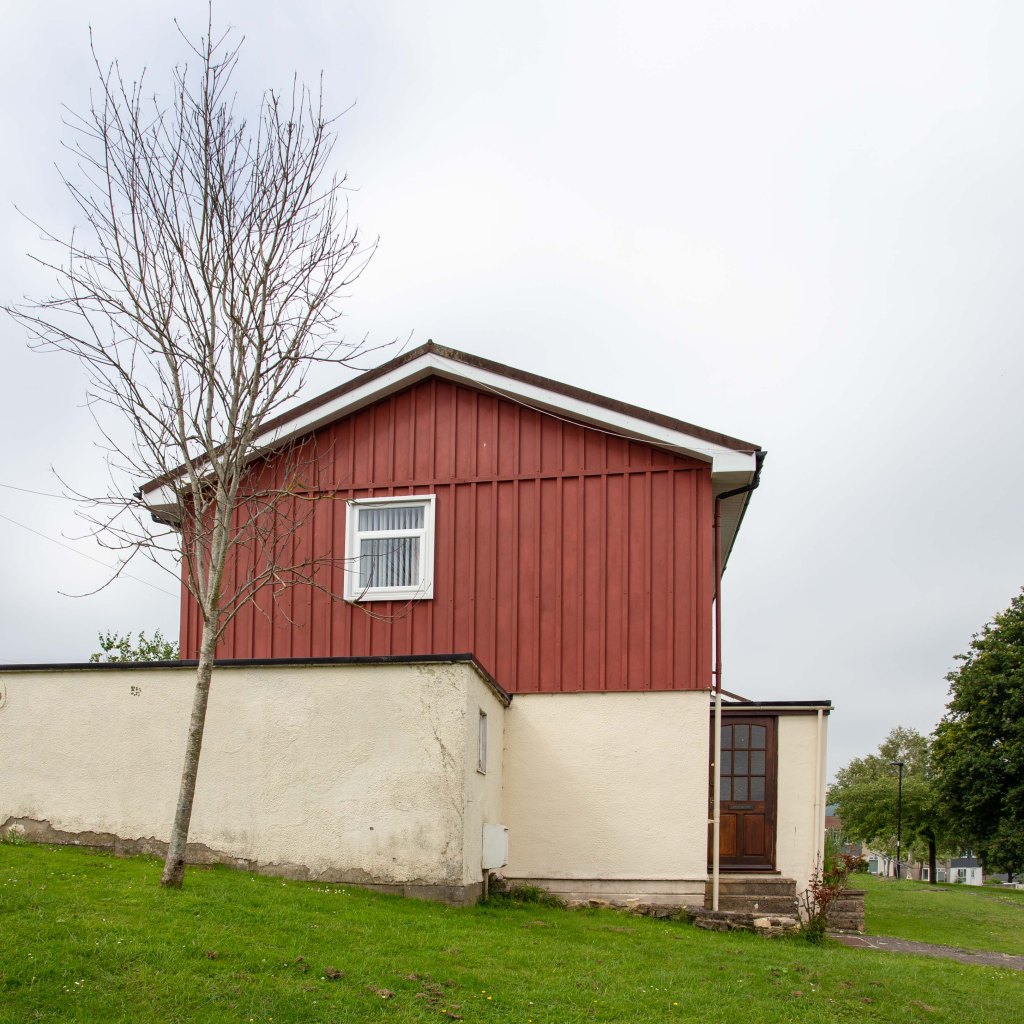
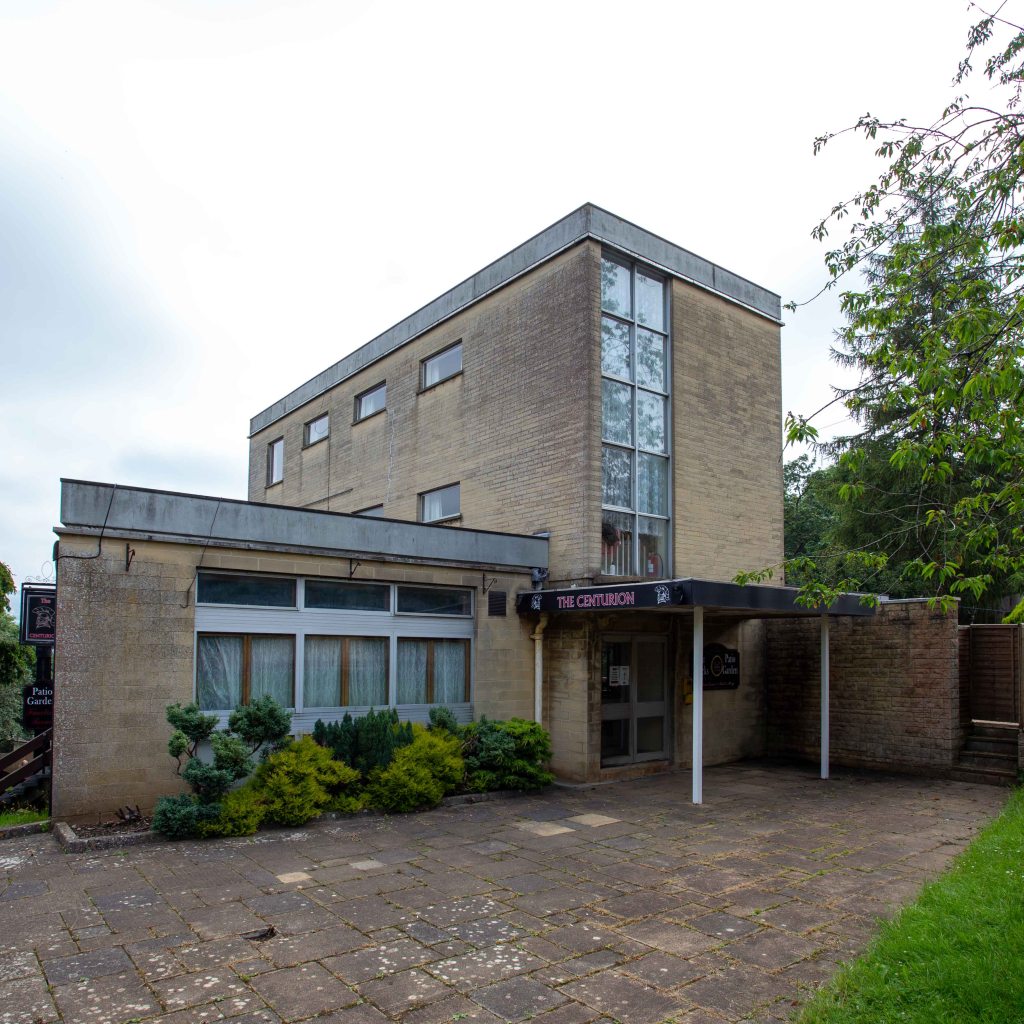
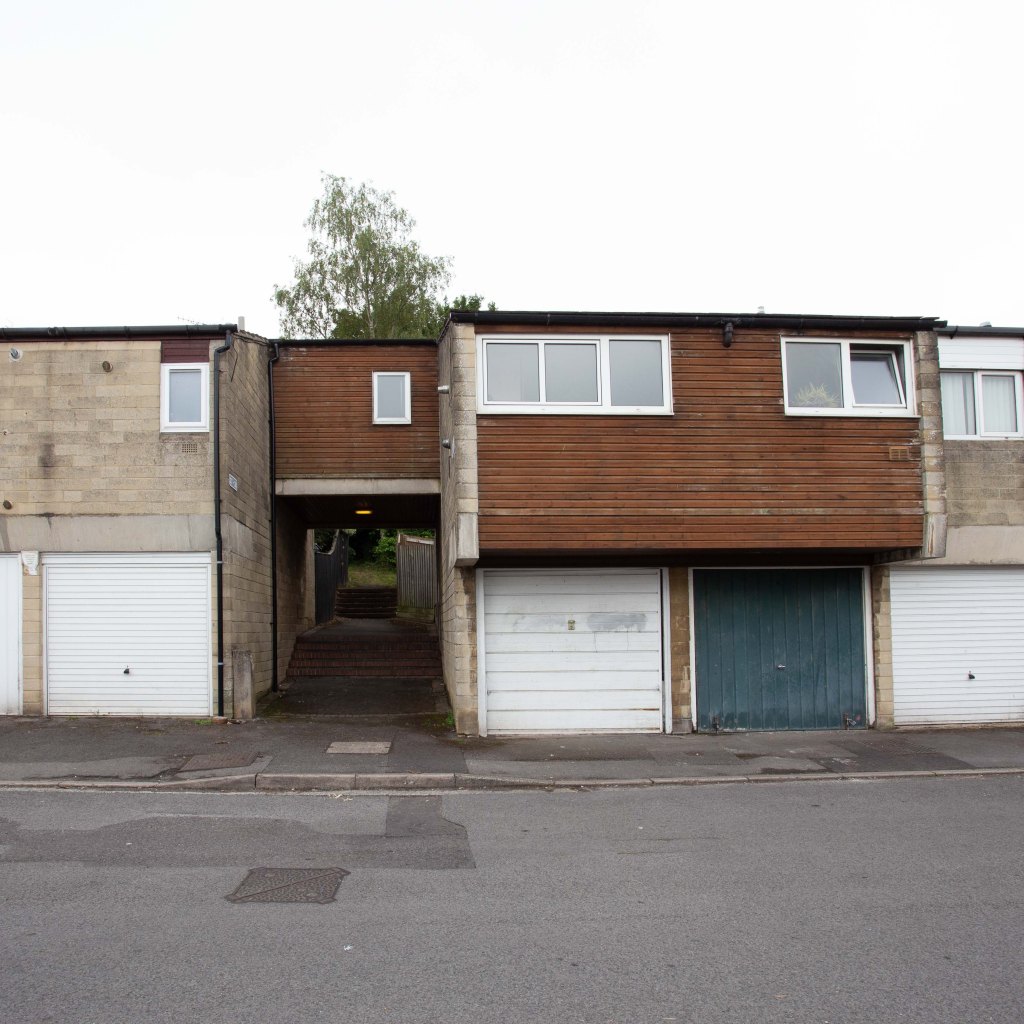
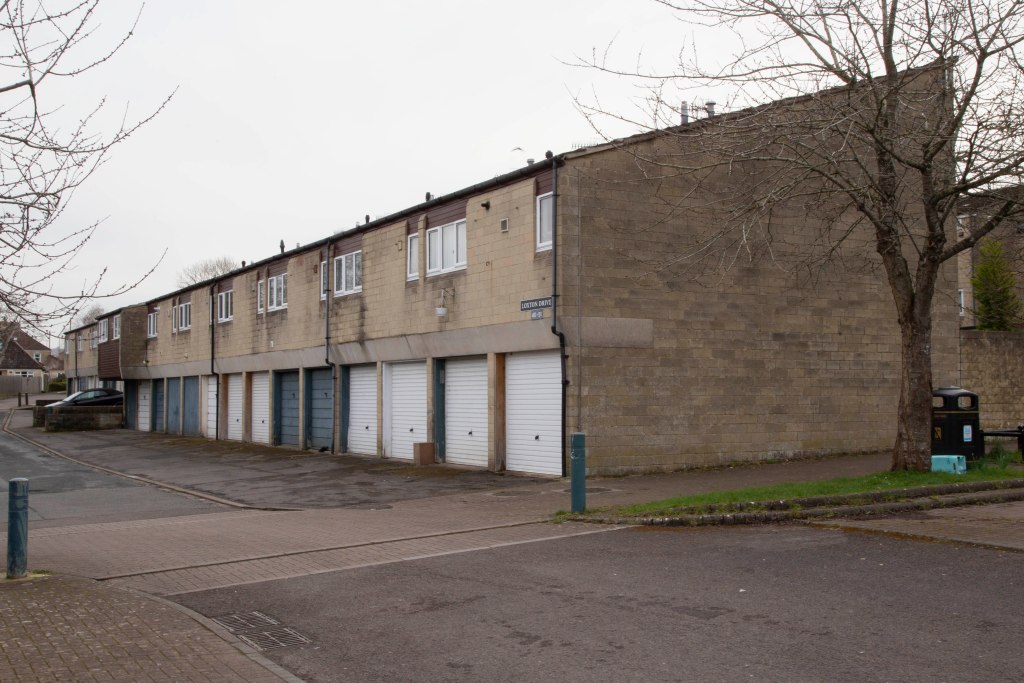
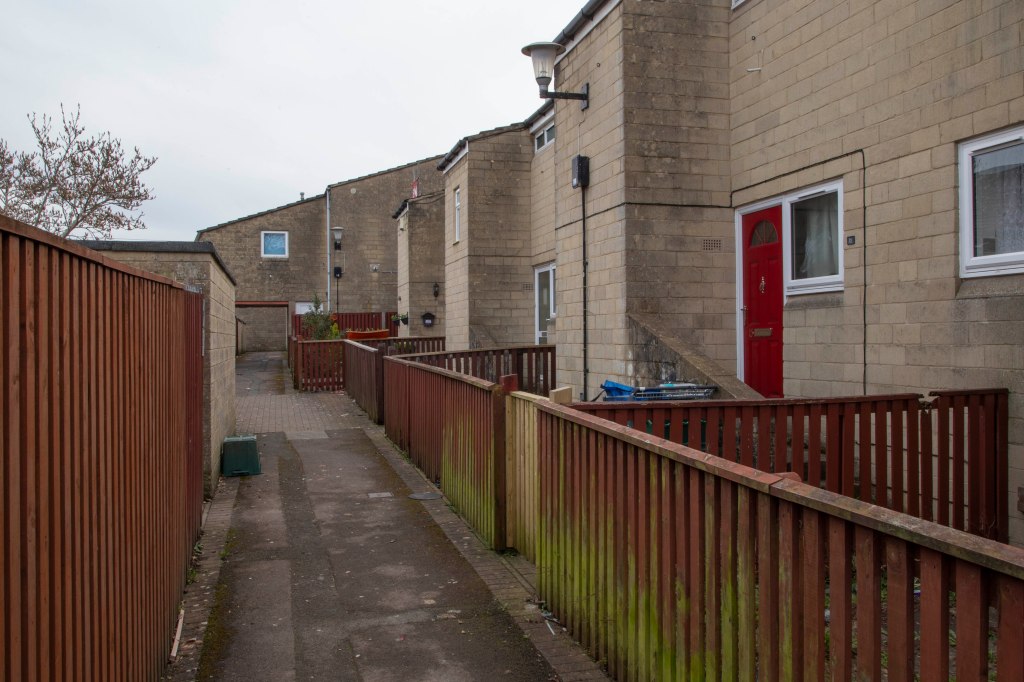
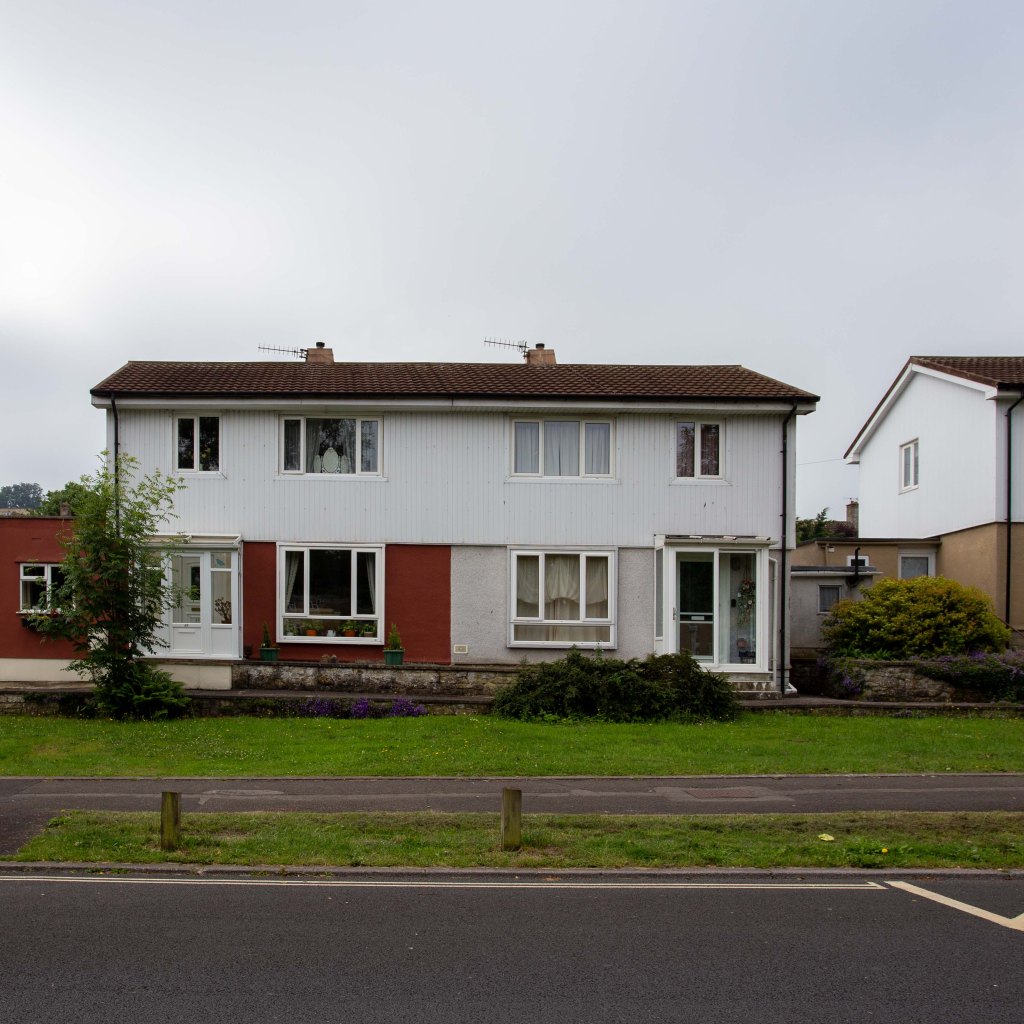
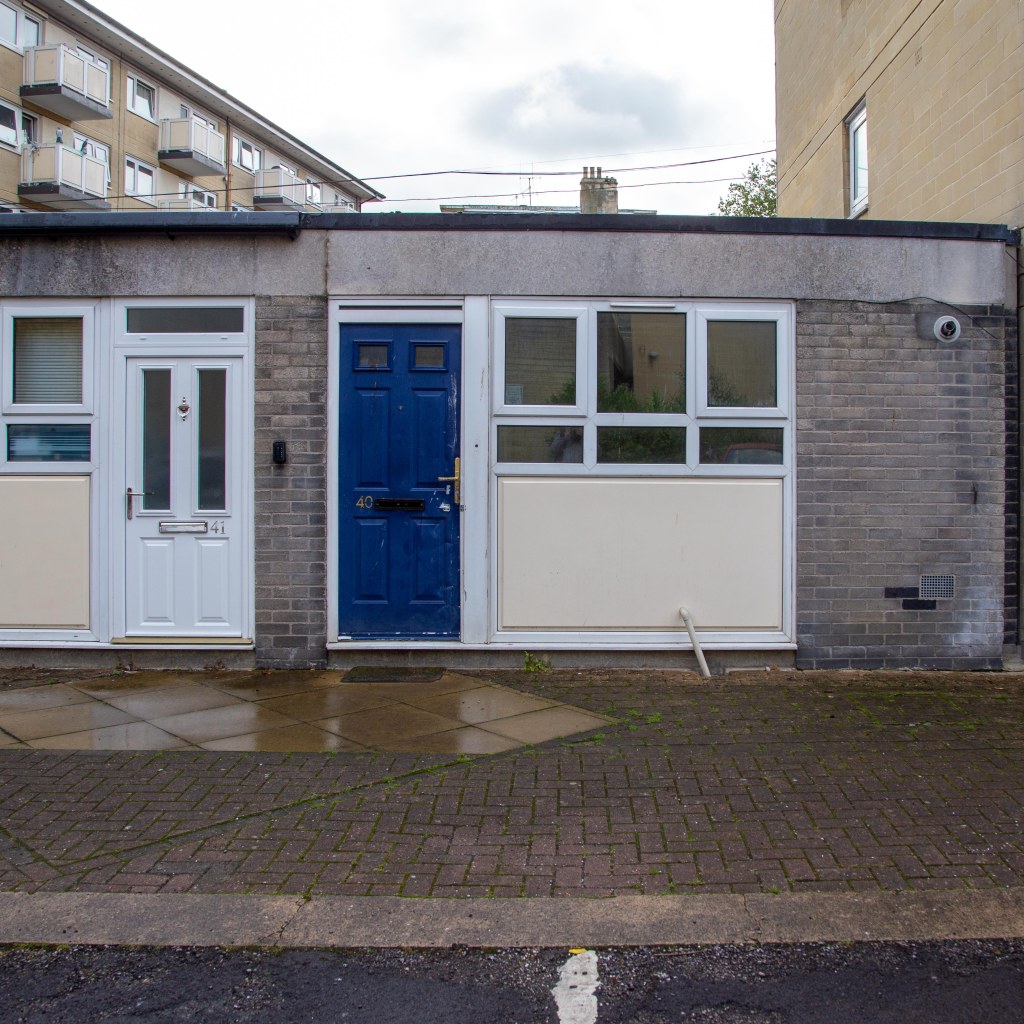
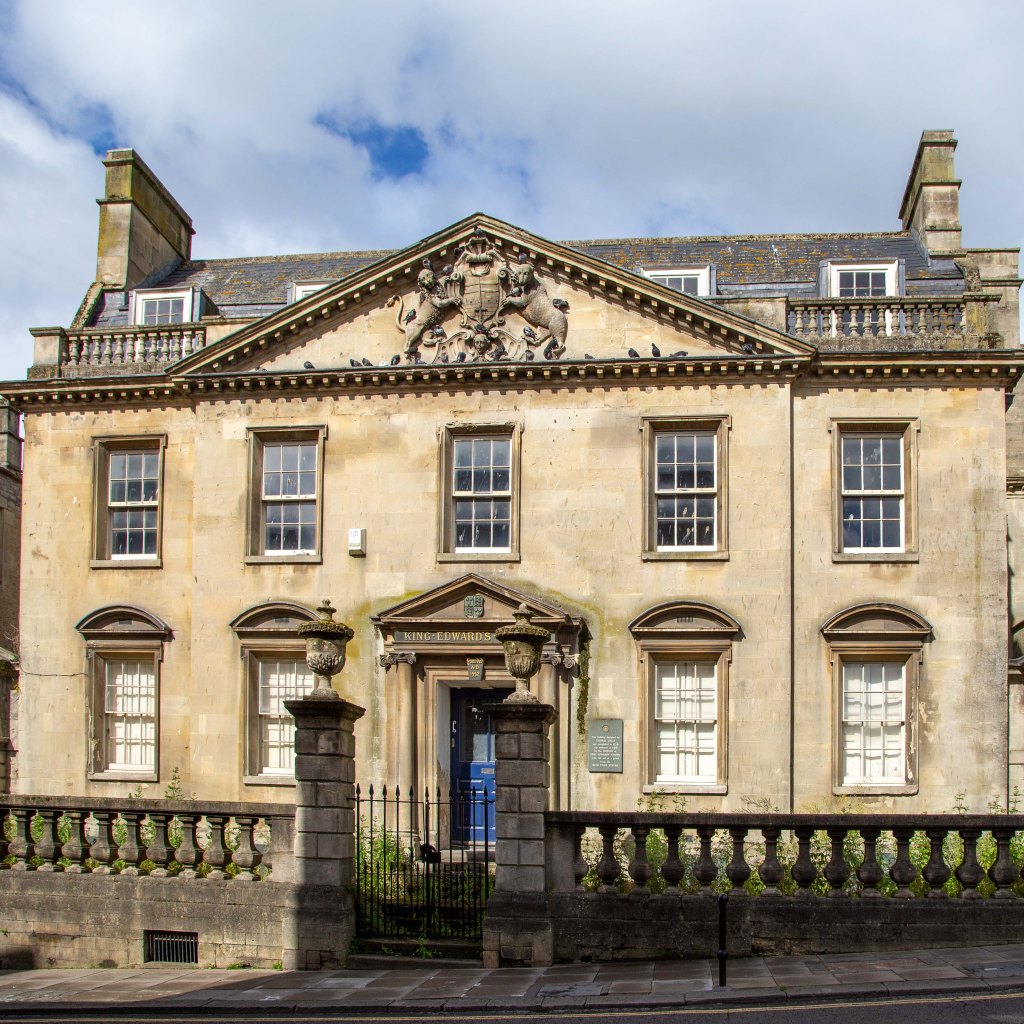
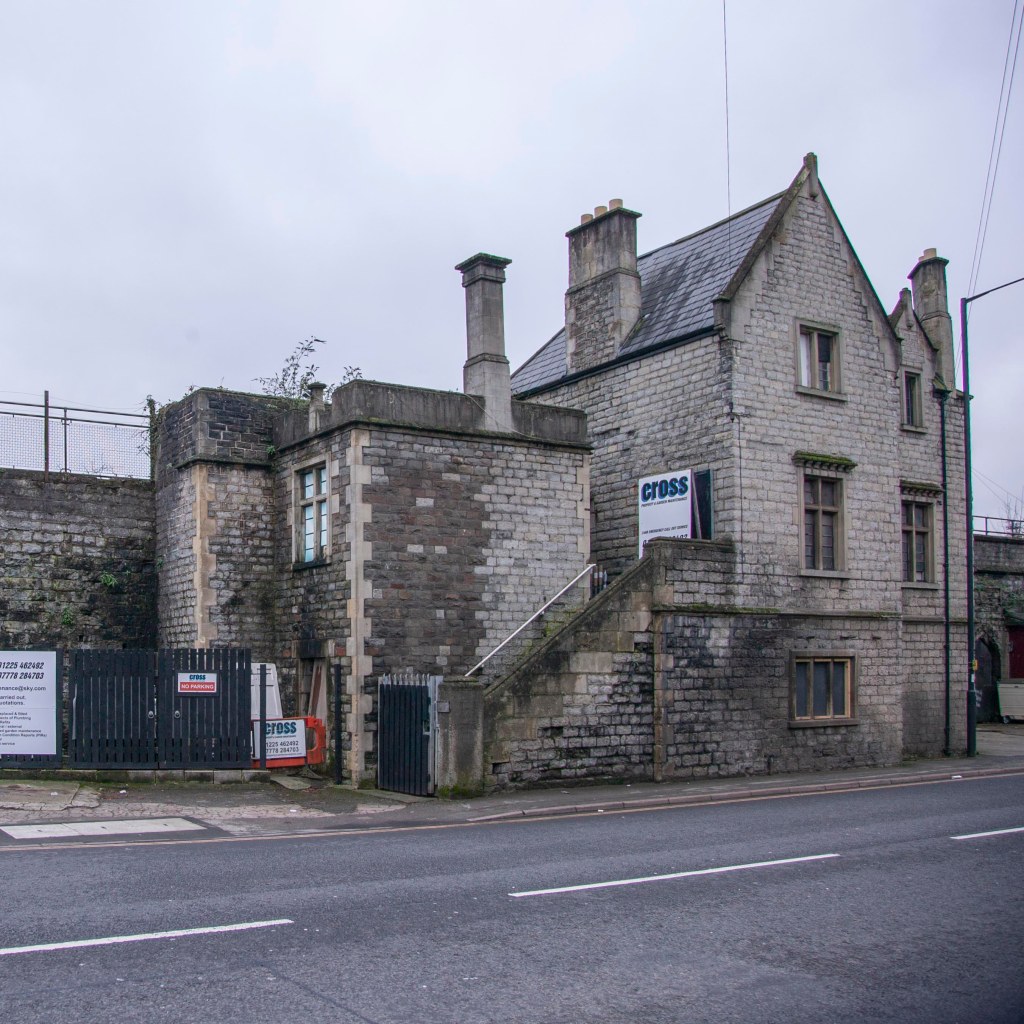
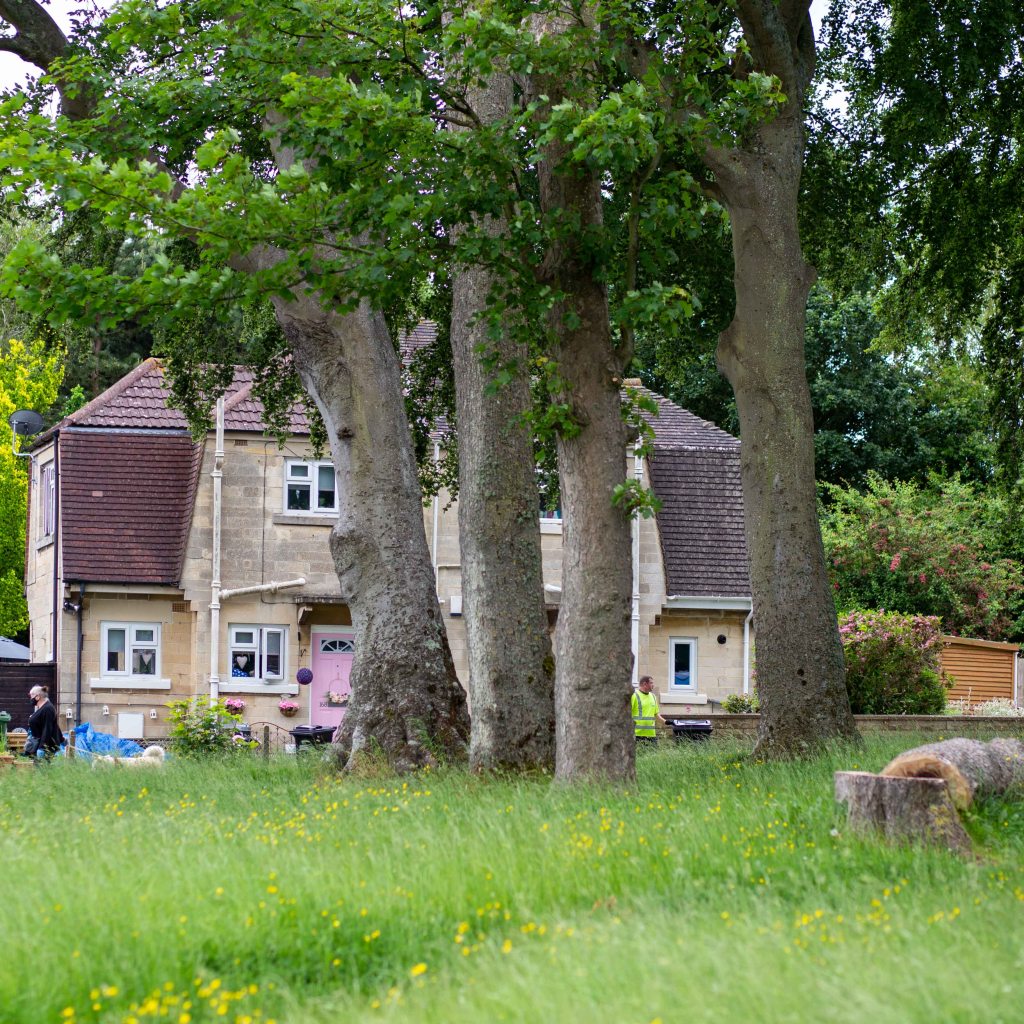
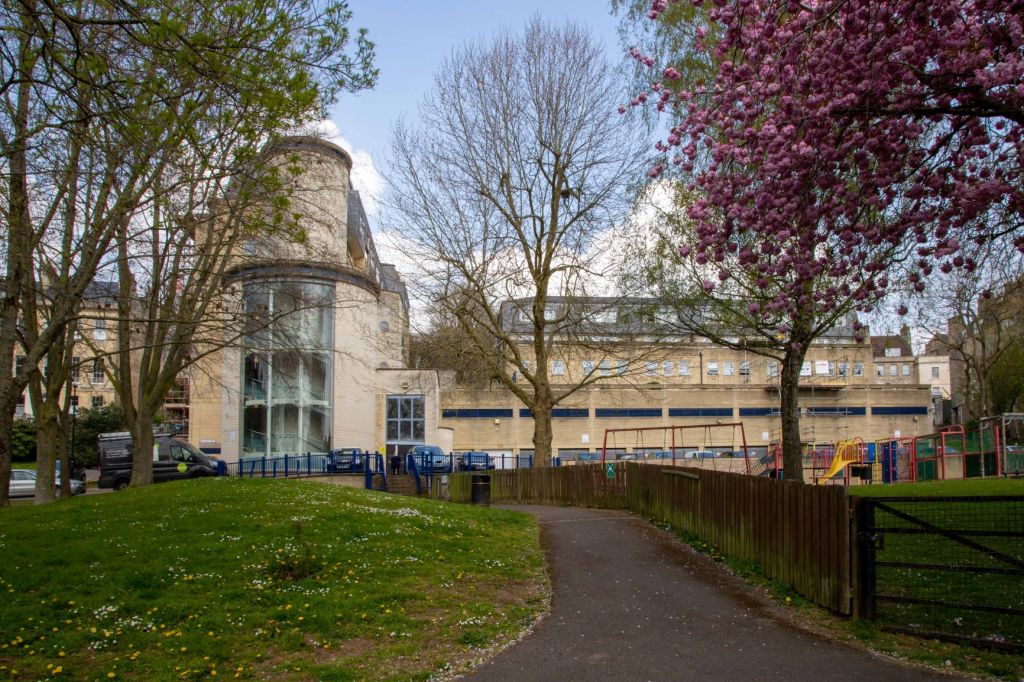
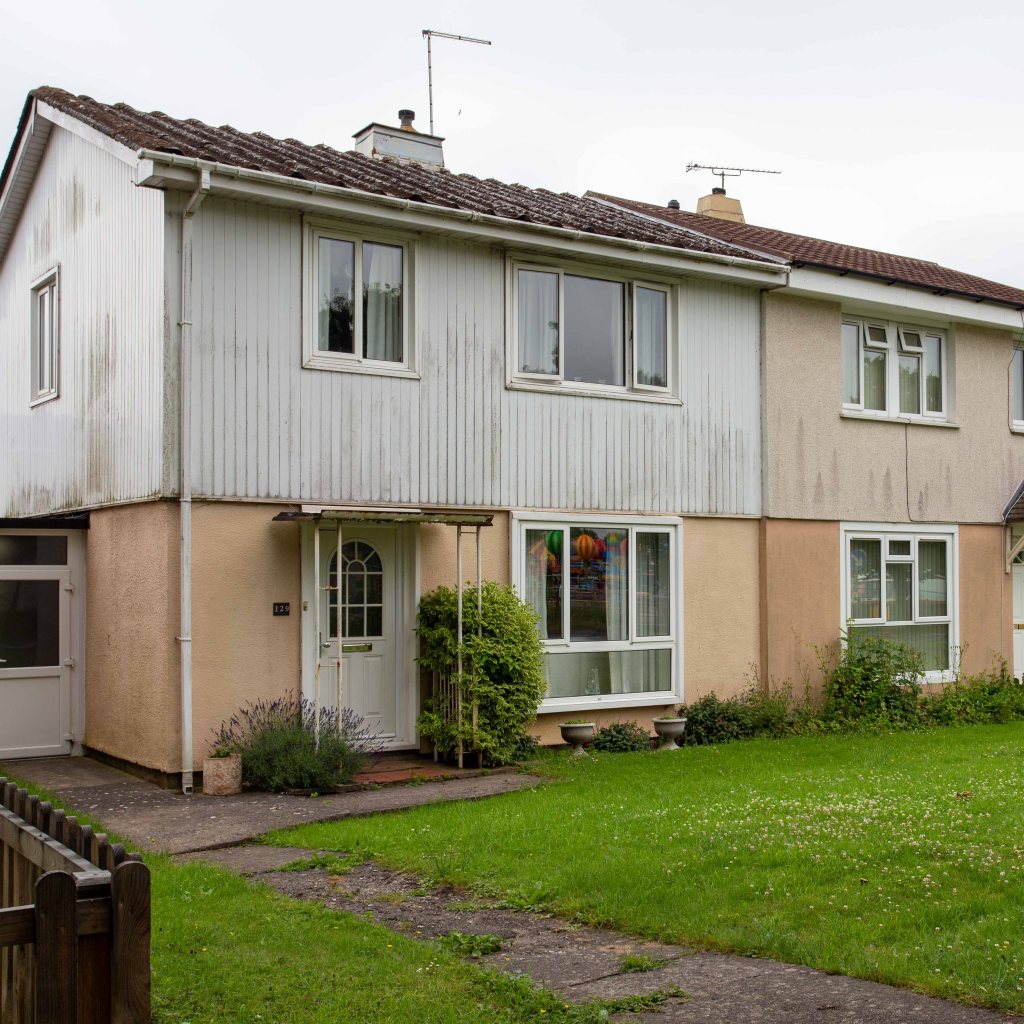
There is something to travelling the same route or visiting the same spot time and time again. You start to see things other may miss, the little details, the way light hits the side of a building at a specific time of day or year, the progress of the developing world, or its slow decay. As I move across Bath, from grand Georgian town houses in the centre, out to the grey monochrome of 1960’s Brutalist cramped estates, I am drawn to these less well of areas. There is a greater sense of community here, I think because people have to work harder to live here, they value what is around them more. Often though the well-manicured front gardens of suburban homes are juxtaposed next to poorer dilapidated homes. Like many photographers before me I feel drawn to what is familiar and having grown up in social housing, I feel a kinship to the people of areas such as Twerton, Southdown and Moorfields. I record the places I find as a way of building up a social history of a city that is famed for its tourist hotspots, rather than its many struggling residents.  

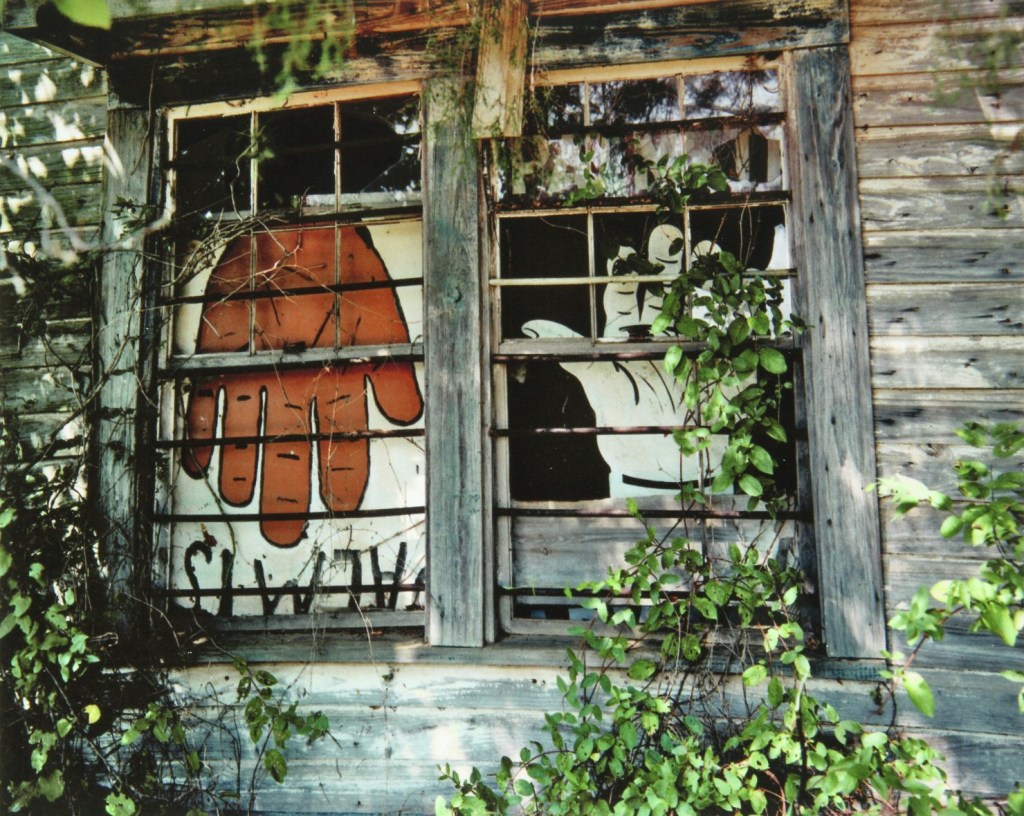
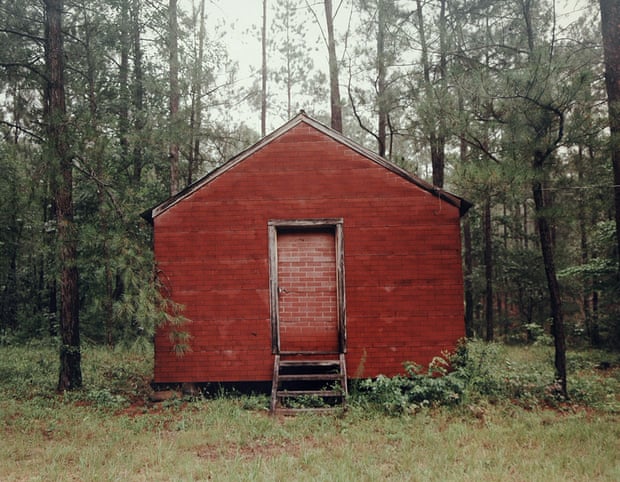
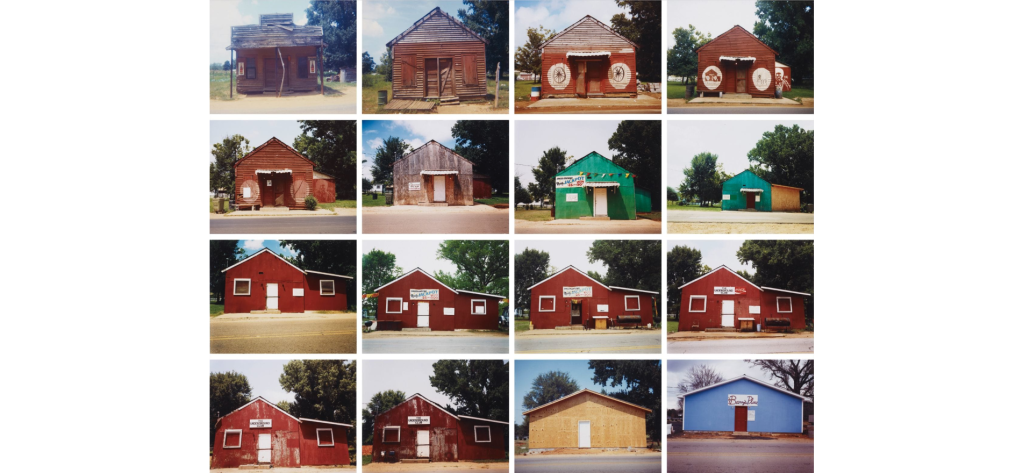
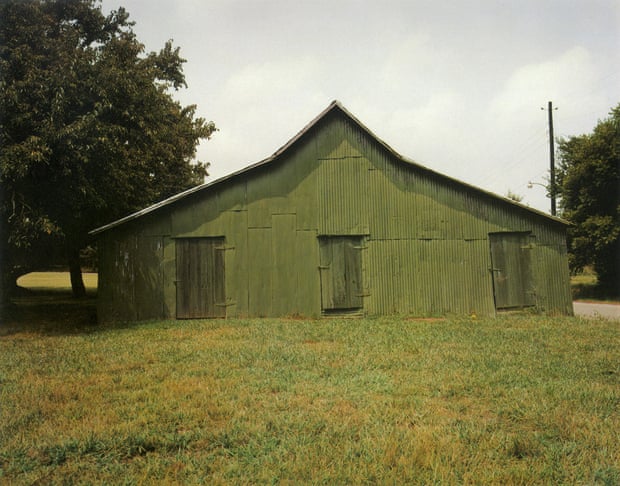
A fellow Falmouth University student put me onto the work of American artist William Christenberry, who has recorded the changing appearance of the deep south’s natural landscape and vernacular architecture in diverse formats and media since the early 1960s. His color photographs of loan dilapidated houses, rusted signage, winding dirt roads, and weathered exteriors present, prolonged studies of place that chronicle the passage of time. We can see in Christenberry’s imagery the influence of Walker Evans, in the way he documents the social landscape in all its grit and detail. When talking about photographing Hale county, one of the poorest areas in the American south Christenberry says: 

“This is and always will be where my heart is,” “It is what I care about. Everything I want to say through my work comes out of my feelings about that place – its positive aspects and its negative aspects.” [Christenberry 2005:Guardian online] 

Much of what Christenberry shows the viewer is in isolation to its surroundings, a warehouse, church, or detail of a window, is shown alone and devoid of human interaction. His images are simple things, often using a box brownie and occasionally an 8×10, there is a softness to the finished image, almost avoiding the technical constraints of image making we know today. Many of these images were later used by Christenberry as source material, to create sculptures, painting and collages.  
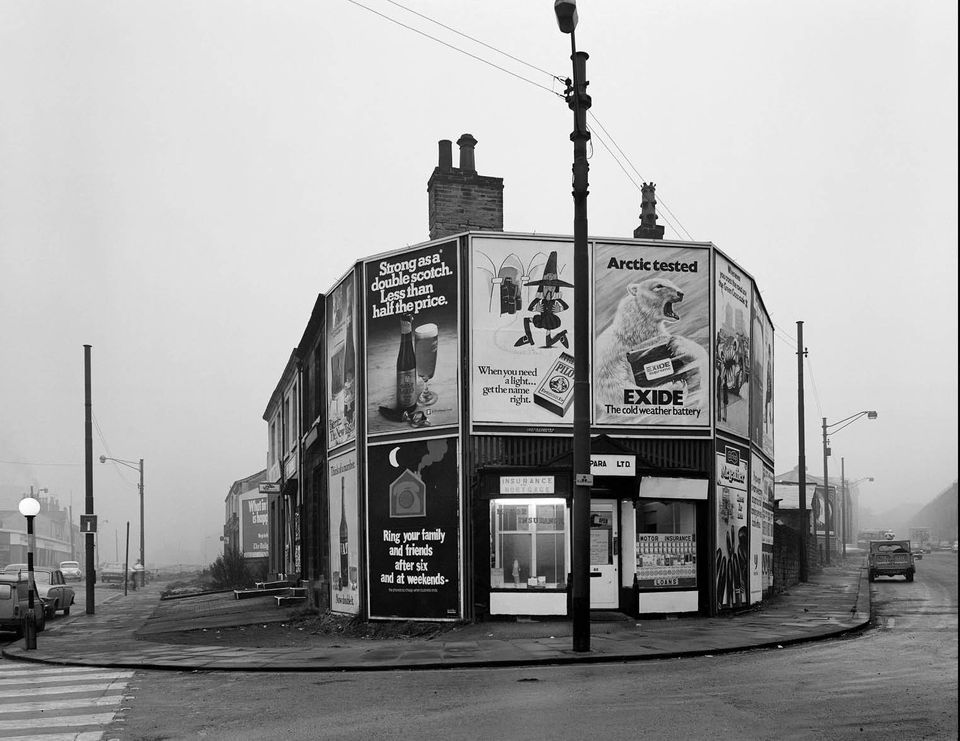
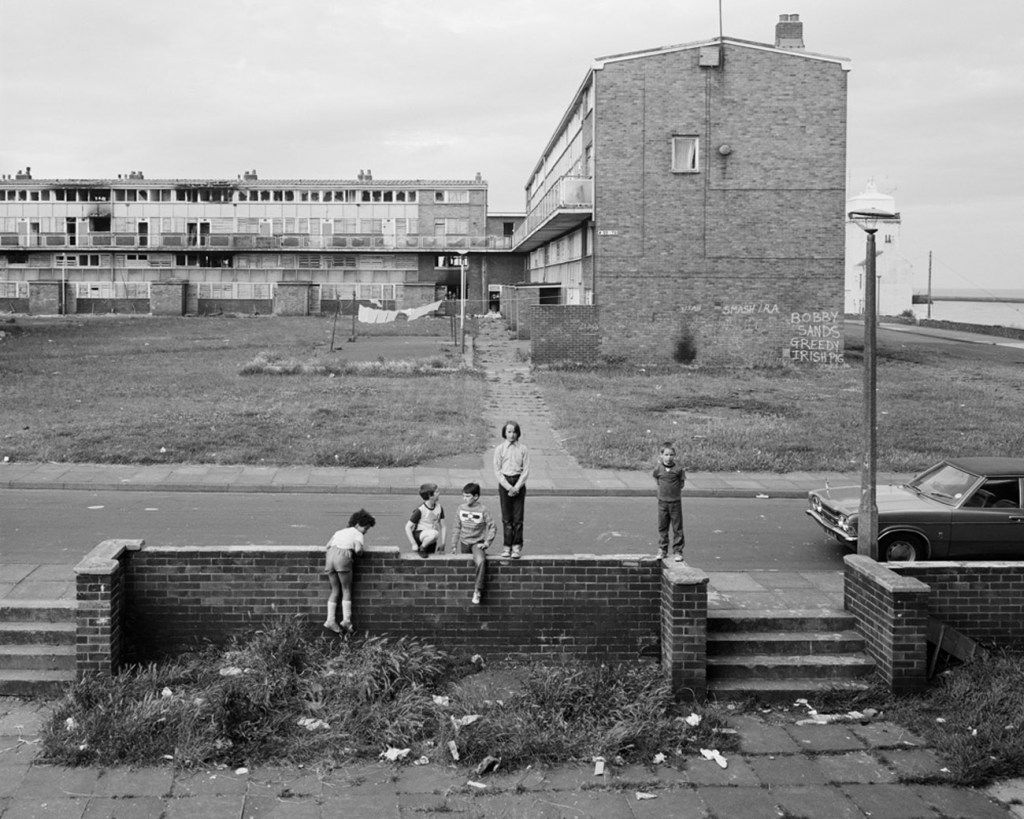
In sharp contrast on the other side of the pond we had the photographer Chris Killip photographing the industrial landscape of northern England. Almost in polar opposition to Christenberry, Killip’s images are in sharp monochrome and feature people within their social landscape. Killip was also heavily influenced by Walker Evans and states: 

“It was Evan’s coolness, about surviving McCarthyism, and all the things that Evans survived; and still you knew he had a distinct political position: it was in the work. Evans gave me a great heart about that. He had navigated much more difficult circumstances that I had. In America, he had to live through a much more charged political situation than the liberalism of England. In America, it’s much more of a minefield for people who are not of the Right.” [Killip  2012:aperture magazine] 
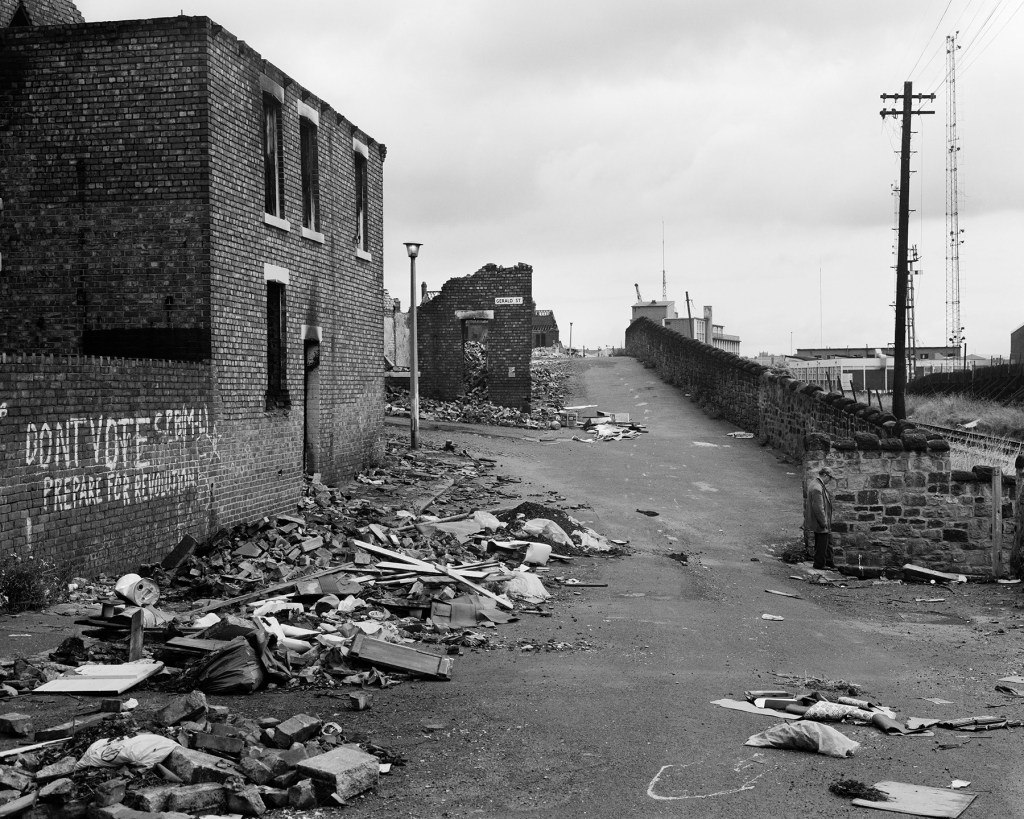
But its Killips images of the urban landscape that speak to me, the use of deep contrasted black and white adds to the bleakness of the subject matter. Unlike Christenberry, there’s little mystery to Killips images, all is laid bare for all to see. The harsh reality of homes crammed in with industrial units and yet the sense of unity of the people who dwell there. Not unlike the residents of the outskirts of Bath, these are people doing the best with what they have.  

I feel that my own practice sits in a place somewhere in-between that of Killip and Christenberry, using a mix of isolated images of place alongside those of communities to create a contemporary view of the reality of living in the UK today. 
References 

https://www.lensculture.com/articles/william-christenberry-william-christenberry

https://www.theguardian.com/artanddesign/2016/dec/04/william-christenberry-obituary

https://www.phillips.com/detail/william-christenberry/UK040213/70

https://www.galleriesnow.net/shows/william-christenberry-summer-winter/

https://chriskillip.com/interviews.html

https://www.theartnewspaper.com/news/british-photographer-chris-killip-remembered-after-battle-with-cancer

https://www.x-traonline.org/article/photography-at-the-end-of-industry

Images

Figure 1 William Christenberry “Green warehouse” 1978, “Palmist building” 1961, “Red Building in forest” 1983 various buildings of the south.

Fgure 2 Chris Killip “Demolished housing Wallsend” 1977, “Shop fronts, Huddersfield” 1974, “housing Estate, North shields, Tyneside” 1981
PHO705: Photographic Research

My practice involves a great deal of research, which I feel stems from a career in the heritage sector. One of the challenges I am faced with is how to use this research within the context of a photographic body of work. I took the opportunity to visit two exhibitions of photographers  

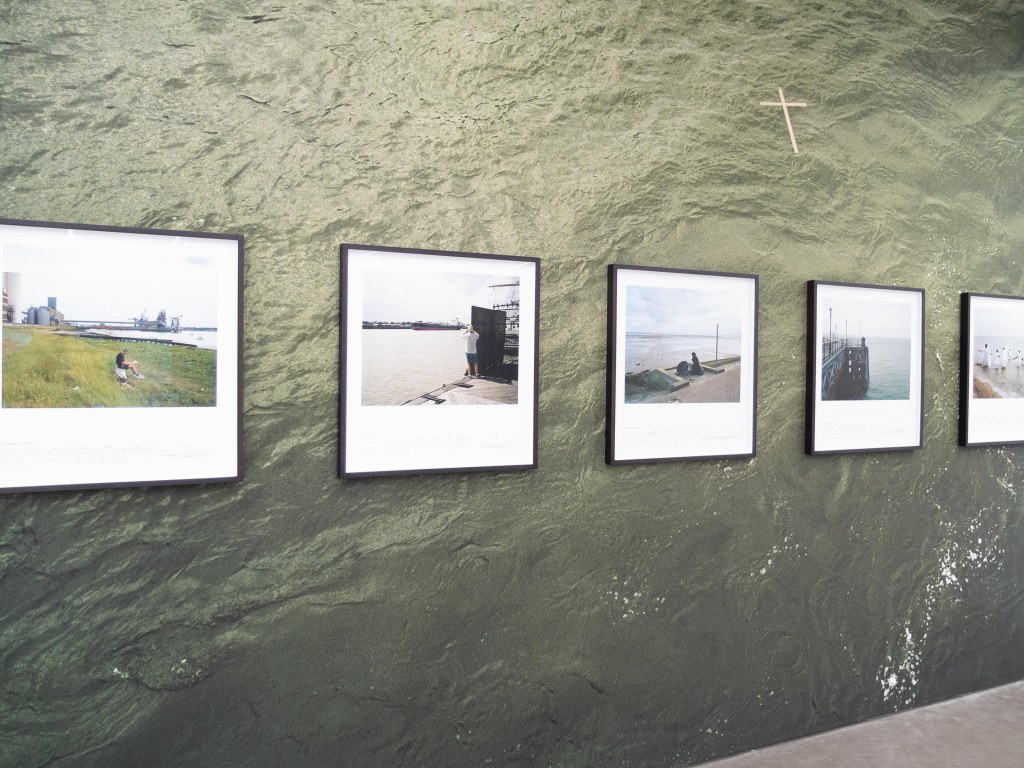
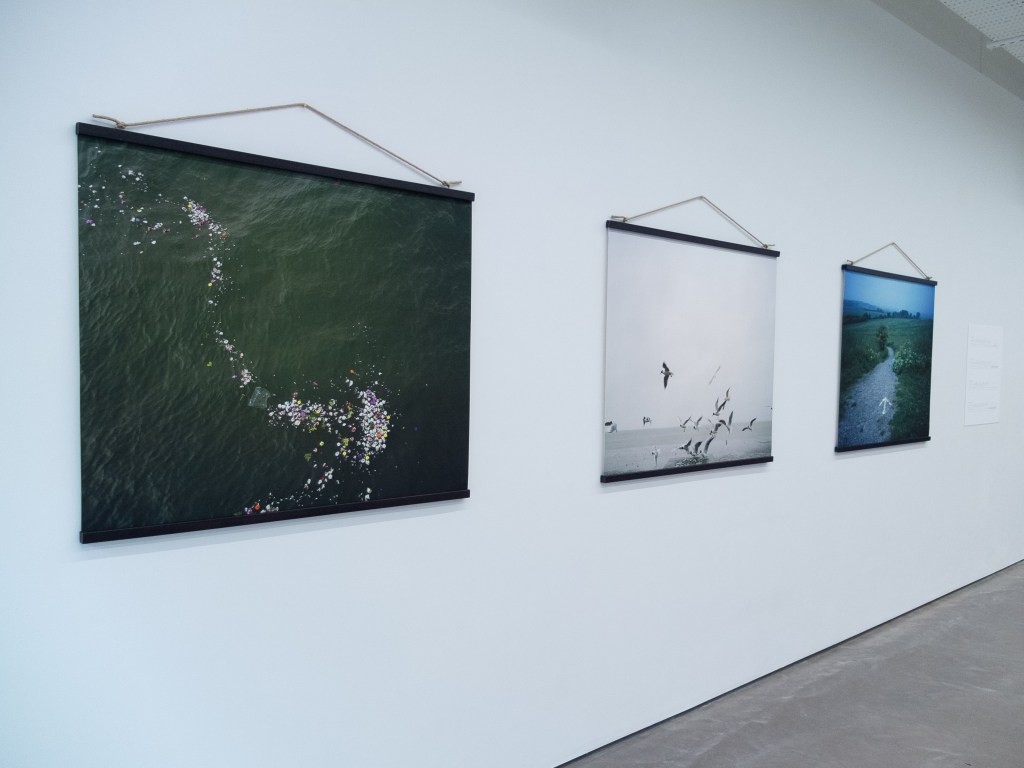
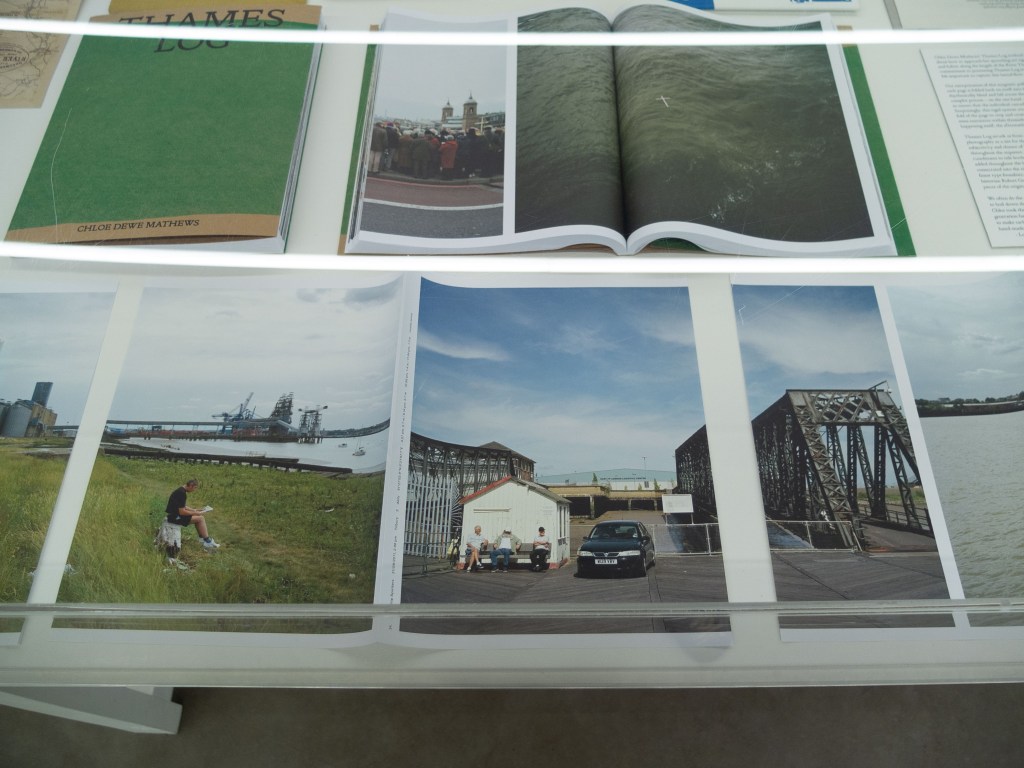
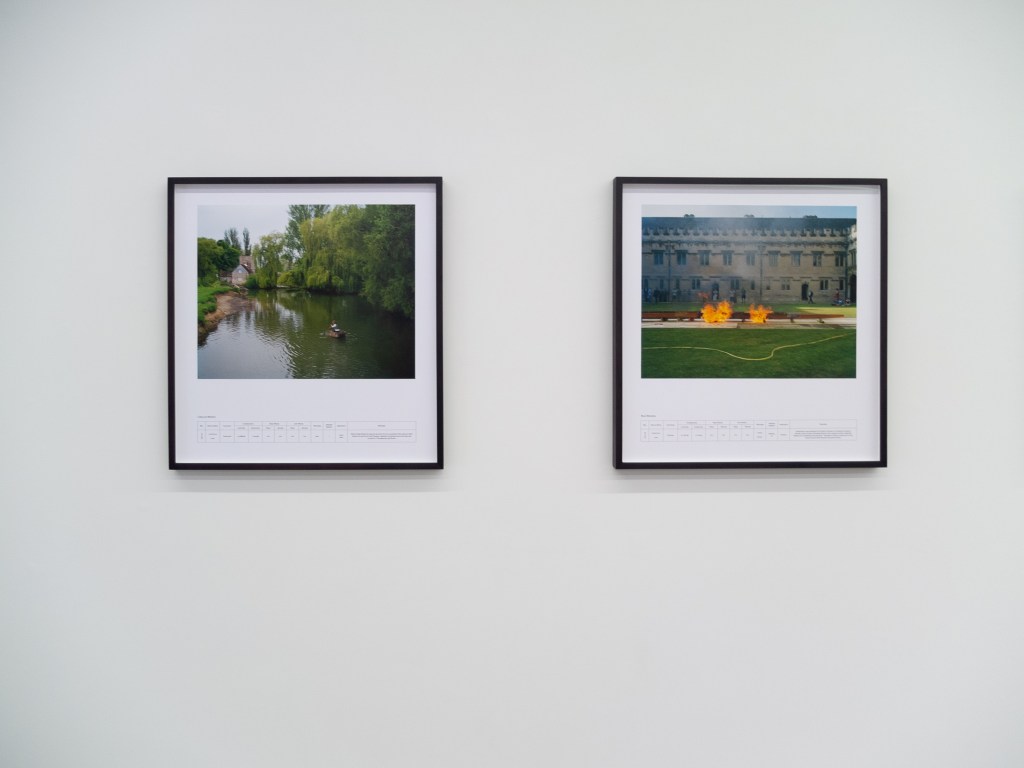
Cloe Drew Mathews’ exhibition “Thames’s log” at the Martin Parr foundation, a culmination of five-year worth of picture taking along the river Thames. Mathews starts the journey from the source of the UK’s largest river, down to the estuary mouth. The resulting body of work examines the various relationships towards water, rituals, festivals, traditions, and its modern use.  

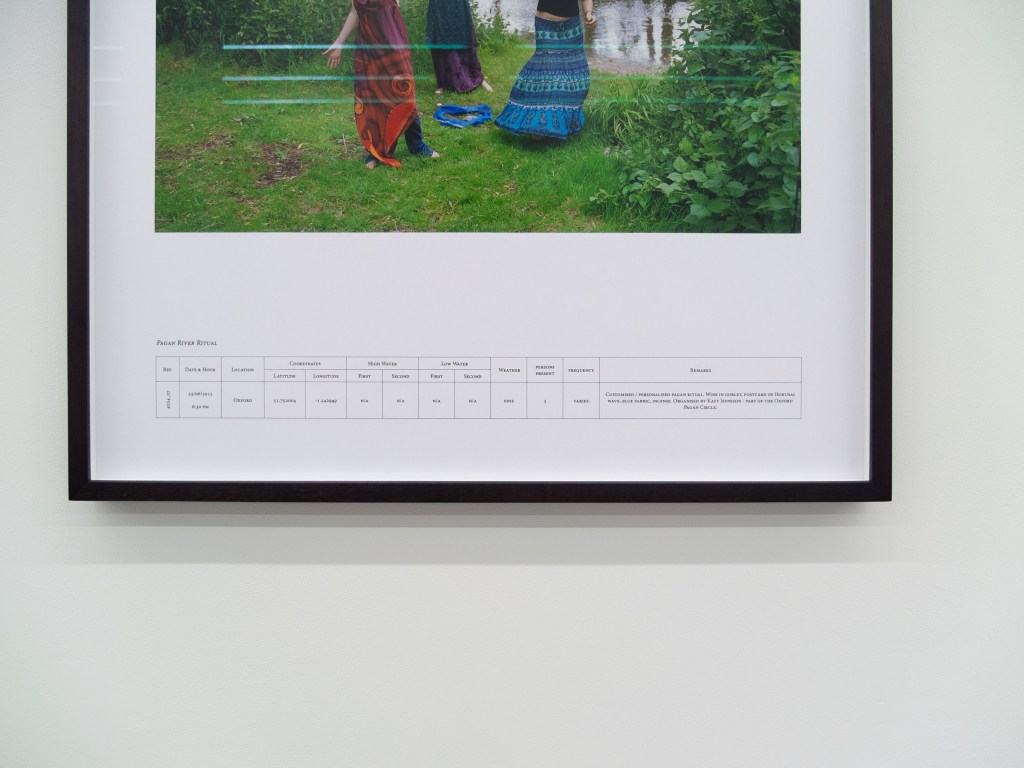
Each image in the exhibition is framed, simply in a standard gallery style, however, for each of the images Mathews includes an information box, the images themselves are straight documentary pieces. These boxes contain information relating to the corresponding image, text informing the viewer of what is happening, the date, time of day, weather conditions and position on the Thames. The format of the information makes me think of shipping forecasts played on the radio, which seems fitting for the subject matter.  

Included in the exhibition was a series of images printed on canvass, hung in a more contemporary way using sections of wood and rope. This method of showing Mathews’ images set them apart for the main body, I am not entirely sure this worked in this format, as the images them lost their narrative, the viewer is then faced with locating the information on a separate panel. The overall feel of this part of the exhibition seemed a little disjointed.  

The exhibition shows the viewer just a small portion of the 5 year project with an accompanying book available for purchase that encompasses the project fully.  

The Royal Photographic Society’s “in Progress” exhibition, crated by Aaron Schuman features solo projects from five leading photographers and photo-based artists Adawma Jalloh, Alba Zari, Hoda Afshar, Wildine Cadet and Laia Abril. New works and works-in-progress exploring topics such as personal history, cultural identity, migration, displacement, belief, and memory.  

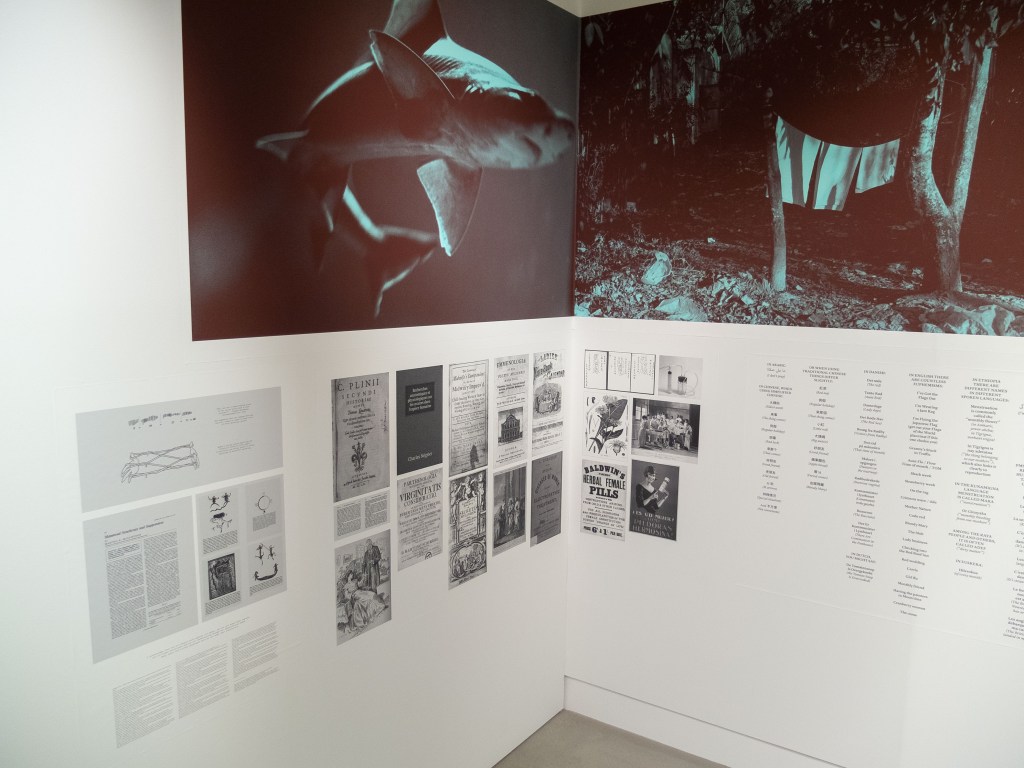
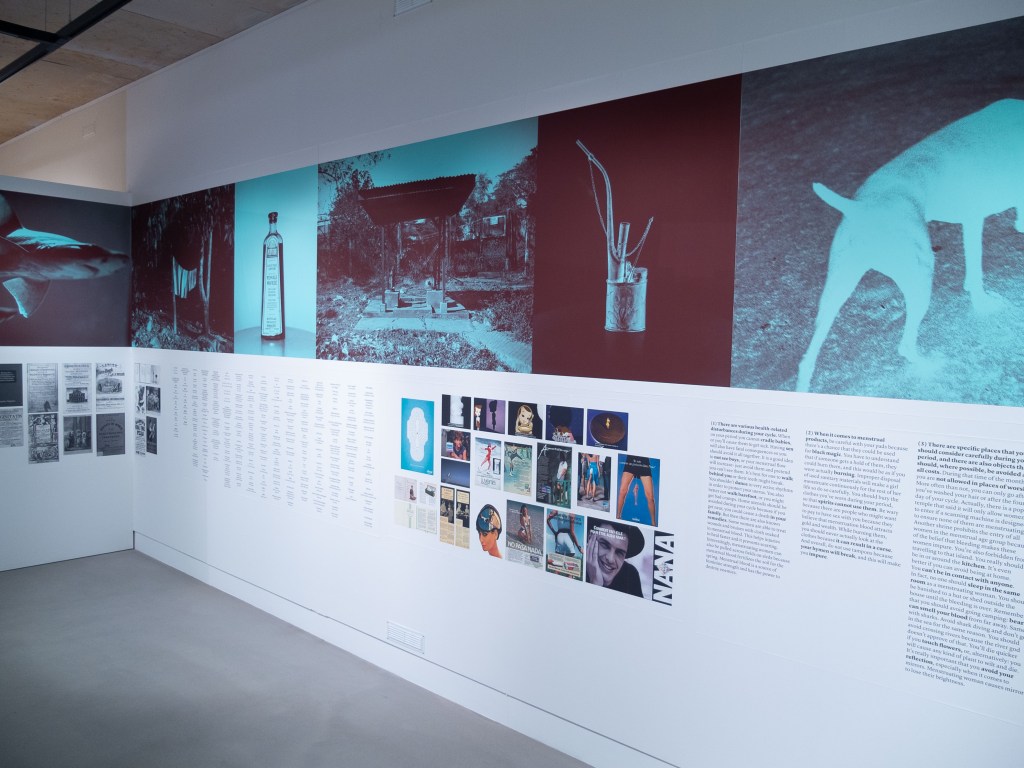
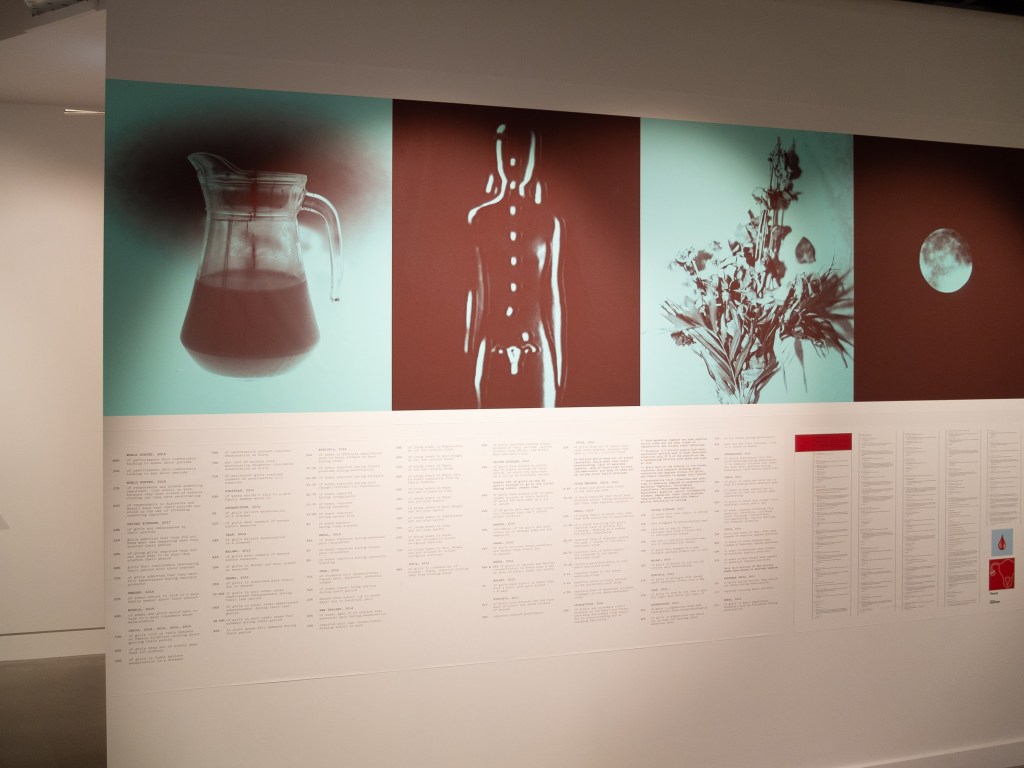
The photographic artist Laia Abril stood out for me with her research-based project “Menstruation Myths” is part (or one chapter) of her new long-term project “History of Misogyny” telling intimate stories that raise uneasy and hidden realities related with sexuality, and gender equality.  

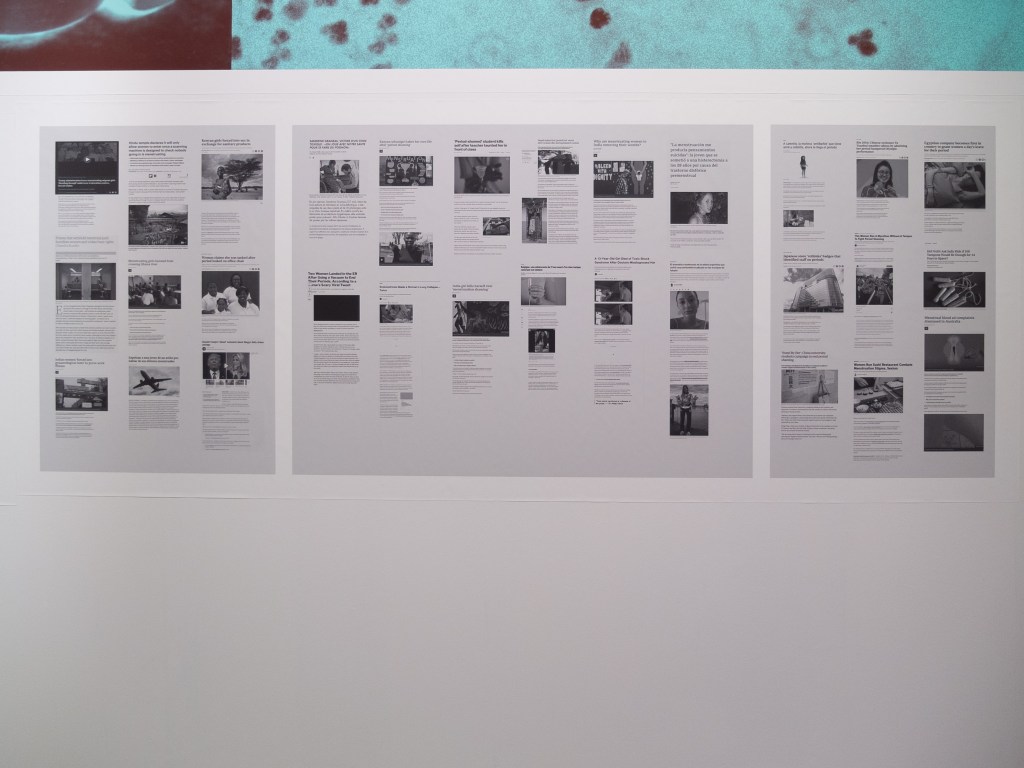
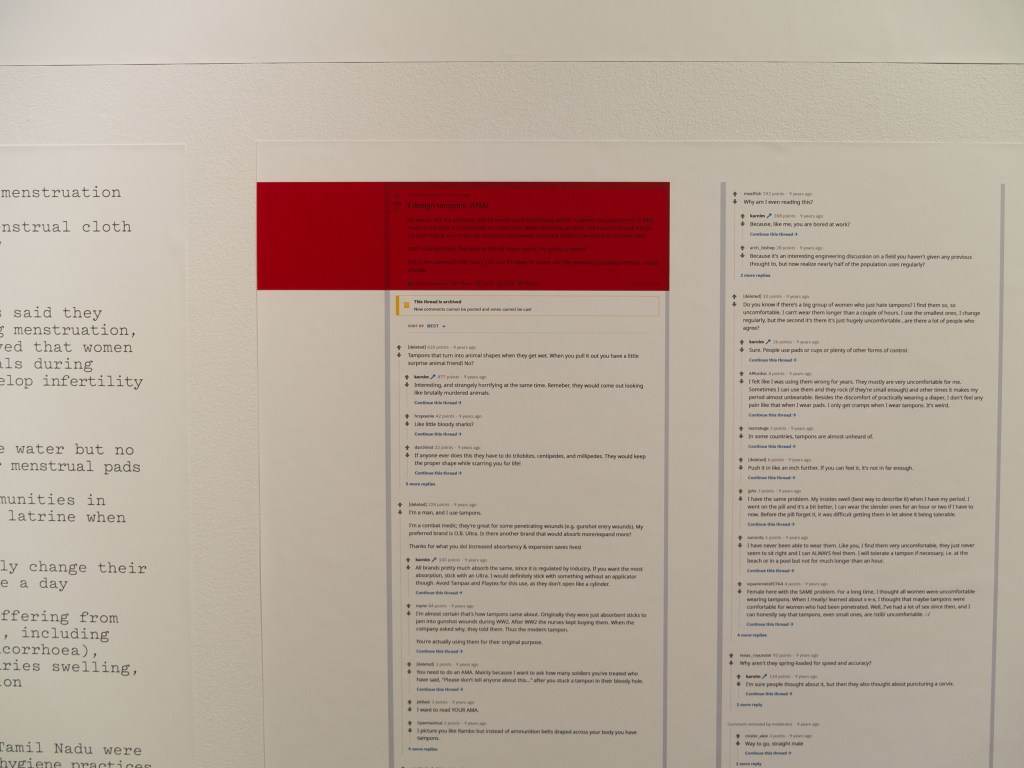
Rather than a standard format of printed images in frames the exhibition uses printed vinyl applied directly to the gallery walls. Images are interplayed with texts, screenshots of conversation threads. The photographic images are processed, monochromatic, in blues and deep (almost black) red, metaphors of blood are used, in some cases subtly and in other cases in ways more obvious, such as the jug of blood or shark images.  

“I decided to tackle this question when I realized that I myself was a little embarrassed when it came to talking about it,” “That I hardly ever did. Only sometimes with girlfriends. And then, when I have my period, I don’t put my tampons on the table, I go to the bathroom with my bag. Privacy or embarrassment? “The start of a long investigation, anyway. In this way: “I left to do journalism, but I didn’t want to stick to a news calendar that wasn’t mine. I wanted to deal with subjects close to me. I also started with eating disorders, after having been bulimic for ten years. And I look for the “holes” in society: female sexuality is one of them. The rules too. ” “I then look for metaphors that synthesize my point, to arouse curiosity and encourage people to read my texts.” [Abril 2017:Liberation.fr] 

What I have learned from each of these exhibitions is that research material can be used in more challenging ways, sitting alongside images. The text is then used to anchor each image creating a visual journey for the viewer. As a viewer I enjoyed the seeing the process of each project and felt that I had a deep sense of what each photographer had set out to achieve. Within my own practice I can see how using the research text alongside images, archival materials, and interview statements to build up a clear narrative.  

References 

https://www.liberation.fr/vous/2017/10/24/regles-des-croyances-menstrueuses_1605420/ [Accessed 17.07.2021] 

Figures

Figure 1 Chloe Drew Mathews, Martin Parr Foundation “Thames Log” exhibition visited 02.07.2021 

Figure 2 Laia Abril, Royal Photographic Society “In progress” exhibition visited 02.07.2021 

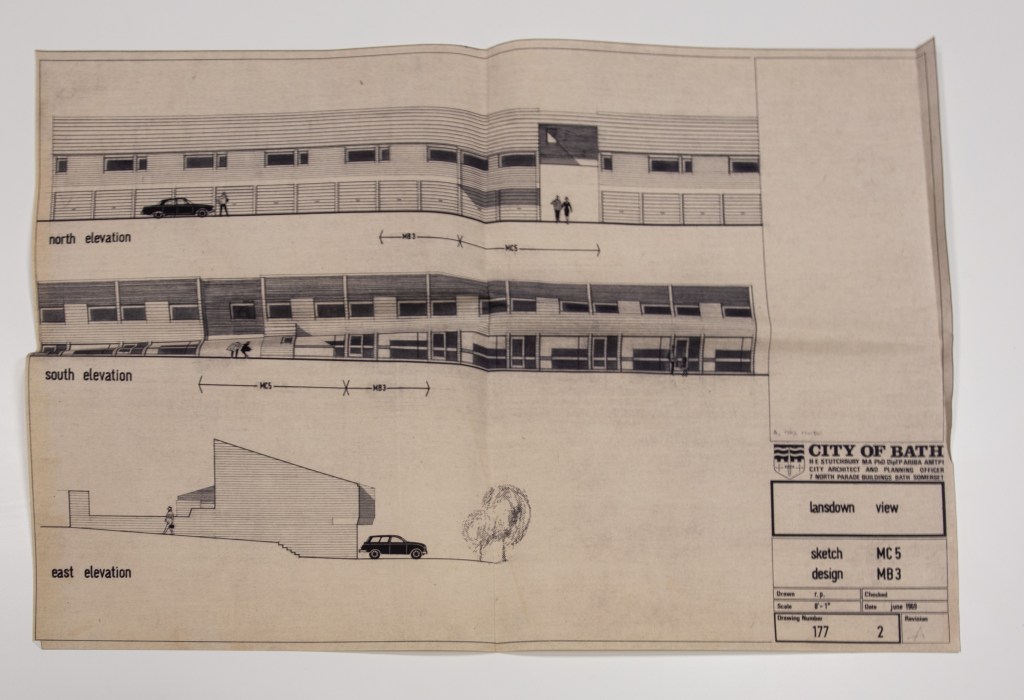
Figure 3 Tim Beale WIP images alongside the 1970 plans for Twerton courtesy of Bath Records Office

PHO705 FMP: Use Value vs Exchange Value

Use Value is the house, as a space fit for those who occupy it.  

Exchange Value is the house as a commodity to be bought and sold as an asset.

“Today, what economists call the ‘exchange value’ of housing in London, and other cities, has entirely broken the connection with its ‘use value’; exchange value is the price of commodity sold on the market whilst use value is its usefulness to people.” [Minton 38:2017] 

The right to buy scheme in the 1980s, sold to the nation as the greatest of opportunities for everyone to own their own house, was nothing more than a way of stripping assets away from local councils. Restrictions in the use of funds from the sale of council owned houses meant that funds could not be used for replenishing social housing stock. Many who bought their homes, found that the cost of maintaining it was too great and had little choice but to sell it on. In the ten years of the scheme some 1 million houses where sold. It has been estimated that 1/3 of those houses sold are now owned by private landlords.1 

“There is so much to say about a system that increasingly treats housing as a means to accumulate capital, never as a home. A creeping worldview that only understand the value of housing as a commodity, as something to be bought and sold, speculated in, land banked. To them (Tories), where you live is only a piece of property subject to global markets, real estate whose value is tied to location and status rather than its conditions, the wellbeing or stability of its tenants, its impact on the neighbourhood.” [Gibbons 27:2017] 

Government assistance schemes to help people buy houses, restrict this help to new build housing, deliberately deterring those wishing to utilise existing housing stock. You would think a new build to be a sound investment compared to housing of 40 to 100 years old but is not, as houses in the UK are getting smaller and being built with a lifespan of just 60 years. Neoliberal housing developments over the past twenty years have seen a fall in the design and build quality but increase in the market value of housing stock and as such we have seen correlation between exchange value and use value become more skewed.  

“When it comes to housing, prices are failing to respond to the needs of most people, allowing the influx of global capital, often from dubious sources, to utterly distort the market and creating a crisis of affordability affecting all layers of society.” [Minton 39:2017] 

The concept of affordable housing is one that gets rolled out when talking about the housing crisis, however the UK governments idea of affordable, 80% of market value, is fair from the reality of what the average person can afford. For new build houses in Bath sitting at £500,000 would mean that an “affordable” house costing £400,000. As I discussed in my previous post, research was carried out in Bath illustrating the need for a £80,000+ pay packed to be able to afford a home here. For the government to truly care about its people it should be looking to what is actually “affordable”, given that the reported average annual salary in Bath is £32,000. In their review of ‘The right to the city’ David Madden and Peter Marcus discuss the need for a solution to the affordability crisis and the need to an impartial, unbiased body to govern housing: 

“Housing needs to be opened up to broader democratic scrutiny and input. Currently, the contours of the housing system are determined by a relatively small elite. As a result, the scale of inequality and injustice in the housing system is not widely acknowledgement. We need to create new sites where housing questions can be reopened.” [ Madden/Marcus 36:2017] 

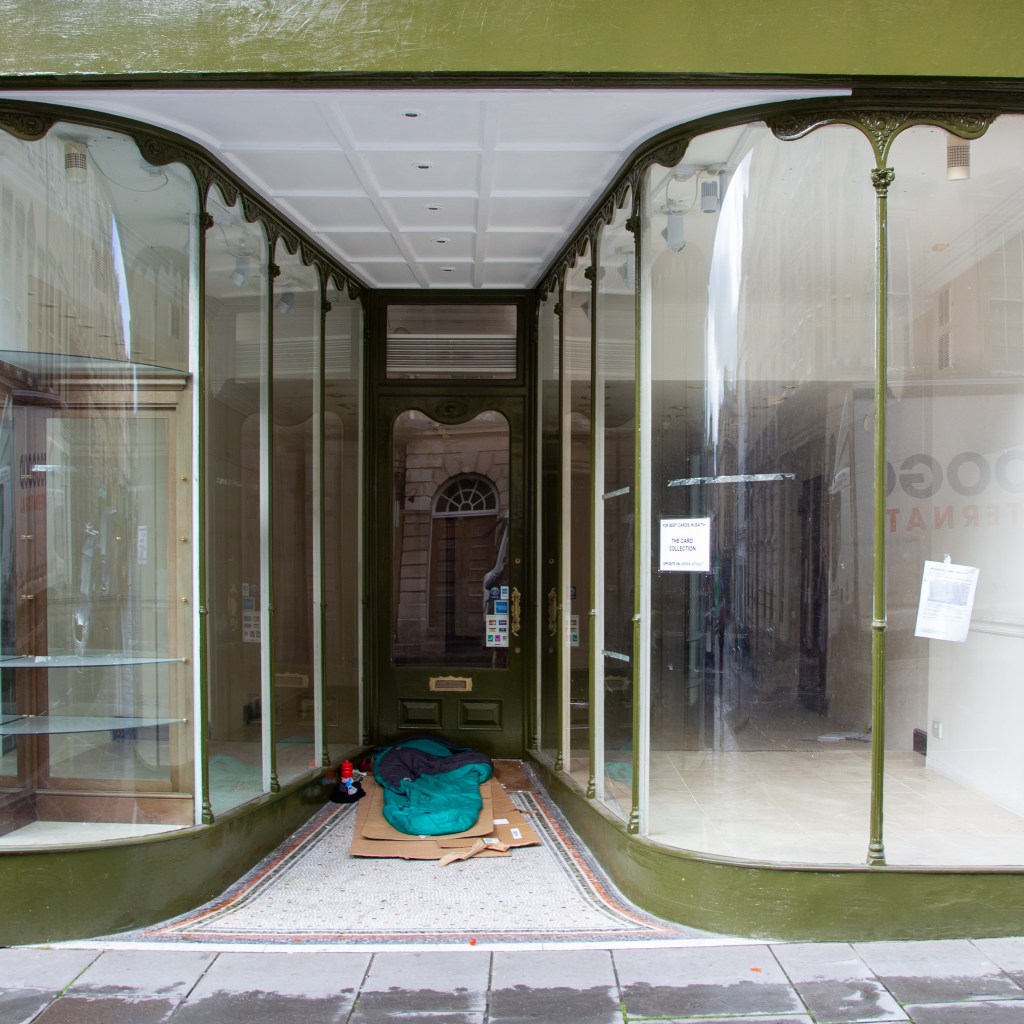
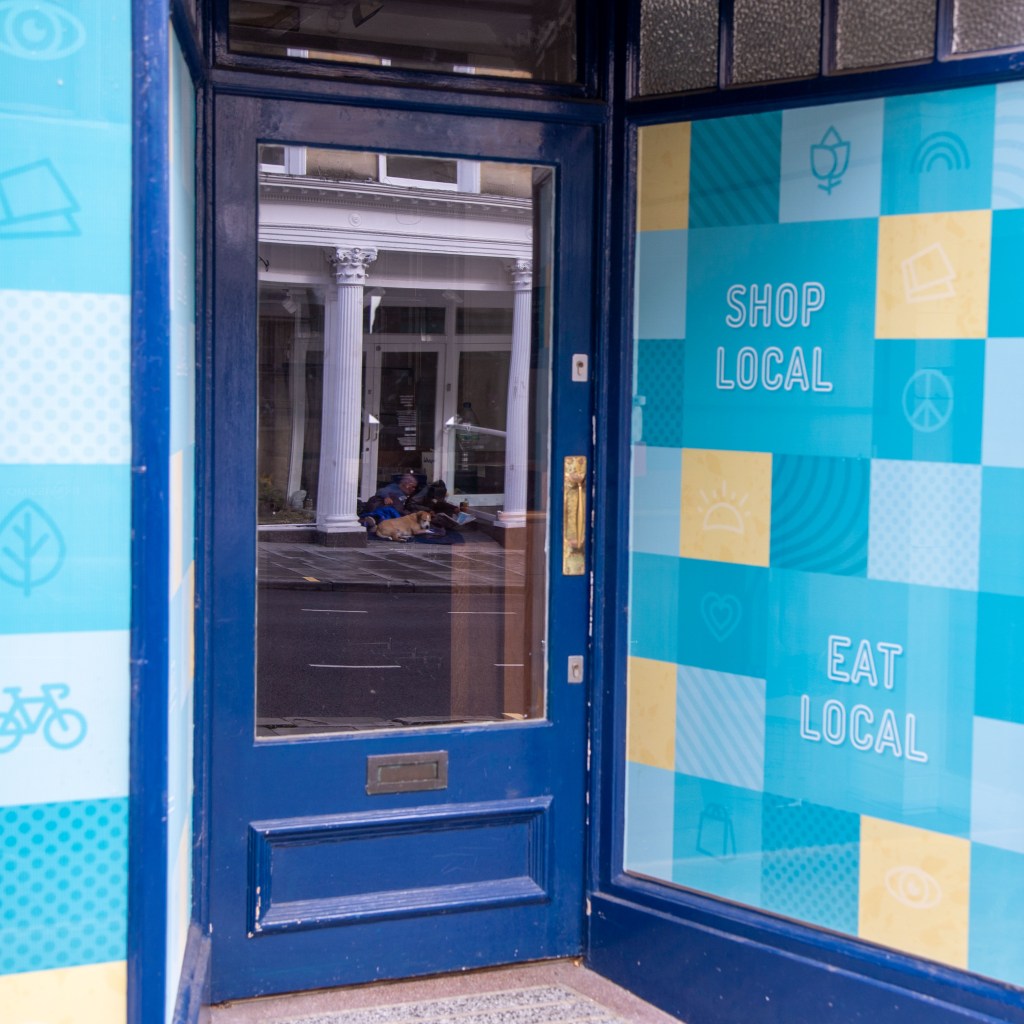
There is no quick win for housing but what is clear is that many of the issues we face as a society comes from the inequality in housing. Rough sleeping on the increase, waiting lists for social housing stretch on for years, and yet we see more luxury apartments being built, empty industrial units and unused purpose-built student accommodation, across the city. When we look to the Right to the City and its manifesto, we see our cities failing on all fronts.  “In recent years UN-HABITAT and UNESCO have led an effort to include the right to the city as part of a broader agenda for human rights.” [Minton 40:2017] As a UNESCO world heritage city, Bath should be leading the way or at the very least working towards these values.  

1 https://www.theguardian.com/money/2013/jun/28/new-class-landlords-profiting-generation-rent 

References 

https://www.gov.uk/affordable-home-ownership-schemes [Accessed 01.07.2021]

https://www.labcwarranty.co.uk/blog/are-britain-s-houses-getting-smaller-new-data/ [Accessed 01.07.2021]

https://blog.planningportal.co.uk/2018/06/22/how-long-should-a-house-last/ [Accessed 01.07.2021]

Bath at Work Museum Exhibition: http://museumofbatharchitecture.org.uk/wp-content/uploads/2012/08/Bath-History-of-Social-Housing-booklet.pdf   [Accessed 01.07.2021]

Gibbons A “A Place to Call Home” The Right to the City: A Verso Report. 2017 Verso Books

Madden D & Marcus P “The residential Is Political” The Right to the City: A Verso Report. 2017 Verso Books

Minton A “Who is the City For?” The Right to the City: A Verso Report. 2017 Verso Books

PHO705: Week 3 – The Big Issues

Continuing with my exploration of Bath and within the context of our Right to the City, and the right for all to live and enjoy the city, I reached out to organisations that help people struggling to survive here. I met with Chris Taylor form the Big Issue at the Bath HQ based beneath the historic Green Park station. We started by talking about the people they help find homes he stated that majority go onto social housing, run by Curo, rather than privately rented homes. 1 Many people in Bath struggle to pay rent with rental costs being more than 60% of average salaries. And buying in Bath has now become unattainable for many, with house prices at £300,000. As a result, there is the social impact of children remaining at home into adulthood and the strain that puts on relationships. And often this has resulted in the young finding themselves sofa surfing or sleeping out on the streets.  

One of the issues Taylor highlights is with the RUH. The Royal United Hospital is one of Bath’s largest employers with over 5000 employees, servicing Bath and the towns in Northeast Somerset. However, the hospital struggles with recruiting and retaining staff. Twerton, one of the areas B&NES highlights as being a key issue in terms of socioeconomic inequality, is an area where most NHS staff live due to the lower house pricing. One way of tackling this issue as Taylor suggests: 

“The creation of purpose built, affordable NHS or key worker homes would encourage more to see Bath & the RUH as a viable place to work and live.” [Taylor 2021:interview] 

1980’s squats were a viable option for many who couldn’t afford to rent or buy, In Bath most squats could be found along the Paragon. In 2012 new legislation was brought which put a stop to squatting. Many of these council owned buildings that were converted in to flats, are now Curo managed properties.   

However there remains a large number of empty buildings across Bath, which Taylor suggests could be repurposed as accommodation such as the old Twerton railway station. Due to a combination of increasing business rates, Covid 19 and the growth of online shopping, empty retail units in the city are ever increasing. Currently there are around 177 empty units across the city.  

“The council are reluctant to allow mixed use of retail units, for example a shop with two additional floors would not be allowed to use this space as accommodation either to rent out or have staff live in.” 

Despite Bath being a relatively small city with just 90,000 inhabitants, it has 2 major universities, Bath Spa and the University of Bath with a combined studentship of some 20,000 student each year. A critical issue is the way they are housed.  

“Over the past few years we have seen many purpose-built student accommodation going up, mostly near the centre.” [Taylor 2021:interview] 

There are two issues with this type of accommodation: 

1) the cost to the students is on average £260/week 

2) student accommodation is exempt from rates and therefore no income for the council.

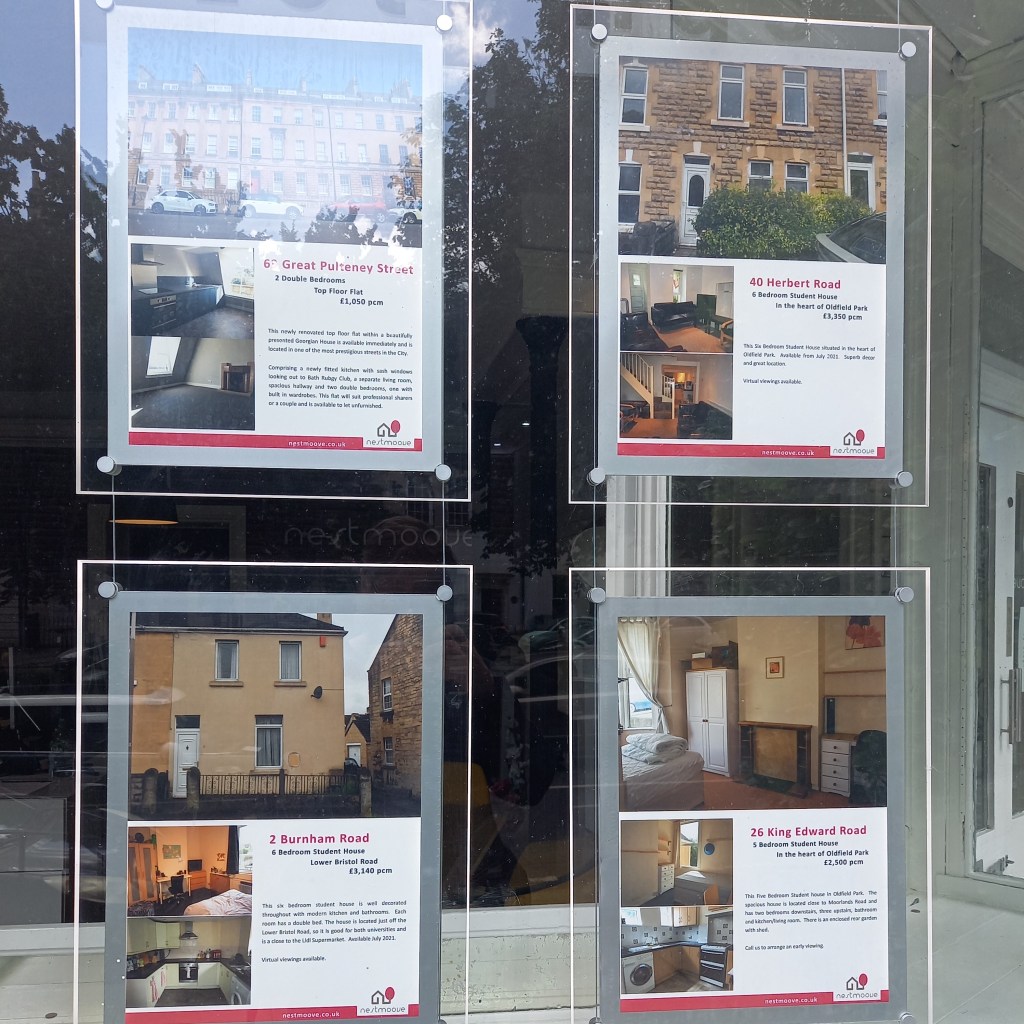
As a result this form of developing is popular with businesses, but students are reluctant to use them due to the cost, especially when looking at shared housing which is on average £120/week per student, half the cost. HMO’s (House of Multiple Occupancy), have been on the increase as landlords see a higher profit from student lets as opposed to family lets. Often a two bedroom family house will be converted to a 4 or 5 bedroom HMO, so from £1200/month to £2500 rental fee. To license a property as a HMO with B&NES council the fee is just £795 for 5 years. As a resident of Bath, renting in the Southwest outskirts, I have seen more and more houses being converted to HMOs, one house a comparable size to my own, two bedroom terrace, was converted to a six bedroom HMO with a monthly rental fee of £3350. When looking for family accommodation to rent in Bath, I found little on offer compared to student accommodation. In a recent Rightmoves search looking for a family sized house there were just 22 results, or just 7 results when looking at a rental fee of £13002. However, using a similar search for student accommodation yielded 97 results.  

Figure 3. Landlords seeking bigger profits will convert family homes to HMOs. Here are three examples of 2 bedroom properties converted to squeeze out maximum profit.

“We really need to rethink how me house people in Bath. The council just aren’t willing to tackle the issues.” [Taylor 2021:interview] 

In a recent news article, it was report that one of the newly built student accommodation applied for a temporary change of use to hotel due to the lack of students using it. The application was rejected after a public outcry from local residents. However, many of this type of accommodation across bath are permitted to rent rooms out during non-term times as Airbnb lets.  

This was a really useful meeting and has given me a greater understanding of the key issues that I want to highlight through my practice. Over the next few weeks, I will be collaborating with Chris to document the empty spaces across Bath. I will also engage with other organisations such as Acorn, Curo housing and Julian house to build up a bigger picture of how we survive in this city.  

1 Curo are a not-for-profit housing association with a diverse portfolio of affordable and market rented homes. They are also responsible for what remains of the council owned housing stock. 

2 Based on 60% of salary and the average household income as £32,000 

References 

Taylor, Chris: Big Issue Sales and Outreach, interview Friday 18th July 2021 

Squatters Rights  

https://www.glovers.co.uk/news-articles435.html  [Accessed 23.06.2021] 

https://tlio.org.uk/government-anti-squatting-law/ [Accessed 23.06.2021] 

Abandoned Buildings of Bath 

https://www.somersetlive.co.uk/news/property/abandoned-buildings-bath-crying-out-3617937 [Accessed 23.06.2021] 

https://www.bathnes.gov.uk/propertylistings [Accessed 23.06.2021] 

https://propertylink.estatesgazette.com/commercial-property-for-rent/bath [Accessed 23.06.2021] 

Student Accomodation 

https://www.studentroost.co.uk/locations/bath [Accessed 23.06.2021] 

https://www.hellostudent.co.uk/student-accommodation/bath/james-house/ [Accessed 23.06.2021] 

https://www.somersetlive.co.uk/news/hotel-use-bath-student-flats-5490981 [Accessed 23.06.2021] 
Accomodation 

PHO705 – Week 2: – A Wave of Gentrification

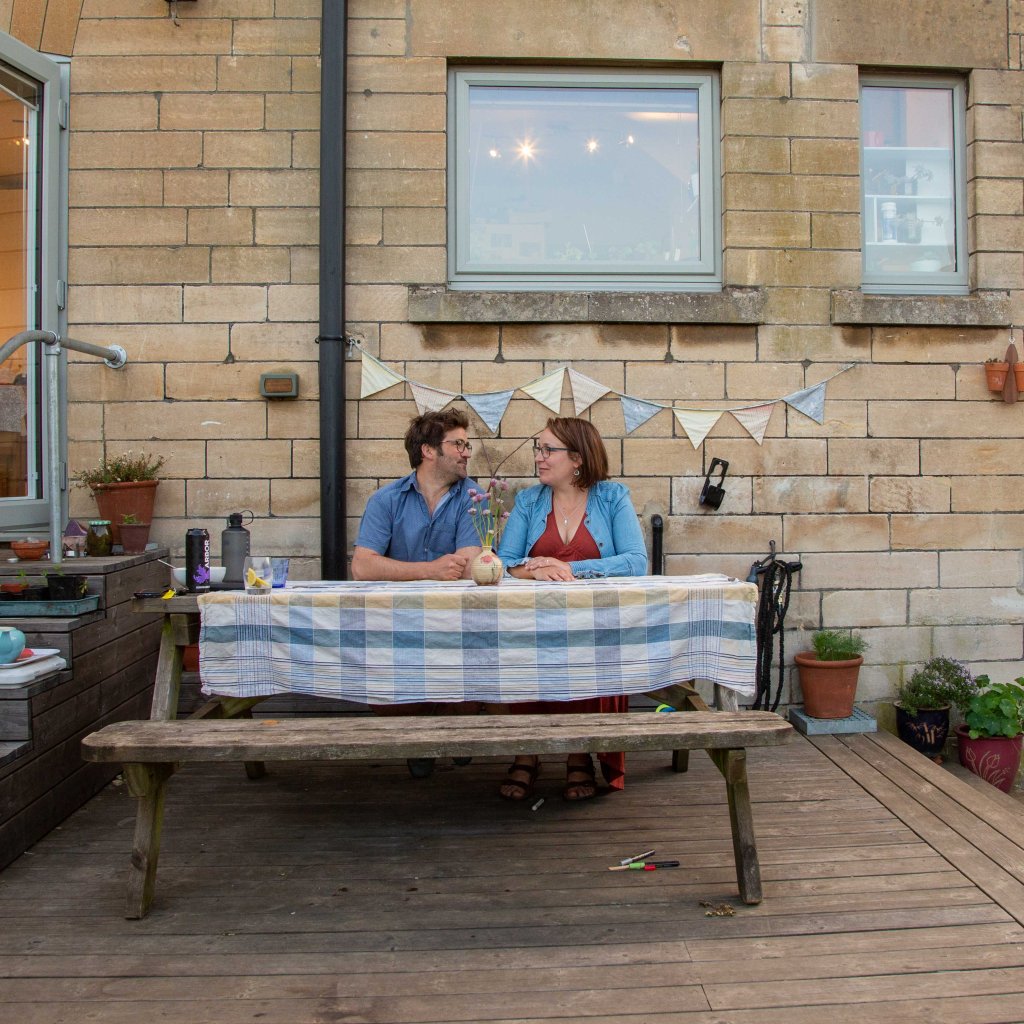
As I continue to interview the residents of Bath, as I explore its suburban landscape, I met with Christine and Phil. A professional couple living with their two children in the south of Bath having moved here in 2017 from Canada. Having initially rented they now own their house and have become integral parts of active community in that area.  

We definitely are the ‘Gentrification wave’ of Bath. Of this area. I don’t want people, that don’t have the same resources we did, to just think we have money and that we can just spend it. [When we started out] I definitely had money from my dad, but we just worked a lot. It’s not been easy.” [Christine 2021:interview] 

This part of Bath sits alongside some of the most socially deprived areas, and as such often sees an over spill of antisocial behavior and crime. However, despite this there is a real sense of community here, with active groups coming together to improve the neighborhood for everyone’s benefit.  

“Its something that shocked me at first, in this neighborhood we have quite a few [whispers] ‘quite rough families around’. So, I wasn’t sure if we’d be happy here, lots of antisocial behavior. But then by meeting people from school and the community we really got on with, I realised that the antisocial people are like just 1%. 1% that make a lot of noise, but most people around here are so freaking nice.” [Christine 2021:interview] 

“For me it’s much more about growing a network of friends in a community. That’s the strongest thing for me [about living in this area of Bath] trying to encourage this feeling of community and friendship, know that there’s a lot of opportunities, for friendship where we are.”  [Phil 2021:interview] 

The choice to live in the South of the city was one of economics, initially at least but now the location, close to the outskirts means a quick escape from the city into wilderness. As for many, Christine and Phill are planning an extension to their home. The prohibitive cost of property in Bath eliminates the option to sell up and move to a larger property.  

According to the National Housing Federation, average house prices are now 14 times the average earnings in Bath and north-east Somerset – a figure that has nearly trebled since 1999. A family must earn at least £87,106 to afford a mortgage in the area.” [Wall 2018:online] 

Given that the average household income for Bath is £38,000 it is easy to see why so many struggle to get onto the property ladder. In an interview with Caitlin, an ex-Bath Spa student and recent resident to Bath, she discussed the fact that many people who live and rent in Bath will more often than not look to move to towns further afield when looking to buy: 

“You get a lot of people that rent here but then when they look to buy, they have to look outside of Bath. They tend to migrate out rather than in.” [Caitlin 2021:interview] 

The cost of renting and buying in Bath seems to stem from two key issues, the influx of financially successful people from London and the southeast, and the lack of family homes due to the vast number of HMOs (House of Multiple Occupancy) such as student houses and holiday lets.  

“People have gone from owning a property in London. The next step is to own a property in the countryside and still be close to London.” [Phil 2021:interview] 

This issue of cost of living in the city has lead me to research the work of the French theorist Henri Lefebvre, who in 1968 published “Le Droit à la ville:The right to the city”, an influential piece of literature that has been used across the globe as a manifesto for city development and the wellbeing of its occupants. Lefebvre outlined that the right to the city meant, the right to affordable housing, a decent school for the young, accessible services, reliable public transport, but most of all the right to live and be happy in the city. Fifty years on it seems not a lot has progressed, certainly in Bath, where developers are only building luxury apartments. We find that inequalities are ever present in Bath with pockets of deprivation, mostly found in the outskirts to the Southwest city. 

Despite Bath’s appearance as a wealthy city devoid of social issue this is far from the truth and sadly the same issues that all cities across the UK face, to a greater or lesser degree. As highlighted in a recent council report: 

“Approximately 12% of children in Bath and Northeast Somerset were living in poverty in 2017/18, increasing to approximately 19% when housing costs had been taken into account.” [BathNES 2019:report] 

Despite such harsh figures the local council and central government appear to be doing very little to solve these issues. Reviewing the 50 years since the publishing of “The Rights to the City” Anrea Gibbons writes about the Tory’s approach to housing: 

There is so much to say about a system that increasingly treats housing as a means to accumulate capital, never as a home. A creeping worldview that only understands the value of housing as a commodity, as something to be bought and sold, speculated in, land banked. To them, where you live is only a piece of property subject to global markets, real estate whose value is tied to location and status rather than its conditions, the wellbeing or stability of its tenants, its impact on the neighborhood.” [Gibbons 2018:48] 

Over the past four years that I have lived in Bath I have seen a sizable number of developments across the city and see more in production as I write this. These have consisted of luxury two-bedroom apartments, student halls, hotels, and overpriced housing estates. Increasingly often developers attempt to get away with reducing the number of “affordable” housing they include in their new estates for few of loss of profits. So called “Affordable” housing in Bath is a fallacy given that the government requirements for a house to be classed as affordable is for it to be 20% below market value. The new housing coming onto the market has an average value of £600,000. This would place a so-called “affordable” house at £480,000. Incidentally, the last piece of social housing to be built in Bath was 1972.  

Figure 6 “The last social housing in Bath” Tim Beale 2021
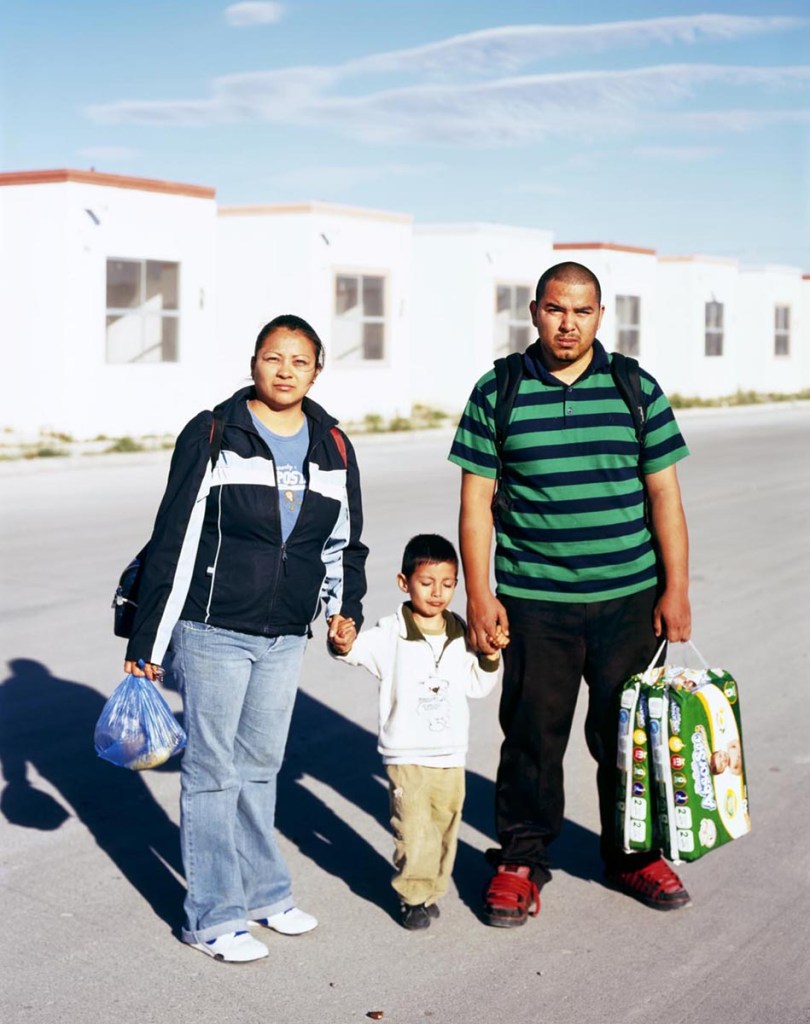
In his series Suburbia Mexicana Alejandro Cartagena uses urban landscapes and portraiture as a medium to represent the Mexican urban sprawl and rapid development around the metropolitan area of Monterrey. His images tell of the inhabitants and the struggles they face in these new fragmented cities.  

“The different aspects of Suburbia mexicana propose alternate narratives, which depict a global issue from a local perspective. Ii feel that my commitment as a photographer is not to denounce our need for a household, but rather to point out the struggle we face following the ideals of a capitalistic system while striving for fairer cities in which to live.” [Cartagena 2009:online] 

Cartagena’s portraits are simple and hold a truth to them, the way his subjects stand or sit. The topographical images of the cities site alongside the portraits and offer the viewer a real sense of place. This body of work really resonates with my own practice as I stive to capture people in a naturistic way, avoiding the deadpan look of other contemporary documentarists. The architectural and topographic images I am aiming to capture are ones that do not dwell or exploit the dilapidation of socially deprived areas, capturing the simple beauty.  

References 

History of Social Housing http://museumofbatharchitecture.org.uk/wp-content/uploads/2012/08/Bath-History-of-Social-Housing-booklet.pdf [Accessed 15.06.21}

Bath and Northeast Somerset Council “Inequalities report” 2019  https://www.bathnes.gov.uk/services/your-council-and-democracy/local-research-and-statistics/wiki/socio-economic-inequality [Accessed 14/06/2021]

Gibbons A “The Right to the City: A Verso report” 2018 Verso Books 

Wall T, 2018 Guardian online https://www.theguardian.com/society/2018/sep/02/tensions-rise-in-bath-exodus-of-londoners-prices-out-local-families [Accessed 14/06/2021] 

Bath and Northwest Somerset Council https://www.bathnes.gov.uk/services/your-council-and-democracy/local-research-and-statistics/wiki/socio-economic-inequality [Accessed 14/06/2021] 

Cartagena A “Suburbia Mexicana”  https://alejandrocartagena.com/h/home/suburbia-mexicana-people-of-suburbia/ [Accessed 14/06/2021] 

Images 

Figures 1-6 Work in progress images 2021 Tim Beale

Figures 7&8 “Suburbia Mexicana” Alejandro Cartagena https://alejandrocartagena.com/h/home/suburbia-mexicana-people-of-suburbia/ [Accessed 14/06/2021] 

PHO705: Week 1 – interview one

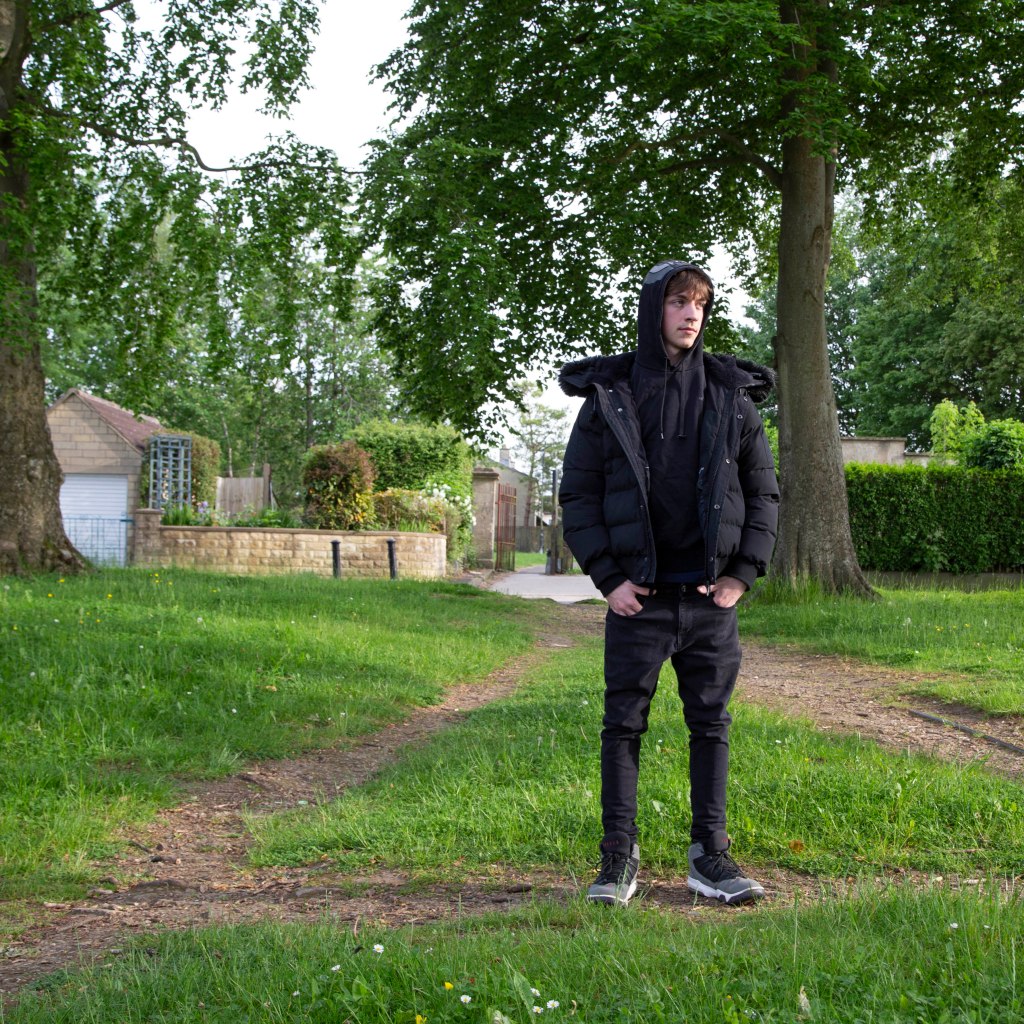
“Alfredo” 2021 Tim Beale

This week I took the first steps towards a better understanding of the people that live in the houses I’ve been creating images of these past months. Using social media, I created a call out for participants to interview and photograph with an aim to discover what gives Bath it’s sense of community and what it is about the city that gives them a sense of place. I was pleasantly surprised by the number of responses I got back within a few hours of the posts.  

My first interview was with a young hip hop artist, Alfredo. In his early 20’s, Alfredo has lived in Bath his whole life both on the South side and North side. The interview took place near his home in Whiteway, on the outskirts of southwest Bath. Bath, from a wealth or social point of view is divided into those with good jobs or wealth, being primarily in the center and to the North, and those in the South and on the outskirts, who are on low incomes or struggle with unemployment.  

“One of the things that motivates me, with hip hop its primarily about getting a message of struggle out there. And Bath stereotypically doesn’t have that struggle, but what a lot of outsiders don’t see is that, its portrayed as this beautiful town with a rich history, which it is. But I don’t think that people on the outskirts of Bath fit that pretty image. I don’t think they get enough publicity.” [Alfredo interview:2021] 

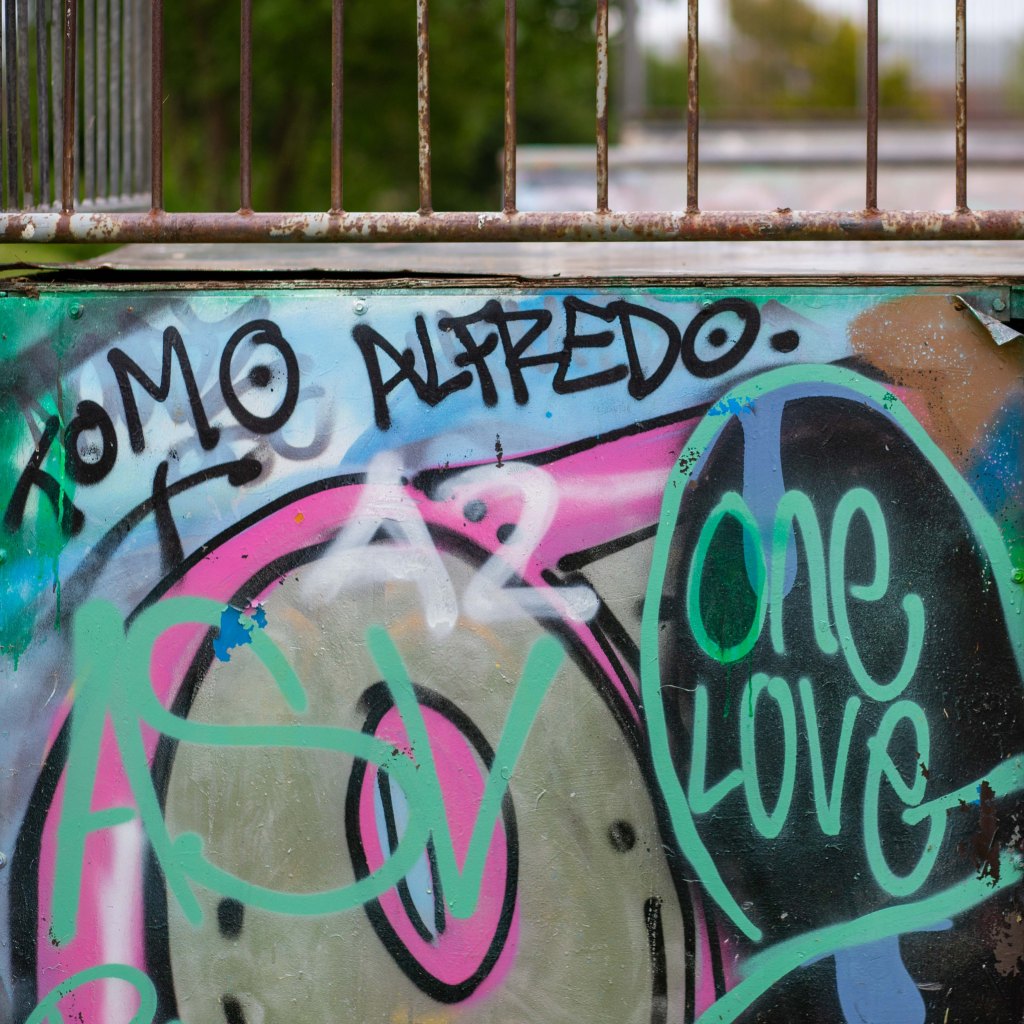
One of the eye-opening moments was when talking about the social divide in Bath, Alfredo spoke of the A1/A2 divide (referring to the postcodes BA1 and BA2). This was something I hadn’t heard of, however had seen evidence of this in my walks, in the form of graffiti: 

“From a class perspective there’s at least a stereotype that anywhere in A2, your sort of chavvy or what not, don’t get me wrong most of them are. It’s not really North South, it’s more A2 A1. In A1 your considered posh and in A2 you’re considered a chav. But I preferer to hang around with people in A1, I don’t have a lot of respect for people in A2. And people here know that, so they have no respect for me.” [Alfredo interview:2021]  

“Living in the A2” 2021 Tim Beale

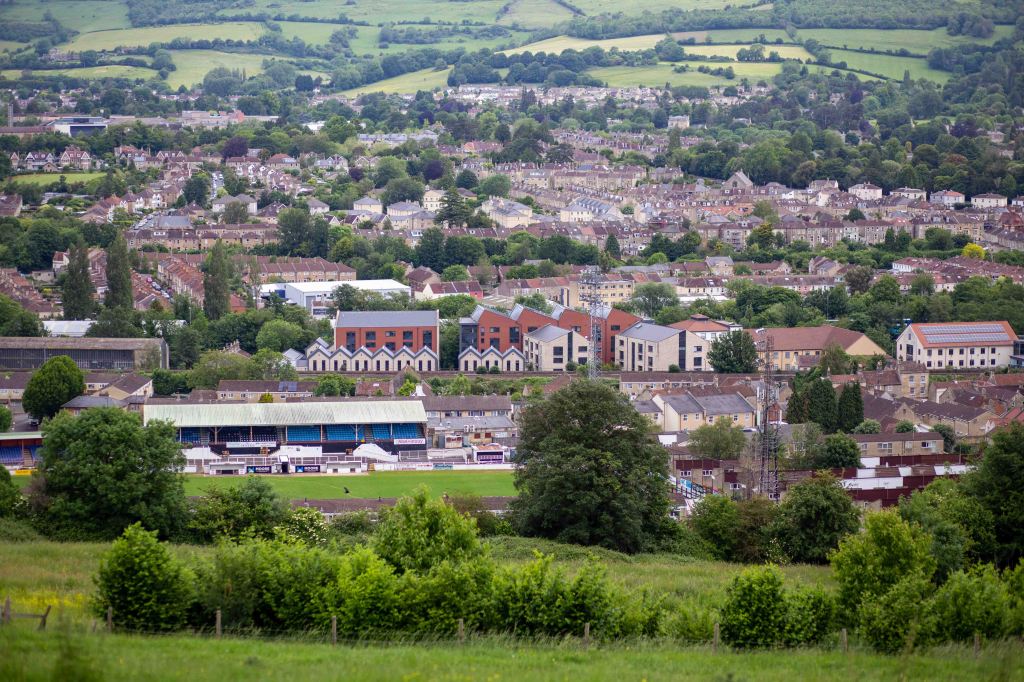
For me this was a pivotal moment in my project as I felt I needed to learn more about this A1/A2 divide, the struggles faced by people in Bath, living in a city they can’t afford to live in. And to learn more about how this issue affects the youth of the city, what prospects do they have of finding a home there. One aspect of life in this city that appears to be universal is the ability to escape from it merely by walking away from the centre.  

“My music combined with that [finding peace] is my escape, because Bath, from a hip hop point of view doesn’t fit the hip hop stereotype. But if you’ve come from the areas we’ve come from, a lots of us do struggle and a lot of us come from single parents. A lot of people around here are living on benefits. There’s a lot of the same struggles [as bigger, urban cities]. The judgement that we’re all posh just comes from the lack of crime, there is crime just not as much as a big city. But that’s probably because we’re a small city so the less people the less of everything.” [Alfredo interview: 2021] 

“View North from Bath City Farm” 2021 Tim Beale

Reference

Interview with Alfredo conducted 01.06.2021

PHO702: Dissemination

As my practice progresses, thoughts turn to how my work can be disseminated, who the audience are and what the end product will look like. The use of text plays an important role in my work and acts as an anchorage between walking routes and images and social qualities of place.  

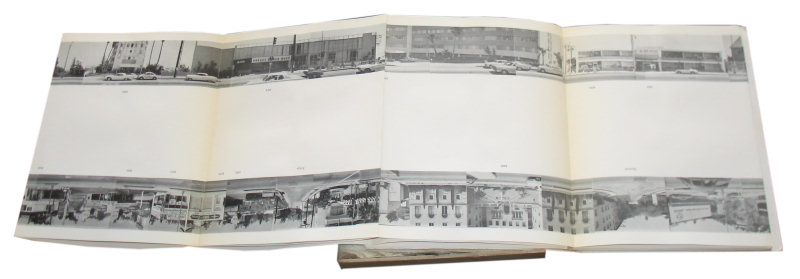
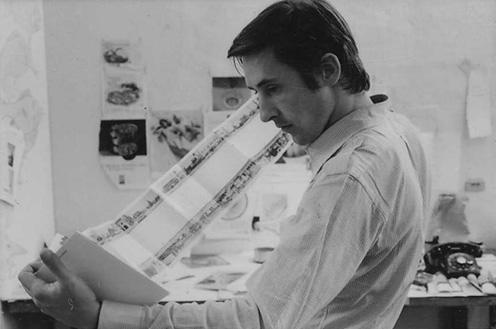
Creating a book was my first consideration. Certainly, when looking at the flow of travel, one immediately thinks of the books produced by Ed Ruscha such as “Every Building on the Sunset Strip” with its simplistic style and form allow the reader to move from one image to the next seamlessly. One is reminded of the early Zoetrope and imagine if one where to place Ruscha’s images into the drum you would get a sense of drive along the Sunset Strip. [Figure 1] 

“The accordion format of the book, which suggests a temporal unfurling, mimics the sense of passage implicit in a drive. As the car rolls down the length of the street, it produces a series of images of contiguous spaces horizontally aligned.” [Mansoor 2005:online] 

As a method of editing and testing the flow of images I created a Ruscha style, small handmade book, but the constraints of the page and need to turn each page interrupted the flow. I considered a foldout, this too wouldn’t fit with the twists, turns and dead ends  of Bath.  

Video 1. Tim Beale 2021 “Walks around Southdown & Twerton”

However, because of its topographic nature, Bath does not have this flow, with its maze-like roads, back streets and alleyways that create dead ends and cul-de-sacs. Each route is disjointed and more suited to walking, allowing for pause and reflection. This was something the architect Peter Smithson alluded to in his walking guide of Bath “Walks within the Walls” [figure 2]: 

“The walks follow pedestrian ways and quiet streets as far as possible; for to see what there is to be seen one has to walk, one has preferably to be alone or with one other person, and one should not talk. The reverie that Bath can induce is an important part of the lesson.” [Smithson 1971:2] 

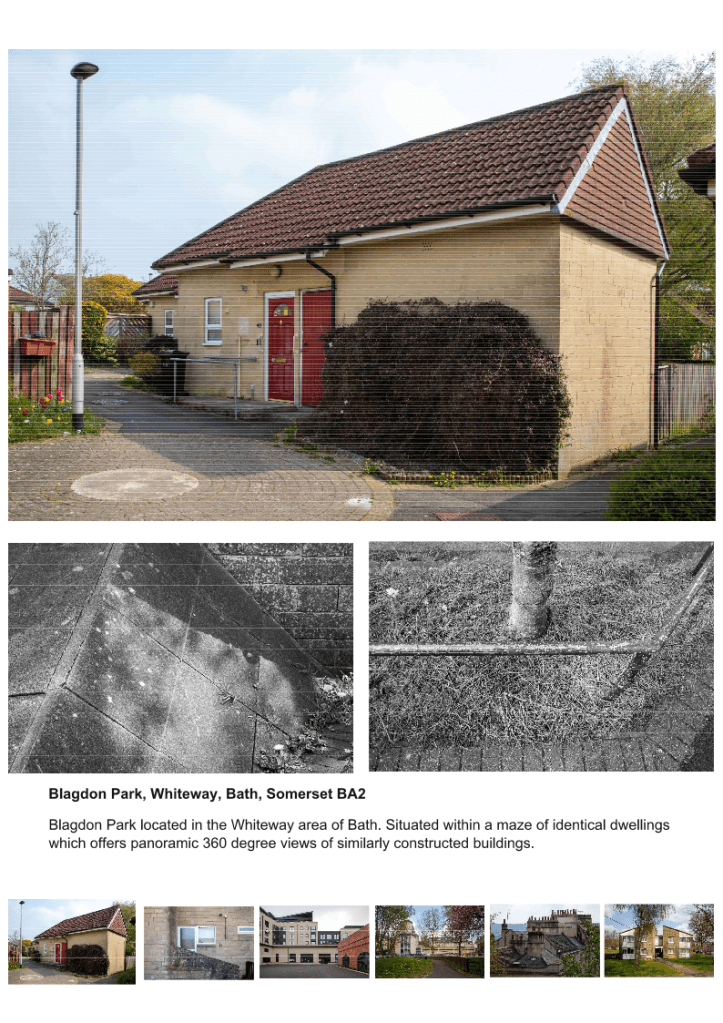
Smithson’s guide looks to educate the up-and-coming architects, through the use of poetic descriptions of Georgian features acting as anchorage to his photographs. The guide concentrates on the central “touristy” parts of Bath. The descriptive narrative used by Smithson appears more akin to the sales pitch of an estate agent than a guide book. This has been something I have been exploring within my own practice, using estate agent tropes to describe dwellings and as a way of challenging the viewers initial appraisal of an image. [figure 3] 

Figure 3. Tim Beale 2021 “Blagdon Park: Walk 1 South West to North East”

After watching Patrick Keiller’s film “London”, I have been keen to look at combining audio with images in the form of ambient sounds and recorded oral interviews with residents. In Keiller’s film his fictional character Robinson is commissioned with the task of discovering, first the ‘problem with London and then later the ‘problem with Britain’. Keiller, using static images (almost like photographs) and narrative, explores the decline in vernacular dwellings:  

“Both London and Robinson in Space had set out with a perception of economic failure, the result of a backward, specifically English capitalism; but in the second film, this gave way to an understanding that the UK’s social and physical impoverishment was not a consequence of some inevitable ‘decline’, but of the successful operation of a particular economic system in the interests of those who own it. The ‘problem’ that the film had set out to examine was revealed as the result of political decisions that could be changed.” [Keiller 2014:6] 

I find many similarities with Keiller’s film and my own practice, particularly when looking at the decline in dwelling space and disparities in wealth distribution across most cities in the UK. Keiller states: 

“The juxtaposition of successful industry and the urban decay in the UK’s landscape is certainly not confined to the north of the country. A town like reading, with some of the fastest growth in the country (Microsoft, US Robotics, Digital, British Gas, Prudential Assurance) offers, albeit to a lesser degree, exactly the same contrasts between corporate wealth and the urban deprivation: the UK does not look anything like as wealthy as it really is. The dilapidated appearance of the visible landscape, especially the urban landscape, masks prosperity.” [Kieller 2014:46] 

Keiller further goes on to say: 

“Buildings and other infrastructure often seem surprisingly rudimentary or dilapidated to visitors from other industrialised countries, and in London especially, even relatively wealthy people often live in houses that are small, old and architecturally impoverished, but extraordinarily expensive.” [Keiller 2014:70-71] 

What is lacking in Keiller’s work is a voice of the people he appears to be championing, this is something I want to explore more in my own practice over the coming months.  

Video 2. Tim Beale 2021 “South to North” test video

My goal for disseminating my practice comes in the form of a photo book in the form of a mock guide book format would lend itself well to my practice, especially used as a tongue-in-cheek alternative look at the topography and social disparity with Bath. The book would include walking routes through cross sections of Bath, descriptive narrative and images, fitting for a tourist guide or estate agent’s brochure. I would look to exhibit printed images, text in conjunction with the book. Potential exhibition spaces would be Museum of Bath Architecture (MoBA) or Royal United Hospital (RUH), each have a very different audience. MoBA has an audience draw from Bath residents, architects and students; whereas the RUH will have a wider audience base all be it predominantly local.  

References 

Keiller P, 2014  

Mansoor J, 2005 “Ed Ruscha: One-Way Street” https://americansuburbx.com/2012/04/ed-ruscha-one-way-street-2005.html [Accessed 28.04.2021] 

Smithson P, 1971 “Walks with in the Walls” https://fcbstudios.com/download/n-com-eve-walks-within-the-walls_interactive.pdf [Accessed 26.04.2021] 

Images

Figure 1. Ed Ruscha “Every building on the Sunset Strip” 1967 https://americansuburbx.com/2012/04/ed-ruscha-one-way-street-2005.html [Accessed 28.04.2021] 

Figure 2. Peter Smithson 1971 “Walks within the Walls” guidebook https://museumofbatharchitecture.org.uk/explore/ [Accessed 28.04.2021]

Figure 3. Tim Beale 2021 “Blagdon Park: Walk 1 South West to North East”

Videos

Video 1. Tim Beale 2021 “Walks around Southdown & Twerton” https://youtu.be/XuMm6sh3umc

Video 2. Tim Beale 2021 “South to North” test video https://youtu.be/8p7-0AfqI7M

PHO702 Week 10: Enter the Academy

Often curated exhibitions showing multiple photographers are a result of a competition, festival, a retrospective of a style or period. There are also call outs for a specific topic such as the FFotogallery’s “A woman’s work”, as a way of engaging a wide range of practitioners to fit a preconceived idea.  

In 2018 I curated the exhibition “Architecture through the lens”, an exhibition examining the intrinsic link between architecture and photography. As this was an exhibition based in Bath, UK it was appropriate to engage with local photographers. When putting the call out for photographers I had a clear idea of how I wanted the exhibition to look, and it’s aims. A core aim was to demonstrate the variety of architectural photography, as such it was imperative the show included interior, abstract, commercial and include buildings from both a historic and modern settings.  

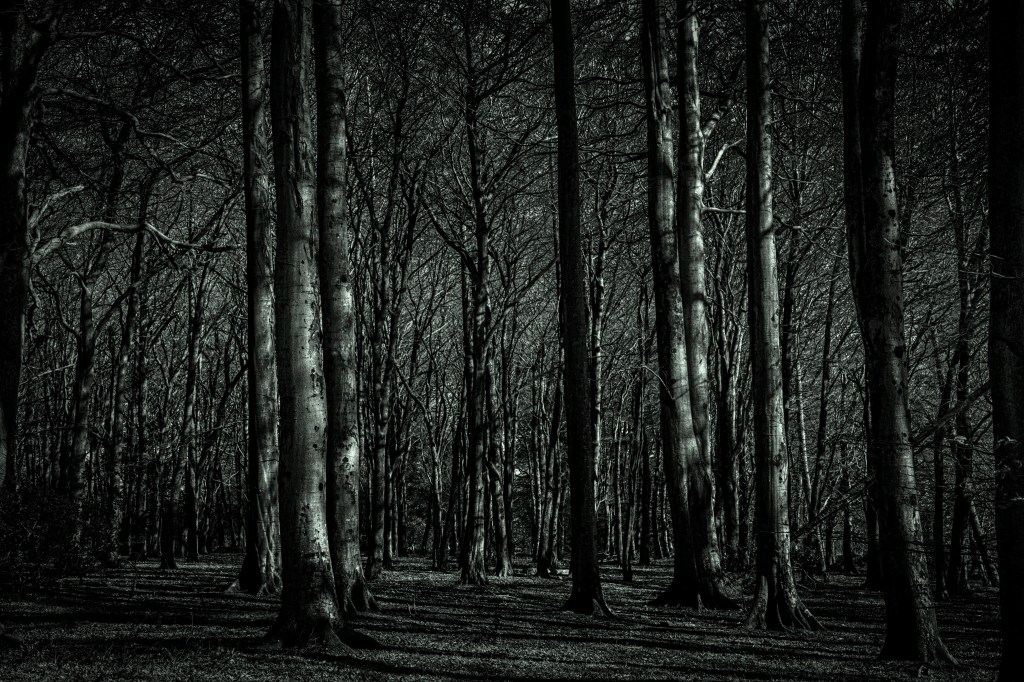
Figure 1 ‘Woodland visions’ part of Into the trees series 2018-2019 Tim Beale

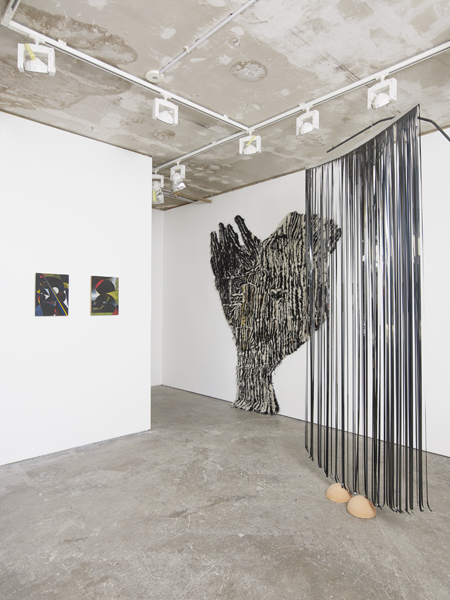
However, unlike a curated show, most collaborative exhibitions will begin at the creative stage well before reaching the gallery.  An exhibition I would have enjoyed being part of would have been “A FOREST” (fig2)17.05 – 16.06.2018. Inspired by the lyrics of the Cure song by the same name, A forest was the collaborative exhibition of six artists comprising of Caroline Achaintre, Anna Barham, Chiara Camoni, Sarah Chilvers, Peggy Franck, Anne Hardy – a group of artists represented by the Arcade gallery, London. At around the same time as this exhibition was showing I was embarking on my own project inspired by the same song “Into the trees” (fig1). The inclusion of my work would have added a more literal element to the exhibition as the view navigates through the exhibition, they would act as anchorage to the more esoteric works of the other artists.  

References

https://ffotogallery.org/programme/a-womans-work [accessed 19.4.2021]

https://thisisarcade.art/exhibition/a-forest/ [accessed 19.4.2021]

Images

PHO702 Week 9 – critical review of practice presentation: Peer review

Fraught with technical issues, my presentation of where I’m at with my practice felt rushed and disjointed. However, the feedback I received from my peers reassured that I had achieved something of what I wanted to get across. After reflecting upon the feedback given to me, I can see how I can target down my intent to really grasp the concept for my project. The ideas that I have presented and have been working through come from some clearly different approaches. By identifying these I feel I can then look to what to aim towards. Two distinct areas I have chosen to concentrate on are:  

Psychogeography 

Rebecca Solnit, in her book “wanderlust” talks about the lack of connection with the outside world as we tend to move from one interior to another: 

“Many people nowadays in a series of interiors – home, car. Gym, office, shops – disconnected from each other. On foot everything stays connected, for while walking one occupies the spaces between those interiors. One lives in the whole world rather than in interiors built up against it.” [Solnit 9:2014] 

Ironically, the advent of Covid-19 in 2020 not only forced us to retreat to our home but also gave us the opportunity to reconnect with the outside world. The first lockdown in the UK restricted the public to one hour of exercise outside per day. This resulted in an increase in foot traffic on the streets across the country. 

For me it was walking the streets of Bath, exploring the urban and suburban landscape many do not associate with the World Heritage City. As with many towns and cities in the UK, Bath has medieval origins. A defensive measure, medieval cities would use complex networks of streets and alleyways to slow invading forces. This complexity creates a labyrinth of vernacular housing stretching back across two centuries, as the city expanded.  

Solnit quotes canon Lauren Artress when referencing the metaphor of the labyrinth:  

“Labyrinths are usually in the form of a circle with a meandering but purposeful path, from the edge to the center and back out again. Each on has only one path, and once we make the choice to enter it, the path becomes a metaphor for our journey through life.” [Artress in Solnit 2014:70]  

And this is where I return to the notion of how our environment shapes the way we live and grow and ultimately, who we are. Through a series of images illustrating the topography of the city as a labyrinth, being navigated by it’s inhabitants, whose choices are dictated by the twists and turns of the streets, roads and alleyways.  

Society and identity 

Working with the concept of how the environment impacts on our growth and development as humans. The idea of a society shaped by the economics of space is one that is that of a social hierarchy that have not changed in centuries. The largest demographic of Bath’s makeup is that of the working class, some 30%, many of which live in the south side. The city is divided north/south by the physical barriers of the river Avon and the Victorian railway line to Bristol and beyond.  

In the 1990’s, documentary film maker Patrick Keiller produced a series of films documenting the ‘Problem of London’ and later the ‘Problem with Britain’, in which he describes that for such an affluent 1st world country there is a tendency towards adapting what we have above investing in new. Pointing the finger at Tory capitalism Keiller states: 

“Capitalism both destroys and creates places, but the places it creates seem always, at least to begin with, less substantial, less rich, than the places it destroys…” [Keiler 2013:136] 

He further uses the writing of Saskia Sassan to identify those dwelling within the dilapidated places as, what we now know as key workers, shop workers, delivery drivers, nurses, and teachers:   

“There is a whole infrastructure of low-wage, non professional jobs and activities that constitute a crucial part of the so-called corporate economy.” [Sassan in Keiller 2013:109] 

Places like Twerton show the signs of a “Make do and mend” society, with its post war prefab housing that was meant to be a temporary fix until more appropriate social housing was built. The signs of dilapidation here, are in stark contrast to the Georgian city center that has been restored to its former glory.  

The key to telling this story is the gathering of oral histories and interviews from the south side society. Learning about how the city shapes them and how they perceive their socioeconomic standing. This may take the form of portraits, documentary images or self-portraiture.  

Peer Feedback 

“Well done Tim, enjoyed your presentation. Your description of how sprawling housing and flats have become the hillsides and mountains of today really resonated with me. We do as humans,, seem to go out of our way to leave our mark on nature and sometimes not in a good way. I also find it interesting that in a place like Bath, who most associate with sweeping curves of large Victorian houses and as a ‘posh’ tourist destination has the same social housing issues as Northern towns and cities with a silent majority struggling to get by. Important and interesting work.” [Douglas Stenhouse] 

“I thoroughly enjoyed your presentation and I totally relate to how we relate to the environment and how this influences us as individuals. You’ve captured some great shots. Especially like Figure 9 – I think most of the population can relate to this – feeling trapped in our own environment with the effects of lockdown and looking through our window as the world goes on during these unprecedented times.” [Eamon Ward] 

“’Psychogeography’ is always a fascinating topic. I found your photographic suburban exploration and documentation somewhat haunting yet gentle especially your decisions to shoot in the fog. Questions of ethics and stereotypes are relevant and well researched, your inspirations give your presentation a pertinent context. I always associate Bath with Victorian / Georgian architecture and its historical context so this documentation shows another side and perspective which is less known. I look forward to seeing more of work. The imagery I find suggests a ‘lonely’ quality which reinforces the pandemic’s hold on all of us. Well done.” [Layla Perchal Neal] 

“enjoyed your presentation.  I like the idea of an allotment being an ‘oasis’.  Your practice is well informed, I like the work you showed of Todd Hido and think that is a good road for you to go down with your work.  The blank homogenous houses with “occupants inside” is an intriguing thought. I think the self-portraits element is also another interesting avenue.  

I would have liked to have seen a bit more of your work in the presentation so I could get an idea of your intent and a touch more clarity. 

Absolutely love your photograph of the row of terraced houses!  I would be interested to see more of your work in that vein.” [Tim Young] 

“I really enjoyed interacting with your hometown during your presentation. As we have mentioned before when we last spoke, sequencing and ‘mode’ (the look of the images, specifically the distance of the viewer from the subject of your image) will be integral to presenting the gaze or representation of the voice you wish to achieve and therefore it’s commentary on class and the people of Bath. From your images you are representing the view of a local, which is refreshing and, in my opinion, the most interesting and intimate viewpoint. You do achieve the curiosity that Hido achieves in his work but also a greater sense of intimacy when looking from the window/ including portraits. Both compliment each other and is a difficult balance to achieve. 
 
How do you feel you are commenting on class of Bath as opposed to class in general? 
 
Did you deliberately not use the word identity? As this project seems to be framed with identity as an over arching theme. If so, is that because you’re focusing on photographing the space rather than the location as a portrait?” [Damien Williams] 

“Hi Tim, I very much like the idea of Bath, class, and geography, in particular the geography of property.  

There are some great broad brush strokes in there and these connect to some of the discussions we have had. The idea of the allotment of oasis is interesting, the idea of the narratives of life behind the window are all interesting.  

I think perhaps drill down into the areas which you are really interested in and build your research around those interests (so Sontag might not be in that research ). 

 The self-portraits are also interesting, and tie in well to the overall theme. I think the subject matter (which we talked about in tutorials) is really interesting and if you get a focus on it, some of the elements featured here might not be needed.  

The point about Jon Tonks (a neighbour here in Larkhall) is the story really mattered for him. What’s the story is the question is what he’s still struggling with on his current project.  

Well done on a well-thought out presentation. [Colin Plantall – course tutor] 

References 

Keiller, P “The View from the train: Cities and other landscapes” 2013 Verso books 

Solnit, R “Wanderlust: a history of walking” 2014 Granta Books 

PHO702: Week 8 – Can an image change the world?

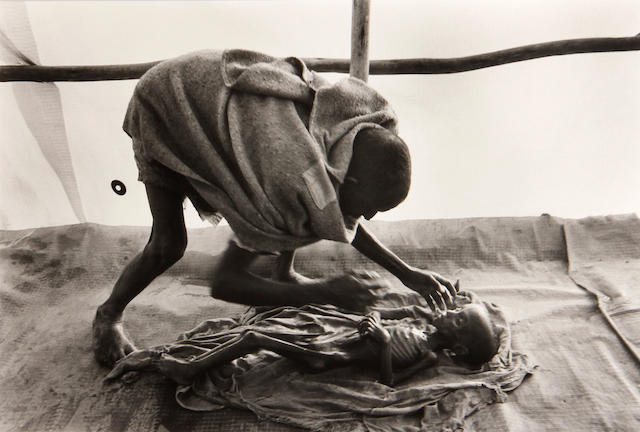
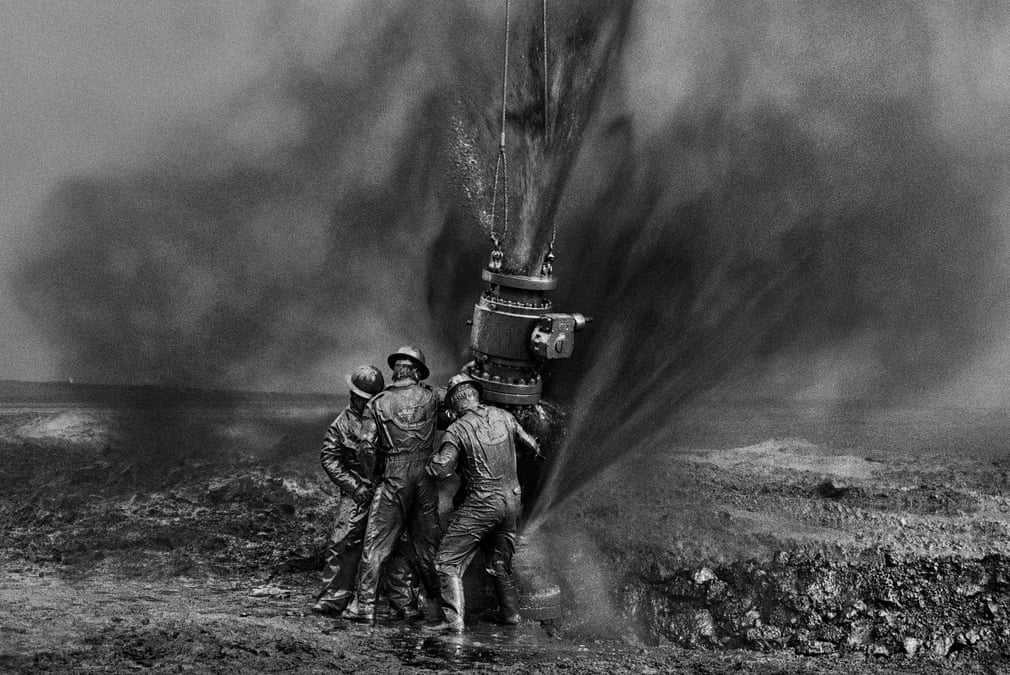
In a world saturated in images can one image have an impact on the viewing public in such a way as images did some thirty or more years ago? When we recall the Live Aid campaign of the 1980’s we draw up images of extreme famine and that of starving children. Many, if not all these images were brought to use through newspapers, TV news and bill boards, taken by the photographer Sebastiao Selgado [fig 1]. I recall these images and the shock of seeing humans in such a condition at the brink of death, and I recall the shock I felt. Jumping forward a decade, as these images became more common place, the shock we felt became numbed and we are left desensitized. We then see a new global catastrophe in the first Gulf War, in Kuwait, again via the lens of Salgado. Gone are the starving children, replaced by dirty, hard faced oil workers and fire fighters, fighting fires and wrestling with oil erupting from the ground [fig 2]. This form of concerned photography had an impact at the time of these world events, particularly raising public awareness to the war or plight of third world countries.  

However, Salgado has come under criticism for his images, in particular form Ingrid Sischy in her review of Salgado’s 1991 exhibition at New York’s International Center of Photography. Sischy argues that Salgado was more concerned with the composition of an image, and not in fact capturing the truth of the events unfolding in front of him. Sischy also makes reference to Salgado’s attempts to draw out religious motifs from his constructed images:  

“His compositions, crops, lighting, angles and toning stand in sharp contrast to the usual lack of insistent style in photojournalism. He goes in for Aura. What’s more, many of his photographs suggest both religious art and the kitsch product resulting from the commercialization of religion…It is work that is sloppy with symbolism.” [Sischy 1991:NY Times] 

Perhaps the one aspect of Salgado’s practice that can be questioned is his commercialization of the work he produces. Certainly, in the 80s and 90s Salgado would create books and exhibitions to run in parallel to media coverage of the global events he photographed as with the 1991 ICP exhibition featuring the oil wars in Kuwait. Was this level of promotion and commercialization a useful tool for engaging an audience as a method of educating the public of these events or merely a tool for self-promotion? One can argue for the latter case given the limited audience that exhibitions and the expensive photo books attract, that of the wealthy and upper middle class. Either way, what we can say is that Salgado’s images worked at that time but the cost may have been a desensitization of the viewing public eye. 

Shocking images now come from a different source; the days of the photojournalist are pretty much over as we see the rise of the Citizen journalist. The advent of the camera on the mobile phone and events of 9/11 were pivotal in securing the future for citizen journalism. Never before could video or photographs be presented by the media ‘as it happened’ in real time. The footage taken by the public presented us with a new form of shock as we saw the story unfold. With 24hr news broadcasts and near instantaneous updates via social media access to images, footage of an event is presented straight to the devices in our hand. Rarely do we question the truth of these images, after all is a thousand people post images of the same event happening at the same time there can be no question of clever editing by media sources. Or can there?  

I feel the days of a single image making the same impact as Salgado’s images from Ethiopia and Kuwait are now past. We have become cynical and desensitized to such images through over saturation, the media have all but stopped using them. 9/11 and footage since has given us a new perspective of the world, that of the first player in a video game, our own action movie.  One could ask where has the ‘real world’ gone?

References 

Sischy, Ingrid (1991) ‘Good Intentions’ in The New Yorker (9th September 1991). 

Images 

Figure 1 Salgado, S “A Body Being Prepared for Burial, Korem Camp, Ethiopia”, 1984 https://www.bonhams.com/auctions/22398/lot/5051/ [Accessed 22.03.2021] 

Figure 2 Salgado, S “Concerted efforts to bring the fires and other damage under control” 1991 https://www.theguardian.com/environment/gallery/2016/nov/21/kuwait-a-desert-on-fire-by-sebastiao-salgado [Accessed 25.03.2021]