PHO702: Dissemination

As my practice progresses, thoughts turn to how my work can be disseminated, who the audience are and what the end product will look like. The use of text plays an important role in my work and acts as an anchorage between walking routes and images and social qualities of place.  
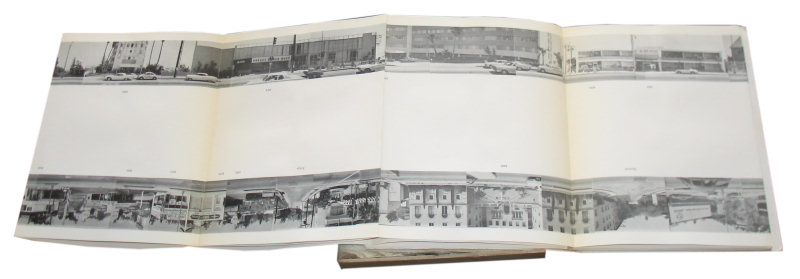
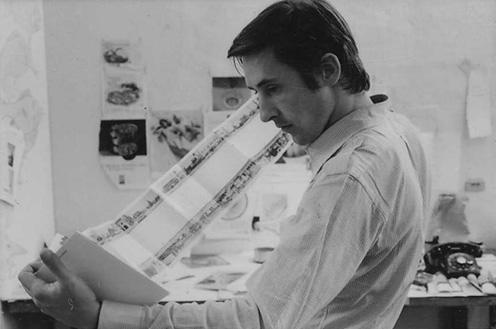
Creating a book was my first consideration. Certainly, when looking at the flow of travel, one immediately thinks of the books produced by Ed Ruscha such as “Every Building on the Sunset Strip” with its simplistic style and form allow the reader to move from one image to the next seamlessly. One is reminded of the early Zoetrope and imagine if one where to place Ruscha’s images into the drum you would get a sense of drive along the Sunset Strip. [Figure 1] 

“The accordion format of the book, which suggests a temporal unfurling, mimics the sense of passage implicit in a drive. As the car rolls down the length of the street, it produces a series of images of contiguous spaces horizontally aligned.” [Mansoor 2005:online] 

As a method of editing and testing the flow of images I created a Ruscha style, small handmade book, but the constraints of the page and need to turn each page interrupted the flow. I considered a foldout, this too wouldn’t fit with the twists, turns and dead ends  of Bath.  
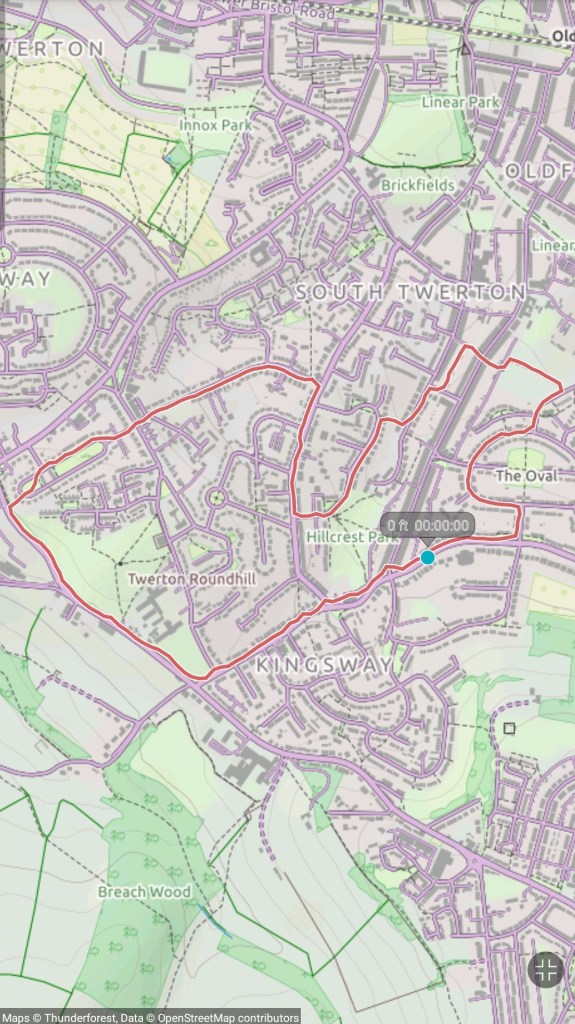
Video 1. Tim Beale 2021 “Walks around Southdown & Twerton”

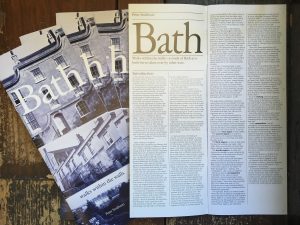
However, because of its topographic nature, Bath does not have this flow, with its maze-like roads, back streets and alleyways that create dead ends and cul-de-sacs. Each route is disjointed and more suited to walking, allowing for pause and reflection. This was something the architect Peter Smithson alluded to in his walking guide of Bath “Walks within the Walls” [figure 2]: 

“The walks follow pedestrian ways and quiet streets as far as possible; for to see what there is to be seen one has to walk, one has preferably to be alone or with one other person, and one should not talk. The reverie that Bath can induce is an important part of the lesson.” [Smithson 1971:2] 

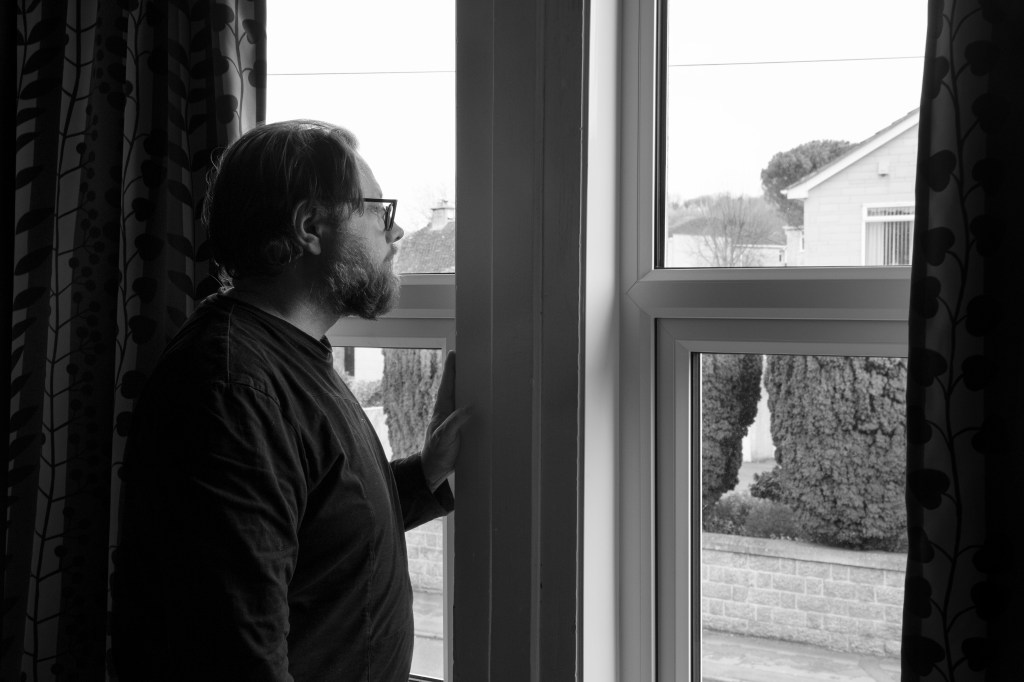
Smithson’s guide looks to educate the up-and-coming architects, through the use of poetic descriptions of Georgian features acting as anchorage to his photographs. The guide concentrates on the central “touristy” parts of Bath. The descriptive narrative used by Smithson appears more akin to the sales pitch of an estate agent than a guide book. This has been something I have been exploring within my own practice, using estate agent tropes to describe dwellings and as a way of challenging the viewers initial appraisal of an image. [figure 3] 
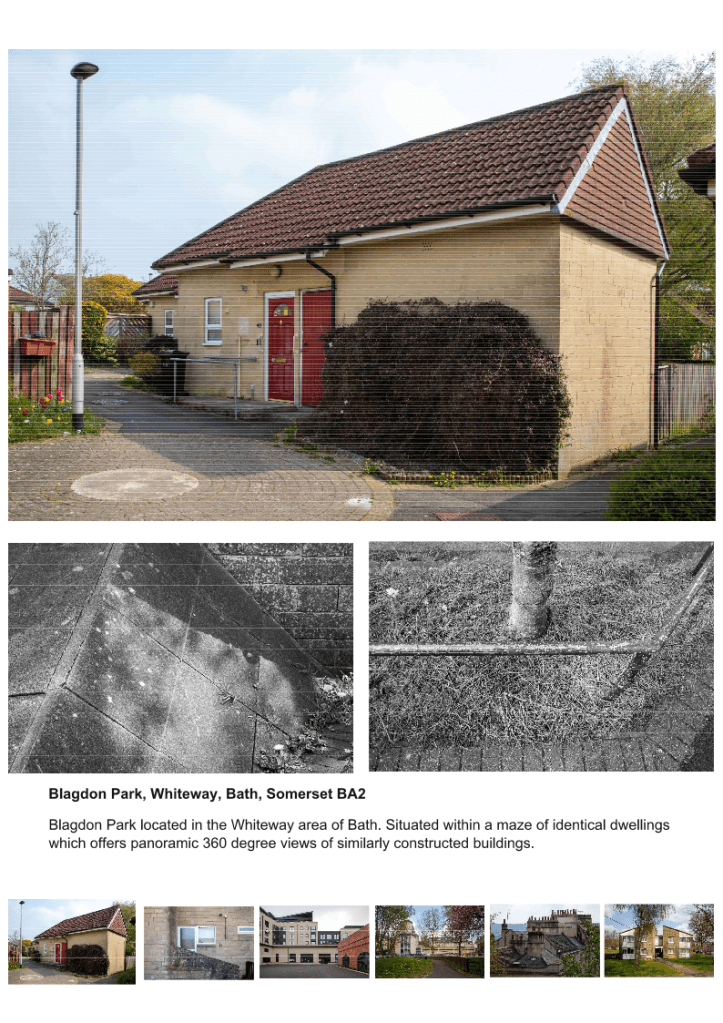
Figure 3. Tim Beale 2021 “Blagdon Park: Walk 1 South West to North East”

After watching Patrick Keiller’s film “London”, I have been keen to look at combining audio with images in the form of ambient sounds and recorded oral interviews with residents. In Keiller’s film his fictional character Robinson is commissioned with the task of discovering, first the ‘problem with London and then later the ‘problem with Britain’. Keiller, using static images (almost like photographs) and narrative, explores the decline in vernacular dwellings:  

“Both London and Robinson in Space had set out with a perception of economic failure, the result of a backward, specifically English capitalism; but in the second film, this gave way to an understanding that the UK’s social and physical impoverishment was not a consequence of some inevitable ‘decline’, but of the successful operation of a particular economic system in the interests of those who own it. The ‘problem’ that the film had set out to examine was revealed as the result of political decisions that could be changed.” [Keiller 2014:6] 

I find many similarities with Keiller’s film and my own practice, particularly when looking at the decline in dwelling space and disparities in wealth distribution across most cities in the UK. Keiller states: 

“The juxtaposition of successful industry and the urban decay in the UK’s landscape is certainly not confined to the north of the country. A town like reading, with some of the fastest growth in the country (Microsoft, US Robotics, Digital, British Gas, Prudential Assurance) offers, albeit to a lesser degree, exactly the same contrasts between corporate wealth and the urban deprivation: the UK does not look anything like as wealthy as it really is. The dilapidated appearance of the visible landscape, especially the urban landscape, masks prosperity.” [Kieller 2014:46] 

Keiller further goes on to say: 

“Buildings and other infrastructure often seem surprisingly rudimentary or dilapidated to visitors from other industrialised countries, and in London especially, even relatively wealthy people often live in houses that are small, old and architecturally impoverished, but extraordinarily expensive.” [Keiller 2014:70-71] 

What is lacking in Keiller’s work is a voice of the people he appears to be championing, this is something I want to explore more in my own practice over the coming months.  

Video 2. Tim Beale 2021 “South to North” test video

My goal for disseminating my practice comes in the form of a photo book in the form of a mock guide book format would lend itself well to my practice, especially used as a tongue-in-cheek alternative look at the topography and social disparity with Bath. The book would include walking routes through cross sections of Bath, descriptive narrative and images, fitting for a tourist guide or estate agent’s brochure. I would look to exhibit printed images, text in conjunction with the book. Potential exhibition spaces would be Museum of Bath Architecture (MoBA) or Royal United Hospital (RUH), each have a very different audience. MoBA has an audience draw from Bath residents, architects and students; whereas the RUH will have a wider audience base all be it predominantly local.  

References 

Keiller P, 2014  

Mansoor J, 2005 “Ed Ruscha: One-Way Street” https://americansuburbx.com/2012/04/ed-ruscha-one-way-street-2005.html [Accessed 28.04.2021] 

Smithson P, 1971 “Walks with in the Walls” https://fcbstudios.com/download/n-com-eve-walks-within-the-walls_interactive.pdf [Accessed 26.04.2021] 

Images

Figure 1. Ed Ruscha “Every building on the Sunset Strip” 1967 https://americansuburbx.com/2012/04/ed-ruscha-one-way-street-2005.html [Accessed 28.04.2021] 

Figure 2. Peter Smithson 1971 “Walks within the Walls” guidebook https://museumofbatharchitecture.org.uk/explore/ [Accessed 28.04.2021]

Figure 3. Tim Beale 2021 “Blagdon Park: Walk 1 South West to North East”

Videos

Video 1. Tim Beale 2021 “Walks around Southdown & Twerton” https://youtu.be/XuMm6sh3umc

Video 2. Tim Beale 2021 “South to North” test video https://youtu.be/8p7-0AfqI7M
PHO702 Week 10: Enter the Academy

Often curated exhibitions showing multiple photographers are a result of a competition, festival, a retrospective of a style or period. There are also call outs for a specific topic such as the FFotogallery’s “A woman’s work”, as a way of engaging a wide range of practitioners to fit a preconceived idea.  

In 2018 I curated the exhibition “Architecture through the lens”, an exhibition examining the intrinsic link between architecture and photography. As this was an exhibition based in Bath, UK it was appropriate to engage with local photographers. When putting the call out for photographers I had a clear idea of how I wanted the exhibition to look, and it’s aims. A core aim was to demonstrate the variety of architectural photography, as such it was imperative the show included interior, abstract, commercial and include buildings from both a historic and modern settings.  

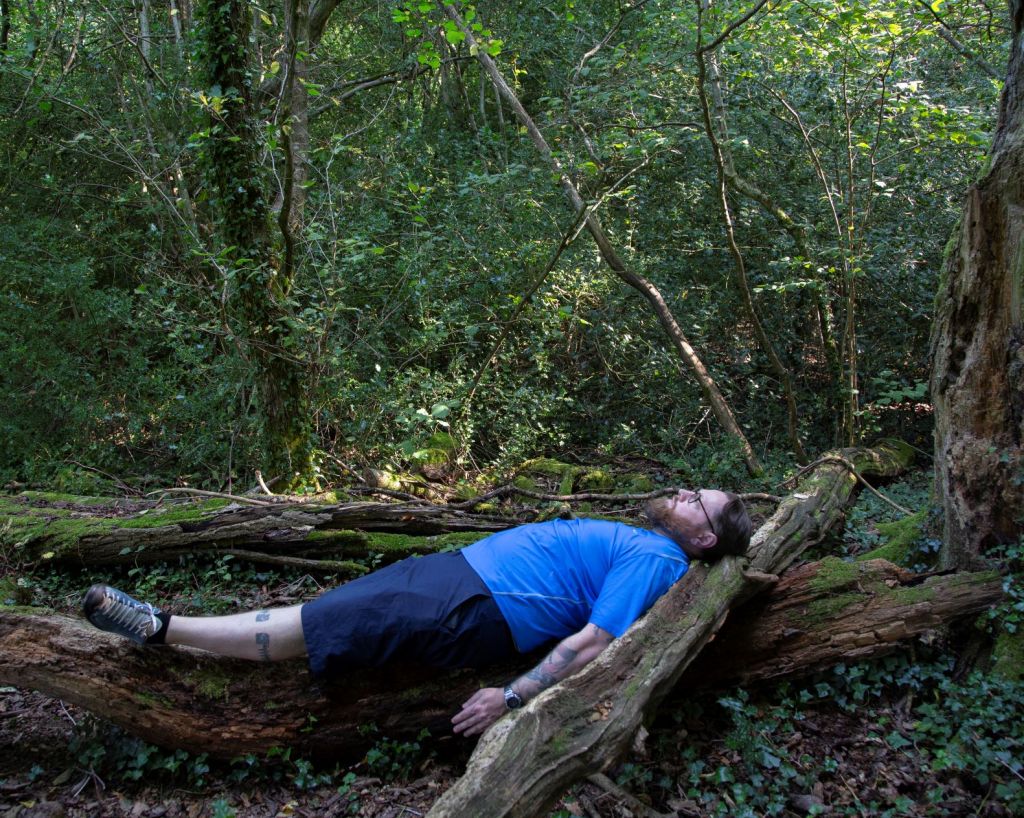
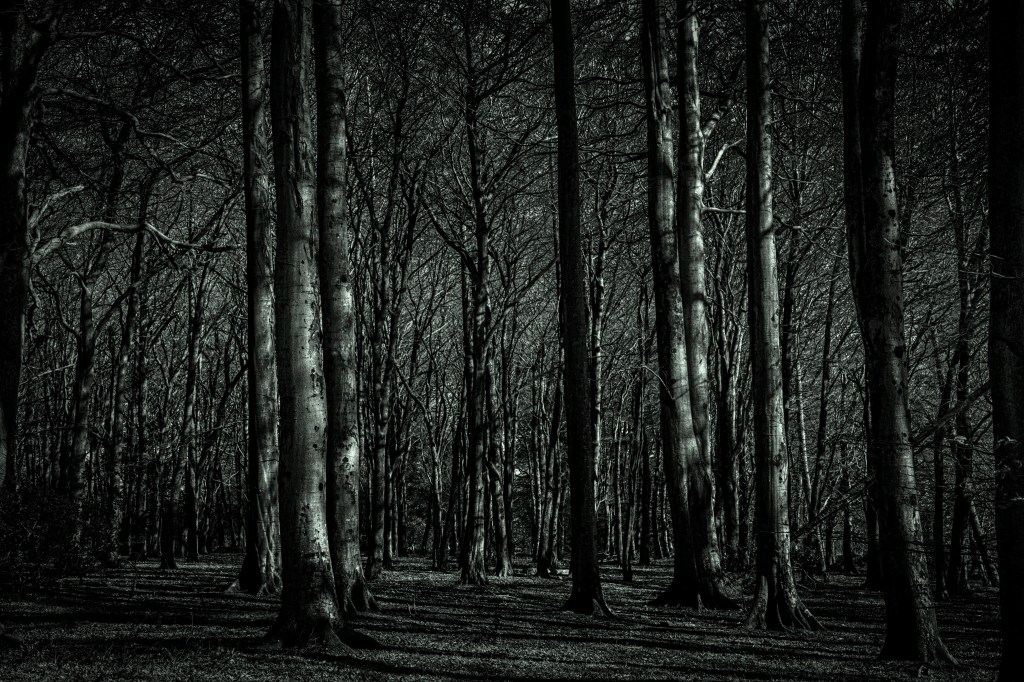
Figure 1 ‘Woodland visions’ part of Into the trees series 2018-2019 Tim Beale

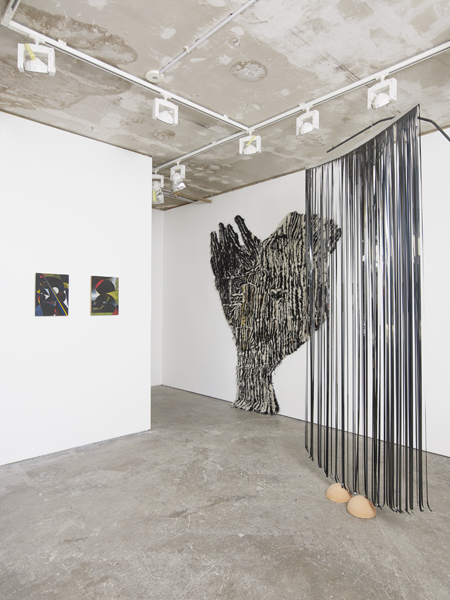
However, unlike a curated show, most collaborative exhibitions will begin at the creative stage well before reaching the gallery.  An exhibition I would have enjoyed being part of would have been “A FOREST” (fig2)17.05 – 16.06.2018. Inspired by the lyrics of the Cure song by the same name, A forest was the collaborative exhibition of six artists comprising of Caroline Achaintre, Anna Barham, Chiara Camoni, Sarah Chilvers, Peggy Franck, Anne Hardy – a group of artists represented by the Arcade gallery, London. At around the same time as this exhibition was showing I was embarking on my own project inspired by the same song “Into the trees” (fig1). The inclusion of my work would have added a more literal element to the exhibition as the view navigates through the exhibition, they would act as anchorage to the more esoteric works of the other artists.  

References

https://ffotogallery.org/programme/a-womans-work [accessed 19.4.2021]

https://thisisarcade.art/exhibition/a-forest/ [accessed 19.4.2021]

Images

PHO702 Week 9 – critical review of practice presentation: Peer review

Fraught with technical issues, my presentation of where I’m at with my practice felt rushed and disjointed. However, the feedback I received from my peers reassured that I had achieved something of what I wanted to get across. After reflecting upon the feedback given to me, I can see how I can target down my intent to really grasp the concept for my project. The ideas that I have presented and have been working through come from some clearly different approaches. By identifying these I feel I can then look to what to aim towards. Two distinct areas I have chosen to concentrate on are:  

Psychogeography 

Rebecca Solnit, in her book “wanderlust” talks about the lack of connection with the outside world as we tend to move from one interior to another: 

“Many people nowadays in a series of interiors – home, car. Gym, office, shops – disconnected from each other. On foot everything stays connected, for while walking one occupies the spaces between those interiors. One lives in the whole world rather than in interiors built up against it.” [Solnit 9:2014] 

Ironically, the advent of Covid-19 in 2020 not only forced us to retreat to our home but also gave us the opportunity to reconnect with the outside world. The first lockdown in the UK restricted the public to one hour of exercise outside per day. This resulted in an increase in foot traffic on the streets across the country. 

For me it was walking the streets of Bath, exploring the urban and suburban landscape many do not associate with the World Heritage City. As with many towns and cities in the UK, Bath has medieval origins. A defensive measure, medieval cities would use complex networks of streets and alleyways to slow invading forces. This complexity creates a labyrinth of vernacular housing stretching back across two centuries, as the city expanded.  

Solnit quotes canon Lauren Artress when referencing the metaphor of the labyrinth:  

“Labyrinths are usually in the form of a circle with a meandering but purposeful path, from the edge to the center and back out again. Each on has only one path, and once we make the choice to enter it, the path becomes a metaphor for our journey through life.” [Artress in Solnit 2014:70]  

And this is where I return to the notion of how our environment shapes the way we live and grow and ultimately, who we are. Through a series of images illustrating the topography of the city as a labyrinth, being navigated by it’s inhabitants, whose choices are dictated by the twists and turns of the streets, roads and alleyways.  

Society and identity 

Working with the concept of how the environment impacts on our growth and development as humans. The idea of a society shaped by the economics of space is one that is that of a social hierarchy that have not changed in centuries. The largest demographic of Bath’s makeup is that of the working class, some 30%, many of which live in the south side. The city is divided north/south by the physical barriers of the river Avon and the Victorian railway line to Bristol and beyond.  

In the 1990’s, documentary film maker Patrick Keiller produced a series of films documenting the ‘Problem of London’ and later the ‘Problem with Britain’, in which he describes that for such an affluent 1st world country there is a tendency towards adapting what we have above investing in new. Pointing the finger at Tory capitalism Keiller states: 

“Capitalism both destroys and creates places, but the places it creates seem always, at least to begin with, less substantial, less rich, than the places it destroys…” [Keiler 2013:136] 

He further uses the writing of Saskia Sassan to identify those dwelling within the dilapidated places as, what we now know as key workers, shop workers, delivery drivers, nurses, and teachers:   

“There is a whole infrastructure of low-wage, non professional jobs and activities that constitute a crucial part of the so-called corporate economy.” [Sassan in Keiller 2013:109] 

Places like Twerton show the signs of a “Make do and mend” society, with its post war prefab housing that was meant to be a temporary fix until more appropriate social housing was built. The signs of dilapidation here, are in stark contrast to the Georgian city center that has been restored to its former glory.  

The key to telling this story is the gathering of oral histories and interviews from the south side society. Learning about how the city shapes them and how they perceive their socioeconomic standing. This may take the form of portraits, documentary images or self-portraiture.  

Peer Feedback 

“Well done Tim, enjoyed your presentation. Your description of how sprawling housing and flats have become the hillsides and mountains of today really resonated with me. We do as humans,, seem to go out of our way to leave our mark on nature and sometimes not in a good way. I also find it interesting that in a place like Bath, who most associate with sweeping curves of large Victorian houses and as a ‘posh’ tourist destination has the same social housing issues as Northern towns and cities with a silent majority struggling to get by. Important and interesting work.” [Douglas Stenhouse] 

“I thoroughly enjoyed your presentation and I totally relate to how we relate to the environment and how this influences us as individuals. You’ve captured some great shots. Especially like Figure 9 – I think most of the population can relate to this – feeling trapped in our own environment with the effects of lockdown and looking through our window as the world goes on during these unprecedented times.” [Eamon Ward] 

“’Psychogeography’ is always a fascinating topic. I found your photographic suburban exploration and documentation somewhat haunting yet gentle especially your decisions to shoot in the fog. Questions of ethics and stereotypes are relevant and well researched, your inspirations give your presentation a pertinent context. I always associate Bath with Victorian / Georgian architecture and its historical context so this documentation shows another side and perspective which is less known. I look forward to seeing more of work. The imagery I find suggests a ‘lonely’ quality which reinforces the pandemic’s hold on all of us. Well done.” [Layla Perchal Neal] 

“enjoyed your presentation.  I like the idea of an allotment being an ‘oasis’.  Your practice is well informed, I like the work you showed of Todd Hido and think that is a good road for you to go down with your work.  The blank homogenous houses with “occupants inside” is an intriguing thought. I think the self-portraits element is also another interesting avenue.  

I would have liked to have seen a bit more of your work in the presentation so I could get an idea of your intent and a touch more clarity. 

Absolutely love your photograph of the row of terraced houses!  I would be interested to see more of your work in that vein.” [Tim Young] 

“I really enjoyed interacting with your hometown during your presentation. As we have mentioned before when we last spoke, sequencing and ‘mode’ (the look of the images, specifically the distance of the viewer from the subject of your image) will be integral to presenting the gaze or representation of the voice you wish to achieve and therefore it’s commentary on class and the people of Bath. From your images you are representing the view of a local, which is refreshing and, in my opinion, the most interesting and intimate viewpoint. You do achieve the curiosity that Hido achieves in his work but also a greater sense of intimacy when looking from the window/ including portraits. Both compliment each other and is a difficult balance to achieve. 
 
How do you feel you are commenting on class of Bath as opposed to class in general? 
 
Did you deliberately not use the word identity? As this project seems to be framed with identity as an over arching theme. If so, is that because you’re focusing on photographing the space rather than the location as a portrait?” [Damien Williams] 

“Hi Tim, I very much like the idea of Bath, class, and geography, in particular the geography of property.  

There are some great broad brush strokes in there and these connect to some of the discussions we have had. The idea of the allotment of oasis is interesting, the idea of the narratives of life behind the window are all interesting.  

I think perhaps drill down into the areas which you are really interested in and build your research around those interests (so Sontag might not be in that research ). 

 The self-portraits are also interesting, and tie in well to the overall theme. I think the subject matter (which we talked about in tutorials) is really interesting and if you get a focus on it, some of the elements featured here might not be needed.  

The point about Jon Tonks (a neighbour here in Larkhall) is the story really mattered for him. What’s the story is the question is what he’s still struggling with on his current project.  

Well done on a well-thought out presentation. [Colin Plantall – course tutor] 

References 

Keiller, P “The View from the train: Cities and other landscapes” 2013 Verso books 

Solnit, R “Wanderlust: a history of walking” 2014 Granta Books 

PHO702: Week 8 – Can an image change the world?

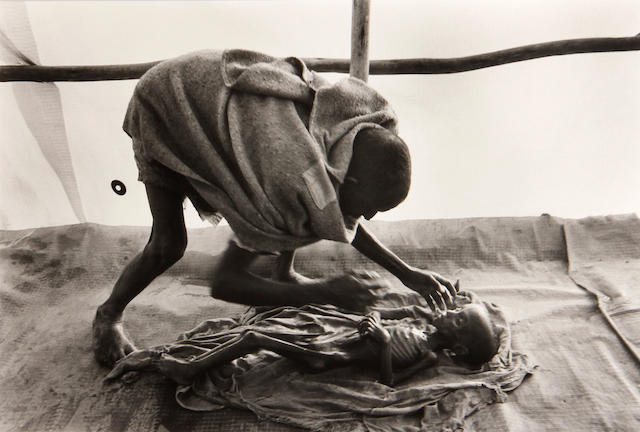
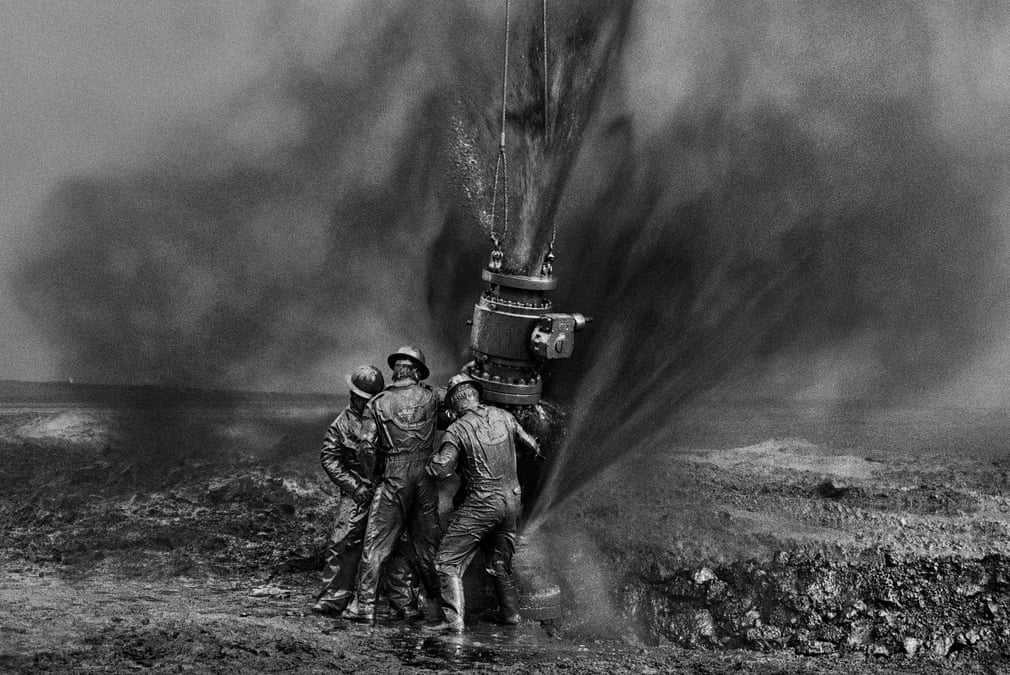
In a world saturated in images can one image have an impact on the viewing public in such a way as images did some thirty or more years ago? When we recall the Live Aid campaign of the 1980’s we draw up images of extreme famine and that of starving children. Many, if not all these images were brought to use through newspapers, TV news and bill boards, taken by the photographer Sebastiao Selgado [fig 1]. I recall these images and the shock of seeing humans in such a condition at the brink of death, and I recall the shock I felt. Jumping forward a decade, as these images became more common place, the shock we felt became numbed and we are left desensitized. We then see a new global catastrophe in the first Gulf War, in Kuwait, again via the lens of Salgado. Gone are the starving children, replaced by dirty, hard faced oil workers and fire fighters, fighting fires and wrestling with oil erupting from the ground [fig 2]. This form of concerned photography had an impact at the time of these world events, particularly raising public awareness to the war or plight of third world countries.  

However, Salgado has come under criticism for his images, in particular form Ingrid Sischy in her review of Salgado’s 1991 exhibition at New York’s International Center of Photography. Sischy argues that Salgado was more concerned with the composition of an image, and not in fact capturing the truth of the events unfolding in front of him. Sischy also makes reference to Salgado’s attempts to draw out religious motifs from his constructed images:  

“His compositions, crops, lighting, angles and toning stand in sharp contrast to the usual lack of insistent style in photojournalism. He goes in for Aura. What’s more, many of his photographs suggest both religious art and the kitsch product resulting from the commercialization of religion…It is work that is sloppy with symbolism.” [Sischy 1991:NY Times] 

Perhaps the one aspect of Salgado’s practice that can be questioned is his commercialization of the work he produces. Certainly, in the 80s and 90s Salgado would create books and exhibitions to run in parallel to media coverage of the global events he photographed as with the 1991 ICP exhibition featuring the oil wars in Kuwait. Was this level of promotion and commercialization a useful tool for engaging an audience as a method of educating the public of these events or merely a tool for self-promotion? One can argue for the latter case given the limited audience that exhibitions and the expensive photo books attract, that of the wealthy and upper middle class. Either way, what we can say is that Salgado’s images worked at that time but the cost may have been a desensitization of the viewing public eye. 

Shocking images now come from a different source; the days of the photojournalist are pretty much over as we see the rise of the Citizen journalist. The advent of the camera on the mobile phone and events of 9/11 were pivotal in securing the future for citizen journalism. Never before could video or photographs be presented by the media ‘as it happened’ in real time. The footage taken by the public presented us with a new form of shock as we saw the story unfold. With 24hr news broadcasts and near instantaneous updates via social media access to images, footage of an event is presented straight to the devices in our hand. Rarely do we question the truth of these images, after all is a thousand people post images of the same event happening at the same time there can be no question of clever editing by media sources. Or can there?  

I feel the days of a single image making the same impact as Salgado’s images from Ethiopia and Kuwait are now past. We have become cynical and desensitized to such images through over saturation, the media have all but stopped using them. 9/11 and footage since has given us a new perspective of the world, that of the first player in a video game, our own action movie.  One could ask where has the ‘real world’ gone?

References 

Sischy, Ingrid (1991) ‘Good Intentions’ in The New Yorker (9th September 1991). 

Images 

Figure 1 Salgado, S “A Body Being Prepared for Burial, Korem Camp, Ethiopia”, 1984 https://www.bonhams.com/auctions/22398/lot/5051/ [Accessed 22.03.2021] 

Figure 2 Salgado, S “Concerted efforts to bring the fires and other damage under control” 1991 https://www.theguardian.com/environment/gallery/2016/nov/21/kuwait-a-desert-on-fire-by-sebastiao-salgado [Accessed 25.03.2021] 

PHO702: Week 7 – Representation

When reflecting upon my own practice, in particular when travelling, I have always tended to feel uncomfortable with taking photos of ‘local’ with a tendency towards making images of tourists. This reluctance, clear to me now, directly links to my own ethics and a desire for truth within my images. I felt that by not truly knowing the ‘locals’ or their life stories I was not in a position to represent them. The images from media sources such as National Geographic have delivered the world to our doorsteps for decades and often we see these edited images as objects of the exotic. Rarely do we challenge these images as misrepresentative, but they clearly are and as such give us, the viewers, a skewed ideology of the world beyond our economic borders. 

Talking about early British, European and American photography, Liz Wells uses the writing of Sylvia Harvey to describe early representational images as “Generally, it was photographers from the middle and upper classes who sought images of the poor for the purposes which included curiosity, philanthropy and sociology, but also policing and social control.” [Harvey in Wells 2010:252] 

Clearly this first world misrepresentation is not something new and has gone unchallenged for some time.  

In my practice now, I look to use self-portraiture to place myself in the footprint of those I seek to represent as way of mitigating the risk of misrepresentation. Wishing to avoid what can be seen a stereo type of working class image, that of the ruddy faced, hard done by family. Karin E. Becker discusses tabloid press images of ordinary people in terms of socioeconomic tropes, the labourer, bricklayer, or factory worker:  

“Most photographs in the tabloid are in fact very plain. They present people who appear quite ordinary, usually in their everyday surroundings: a family sitting around a kitchen table or on their living room sofa, couples and friends embracing, children with their pets. Sometimes the people in the photographs are holding objects that appear slightly out of place, so that we see the objects  as ‘evidence’ : a women hugging a child’s toy, or presenting a photograph to the camera, for example. Sometimes the setting itself is the evidence behind the formal pose: a woman standing next to a grave, or a man sitting in the drivers seat of a taxi. Their faces often express strong emotion, easy to read as joy or sorrow.” [Becker in Wells 2010:298]  

Headlines or further words act as anchorage linking the image to the story, Becker gives examples to this:  

“‘Pals for years’, the two happy embracing women never dreamed that they were lost sisters who had been separated at birth.” [Beker in Wells 2010:298] 

Without this anchorage the photograph loses context and becomes another vernacular photograph from the family album. However, the deliberate construction of these images resonates with the reader, the straight on, eye to eye level positioning mirror the less formal approach more familiar with the ordinary person.  

Targeting the working class families with it’s competitions, and ‘Real’ life stories juxtaposed with the latest celebrity scandal, Take a break magazine is a platform that describes itself as: [Figures 1&2]

“Take a Break not only delivers the sharpest, most original and entertaining magazine in the market, but also an unrivalled sense of community and loyalty that places it at the heart of the family.” [Greatmagazines.co.uk accessed 15.3.2021]

Take a breaks use of subject supplied images and constructed vernacular photographs further instils a magazine that talks to the ordinary person, the family and working class.

I have chosen to explore the socioeconomic sector that is familiar to me, having grown up and find myself living in today. I see myself as observer seeking a neutrality and truth to my images. I am aiming to create images that are both artistic and anthropological. This can only be achieved by interaction and collaboration between myself and subject, exploring social locality and the essence of home by building up a relationship off mutual trust. Use of tabloid wording will challenge the viewer with an opposing reading [Figure 3] as a metaphor for social documentary norms.

Fig 3 Trapped in the house for 360 days, Tim Beale 2021

References 

Becker E. Karin. Photojournalism and the tabloid press, in Wells, Liz (2010) The photography Reader, Routlidge 

Harvey, S. Who wants to know what and why?, in Wells, Liz (2010) The photography Reader, Routlidge 

Images 

Figures 1&2 Take a Break magazine articles, https://takeabreak.co.uk/magazine/latest-issue/4/ [Accessed 15/03/2021] 

Figure 3 Trapped in the house for 360 days, Tim Beale 2021

Week 6: Review of Practice

Week 6 has benefitted from both a 1:1 session with my tutor and portfolio review with the exceptionally talented Jack Latham. This was a fantastic opportunity to discuss ideas for a new direction for my practice, building on the images I have created to date.  

Much of my current practice has involved research and writing, looking at the human condition, what makes us tick, why do we make the choices we make and, more importantly are those choices imposed upon us. I am most interested in where we live, and by ‘we’ I talk about the classless, the people who fall between the cracks between absolute poverty and a comfortable living. Typically, this suburban landscape is home to teachers, nurses, supervisors, and middle managers; falling through the cracks to become a silent majority.  

However, the built environs of suburban landscape hold a key to our national identity and as such social housing, blocks of flats and housing estates have become our woodland, hills, and mountains, meanwhile the allotment become the oasis in the concrete desert. Renting has created the modern nomad, moving from one house to another in search of affordable accommodation. 

Inside out: Home and Landscape  

I have been creating topographical/architectural images of the suburban landscape in a three miles radius of my home. Images of vernacular housing, in sharp contrast to Bath’s stereotype of a grand Georgian city and tourist destination. However, my images are not just about the built environment but the people how make a home of this landscape. For me to tell the stories of the people it is important that I employ a method of documentary that does not employ working class tropes to belittle their socioeconomical status. I am proposing to construct a series of images that create a tangible link between the internal landscape of the ‘Home’ and the external suburban landscape. Using the self-portrayed figure as a simulacra of the home owner, I intend to represent the story of the inside, of the home.  

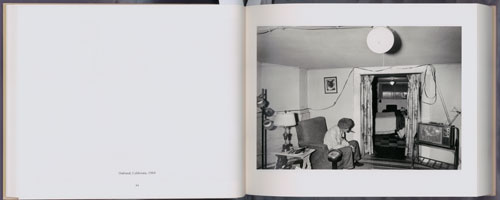
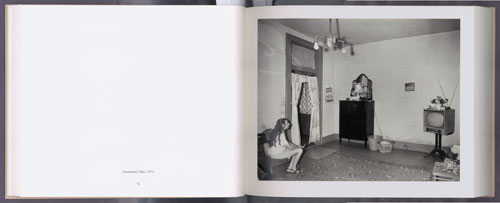
Protest Photographs by Chauncey Hare is a culmination of two decades of images production, the interiors of working-class homes and workplaces across America in the late 1960s and early 1970s. Hare worked as a factory employee for Standard Oil where he came into contact with many of his subjects. It is Hare’s images of the home place that strike true with me, these honest representations of working-class homes, often featuring the occupants relaxing in front of the TV after a day’s work. [Fig 1&2] 

“Hare recounts how, over his years of production, he felt obliged to “Honour the reality of each person and their home” and speaks of a need to relate “the truth of people’s lives”. Yet this is not a measured, dispassionate process.” [Grant 2010:Online] 

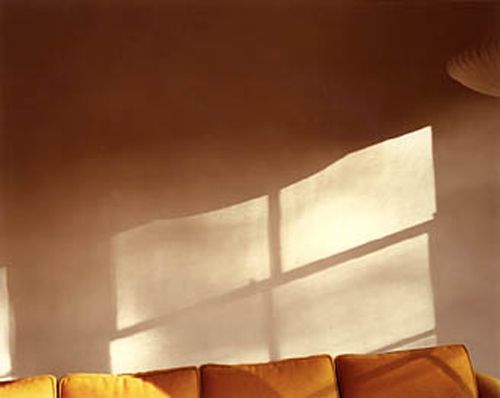
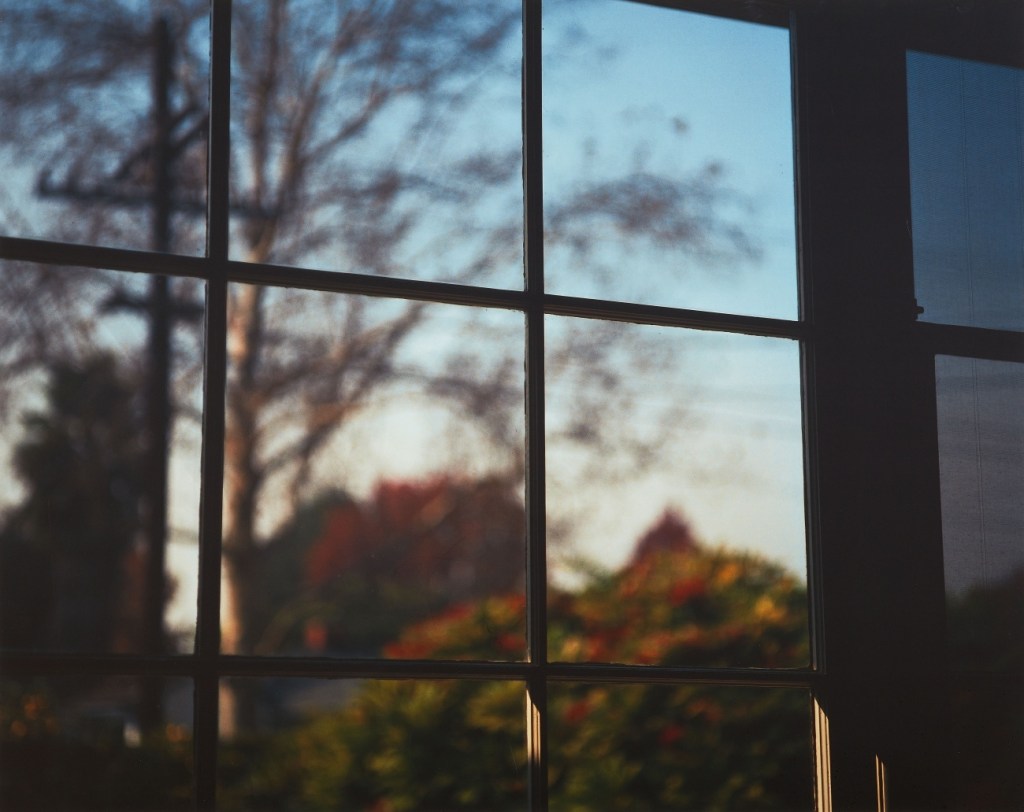
The context of looking out from the inside is one that Uta Barth explores in a less traditional way, in particular the series ‘Nowhere near’ presenting the space between objects, the seen and unseen. The use of window frames to focus the beholder, enticing to look outside beyond the frame. [Figs 3&4] 

“Barth’s photographs, when installed in galleries, resonate phenomenologically. The space between the viewer and photographs become part of the interplay between space and subject, seeing and not seeing.” [Cotton 2009:133] 

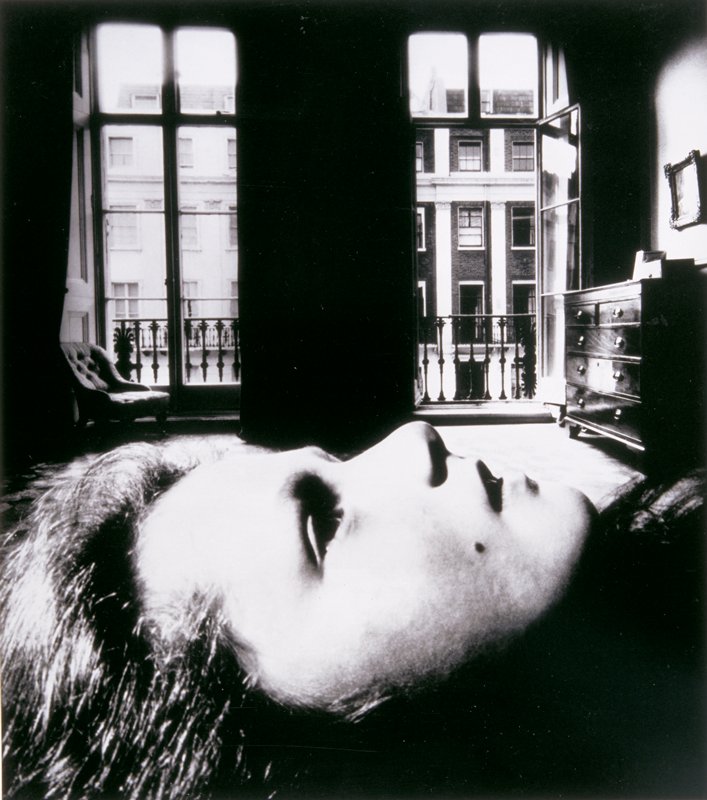
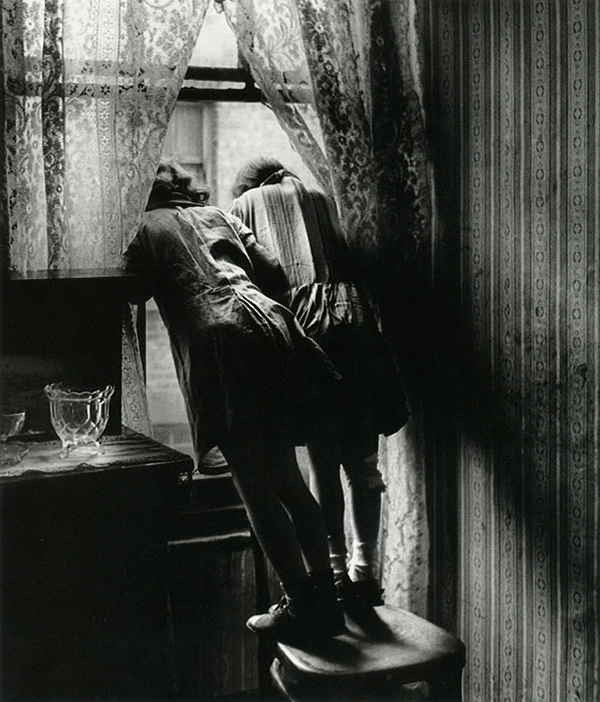
Figure 5 Bill Brandt, 1955 London Child

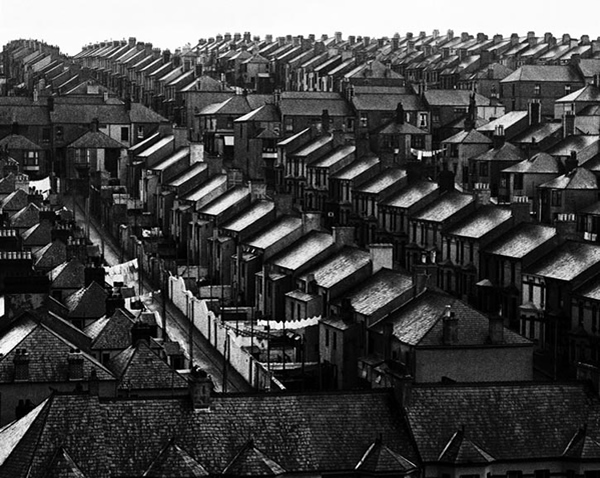
Bill Brandt is another photographer I have begun to look towards for inspiration in particular his imagery of industrial cityscapes and home interiors. [Figs 5&6] When looking through Brandt’s canon of work, I have started to pair images to obtain then type of images I want to achieve. Isolating the core concepts of interplay between the interior and landscape.  

References 

Cotton. C (2009), the photograph as contemporary art, Thames & Hudson.

Grant. K 2010, Hare, Chauncey (2009)  Protest Photographs https://www.foto8.com/live/protest-photographs-by-chauncey-hare/ [Accessed 11.3.2021] 

Images 

Figures 1 & 2 Chauncey, Hare Protest Photographs (2009) https://www.foto8.com/live/protest-photographs-by-chauncey-hare/ [Accessed 11.3.2021] 

Figures 3 & 4 Barth, Uta – Untitled 1999 (nowhere near) https://www.lempertz.com/en/catalogues/artist-index/detail/barth-uta.html [Accessed 11.3.2021] 

Figure 5 Brandt, Bill London Child 1955 https://collections.artsmia.org/art/2047/london-child-bill-brandt [Accessed 11.3.2021] 

Figures 6 & 7 Brandt, Bill https://121clicks.com/inspirations/bill-brandt-inspiration-from-masters-of-photography [Accessed 11.3.2021] 

PHO702: Week 5 – The gaze

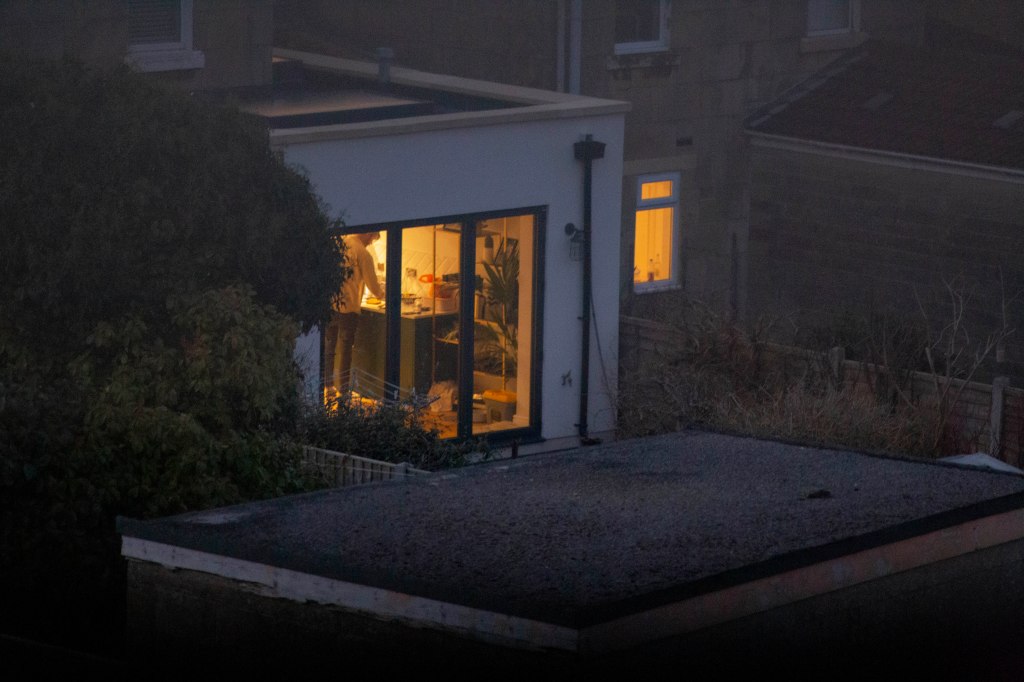
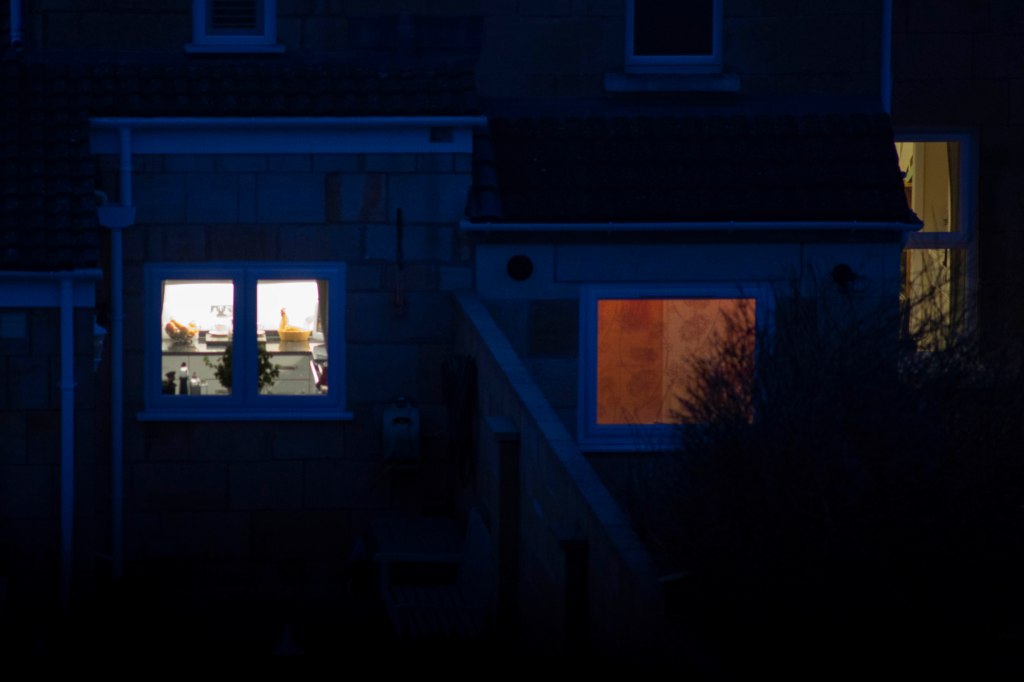
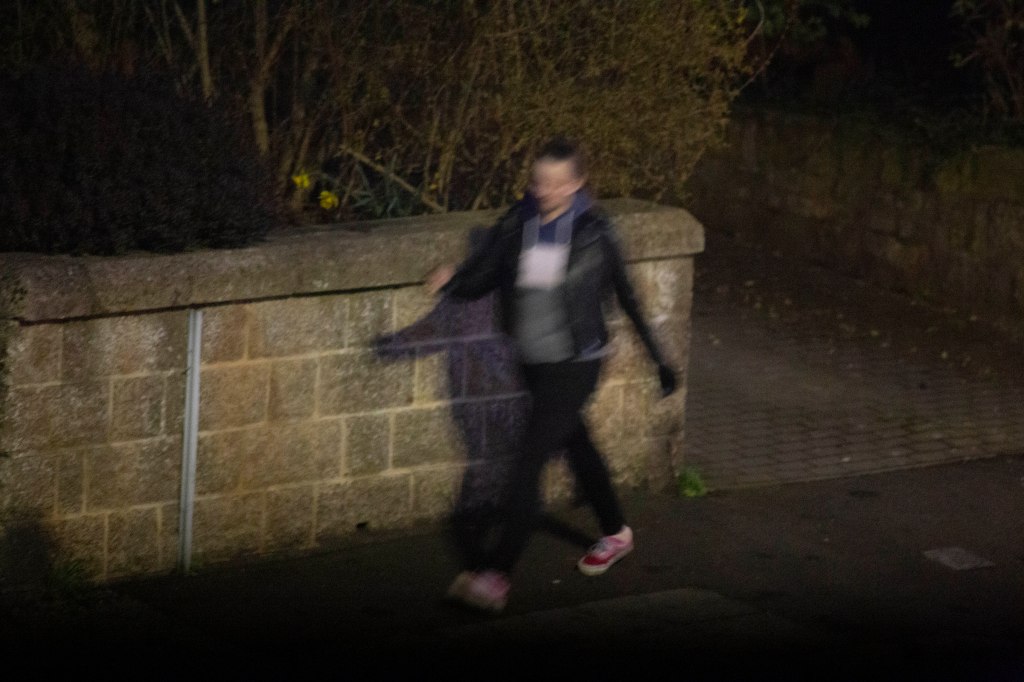
When considering what is ‘appropriate’ to photograph or look at we are confronted with a moral question of is it ‘right’ or ‘wrong.’ Within my own practice I have found myself making this moralistic judgement when choosing what to photograph. on a recent night-time walk I happened upon a scene that I thought would be a great picture. It was the view from the street into a front room, via a window with curtains open, a female figure was sat, glass of wine in hand, watching TV. The lighting was great, and I knew it would work well. I chose not to take the shot, not from a legal stance but from a) fear of what people may think if seen photographing into people’s home and b) I felt this to be an intrusion. Feeling I needed to challenge my own ‘moral code’ I set about capturing images that I felt pushed against my own anxieties. The images have a voyeuristic quality, a mix between CCTV and the paparazzi.  [Images 1-3].  

The subject of the gaze can be looked as one in terms of a moralistic questioning; from the images such as those of Diane Arbus, of marginalised people, to the male privileged gaze and images of Helmut Newton. Both photographers claimed to empower their subjects, however equally both have been criticised for creating exploitative images. Susan Sontag said of Arbus’s work: 

“Arbus photographs people in various degrees of unconscious or unaware relation to their pain, their ugliness…Arbus wanted her subjects to be as fully conscious as possible, aware of the act in which they were participating. Instead of trying to coax her subjects into a natural or typical position, they are encouraged to be awkward-that is to pose… Most Arbus pictures have the subject looking straight at camera. This often makes them look odder, almost deranged.” [Sontag 1977:36-37]

Meanwhile, in Newton’s case, it can be argued that images of women are constructed as objects of desire for the benefit of the male gaze. Newton’s images portray the idealised woman, always young, slim and attractive, certainly not a n unbiased representation of the fatale form. A far cry from the self-proclaimed ‘feminist’, Newton claimed to be. When we question, was there a collaboration between model and photographer? Did the model choose the construction of the image? No, it is apparent that Newton’s images are his constructs, the intention may have been to place the female figure in a position of power and therefore ‘empowered’ but even a negotiated reading of Newton’s images lead back to the fetish and eroticism.  [Baker 2001:online] 

Sontag discusses the targeting of the male gaze by camera manufacturers, as a phallic extension not unlike a gun and further explains: 

“The camera/gun does not kill, so the ominous metaphor seems to be all bluff-like a man’s fantasy of having a gun, knife, or tool between his legs…To photograph people is to violate them, by seeing them as they never see themselves, by having knowledge of them they can never have; it turns people into objects that can be symbolically possessed.” [Sontag 1977:14] 

John Burger describes the gaze as such: 

“Men look at women. Women watch themselves being looked at. This determines not only most relations between men and women but also the relationship of women to themselves” [Berger 1972:47]

Applying these examples to the male gaze and in turn towards Newton’s images we see that his target viewer is a far cry from the feminist and more aligned with the male privileged voyeur. As with Arbus the images of both photographers may have been read in opposition to their intention, either way the viewer has been left with the choice to look or not look.  

Challenging the constructs of the male gaze are the likes of Cindy Sherman who uses the female stereotype tropes from cinema, pornography, advertising, and fashion to construct familiar looking self-portraits. These images challenge the way the viewer sees the female figure within the photograph. Charlote Cotton further states: 

“The conflations of roles, with Sherman as both subject and creator, is a way of visualizing femininity that confronts some of the issues raised by images of women, such as who is being represented, and by whom is this projection of the ‘feminine’ being constructed and for whom. [Cotton 2009:192-193] 

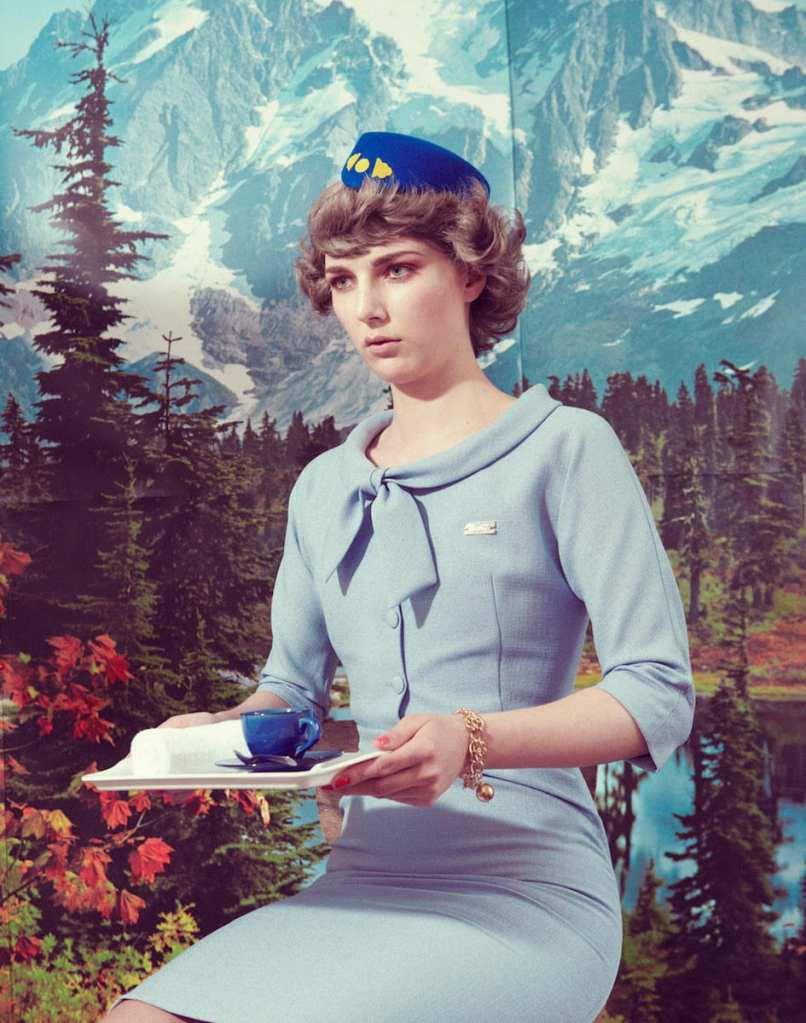
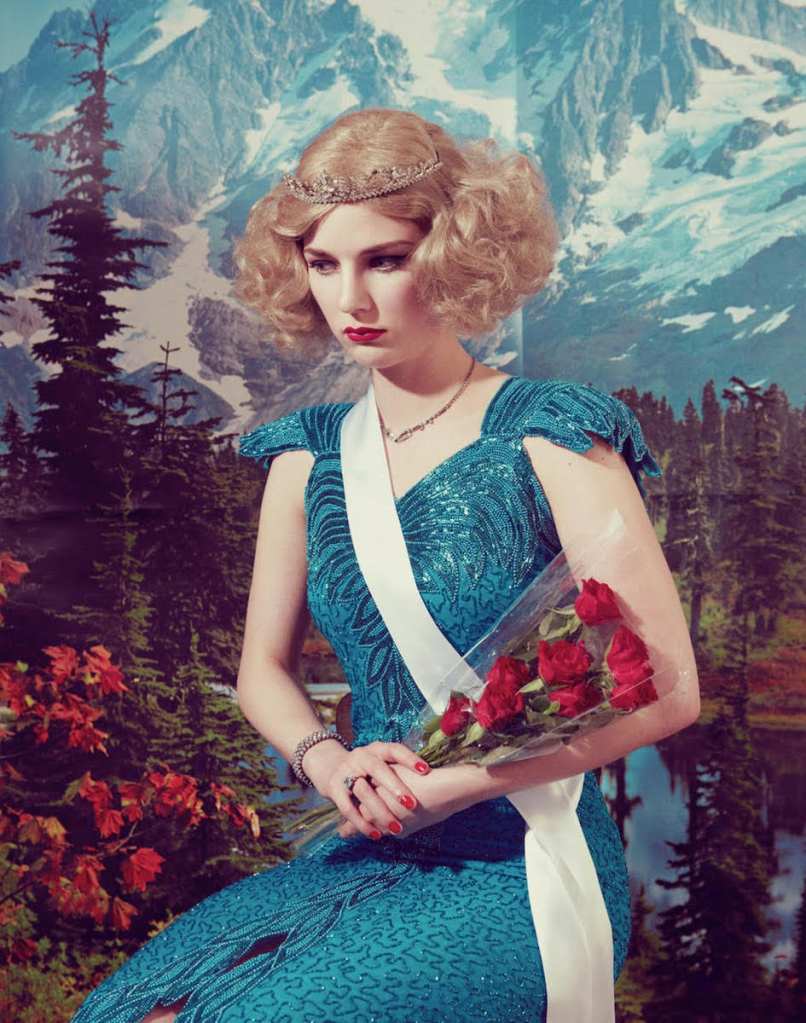
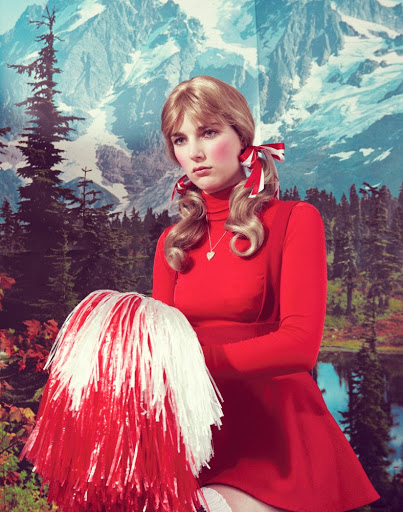
Kourtney Roy is another photographer further explores the feminine image adopting an approach much like Sherman, as both creator and subject. In Roy’s series ‘The ideal women’ she adopts the persona of American clichéd female roles from the male dominated 1960’s, air hostess, secretary, cheer leader, beauty queen. Each image is carefully constructed from the kitsch backdrop, vintage clothing to the glamorous make up, that transforms the female figure into a mannequin.  But the real power of these images come from the way in which Roy poses herself. The figure is pale and rigid with a downward gaze, looking away from the viewer, away from the male gaze (figures 4&5).  In an article by the British Journal of Photography discusses Roy’s work with her: 

In contrast to her use of bold aesthetics, Roy’s reference to the male gaze in the ideal woman is subtle. This reflects her understanding of gender discrimination in both the photography industry and society at large: “I think that discrimination operates in a much more subtle and pervasive manner,” she reflects. “Discriminatory behaviour has been so conditioned that we often accept it as natural, as opposed to learned behaviour.” [BJP/Roy 2019:Online] 

The resulting images by Sherman and Roy, make for uncomfortable viewing, seeing the figure in a position of melancholy, regret or depression. Far from Helmut Newton’s so called empowered images of powerful women. I find myself asking; What does this mean for the male gaze and in particular my practice? How can I challenge male privilege within my own practice? But also, am I, from my position as the male privileged, right to attempt to do so or should this be best left to those who suffer from it?  

References

Baker. L (2001) Helmut Newton: a perverse romantic  https://www.theguardian.com/lifeandstyle/2001/may/05/weekend.lindsaybaker [accessed 02.03.21] 

Berger. J (1972) Ways of seeing. Penguin 

Cotton.C (2009) The photograph as contemporary art. Thames & Hudson

Sontag.S (1977) On Photography. Penguin

BJP (2019) Female in Focus: Kourtney Roy deconstructs the male gaze. British Journal of Photography 1854 media. https://www.1854.photography/2019/03/female-in-focus-kourtney-roy-deconstructs-the-male-gaze/ [accessed 03.3.2021]

Images

Figures 1-3 Tim Beale 2021

Figures 4-6 Kourtney Roy ‘The Ideal Woman’ series. http://www.kourtneyroy.com/?do=gallery&gallery=ideal_woman#ad-image-0 [Accessed 03.03.2021]

Week 4: Into the image world

The photograph has often been described as a nonverbal form of communication and as such can be read by way of semiotics, the understanding of symbols and meanings with an image. The photograph is unique in the way in which it is viewed in many ways, on one hand it is a representation of a ‘thing’ in that instant, in that location and under those conditions. It can also be viewed reading or looking out for signs and messages within the image but also the viewer is invited to look beyond the frame. Victor Burgin, in his essay “Looking at photographs”, writes about the ‘photographic text’:  

“Photographs are texts inscribed in terms of what we may call ‘photographic discourse’, but this discourse, like any other, engages discourses beyond itself, the ‘photographic text’, like any other, is the site of a complex ‘intertextuality, an overlapping series of previous texts ‘taken for granted’ at a particular cultural and historical conjuncture.” [Burgin 1967:131] 

One of the ways to see this ‘photographic text’ or communications, is to look at the advertising image. The advertising world has for many decades researched the needs and desires of the viewer as can be seen in both moving and still images. Since the 1950’s anthropologists, sociologists and psychologists have questioned and observed human buying habits in an attempt to better understand what drives our choices. Advertising is based on knowledge of human learned behaviour, makes assumptions that we will ‘know’ that this ‘thing’ means this ‘symbol or action’ – anthropological knowledge. 

The task now is thus to reconsider each type of message so as to explore it in its generality, without losing sight of our aim of under­ standing the overall structure of the image, the final inter-relationship of the three messages.” [Barthes 1977:p36] “Today, at the level of mass communications, it appears that the linguistic message is indeed present in every image: as title, caption, accompanying press article, film dialogue, comic strip balloon.” [Barthes 1977:p37] 

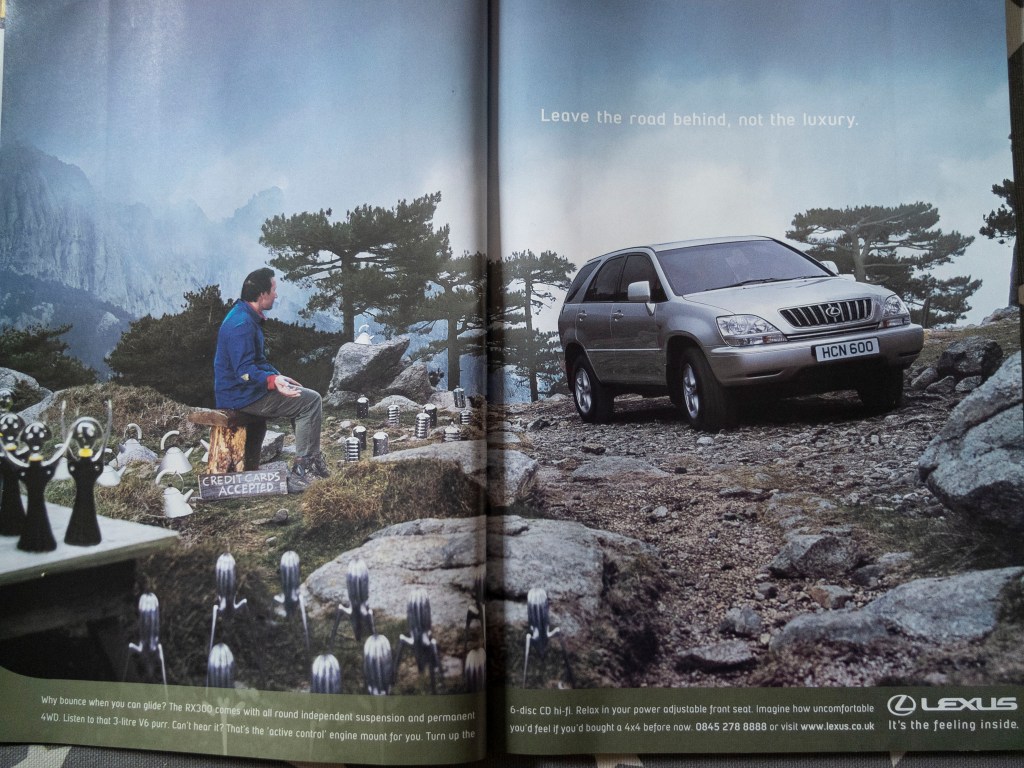
Fig 1. Unknown photographer – National Geographic 2001, Lexus Advert

If we look to this advertisement for Lexus RX300, we can see that the advertisers are appealing to a luxury market and those with aspirations of design and taste. The image signifies the driver having assented a mountain, traversed rugged terrain to shop for luxury designer goods. The text further acts as anchorage, telling us the 4-wheel drive delivers a smooth drive without all the usual bumps and bounces associated with 4WD vehicles. We can also learn that the target audience is potentially female via the use of Allesi designer kitchen goods within the image appealing to the stereo type of the house wife out shopping for luxury items.   

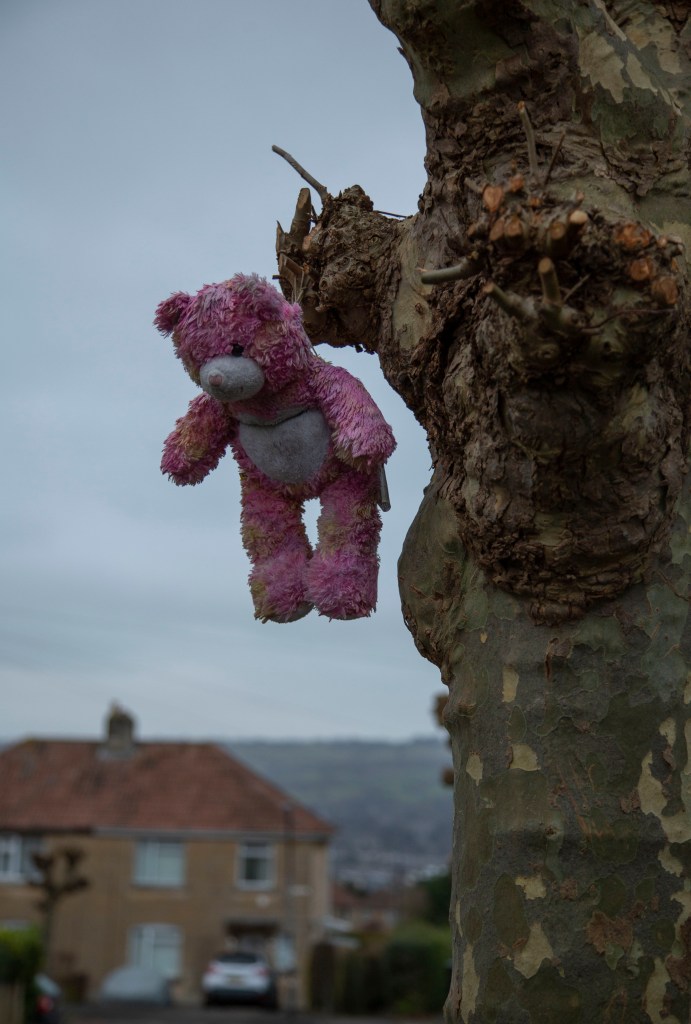
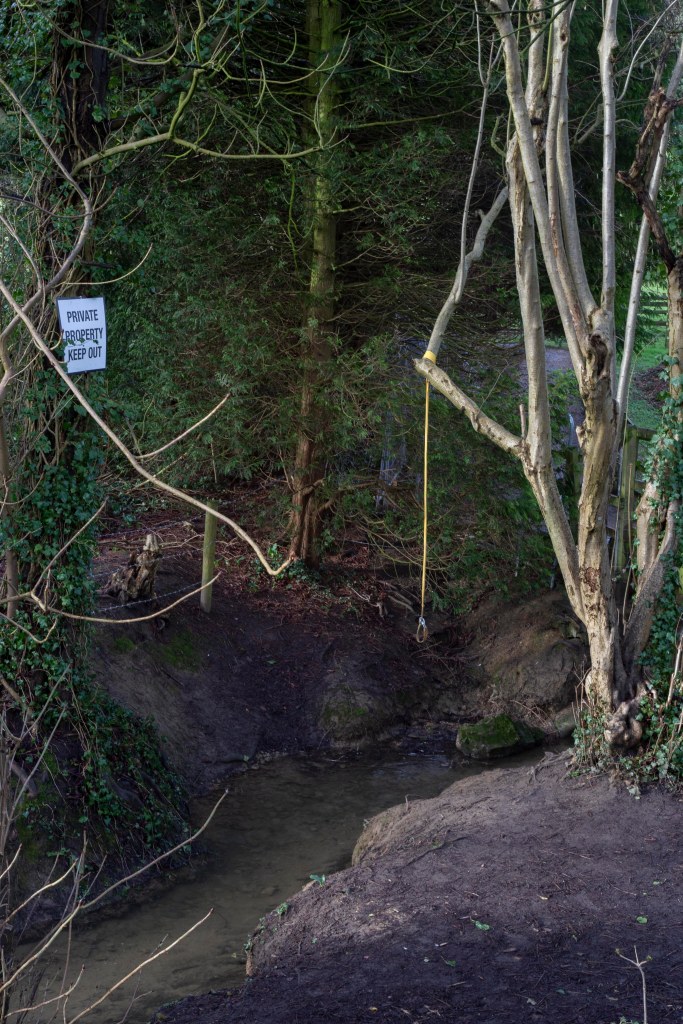
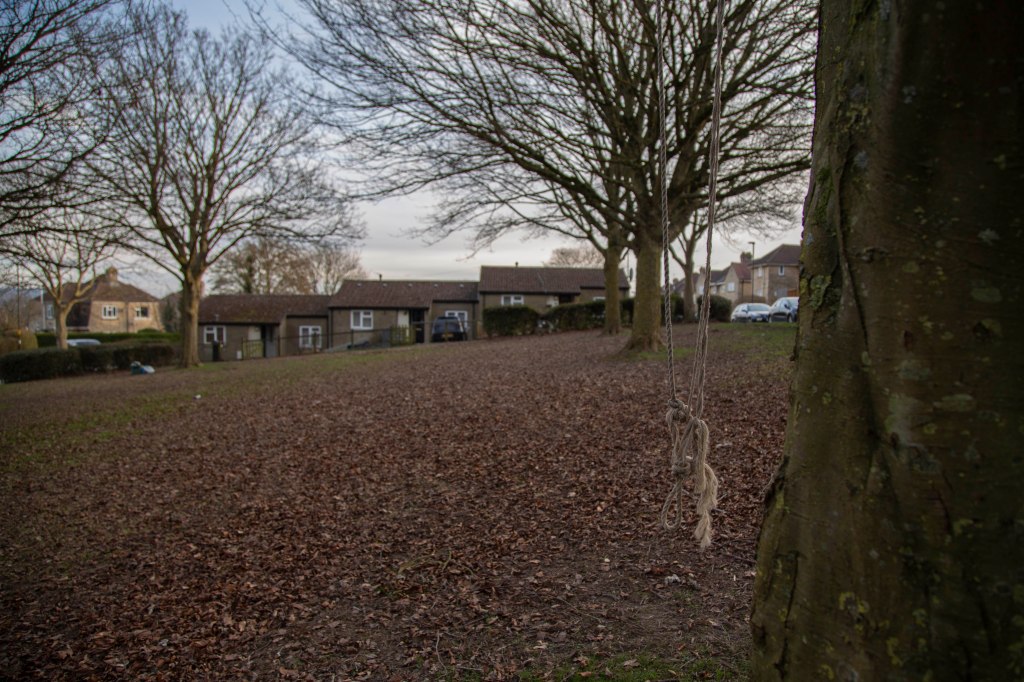
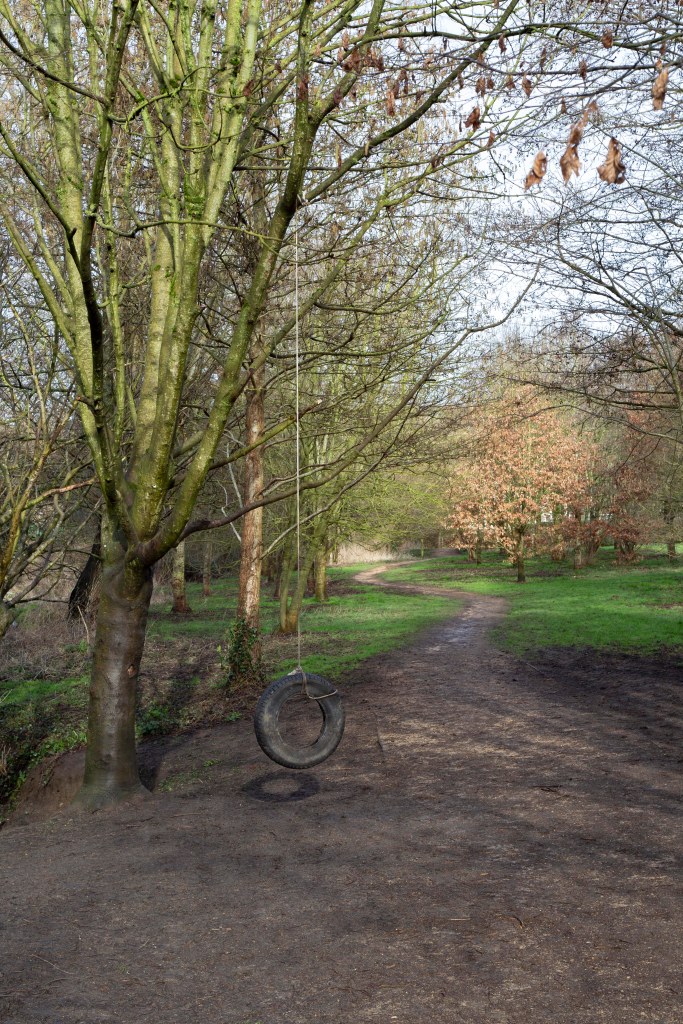
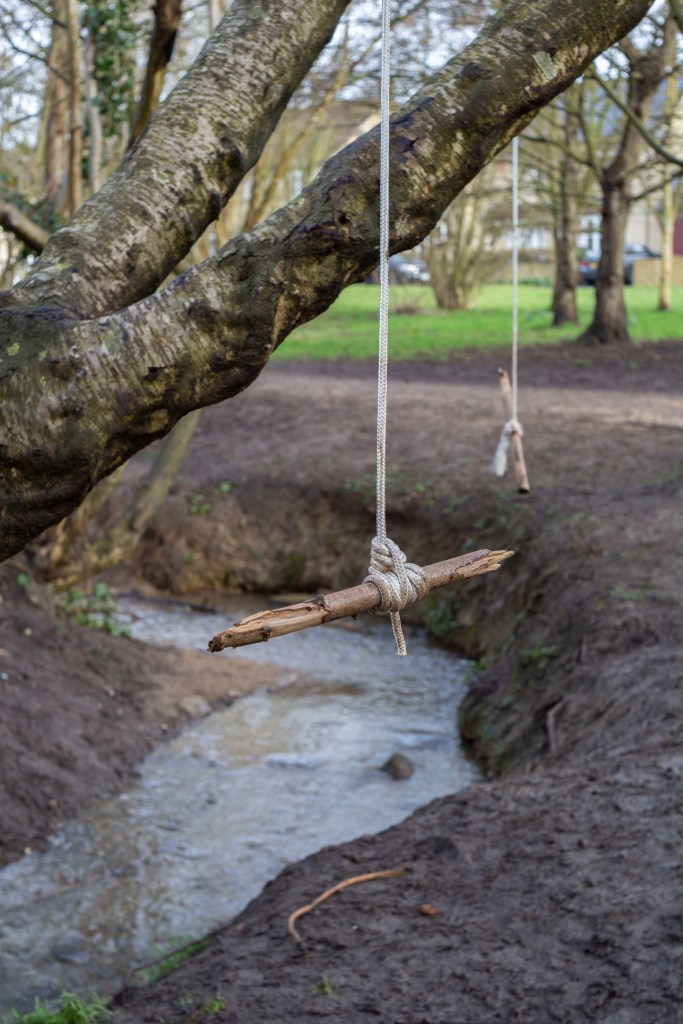
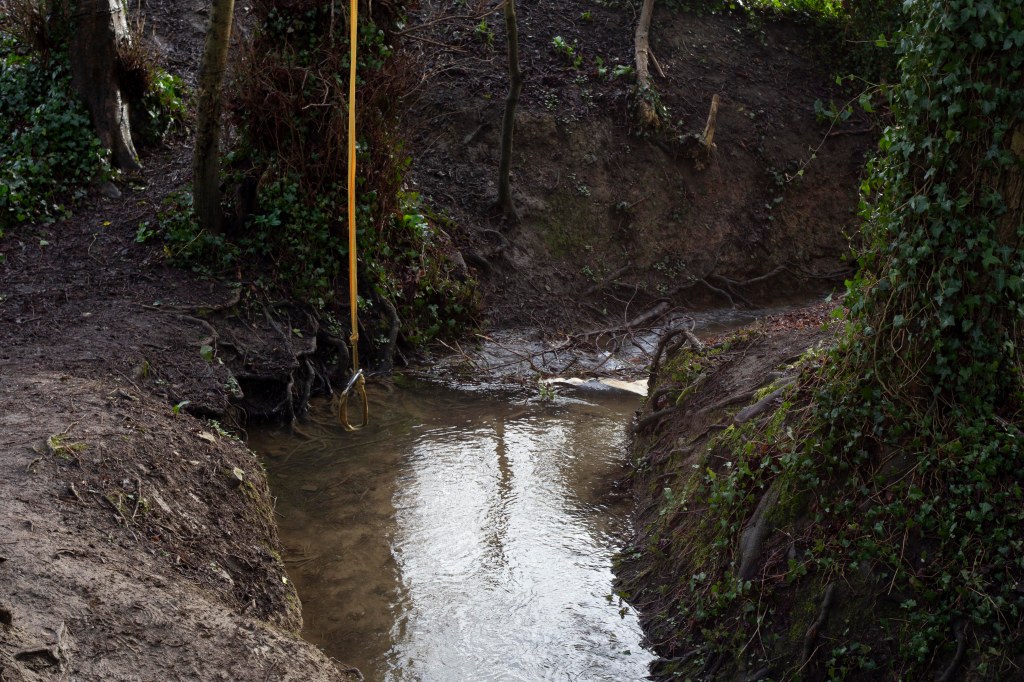
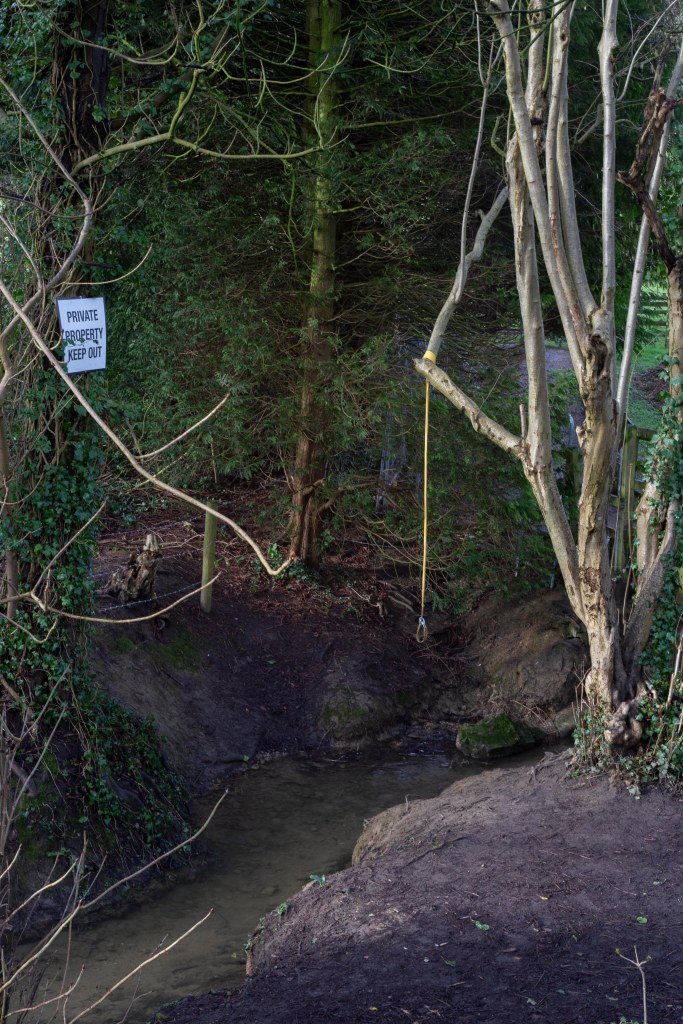
We can read images, especially advertising images, in three ways; ‘Dominant’ – reading the image as the photographer intends, ‘Oppositional’ – not seeing what the intentions is or interpreting the image in a different way to the intention, and ‘Negotiated’ – reading the intended meaning of and image but also seeing a new meaning. Often images in isolation can produce one meaning but when paired or placed within a series of images, takes on a new meaning all together. An example of this can be seen in these images (figs x -x) that were discussed at a recent tutorial. In isolation the image of the left toy bear initially elicited a reading of ‘lost child hood’ or ‘play’, as did the image of the rope swing which offered a similar reading by my peers. 

Fig 2. Untitled, Tim Beale, 2021
Fig 3. Untitled, Tim Beale 2021

However, when places side by side the reading of these paired images was one of a more sinister nature, much darker than the melancholy of the individual images. The bear looks all the more ‘Strung Up’ and rope swing becomes a ‘Hang man’s noose’. These readings are Oppositional to my intent when capturing these images, my initial intent was to illustrate the ‘Lost play’ lockdown has produced.  

References: 

Burgin, V 1967 “Looking at Photographs in “the photography reader” Wells, L. 2003, Routledge.  

Barthes, R 1977 “Rhetoric of the Image” Image-Music-Text, London:Fontana 

Images 

Figure 1  Lexus RX300 Advert from National Geographic magazine July 2001 

Figures 2-4 Tim Beale 2021 

PHO702: Week 3 Reflection – The Constructed Image

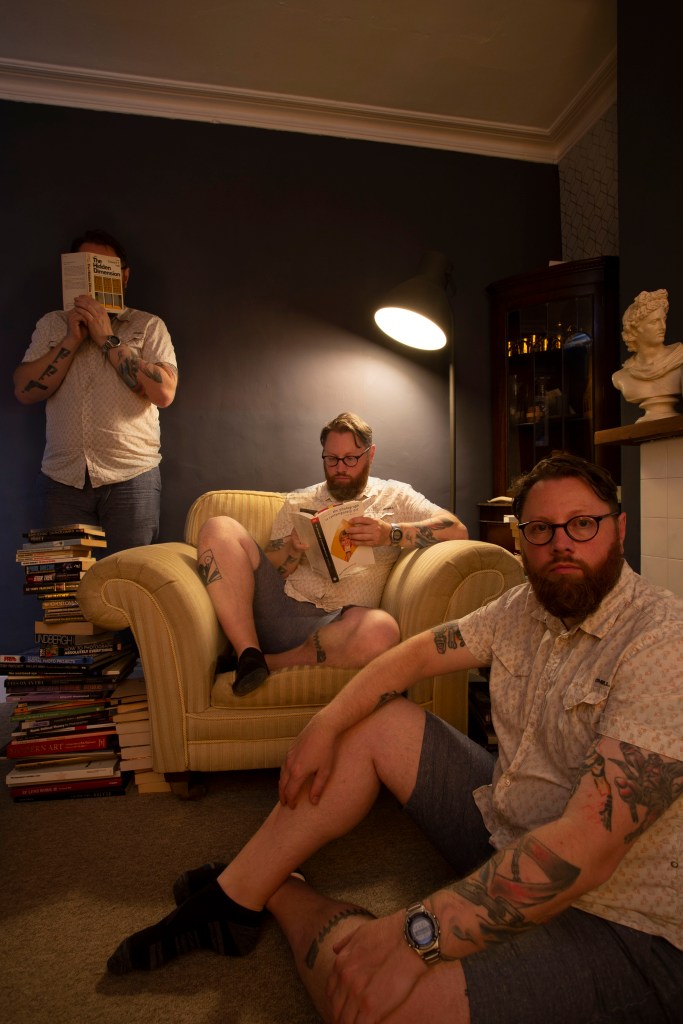
Much of my practice has been subjective and engaged the use of constructed or staged image making, either through directed figures, often myself as performed self-portraits (fig 1) or via digital manipulation as photomontages (fig 2). Much of the work produced during the last module was influenced by the repeated use of the ‘Ophelia’ icon within the photographs of Tom Hunter and Gregory Crewdson. I wrote about this in more detail in my CRJ: https://thespacebetween.photo.blog/2020/10/09/the-photographic-tableau/ 

“Hunter makes the art-historical connection quite explicit to anybody with some knowledge of European art.” [Smith & Lefley 2015:127] 

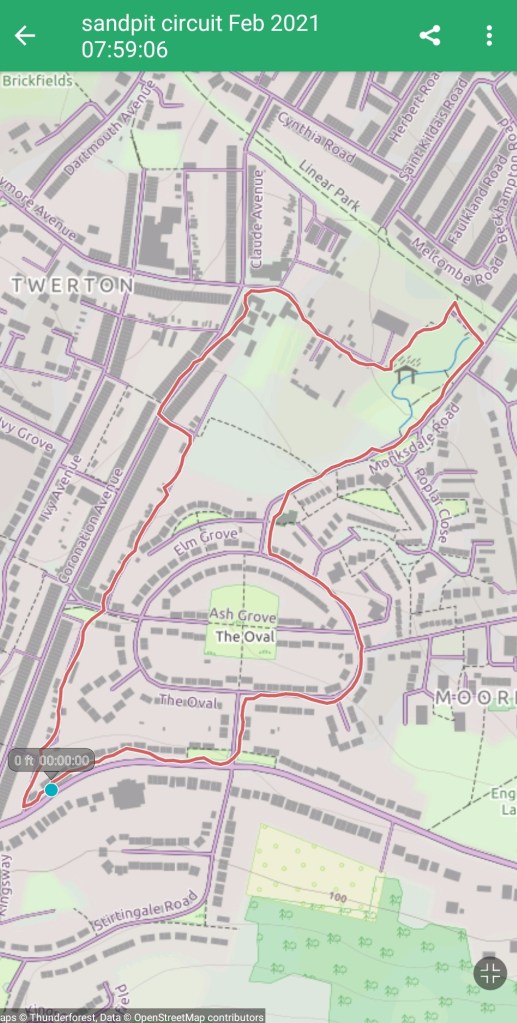
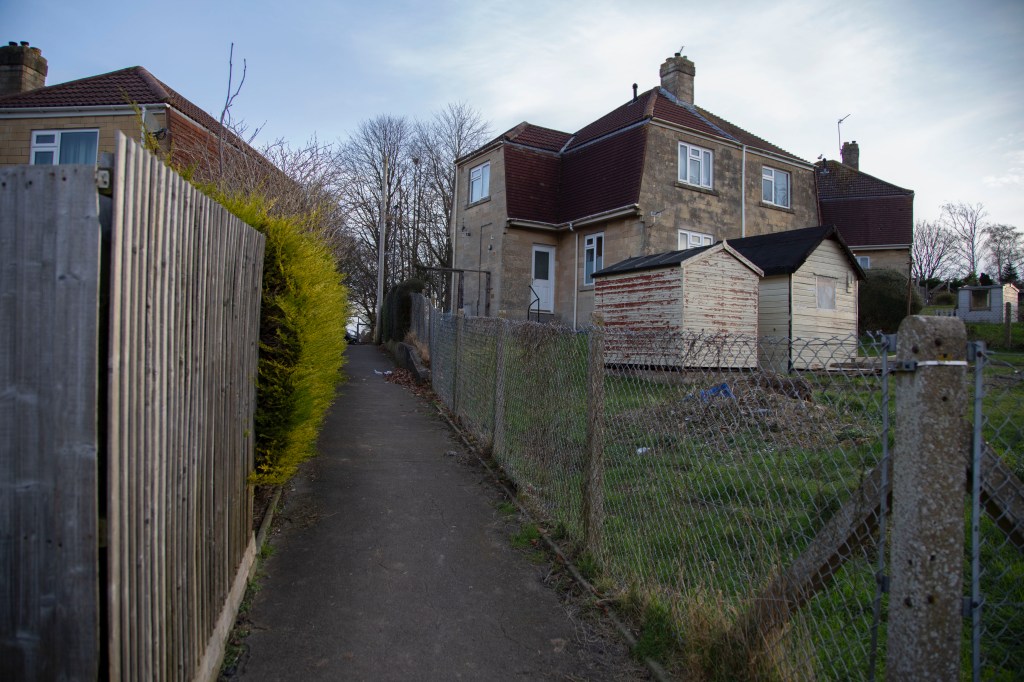
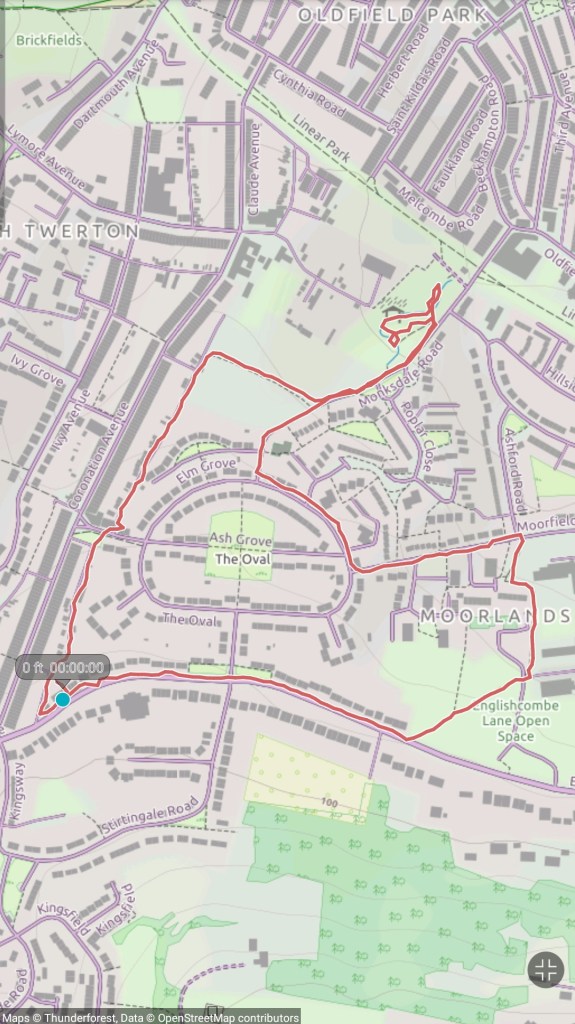
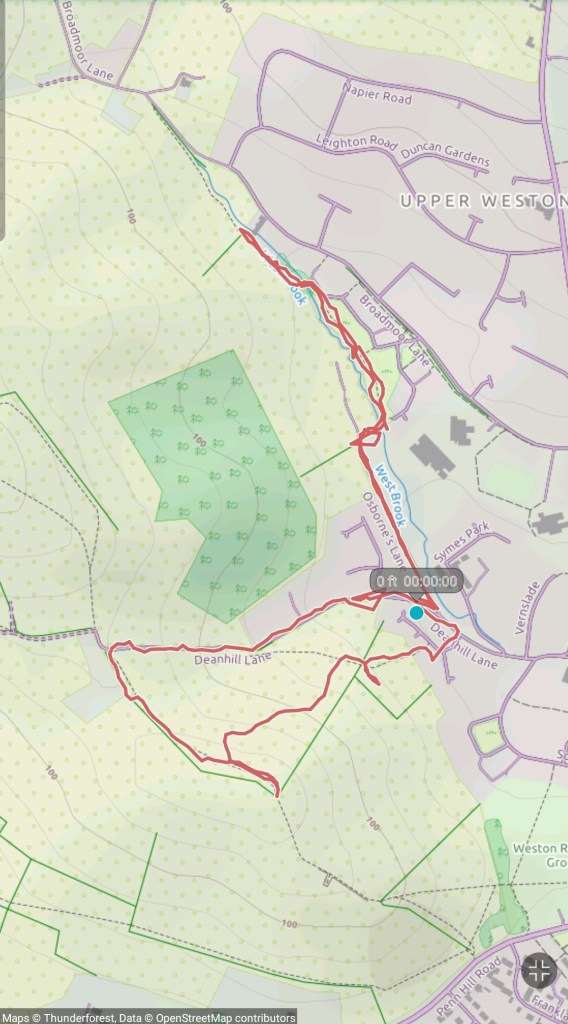
However, the images I have recently taken take on a more objective approach, as straight photographs of that thing at that time. The choice to create straight object images was a result of the 3rd national lock down and my unease of taking out my full photographic kit. I feel that much of these objective images are more for research in location for later images. As such I have begun to log my walking routes, limiting myself to no more than a 2 hour walk and often in a loop.  

There is a lot to dig deeper in with Twerton/shops – what is it that makes a shop stand out – why is McColls different to Aldi, different to Morrisons, different to Waitrose, what is it that stands out when you visit those shops? The story might emerge from the direct experience rather than the photographic.” [Pantall.C False Indexes Forum: FF]  

I’m now at the stage of thinking and research, trying to build up a narrative for these latest images. Over the next few weeks, I plan on revisiting a particular area of Bath, Twerton as I feel I have a strange affinity for the area. This probably because it reminds me of where I grew up but as it is one of Bath’s most deprived areas, I feel there it is underrepresented. There’s a story to be told, I just need to find it. 

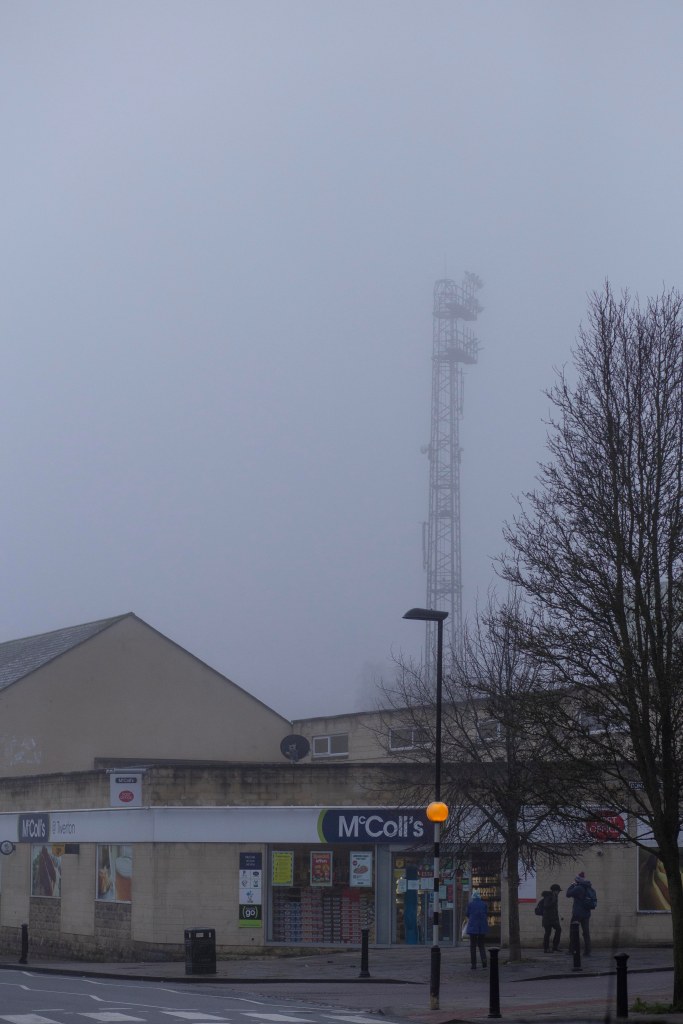
The fog in figure 3 has added a unique quality that I could not recreate artificially, as a result I feel this image takes on an ethereal quality. The lighting tower, dominates the small shop, looking no unlike a prison watch tower or prehistoric predator. We see shoppers, in the lower section of the image, huddled waiting their turn to shop for the essentials.  

Figure 3. Tim Beale 2021 ‘Untitled’

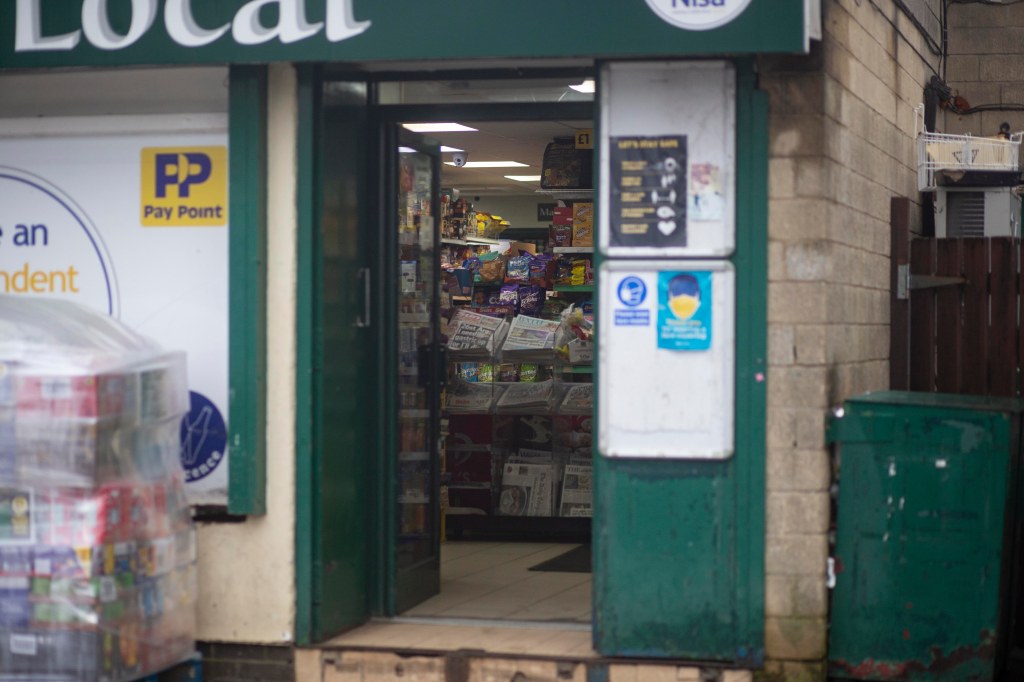
I took this shot of the newsagents with a view to capturing something of the essence of a typical UK “local” shop (Fig 4). The headlines from each newspaper came be seen and read through the open door. I’m not entirely happy with this one and plan to revisit at night as I feel the dynamics of lighting will change the feel greatly. 

Figure 4. Tim Beale 2021 ‘untitled’

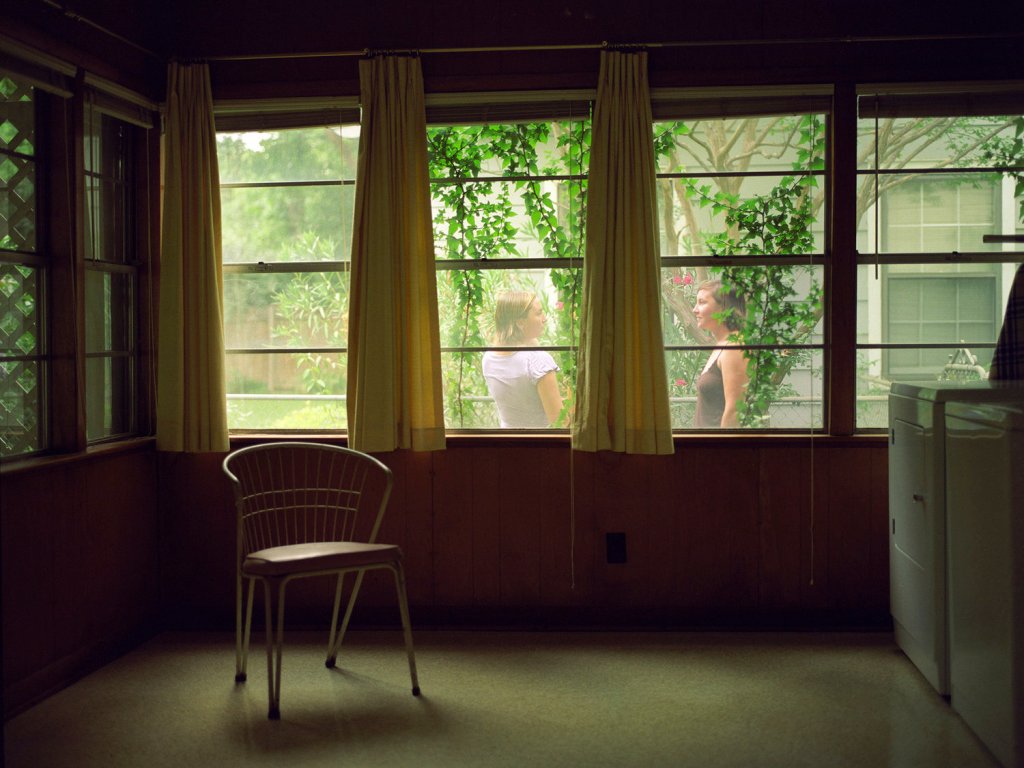
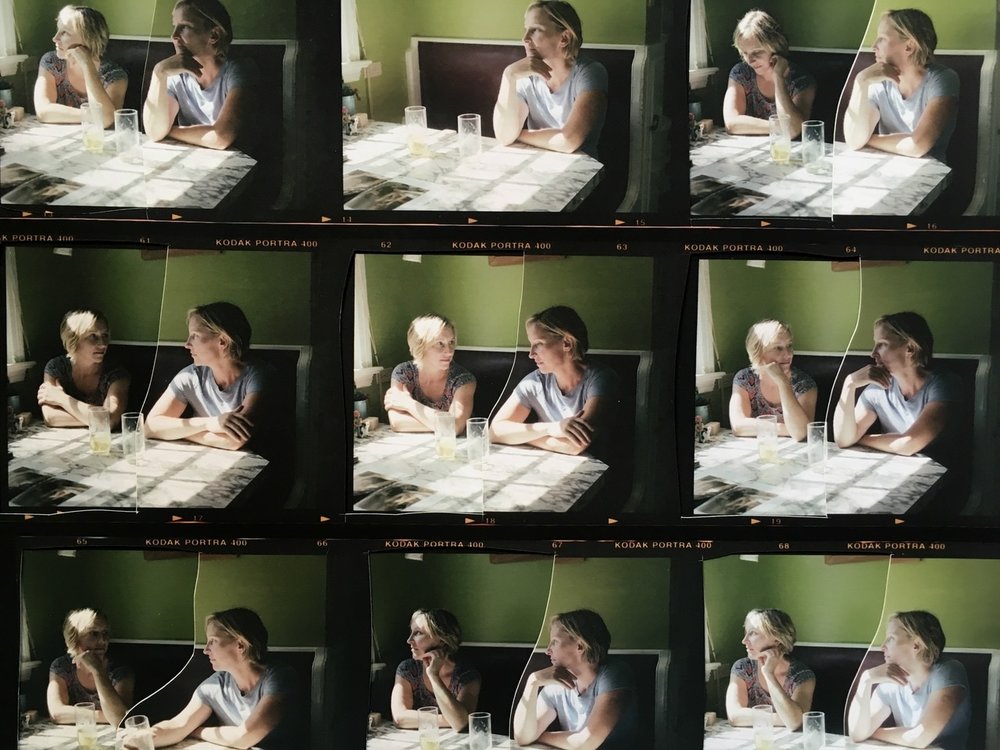
As we look to a more eased lock down, I can start to schedule in more involved photo shoots, look to use self-portraiture again. Kelli Connell’s series “Double Life” (Fig 5) is a fascinating use of the constructed image to depict the made-up story of a couple’s everyday life. The photographs have a voyeuristic quality to them, as if we the view are witnessing these live events unfold, through the eyes of the photographer. What has drawn me to these images is the fact that, what we are looking at is not images of two women, but self-portraits of Connell playing both roles in this relationship (Fig 6). Connell’s performance is such a powerful one that we are convinced of the ‘real’ emotions of this relationship. The viewer starts question the fact of the image before them as they realise the women look identical and the image takes on a more surreal quality. 

When discussing the constructed images of the surrealists Smith & Lefley write: “They were captivated by the strange ambiguity of photographs that are both ‘fact’ and image at the same time.” [Smith & Lefley 2015:120] 

When being interviewed for Blowphoto.com Connell talks about the autobiographical approach to these images: 

“I think it’s kind of a mirror reflecting what I think about relationships and what I think of my own self as it evolves the older I get. the earlier images show something you might do in your late twenties, like drinking in a bar or playing pool depicting a really young stage in a relationship and now that I’m older many of the things I’m interested in have naturally evolved so the characters might be drinking wine, renovating a house or going to bed early. or an embrace might be the kind of hug that is more fragile from just being through a more long-term relationship; the kind of embrace that isn’t even possible with someone you have just been with a couple of weeks.” [Connell no date published:Blowphoto.com] 

I can see there is some scope to adopt a similar process of further constructing images, going beyond the directed and staged approach. Certainly, over the next couple of weeks I intend to revisit archival images alongside recent photographs with a view to experimenting digitally constructing images to represent my research.  

References 

Smith, P, & Lefley, C 2015, “Rethinking Photography : Histories, Theories and Education”, Taylor & Francis Group, London. Available from: ProQuest Ebook Central. [7 February 2021]. Created from falmouth-ebooks on 2021-02-07 01:41:12. 

Pantall.C, 2021 Tutor feedback from “False Indexes” week 3 forum. Falmouth Flexible MA Photography [Accessed 11.2.2021] 

Mac Gowan.A “Kelli Connell interview” Blowphoto.com [Accessed 15.02.2021] http://blowphoto.com/issue-13-press-check/

Images 

Figures 1-4  Tim Beale 2021 

Figure 5 Kelli Connell  2010 [Accessed 15.02.2021] https://www.kelliconnell.com/2010

Figure 6 Kelli Connell [accessed 15.02.2021] https://www.kelliconnell.com/press