
In Charlotte Cotton’s book ‘the photography as contemporary art’1 she sets out each chapter under a theme, in the chapter ‘once upon a time’ one such theme is the tableau photography (or tableau-vivant). Tableaux photography concerns the story telling in contemporary art photography with images that make reference to fable, fairy tales, modern myths and apocryphal events that are all part of our collective consciousness.
Tableau Vivant transalates from French meaning living picture, is not a new technique exclusively used by photographers but one that has its roots in 17th & 18th century paintings. The narative is often concentrated in a single image (which may become part of a series) with the scene choreographed for the viewer, using recognisable (conscious or subconscious) motifs, symbols or props that elicit a memory or emotional response.
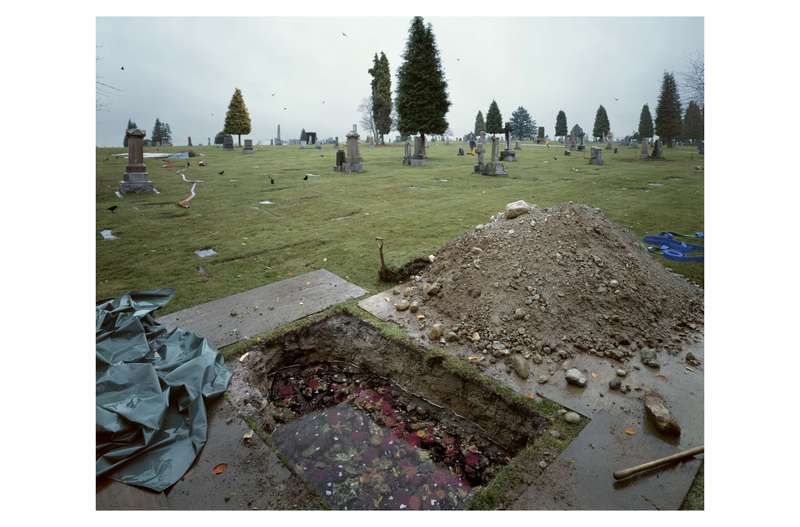
One of the most prolific users of the tableau is Jeff Wall who’s images are created from scenes he has witnessed or memories, these he meticulously recreates. Wall’s exhibition ‘Tableaux Pictures Photographs’ 1996-2013 we see images such as ‘Flooded Grave’ in which an open grave has been filled with water and sea life, such as star fish and sea urchins. This is typical of the way in which Wall plays with the tension between the real and the unreal. For Wall it is the way in which we will voids with our daydreams, in our daydreams we see what isn’t there. When exhibiting his work, Wall uses large light boxes to display his colour images, giving them a luminosity that adds a hyper real quality to them which is turn confronts the viewer with the drama in front of them. The images become more than a photo and more akin to a lit stage. Wall a post graduate in art history has a deep understanding of how space is full of relationships and how to construct a visual scene for the viewer.
“they [Wall’s images] are evidence of a detailed comprehension of how pictures should work and are constructed.” Charlotte Cotton
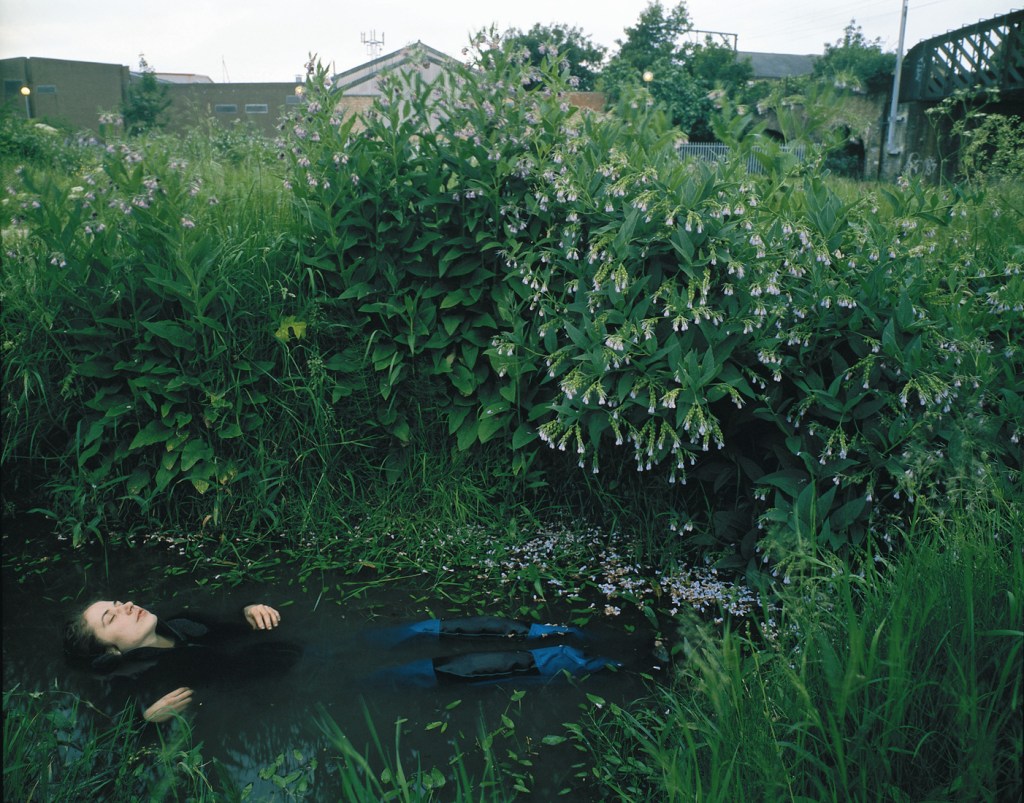
For his tableau’s the British photographer Tom Hunter reworks the images created by Victorian painters such as the Pre-Raphaelite Brotherhood, especially in his series ‘Thoughts of life and Death’. One image from this series ‘The way home’ 2000, is a direct translation of John Everett Millais’s2 ‘Ophelia’ (1851-52) which depicts the tragic character from Shakespeare’s play ‘Hamlet’. In Hamlet the drowning of Ophelia is not actually acted out on stage but rather delivered in poetic verse by Queen Gertrude [Hamlet Act IV]3. In Millais’s painting he has depicted the moment Ophelia has fallen from the broken branch into the brook and begins to sink without a struggle, calmness upon her facial expression. The artist gives form to the poetic description beautifully. As with Millais’s painting, Hunter’s image is rich in detail showing the English landscape however brings this into a contemporary setting by the inclusion of a metal foot bridge and rooftops of modern housing. The use of a dead pan expression on the figures face engenders in the viewer a sense of anxiety and uncertainty of the context or meaning, resulting in the viewer questioning the scene before them.

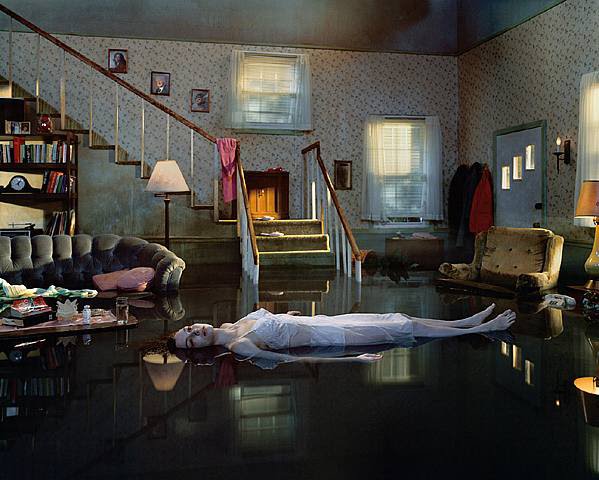
Gregory Crewdson also adapts the Millais painting for his own narrative in his ‘The Twilight’ series. ‘Untitled’ (Ophelia) 2001. Whereas Hunter depicts a girl drowned on her way home from a club, Crewdson’s image shows his Ophelia as a typical American suburban housewife laying lifeless in a flooded home. In the documentary 4 ‘ The aesthetics of repression’ 2004, Crewdson discusses his interests in the psychology underlying the American suburban experience. As a side note, Crewdson’s father was a psychiatrist who had his office in the basement of their family home, a motif that appears in many forms of his images. Each tableau that Crewdson creates is akin to the elaborate block buster movie sets, using huge teams to create scenes of suburban live within the studio. The use of large sets and actors gives his images the appearance of movie stills, frozen scenes of action. Influenced by artists and movie directors such Hopner, Spielberg and Hitchcock, Crewdson’s images have a dramatic almost sinister nature to them.
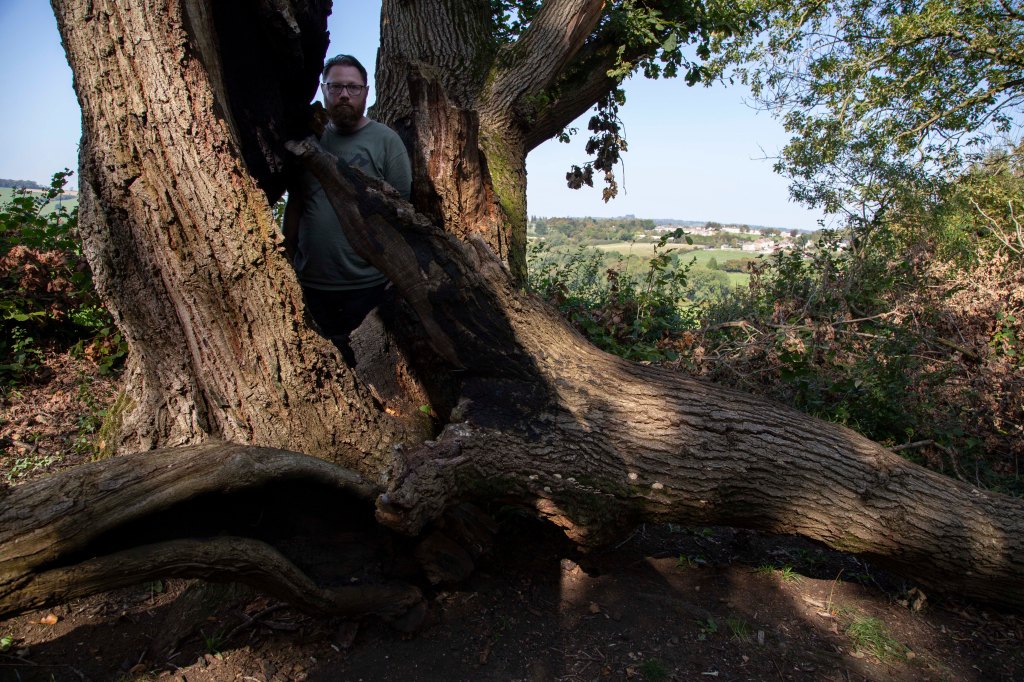
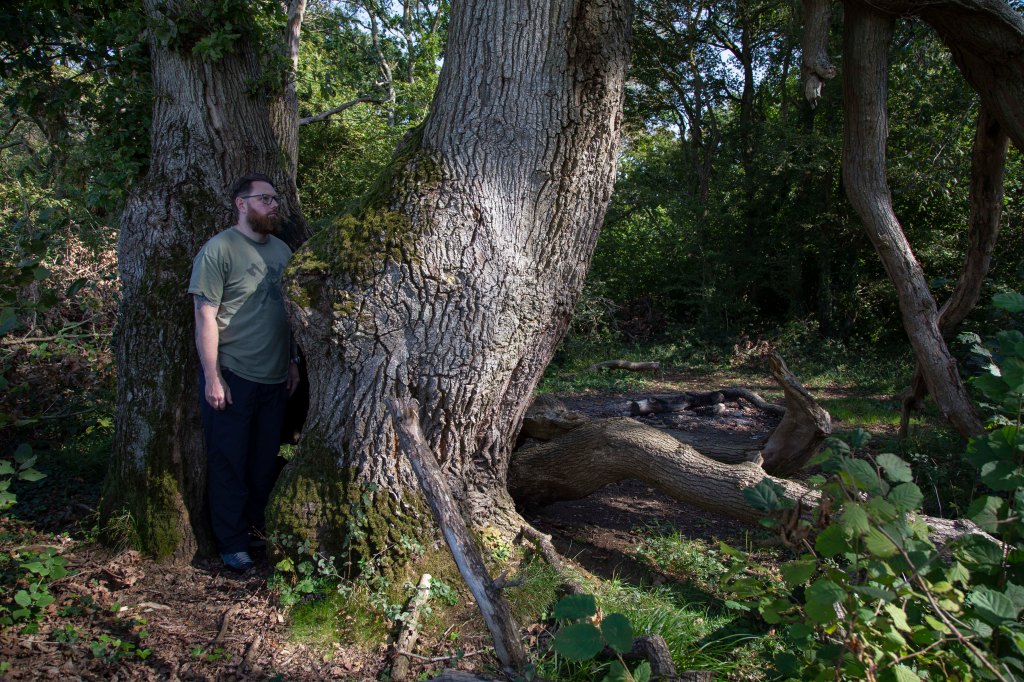
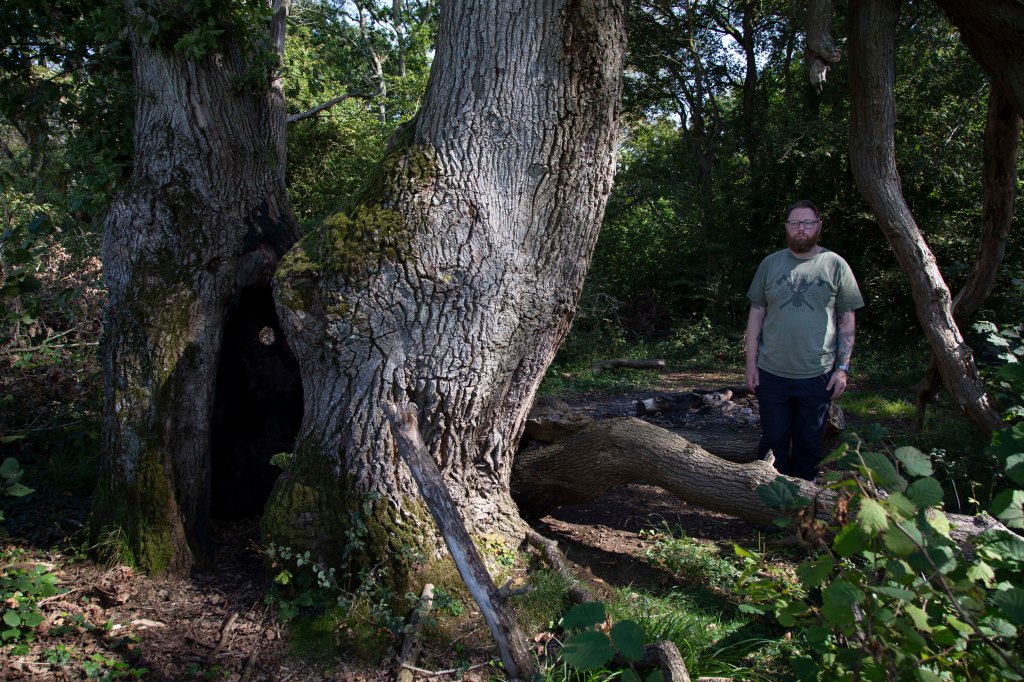
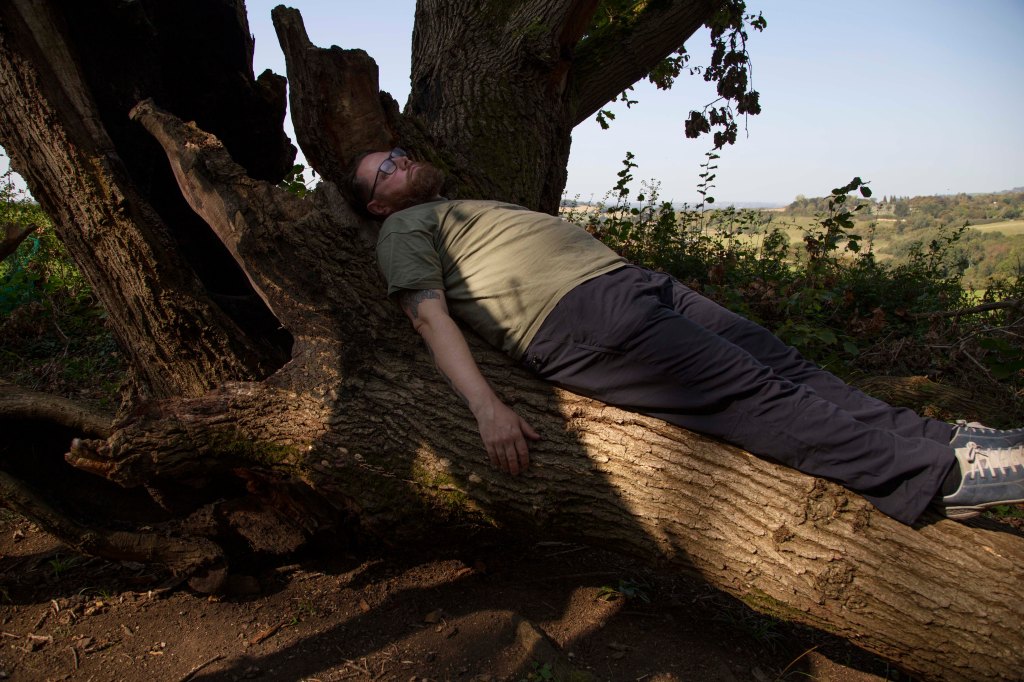
Often tableaux photography will employ pictorial devices to throw questions, a sense of the unknown about the meaning or context. Such devices are often subtle as a turned head, figures facing away from the viewer or a dead pan expression. As with each of these photographers, within my own practice I have experimented with how the image is choreographed, dressing the set, lighting and how the figure is represented within the image. When looking at the space within an image I feel that in order to give the space meaning there needs to be a human presence. If there isn’t someone there to experience the space does the space exist? The use of tableau photography in my practice is a clear method to illustrate this.
Resources
1 Cotton. C, (2011) Thames & Hudson, ‘The photograph as contemporary art’ pp. Pages 54-71.
2 Hilton. T (1991), World of Art books, ‘The Pre-Raphaelites’, pp. 77-81.
3 Riggs. T (1998) [Tate online], Ophelia 1851-52, https://www.tate.org.uk/art/artworks/millais-ophelia-n01506 [Accessed 7.10.2020]
4 Blackwood. M (2004) [documentary film] The Aesthetics of Repression: Gregory Crewdson, [Watched 05.10.2020]
 The Space Between
One thought on “The Photographic Tableaux”