Surrealism in Photography

Surrealism is periodically recycled as a style and as described by Andy Grundberg in his essay ‘surrealism runs like a pulse through art photography’s modernist presence.’1 In 1924 Andre Breton published his first surrealist manifesto and was based on the Freudian notions of the subconscious mind as a platform for the artist or art photographer. In terms of photography, surrealism can be seen as the precursor to postmodernism ‘As an avatar of deconstructivist practice and theory, it supplies a rationale both for photography’s position within the art world and for those photographic practices that seek to disorient and disrupt our conventional responses to images.’2 

Photographs can be seen as surreal in and of themselves, they act to displace, disrupt and disorientate the viewer. In Susan Sontag’s essay ‘On photography’ she writes: 

‘The photographers who concentrated on interfering with the supposedly superficial realism of the photograph were those who most conveyed photography’s surreal properties’3 

As with surrealist painting, photography alternates between representational and the ‘automatic’ abstract styles. May Ray remains to this day the anthesis of surrealist photography. His images typically switch between these two styles, his images such as ‘Le violon d’Ingres’ are pure constructs, choreographed and designed, whereas his ‘Rayographs’ rely upon a more random act of chance or pure experimentation.  

More contemporary photographers have a tendency for the grotesque or theatrical such as the work of Joel-Peter Witkin, Frederick Sommer and Les Krims.  If we first look to the work of Witkin who’s images are meticulously constructed and often grotesque featuring disembodied limbs to create dreamlike still life scenes. Wikin’s image ‘Harvest, 1984’ is something akin to the 17th Century Flemish painters  with their images of fruit and game but offers a more macabre interpretation.  
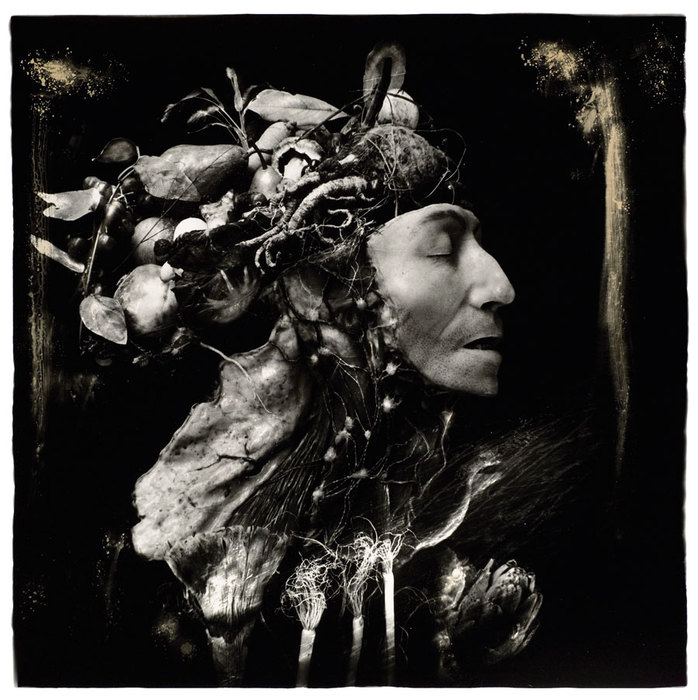
Harvest, Joel-Peter Witkin

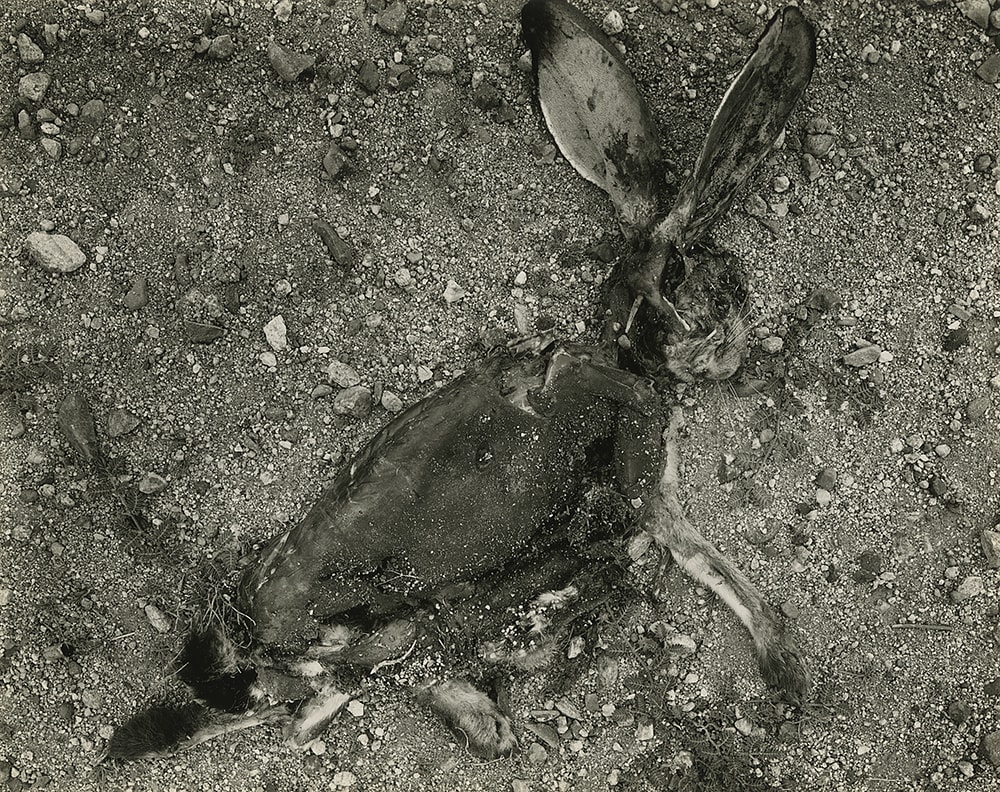
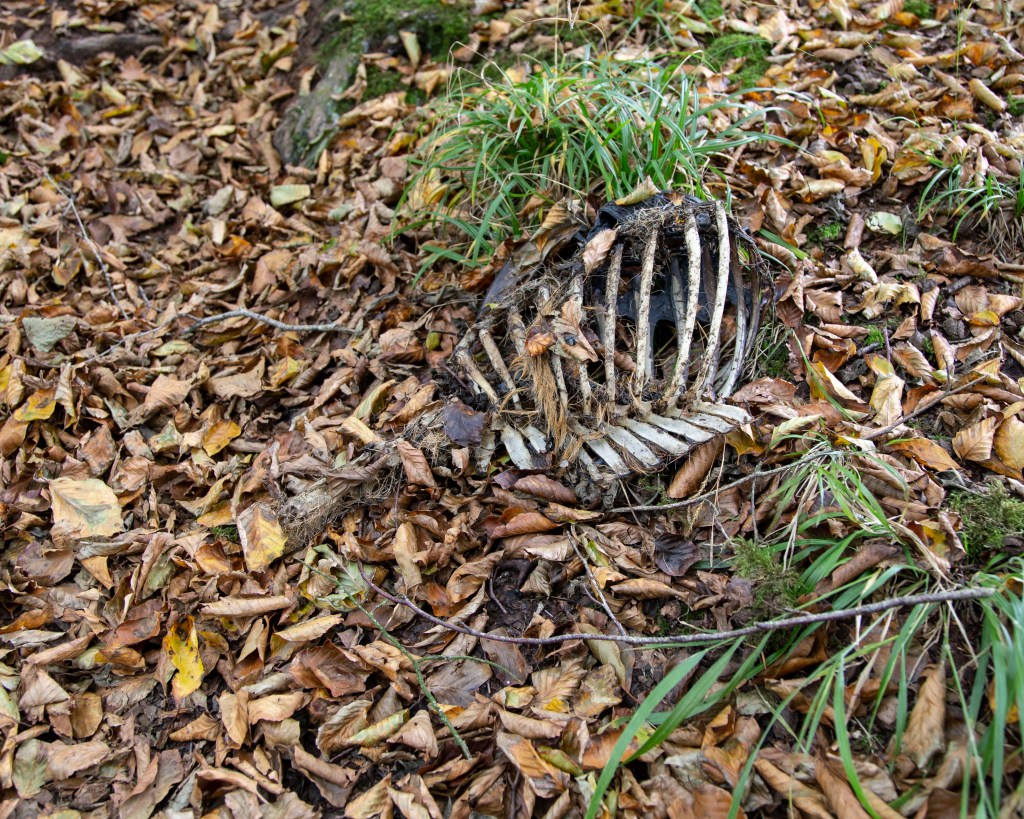
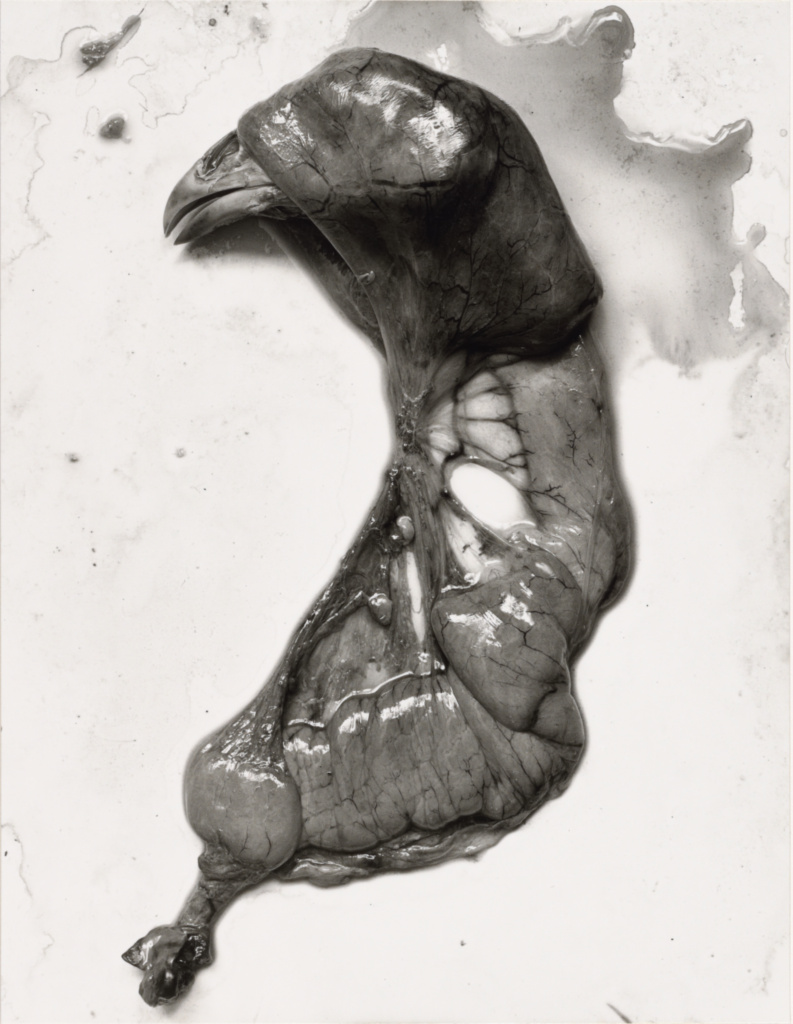
Frederick Sommer’s images can be seen in the same vein as Witkin’s in the use of the grotesque to illicit a reaction from the viewer. However, unlike Wikin, Sommer does not (obviously) arrange his subjects, there are no fancy set pieces.  Images such as ‘Chicken’ and ‘Jack rabbit’ are more automatic in the sense of a document of something found. This sits well within the origins of surrealism and that of tapping into the subconscious.  
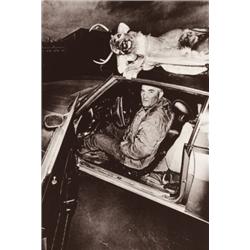
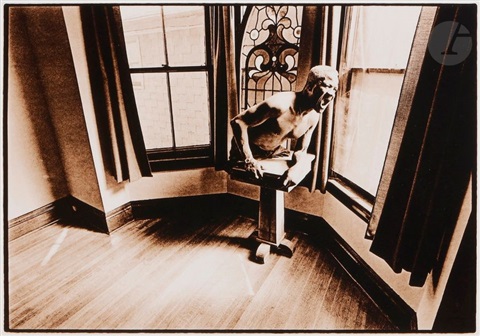
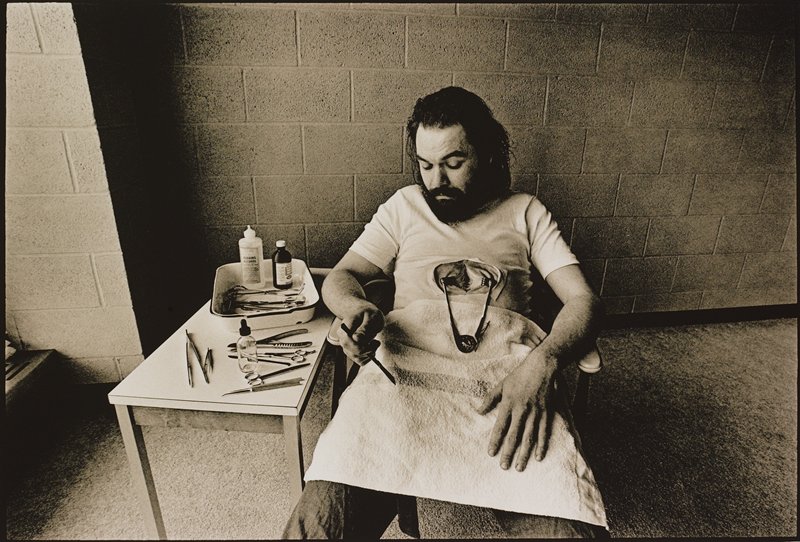
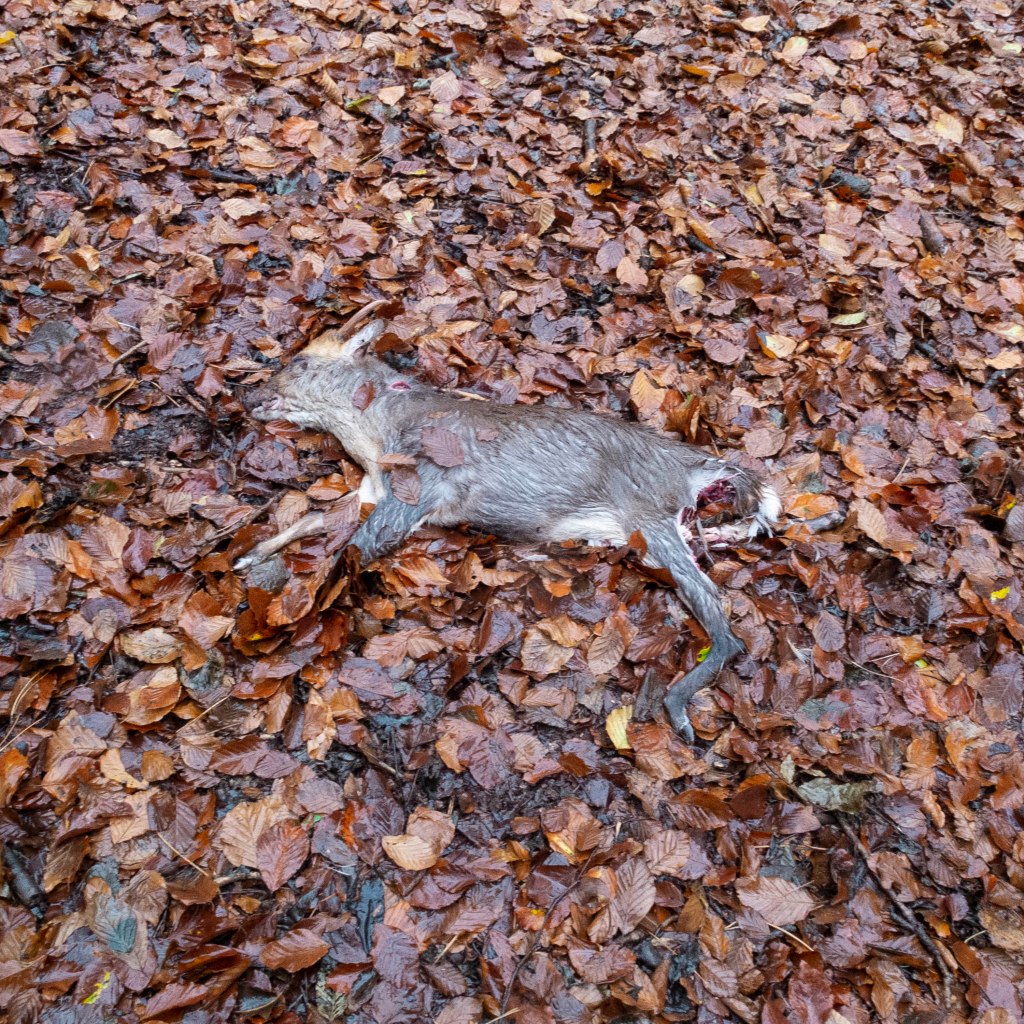
Bridging this divide of styles is Les Krim’s work, that has a mix of autonomous and choreographed images, ‘self-operation’ appears choreographed whilst ‘Deer slayer’ looks to be a documentary image of strangers coming back from a hunt. Of the three photographers I am more drawn to Krim’s work, perhaps because of his use of the human form as in ‘Human Being as a sculpture’ or because there is a simplicity to his work that connects with my subconscious.  
There is something to be said about subtlety, especially in surrealism as all too often images that have been described as surreal are over thought. This was an issue that Breton had with the work of Salvador Dali, in fact many of the Parisian surrealists shunned Dali having said his work to be too contrived and controlled to have come from the subconscious. The same could have been said about Yves Tanguy, who’s work is comparable to that of Dali.  Photographers who work in a similar styling of Dali are Jerry Uelsmann and Clarence John Laughlin, whilst illustrating something dreamlike their images my lack the subtlety that I admire in early surrealist work, especially when comparing to Man Ray’s iconic image ‘Les Larmes’.  
References

1 Grundy. A (1990), Bay Press, The Critical Image: essays on contemporary photography, ‘On the dissecting table: The unnatural coupling of surrealism and photography’ pp. 80. 

2  Grundy. A (1990), Bay Press, The Critical Image: essays on contemporary photography, ‘On the dissecting table: The unnatural coupling of surrealism and photography’ pp. 86. 

3 Sontag. S (1979) Penguin Books, ‘On Photography’ pp. 52. 
The Photographic Tableaux

In Charlotte Cotton’s book ‘the photography as contemporary art’1 she sets out each chapter under a theme, in the chapter ‘once upon a time’ one such theme is the tableau photography (or tableau-vivant). Tableaux photography concerns the story telling in contemporary art photography with images that make reference to fable, fairy tales, modern myths and apocryphal events that are all part of our collective consciousness.

Tableau Vivant transalates from French meaning living picture, is not a new technique exclusively used by photographers but one that has its roots in 17th & 18th century paintings. The narative is often concentrated in a single image (which may become part of a series) with the scene choreographed for the viewer, using recognisable (conscious or subconscious) motifs, symbols or props that elicit a memory or emotional response.

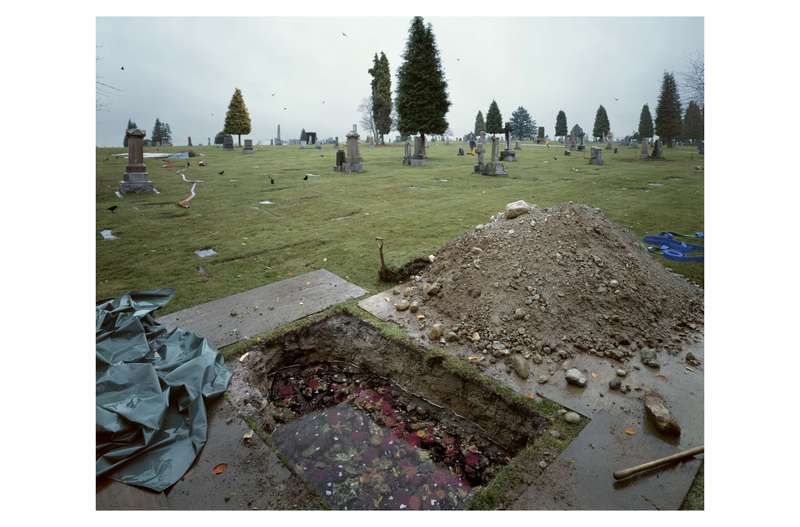
Jeff Wall ‘Flooded Grave’ 1998-2000

One of the most prolific users of the tableau is Jeff Wall who’s images are created from scenes he has witnessed or memories, these he meticulously recreates. Wall’s exhibition ‘Tableaux Pictures Photographs’ 1996-2013 we see images such as ‘Flooded Grave’ in which an open grave has been filled with water and sea life, such as star fish and sea urchins. This is typical of the way in which Wall plays with the tension between the real and the unreal. For Wall it is the way in which we will voids with our daydreams, in our daydreams we see what isn’t there. When exhibiting his work, Wall uses large light boxes to display his colour images, giving them a luminosity that adds a hyper real quality to them which is turn confronts the viewer with the drama in front of them. The images become more than a photo and more akin to a lit stage. Wall a post graduate in art history has a deep understanding of how space is full of relationships and how to construct a visual scene for the viewer.

“they [Wall’s images] are evidence of a detailed comprehension of how pictures should work and are constructed.” Charlotte Cotton

Tom Hunter ‘The way home’ 2000

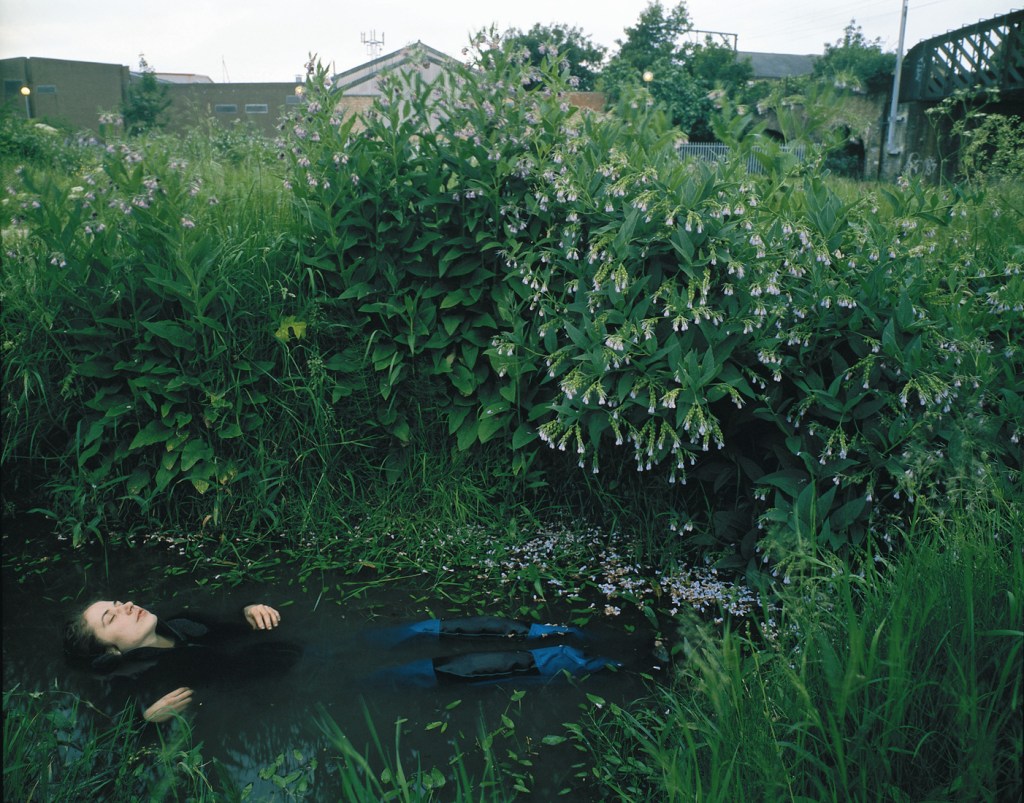
For his tableau’s the British photographer Tom Hunter reworks the images created by Victorian painters such as the Pre-Raphaelite Brotherhood, especially in his series ‘Thoughts of life and Death’. One image from this series ‘The way home’ 2000, is a direct translation of John Everett Millais’s2 ‘Ophelia’ (1851-52) which depicts the tragic character from Shakespeare’s play ‘Hamlet’. In Hamlet the drowning of Ophelia is not actually acted out on stage but rather delivered in poetic verse by Queen Gertrude [Hamlet Act IV]3. In Millais’s painting he has depicted the moment Ophelia has fallen from the broken branch into the brook and begins to sink without a struggle, calmness upon her facial expression. The artist gives form to the poetic description beautifully. As with Millais’s painting, Hunter’s image is rich in detail showing the English landscape however brings this into a contemporary setting by the inclusion of a metal foot bridge and rooftops of modern housing. The use of a dead pan expression on the figures face engenders in the viewer a sense of anxiety and uncertainty of the context or meaning, resulting in the viewer questioning the scene before them.

John Everett Millais ‘Ophelia’ 1851-52

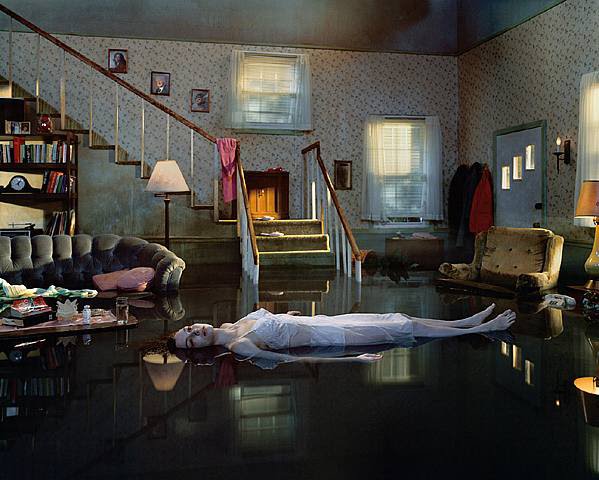
Gregory Crewdson also adapts the Millais painting for his own narrative in his ‘The Twilight’ series. ‘Untitled’ (Ophelia) 2001. Whereas Hunter depicts a girl drowned on her way home from a club, Crewdson’s image shows his Ophelia as a typical American suburban housewife laying lifeless in a flooded home. In the documentary 4 ‘ The aesthetics of repression’ 2004, Crewdson discusses his interests in the psychology underlying the American suburban experience. As a side note, Crewdson’s father was a psychiatrist who had his office in the basement of their family home, a motif that appears in many forms of his images. Each tableau that Crewdson creates is akin to the elaborate block buster movie sets, using huge teams to create scenes of suburban live within the studio. The use of large sets and actors gives his images the appearance of movie stills, frozen scenes of action. Influenced by artists and movie directors such Hopner, Spielberg and Hitchcock, Crewdson’s images have a dramatic almost sinister nature to them.

Gregory Crewdson ‘Untitled’ (Ophelia) 2001

Often tableaux photography will employ pictorial devices to throw questions, a sense of the unknown about the meaning or context. Such devices are often subtle as a turned head, figures facing away from the viewer or a dead pan expression. As with each of these photographers, within my own practice I have experimented with how the image is choreographed, dressing the set, lighting and how the figure is represented within the image. When looking at the space within an image I feel that in order to give the space meaning there needs to be a human presence. If there isn’t someone there to experience the space does the space exist? The use of tableau photography in my practice is a clear method to illustrate this.

Resources

1 Cotton. C, (2011) Thames & Hudson, ‘The photograph as contemporary art’ pp. Pages 54-71.

2 Hilton. T (1991), World of Art books, ‘The Pre-Raphaelites’, pp. 77-81.

3 Riggs. T (1998) [Tate online], Ophelia 1851-52, https://www.tate.org.uk/art/artworks/millais-ophelia-n01506 [Accessed 7.10.2020]

4 Blackwood. M (2004) [documentary film] The Aesthetics of Repression: Gregory Crewdson, [Watched 05.10.2020]

Beyond the ‘White cube’

Two artist photographers that I have found who step beyond the stereo typical white cube format of a photography exhibition have been Carter Mull and Shirana Shahbazi. Both photo artists utilise the space they display their work in, manipulate or incorporate the space as to become part of the exhibition.

Carter Mull, an American artist uses photography and re-photography in his practice is a visual metaphor that conveys the density of communication saturation:

The meaning of making and watching images in a world in which visual bombardment is omnipresent to the point of over saturation.”

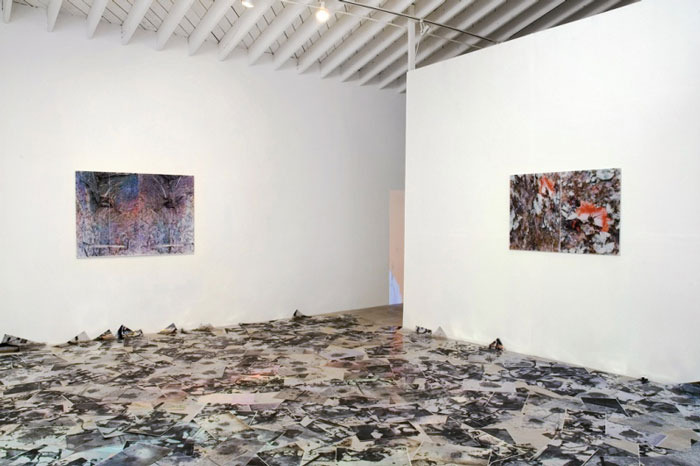
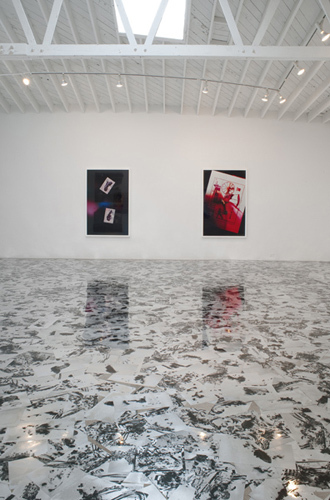
Mull’s work often uses archival materials from old newspapers, a media that he describes as being almost obsolete, the daily paper would be regarded as history each day. By re-photographing and using these newspapers in his work Mull is creating new histories. Building up collages and photographs of multiple sources he creates something new. For me these individual works only really come into their own when exhibited and a single unit. As with the 2006 ‘Ground’ and 2010 ‘Metemetrica’ exhibitions, Mull uses 1800 offset prints on various media strewn about the main exhibition space floor for visitors to walk on. The number of prints corresponds to the number of individual frames in sixty seconds of video footage, at the standard rate of thirty frames per second. I feel this density of images further bombards the viewer and instils the context in Mull’s practice.

I also want this same logic to function between photographs. This is why I try to emphasise the diversity of formats within my larger practice. Part of the impulse to look at the local paper also has to do with a desire to locate an image matrix— one that was delivered to me, and that houses mass images designed to cut across multiple demographics. I wanted to take the paper as a kind of generative source to structure the grammar of a body of work.”

Whilst Mull’s images seem at a polar opposite to my practice, I feel his use of space, when exhibiting, aligns to the context of my work, in that we are both using personal space (proximics) as a way to engage the viewer beyond the fixed image.

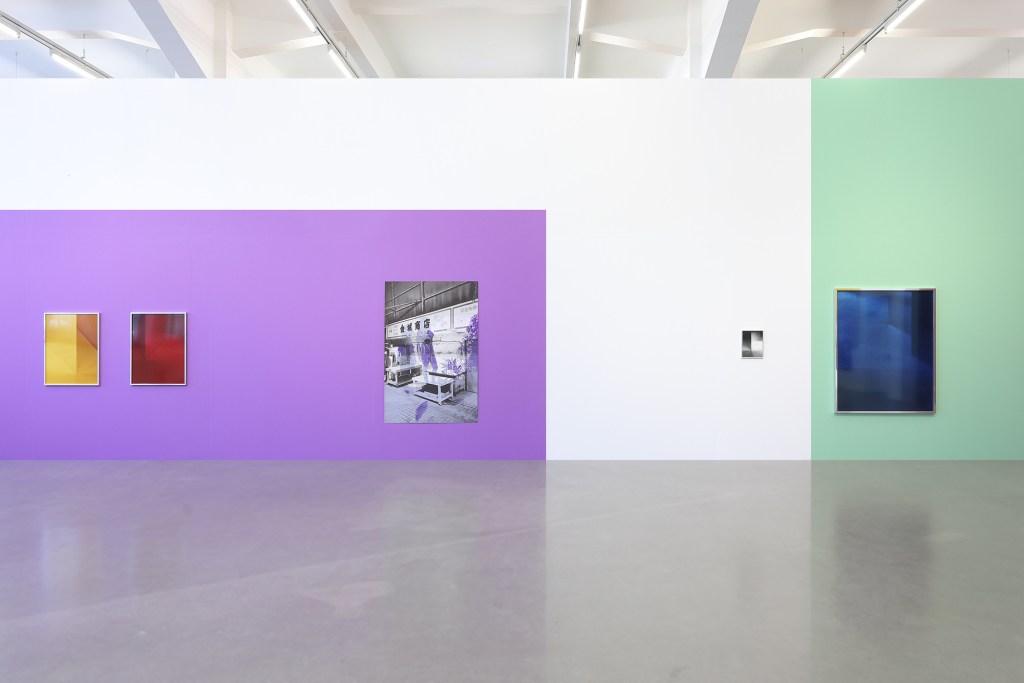
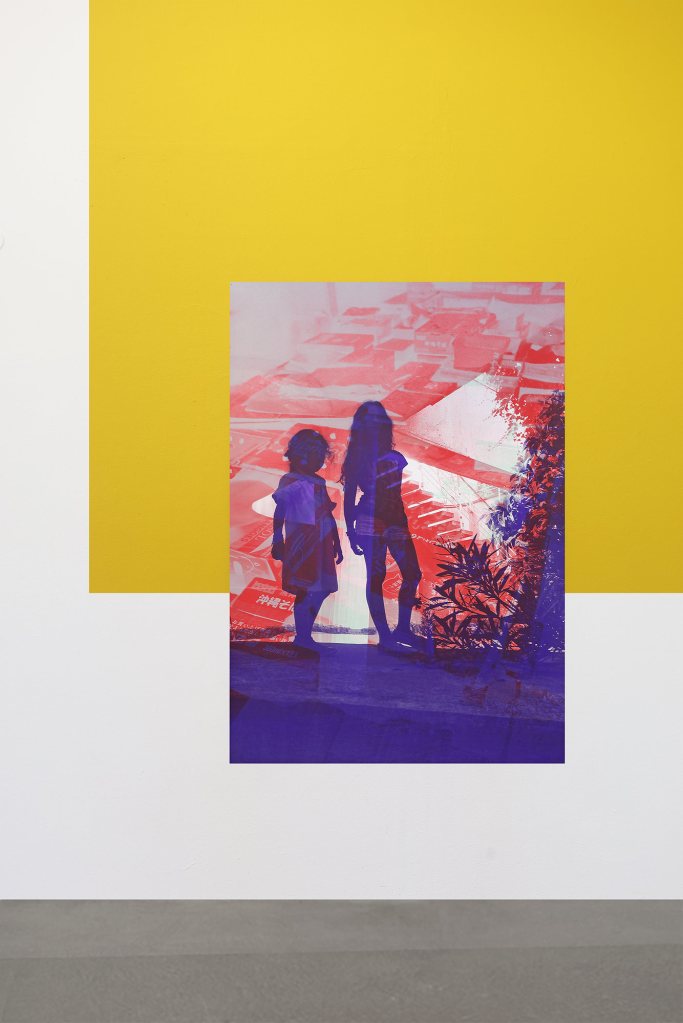
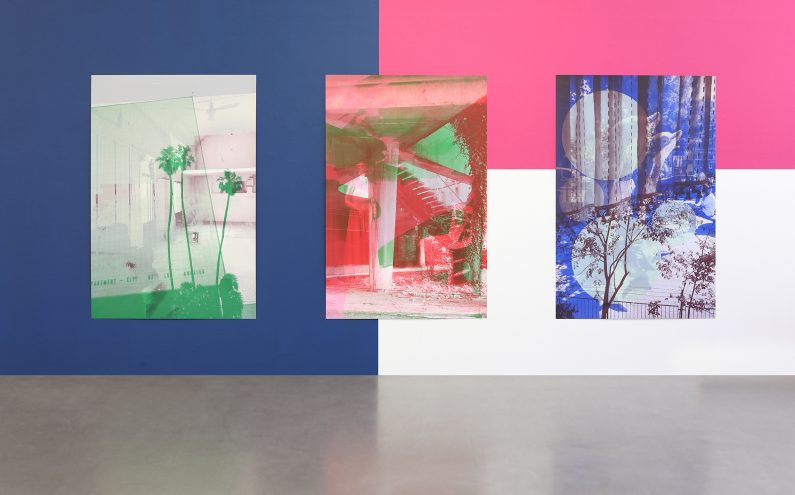
Shirana Shahbazi, is an Iranian-born photographer, famed for her contemporary take on traditional photography genres such as still life, landscape and portraiture. Unlike Mull, Shahbazi’s practice can often be seen as individual works with their individual contexts. Shahbazi’s series ‘Objects in mirror are closer than they appear’ 2018 she composed abstract photographical images of spaces that are distinguished by vibrant colours, juxtaposed by sharp black and white contrasts.

In the exhibition at the Kunsthaus Hamburg, Shahbazi is focused on the subject of space, both as an abstract construct and in the sense of lived urbanity. Shahbazi transformed the gallery space by means of colour and geometric shape. This use of shape and colour complements each set of images, linking in the contrasting b&w images with colour an as such unifying to create a cohesive exhibition.

What I have taken from looking at these photographers is how each has approached the design of each exhibition is another step in the image making process. An exhibition in itself should be considered the final image in a series.

[ Carter Mull sources: museonagazine.com interview with Richard Turnbaull 2010, Artforum: Carter Mull ‘Metemetrica’ 2010 by Aram Moshayed. http://www.museomagazine.com/CARTER-MULL]

[ShiranShahbazi sources: https://youtu.be/XsaHyQjS_rk https://www.e-flux.com/announcements/190663/shirana-shahbaziobjects-in-mirror-are-closer-than-they-appear/ https://www.moma.org/interactives/exhibitions/2012/newphotography/shirana-shahbazi/]

The poetics of space: House

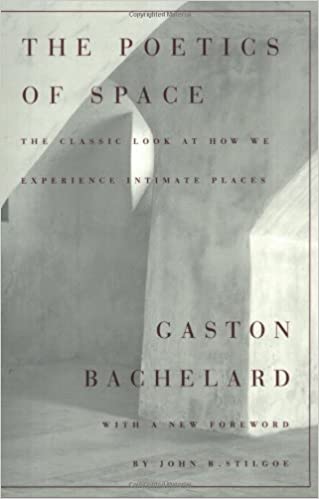
[G Bachelard, The poetics of space, 1958 Press Universitaires de France.]

In ‘the poetics of space’ Bachelard applies the method of phenomenology to architecture, on lived experience in architectural places and their contexts in nature. He focuses especially on the personal, emotional response to buildings both in life and in literary works, both in prose and in poetry. He is thus led to consider spatial types such as the attic, the cellar, drawers and the like. Bachelard implicitly urges architects to base their work on the experiences it will engender rather than on abstract rationales that may or may not affect viewers and users of architecture.

In the section ‘House’ Bachelard discusses the fundamental importance of the house as a space in which we store memories:

Of course, thanks to the house, a great many of our memories are housed, and if the house is a bit elaborate, if it has a cellar and a garret, nooks and corridors, our memories have refuges that are all the more clearly delineated. All our lives we can come back to them in our daydreams.”

And how we fill our homes with objects, photos, keepsakes as strongholds for our memories. When we wish to recall a memory we can seek out that object, special space or room that holds the key to that memory. We can visualise the room in our conscious mind and question:

Was the room a large one? How was it lighted? Was it warm?… How too, in these fragments of space, did we achieve achieve silence? How did we relish the very special silence of the various retreats of solitary dreaming?”

Bachelard further goes on to discuss the house we were born in, the way the ‘house’ holds not conscious memory but a physical memory. Memories we cannot bring to mind but rather those of learning to, walk, talk, touch, taste, smell:

But over and beyond our memories, the house we were born in is physically inscribed in us. It is a group of organic habits…. In short, the house we were born in has engraved within us the hierarchy of the various functions of inhabiting.”

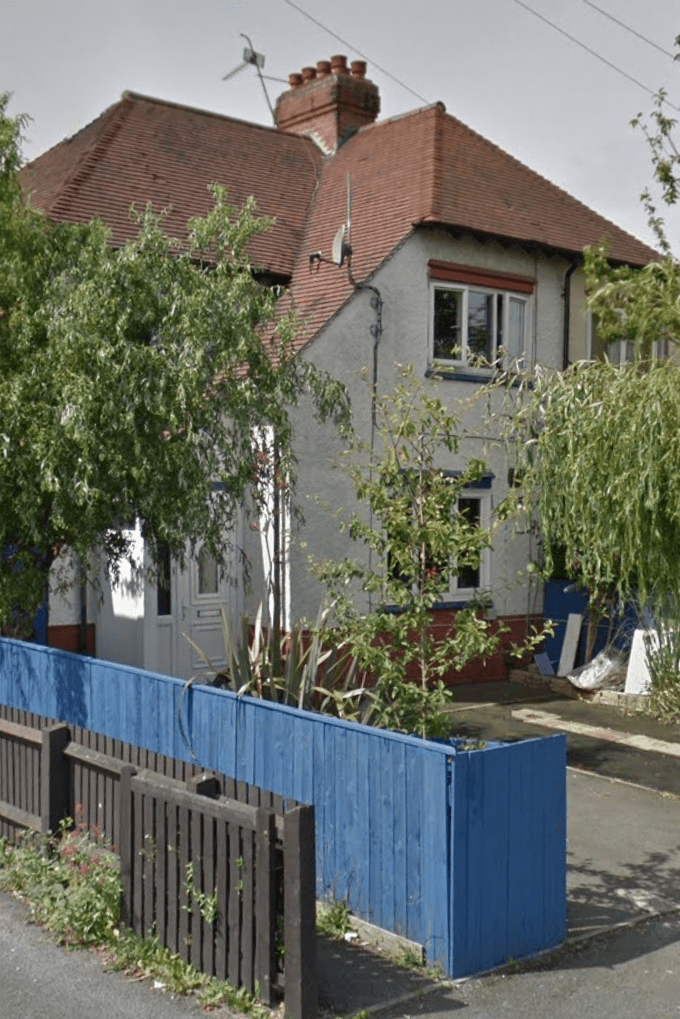
This recalls memories of the house that holds my earliest memories, despite recalling many moments there is a point beyond memory. However I have ‘sense’ of the place from this pre-memory, or as Bachelard indicates an “organic habit”. It is, however, unclear at which point do my emotional responses originate, the conscious or organic memories. For example I can clearly remember my room, the view from the window of the garden, the bathroom and living room, however I cannot recall how the kitchen looked or the front garden. I do recall what food I ate, the smell and taste and that we had a privet hedge at the front of the house. This solidity of memory is so founded in this space. Without the house as a point of reference would our memories simply drift in the winds, to be lost to time?

8 Anderson St, Derby. Google Street view capture July 2017. The house that stores my earliest memories.