When reflecting upon my own practice, in particular when travelling, I have always tended to feel uncomfortable with taking photos of ‘local’ with a tendency towards making images of tourists. This reluctance, clear to me now, directly links to my own ethics and a desire for truth within my images. I felt that by not truly knowing the ‘locals’ or their life stories I was not in a position to represent them. The images from media sources such as National Geographic have delivered the world to our doorsteps for decades and often we see these edited images as objects of the exotic. Rarely do we challenge these images as misrepresentative, but they clearly are and as such give us, the viewers, a skewed ideology of the world beyond our economic borders.
Talking about early British, European and American photography, Liz Wells uses the writing of Sylvia Harvey to describe early representational images as “Generally, it was photographers from the middle and upper classes who sought images of the poor for the purposes which included curiosity, philanthropy and sociology, but also policing and social control.” [Harvey in Wells 2010:252]
Clearly this first world misrepresentation is not something new and has gone unchallenged for some time.
In my practice now, I look to use self-portraiture to place myself in the footprint of those I seek to represent as way of mitigating the risk of misrepresentation. Wishing to avoid what can be seen a stereo type of working class image, that of the ruddy faced, hard done by family. Karin E. Becker discusses tabloid press images of ordinary people in terms of socioeconomic tropes, the labourer, bricklayer, or factory worker:
“Most photographs in the tabloid are in fact very plain. They present people who appear quite ordinary, usually in their everyday surroundings: a family sitting around a kitchen table or on their living room sofa, couples and friends embracing, children with their pets. Sometimes the people in the photographs are holding objects that appear slightly out of place, so that we see the objects as ‘evidence’ : a women hugging a child’s toy, or presenting a photograph to the camera, for example. Sometimes the setting itself is the evidence behind the formal pose: a woman standing next to a grave, or a man sitting in the drivers seat of a taxi. Their faces often express strong emotion, easy to read as joy or sorrow.” [Becker in Wells 2010:298]
Headlines or further words act as anchorage linking the image to the story, Becker gives examples to this:
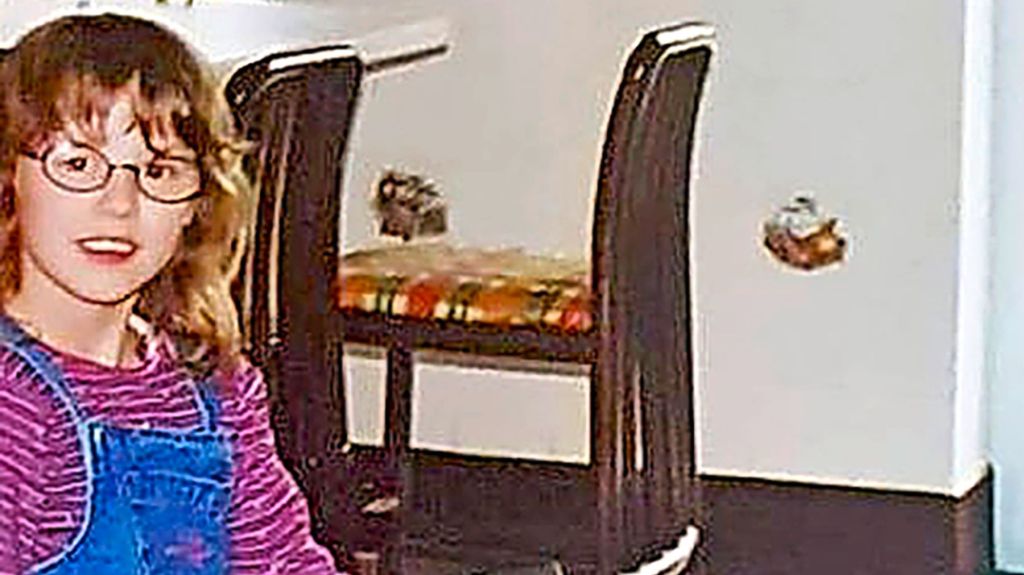
Fig 1. I was forced to watch Mum being murdered, Take a break magazine
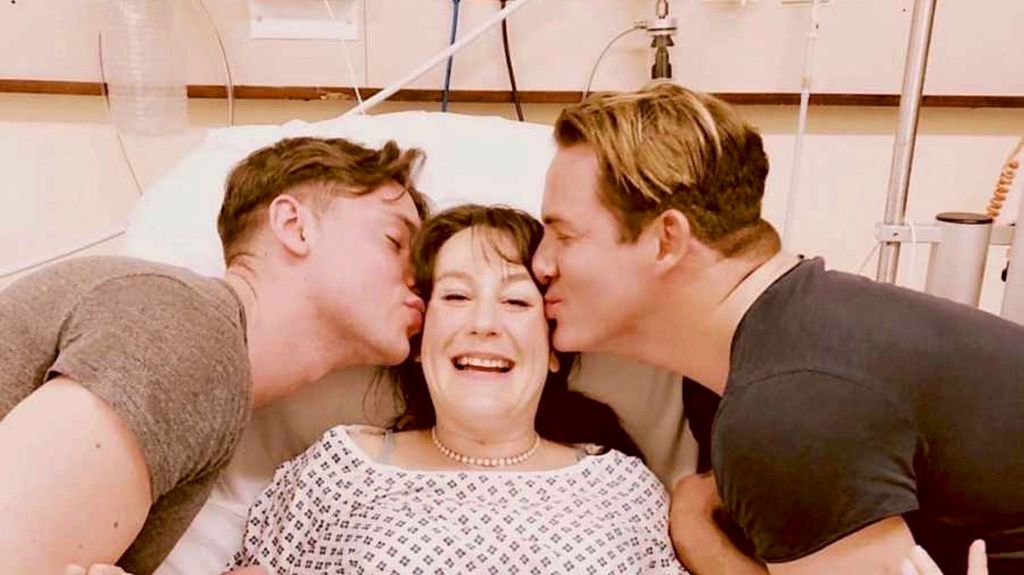
Fig 2. Drama at the birth, Take a break magazine
“‘Pals for years’, the two happy embracing women never dreamed that they were lost sisters who had been separated at birth.” [Beker in Wells 2010:298]
Without this anchorage the photograph loses context and becomes another vernacular photograph from the family album. However, the deliberate construction of these images resonates with the reader, the straight on, eye to eye level positioning mirror the less formal approach more familiar with the ordinary person.
Targeting the working class families with it’s competitions, and ‘Real’ life stories juxtaposed with the latest celebrity scandal, Take a break magazine is a platform that describes itself as: [Figures 1&2]
“Take a Break not only delivers the sharpest, most original and entertaining magazine in the market, but also an unrivalled sense of community and loyalty that places it at the heart of the family.” [Greatmagazines.co.uk accessed 15.3.2021]
Take a breaks use of subject supplied images and constructed vernacular photographs further instils a magazine that talks to the ordinary person, the family and working class.
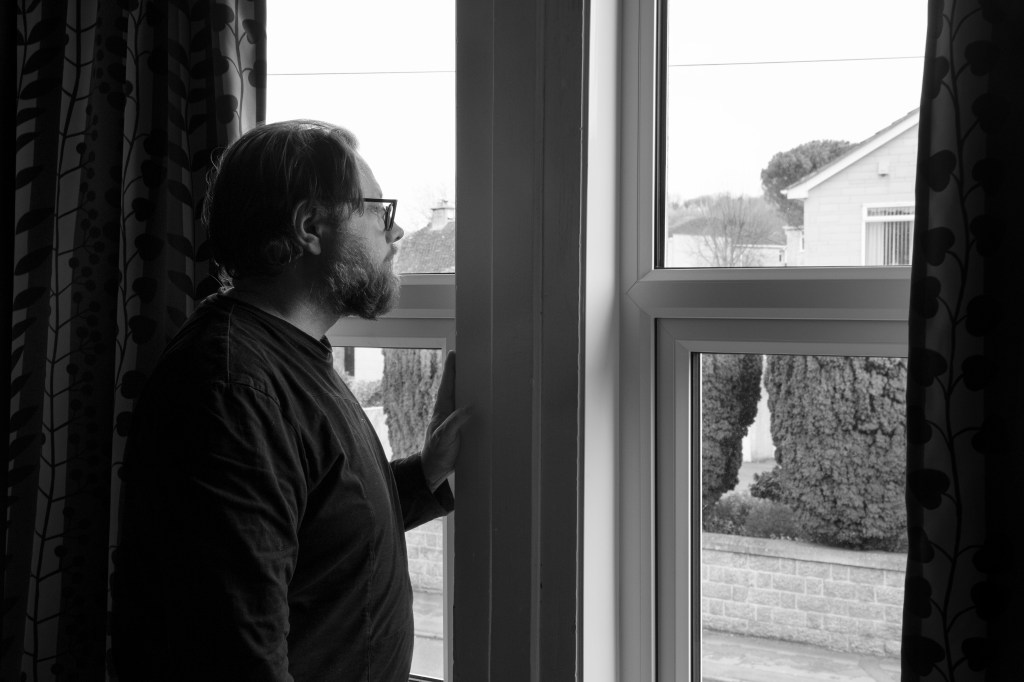
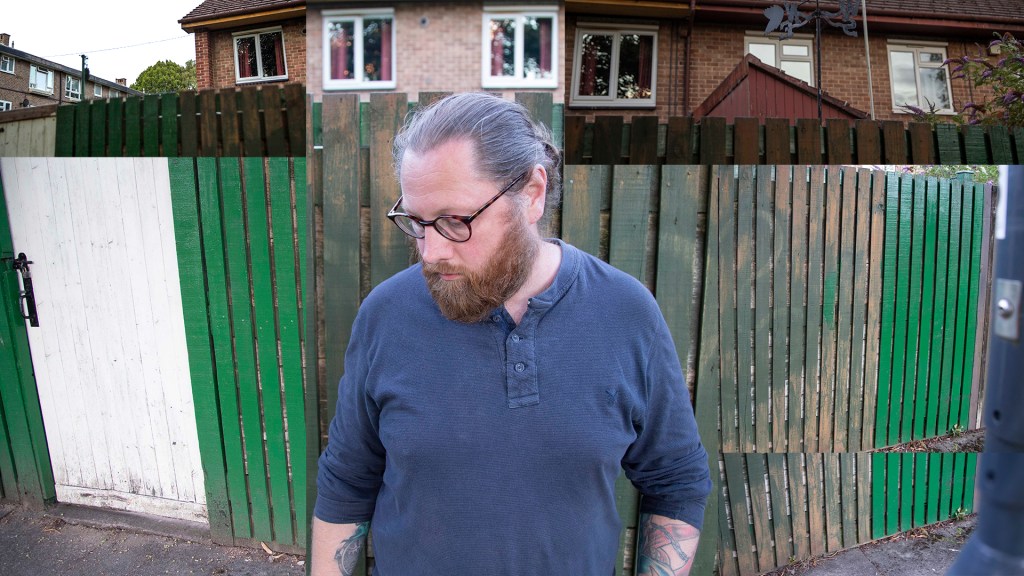
I have chosen to explore the socioeconomic sector that is familiar to me, having grown up and find myself living in today. I see myself as observer seeking a neutrality and truth to my images. I am aiming to create images that are both artistic and anthropological. This can only be achieved by interaction and collaboration between myself and subject, exploring social locality and the essence of home by building up a relationship off mutual trust. Use of tabloid wording will challenge the viewer with an opposing reading [Figure 3] as a metaphor for social documentary norms.
Fig 3 Trapped in the house for 360 days, Tim Beale 2021
References
Becker E. Karin. Photojournalism and the tabloid press, in Wells, Liz (2010) The photography Reader, Routlidge
Harvey, S. Who wants to know what and why?, in Wells, Liz (2010) The photography Reader, Routlidge
Week 6 has benefitted from both a 1:1 session with my tutor and portfolio review with the exceptionally talented Jack Latham. This was a fantastic opportunity to discuss ideas for a new direction for my practice, building on the images I have created to date.
Much of my current practice has involved research and writing, looking at the human condition, what makes us tick, why do we make the choices we make and, more importantly are those choices imposed upon us. I am most interested in where we live, and by ‘we’ I talk about the classless, the people who fall between the cracks between absolute poverty and a comfortable living. Typically, this suburban landscape is home to teachers, nurses, supervisors, and middle managers; falling through the cracks to become a silent majority.
However, the built environs of suburban landscape hold a key to our national identity and as such social housing, blocks of flats and housing estates have become our woodland, hills, and mountains, meanwhile the allotment become the oasis in the concrete desert. Renting has created the modern nomad, moving from one house to another in search of affordable accommodation.
Inside out: Home and Landscape
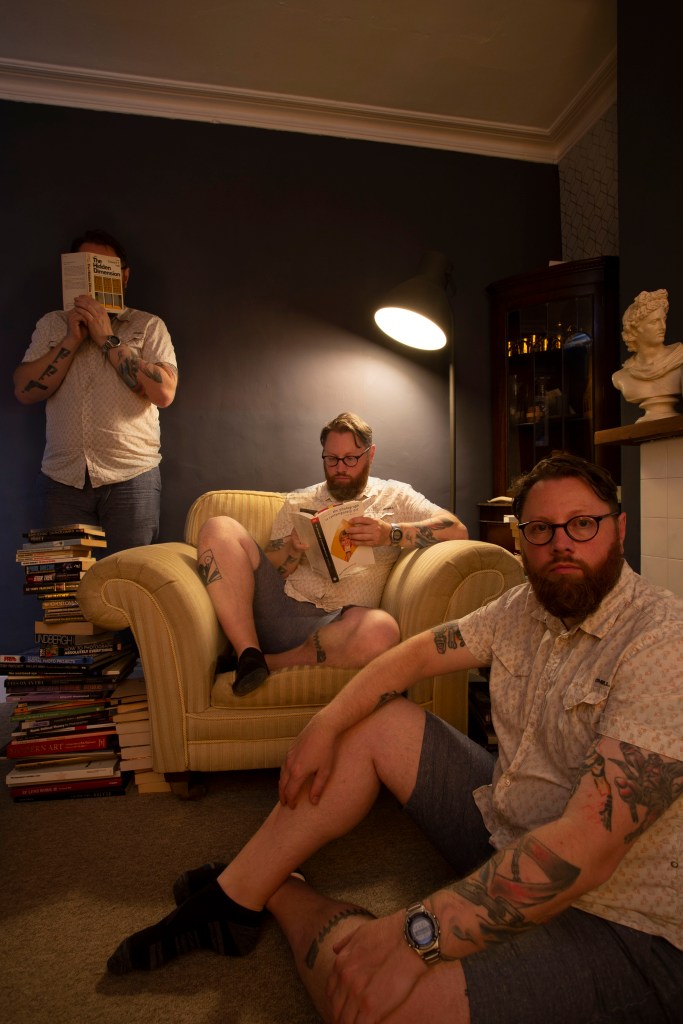
I have been creating topographical/architectural images of the suburban landscape in a three miles radius of my home. Images of vernacular housing, in sharp contrast to Bath’s stereotype of a grand Georgian city and tourist destination. However, my images are not just about the built environment but the people how make a home of this landscape. For me to tell the stories of the people it is important that I employ a method of documentary that does not employ working class tropes to belittle their socioeconomical status. I am proposing to construct a series of images that create a tangible link between the internal landscape of the ‘Home’ and the external suburban landscape. Using the self-portrayed figure as a simulacra of the home owner, I intend to represent the story of the inside, of the home.
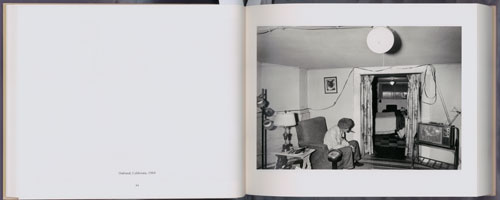
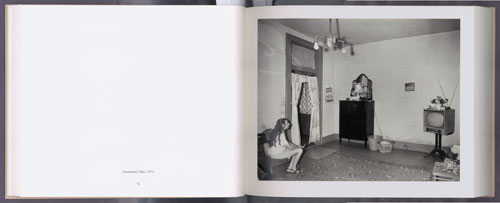
Figures Chauncey Hare 1960/701 & 2 Interior shots of home life
Protest Photographs by Chauncey Hare is a culmination of two decades of images production, the interiors of working-class homes and workplaces across America in the late 1960s and early 1970s. Hare worked as a factory employee for Standard Oil where he came into contact with many of his subjects. It is Hare’s images of the home place that strike true with me, these honest representations of working-class homes, often featuring the occupants relaxing in front of the TV after a day’s work. [Fig 1&2]
“Hare recounts how, over his years of production, he felt obliged to “Honour the reality of each person and their home” and speaks of a need to relate “the truth of people’s lives”. Yet this is not a measured, dispassionate process.” [Grant 2010:Online]
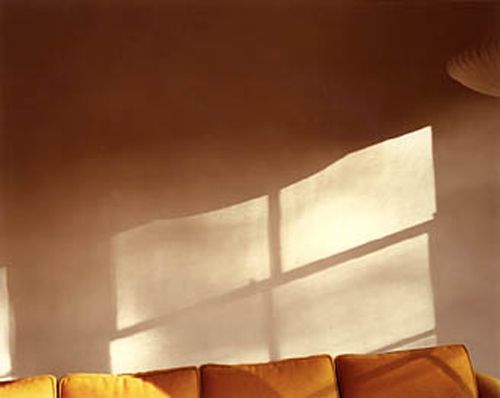
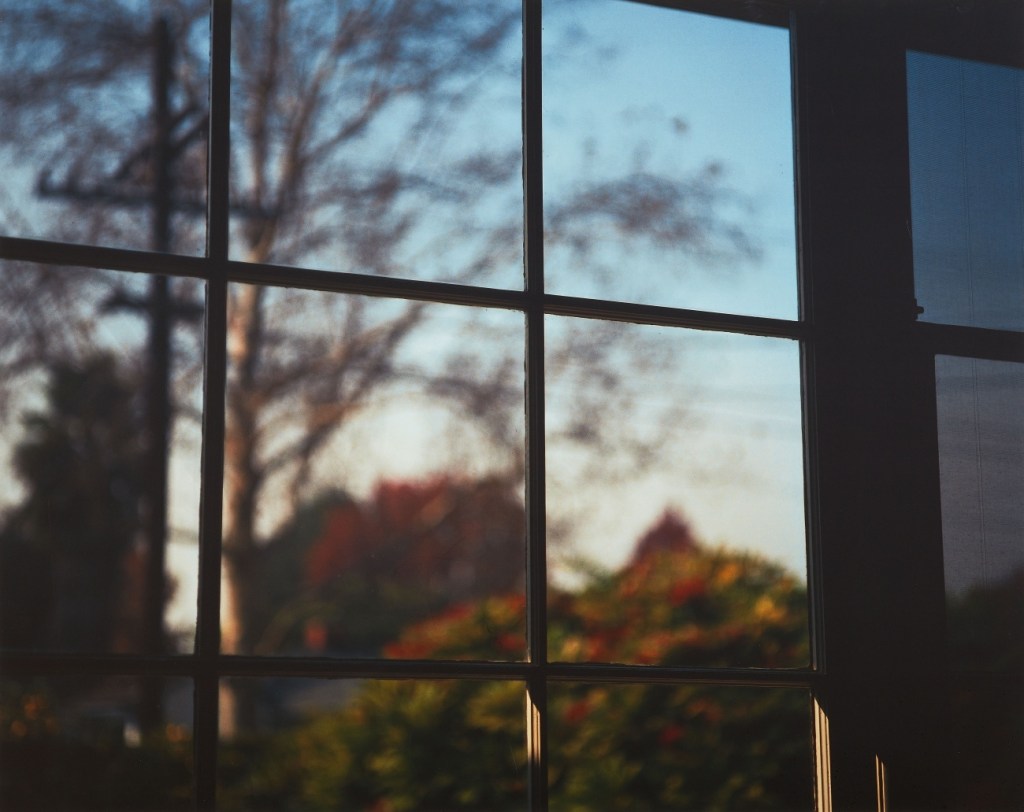
Figures 3 & 4 Uta Barth images from Nowhere near 1999
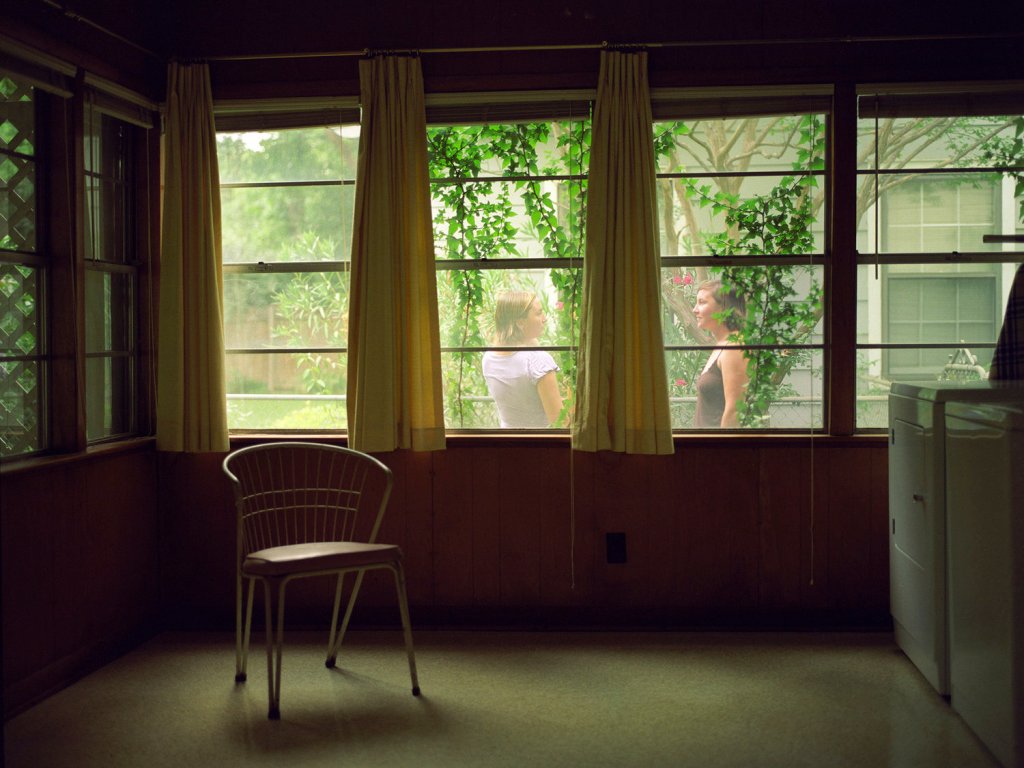
The context of looking out from the inside is one that Uta Barth explores in a less traditional way, in particular the series ‘Nowhere near’ presenting the space between objects, the seen and unseen. The use of window frames to focus the beholder, enticing to look outside beyond the frame. [Figs 3&4]
“Barth’s photographs, when installed in galleries, resonate phenomenologically. The space between the viewer and photographs become part of the interplay between space and subject, seeing and not seeing.” [Cotton 2009:133]
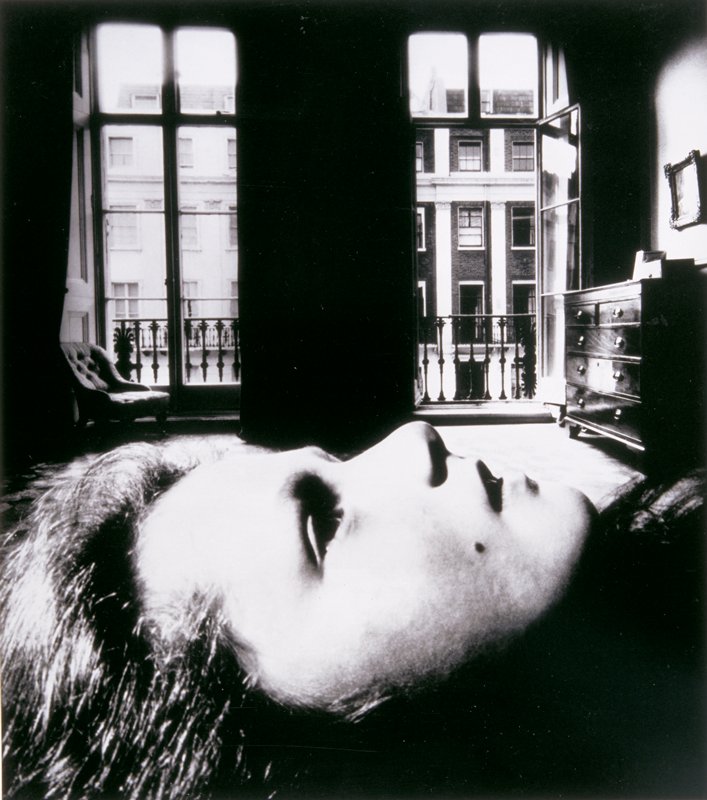
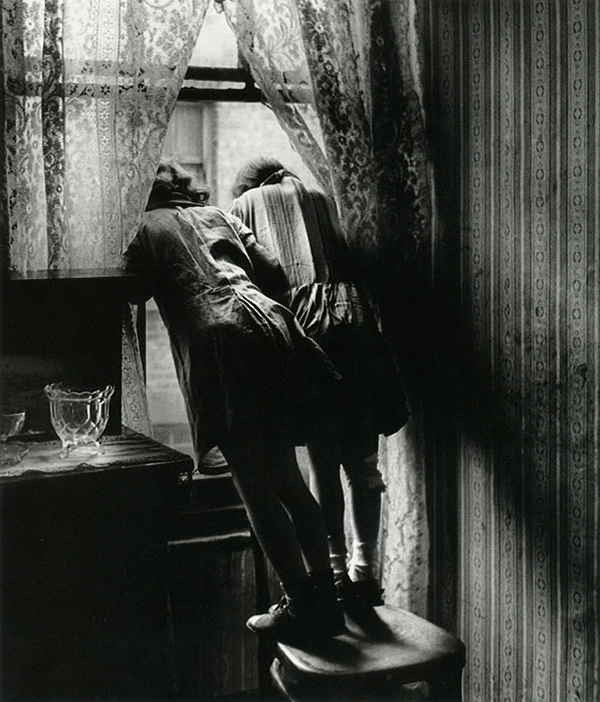
Figure 5 Bill Brandt, 1955 London Child
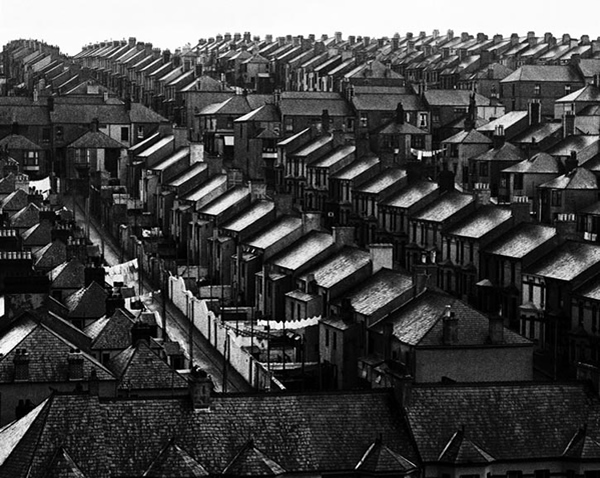
Bill Brandt is another photographer I have begun to look towards for inspiration in particular his imagery of industrial cityscapes and home interiors. [Figs 5&6] When looking through Brandt’s canon of work, I have started to pair images to obtain then type of images I want to achieve. Isolating the core concepts of interplay between the interior and landscape.
Figures 6&7 Bill Brandt images of working-class 1950s
References
Cotton. C (2009), the photograph as contemporary art, Thames & Hudson.
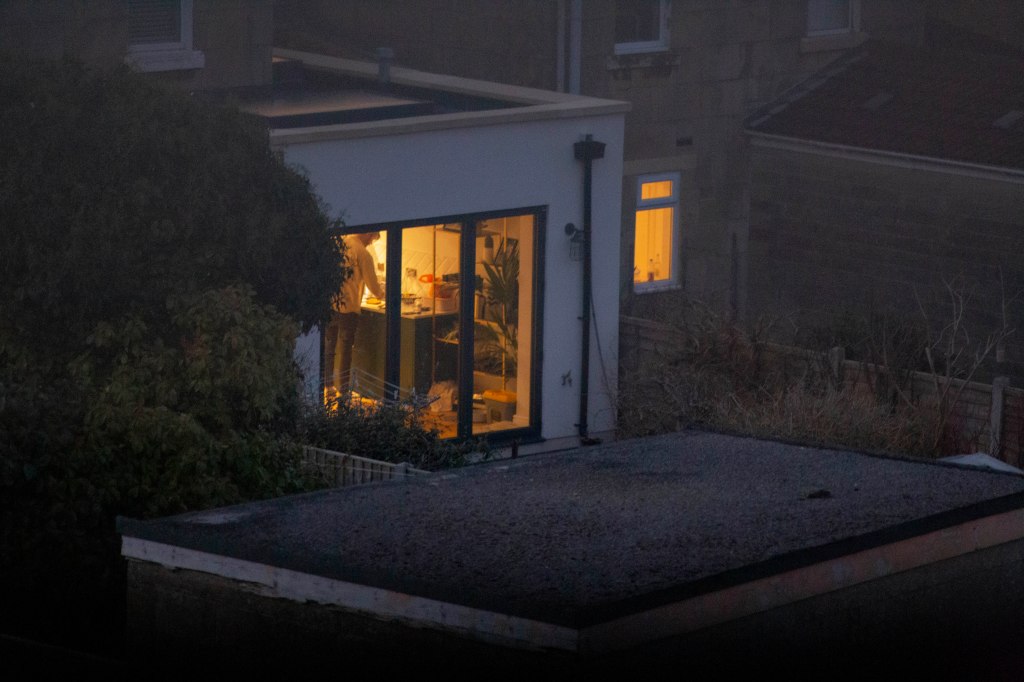
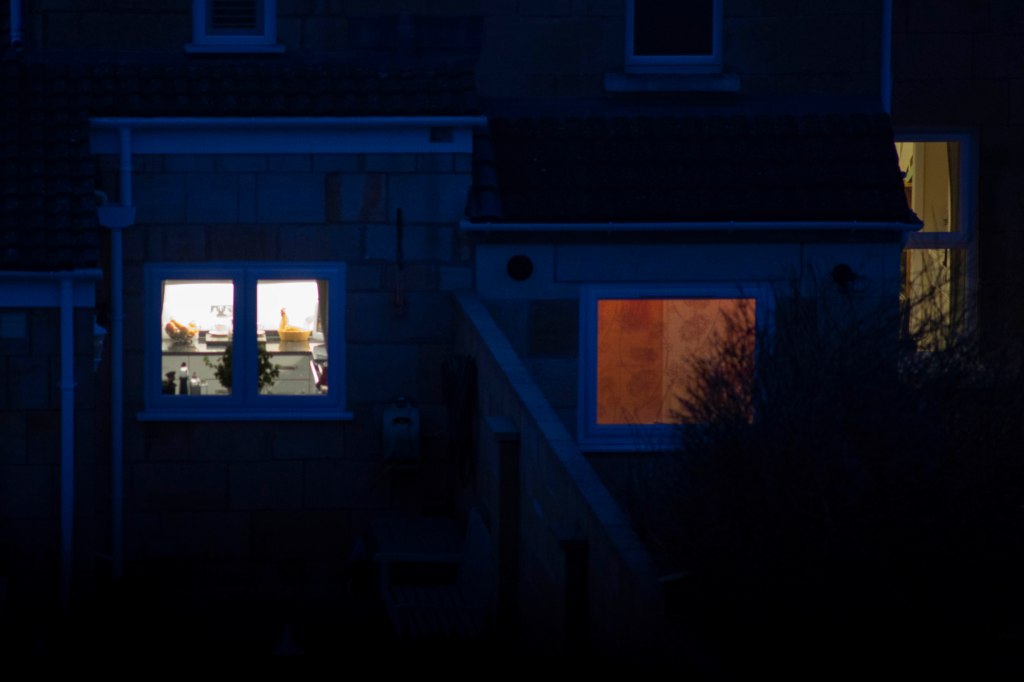
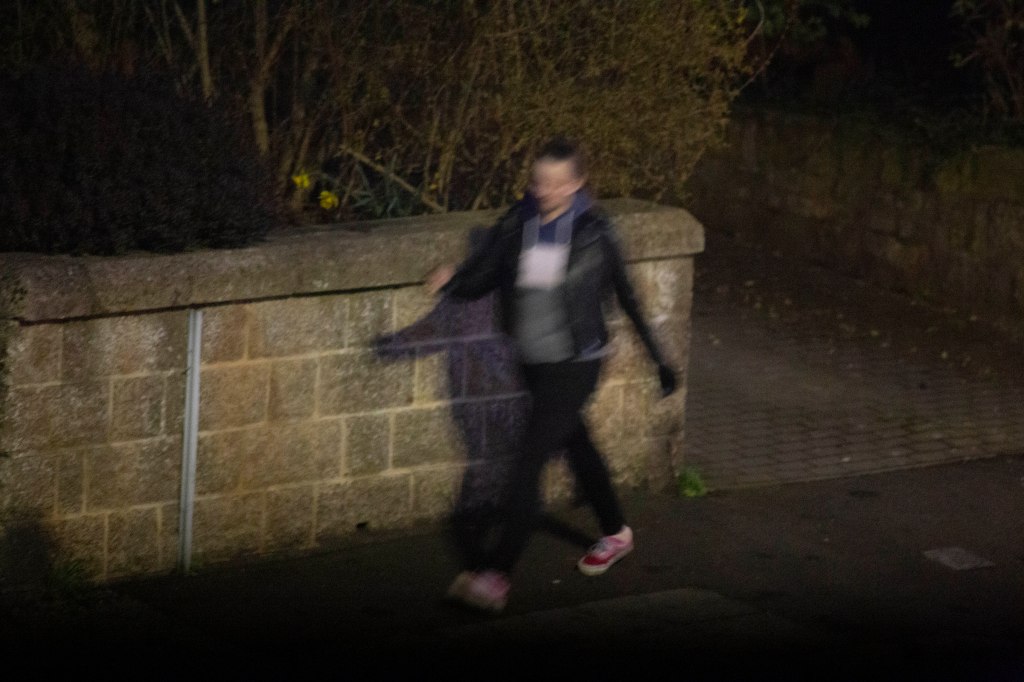
When considering what is ‘appropriate’ to photograph or look at we are confronted with a moral question of is it ‘right’ or ‘wrong.’ Within my own practice I have found myself making this moralistic judgement when choosing what to photograph. on a recent night-time walk I happened upon a scene that I thought would be a great picture. It was the view from the street into a front room, via a window with curtains open, a female figure was sat, glass of wine in hand, watching TV. The lighting was great, and I knew it would work well. I chose not to take the shot, not from a legal stance but from a) fear of what people may think if seen photographing into people’s home and b) I felt this to be an intrusion. Feeling I needed to challenge my own ‘moral code’ I set about capturing images that I felt pushed against my own anxieties. The images have a voyeuristic quality, a mix between CCTV and the paparazzi. [Images 1-3].
Figures 1-3 ‘Peeping Tom’ Tim Beale 2021
The subject of the gaze can be looked as one in terms of a moralistic questioning; from the images such as those of Diane Arbus, of marginalised people, to the male privileged gaze and images of Helmut Newton. Both photographers claimed to empower their subjects, however equally both have been criticised for creating exploitative images. Susan Sontag said of Arbus’s work:
“Arbus photographs people in various degrees of unconscious or unaware relation to their pain, their ugliness…Arbus wanted her subjects to be as fully conscious as possible, aware of the act in which they were participating. Instead of trying to coax her subjects into a natural or typical position, they are encouraged to be awkward-that is to pose… Most Arbus pictures have the subject looking straight at camera. This often makes them look odder, almost deranged.” [Sontag 1977:36-37]
Meanwhile, in Newton’s case, it can be argued that images of women are constructed as objects of desire for the benefit of the male gaze. Newton’s images portray the idealised woman, always young, slim and attractive, certainly not a n unbiased representation of the fatale form. A far cry from the self-proclaimed ‘feminist’, Newton claimed to be. When we question, was there a collaboration between model and photographer? Did the model choose the construction of the image? No, it is apparent that Newton’s images are his constructs, the intention may have been to place the female figure in a position of power and therefore ‘empowered’ but even a negotiated reading of Newton’s images lead back to the fetish and eroticism. [Baker 2001:online]
Sontag discusses the targeting of the male gaze by camera manufacturers, as a phallic extension not unlike a gun and further explains:
“The camera/gun does not kill, so the ominous metaphor seems to be all bluff-like a man’s fantasy of having a gun, knife, or tool between his legs…To photograph people is to violate them, by seeing them as they never see themselves, by having knowledge of them they can never have; it turns people into objects that can be symbolically possessed.” [Sontag 1977:14]
John Burger describes the gaze as such:
“Men look at women. Women watch themselves being looked at. This determines not only most relations between men and women but also the relationship of women to themselves” [Berger 1972:47]
Applying these examples to the male gaze and in turn towards Newton’s images we see that his target viewer is a far cry from the feminist and more aligned with the male privileged voyeur. As with Arbus the images of both photographers may have been read in opposition to their intention, either way the viewer has been left with the choice to look or not look.
Challenging the constructs of the male gaze are the likes of Cindy Sherman who uses the female stereotype tropes from cinema, pornography, advertising, and fashion to construct familiar looking self-portraits. These images challenge the way the viewer sees the female figure within the photograph. Charlote Cotton further states:
“The conflations of roles, with Sherman as both subject and creator, is a way of visualizing femininity that confronts some of the issues raised by images of women, such as who is being represented, and bywhom is this projection of the ‘feminine’ being constructed and forwhom.” [Cotton 2009:192-193]
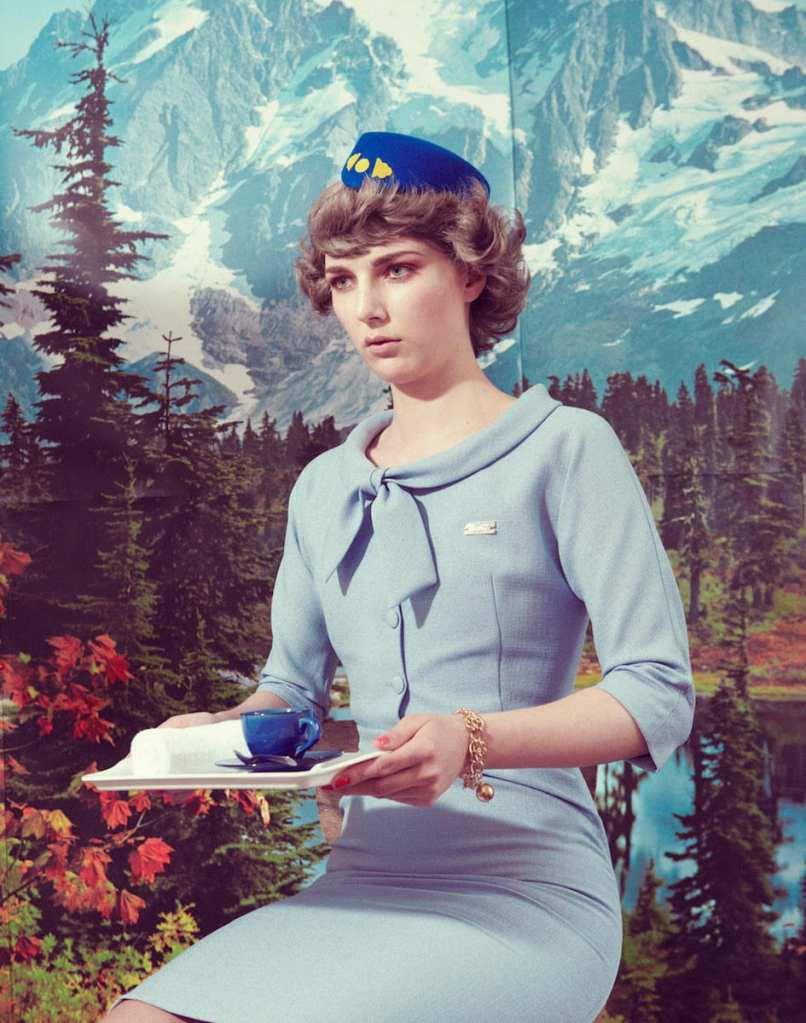
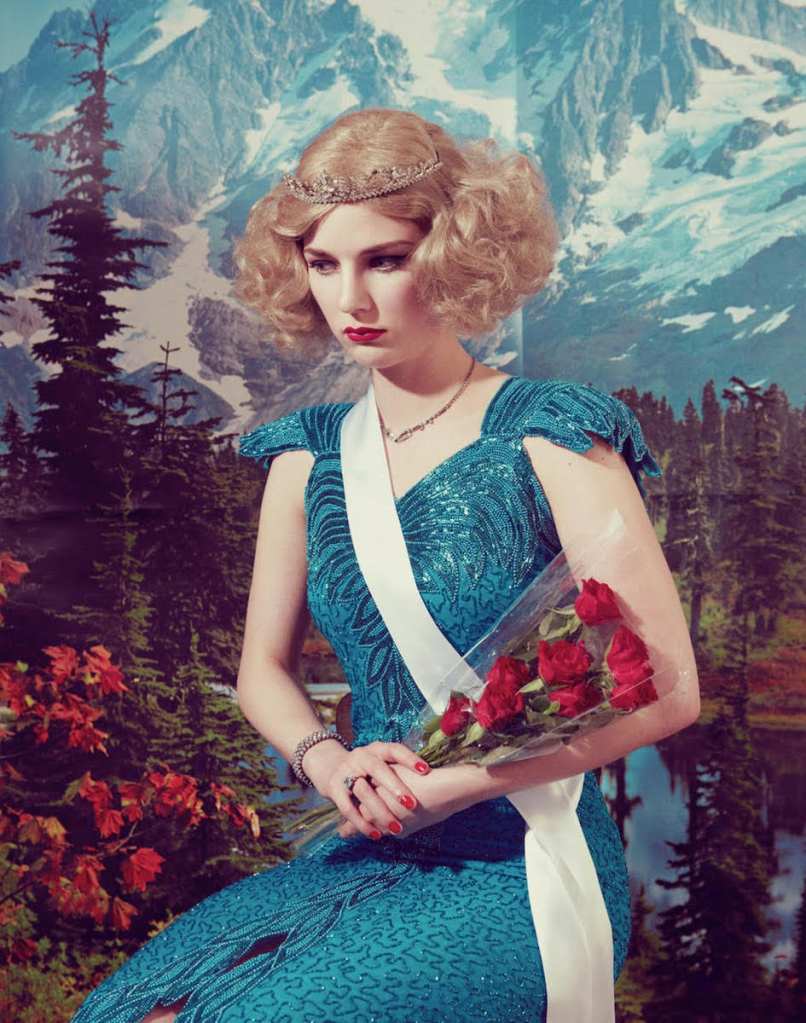
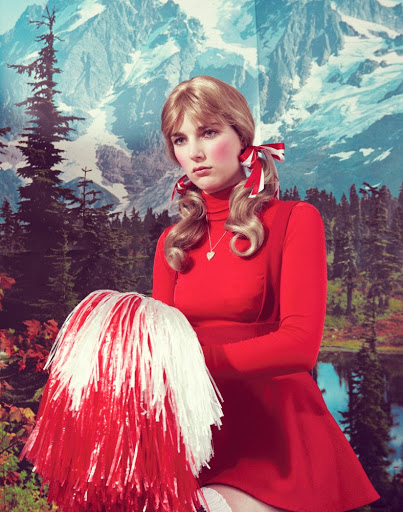
Kourtney Roy is another photographer further explores the feminine image adopting an approach much like Sherman, as both creator and subject. In Roy’s series ‘The ideal women’ she adopts the persona of American clichéd female roles from the male dominated 1960’s, air hostess, secretary, cheer leader, beauty queen. Each image is carefully constructed from the kitsch backdrop, vintage clothing to the glamorous make up, that transforms the female figure into a mannequin. But the real power of these images come from the way in which Roy poses herself. The figure is pale and rigid with a downward gaze, looking away from the viewer, away from the male gaze (figures 4&5). In an article by the British Journal of Photography discusses Roy’s work with her:
Figures 4-6 Kourtney Roy ‘The ideal woman’
“In contrast to her use of bold aesthetics, Roy’s reference to the male gaze in the ideal woman is subtle. This reflects her understanding of gender discrimination in both the photography industry and society at large: “I think that discrimination operates in a much more subtle and pervasive manner,” she reflects. “Discriminatory behaviour has been so conditioned that we often accept it as natural, as opposed to learned behaviour.” [BJP/Roy 2019:Online]
The resulting images by Sherman and Roy, make for uncomfortable viewing, seeing the figure in a position of melancholy, regret or depression. Far from Helmut Newton’s so called empowered images of powerful women. I find myself asking; What does this mean for the male gaze and in particular my practice? How can I challenge male privilege within my own practice? But also, am I, from my position as the male privileged, right to attempt to do so or should this be best left to those who suffer from it?
The photograph has often been described as a nonverbal form of communication and as such can be read by way of semiotics, the understanding of symbols and meanings with an image. The photograph is unique in the way in which it is viewed in many ways, on one hand it is a representation of a ‘thing’ in that instant, in that location and under those conditions. It can also be viewed reading or looking out for signs and messages within the image but also the viewer is invited to look beyond the frame. Victor Burgin, in his essay “Looking at photographs”, writes about the ‘photographic text’:
“Photographs are texts inscribed in terms of what we may call ‘photographic discourse’, but this discourse, like any other, engages discourses beyond itself, the ‘photographic text’, like any other, is the site of a complex ‘intertextuality’, an overlapping series of previous texts ‘taken for granted’ at a particular cultural and historical conjuncture.” [Burgin 1967:131]
One of the ways to see this ‘photographic text’ or communications, is to look at the advertising image. The advertising world has for many decades researched the needs and desires of the viewer as can be seen in both moving and still images. Since the 1950’s anthropologists, sociologists and psychologists have questioned and observed human buying habits in an attempt to better understand what drives our choices. Advertising is based on knowledge of human learned behaviour, makes assumptions that we will ‘know’ that this ‘thing’ means this ‘symbol or action’ – anthropological knowledge.
“The task now is thus to reconsider each type of message so as to explore it in its generality, without losing sight of our aim of under standing the overall structure of the image, the final inter-relationship of the three messages.” [Barthes 1977:p36] “Today, at the level of mass communications, it appears that the linguistic message is indeed present in every image: as title, caption, accompanying press article, film dialogue, comic strip balloon.” [Barthes 1977:p37]
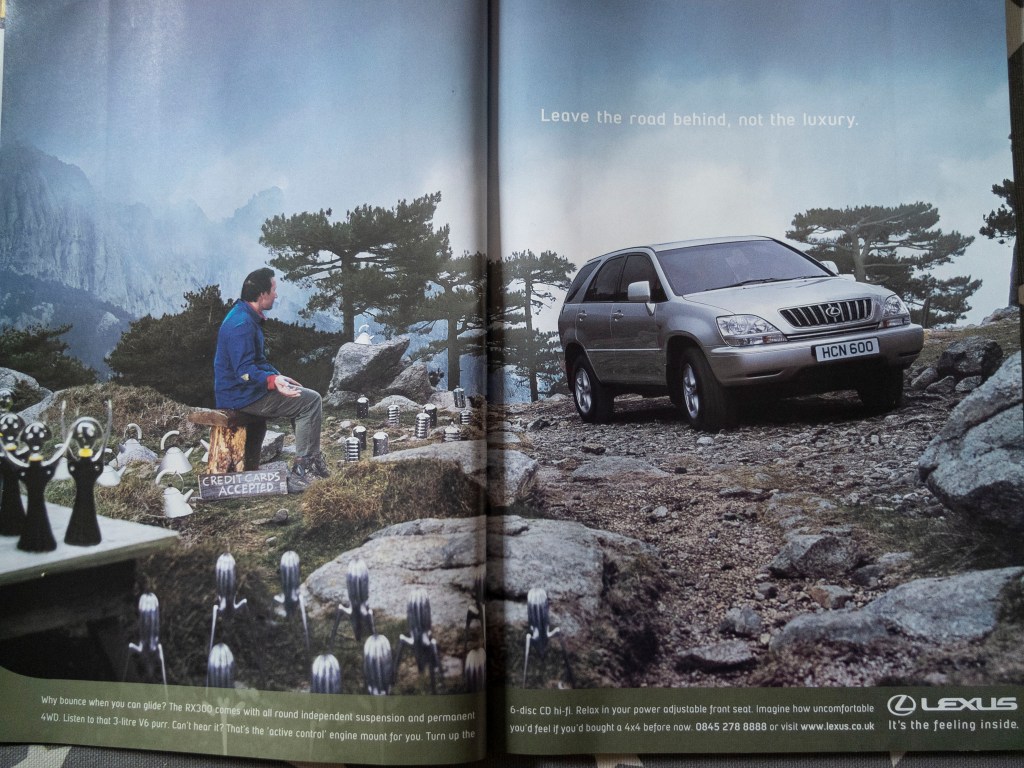
Fig 1. Unknown photographer – National Geographic 2001, Lexus Advert
If we look to this advertisement for Lexus RX300, we can see that the advertisers are appealing to a luxury market and those with aspirations of design and taste. The image signifies the driver having assented a mountain, traversed rugged terrain to shop for luxury designer goods. The text further acts as anchorage, telling us the 4-wheel drive delivers a smooth drive without all the usual bumps and bounces associated with 4WD vehicles. We can also learn that the target audience is potentially female via the use of Allesi designer kitchen goods within the image appealing to the stereo type of the house wife out shopping for luxury items.
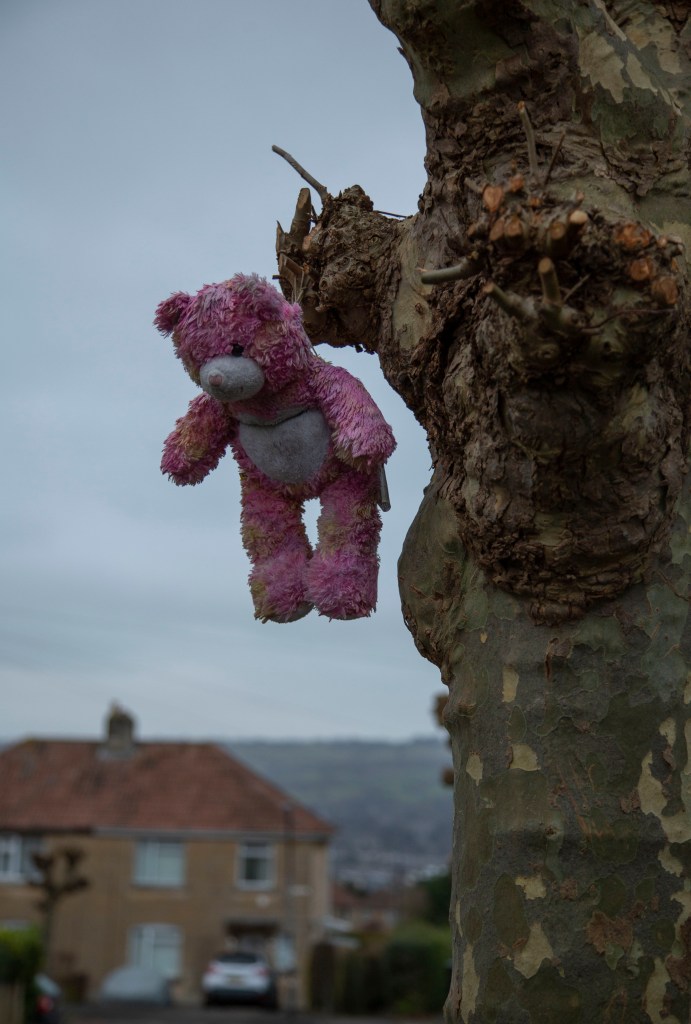
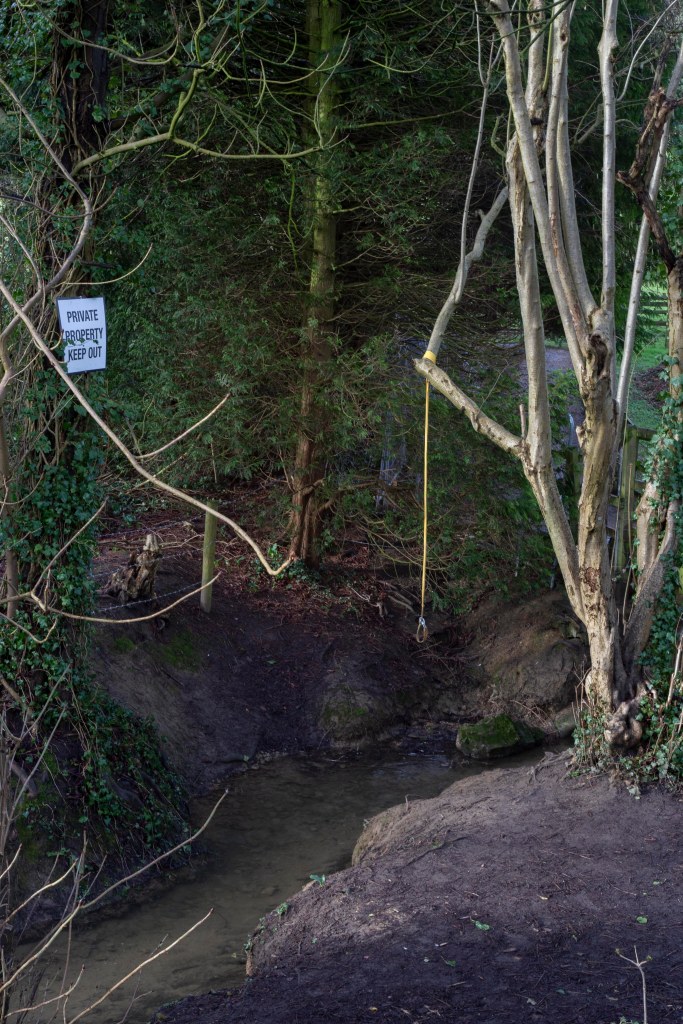
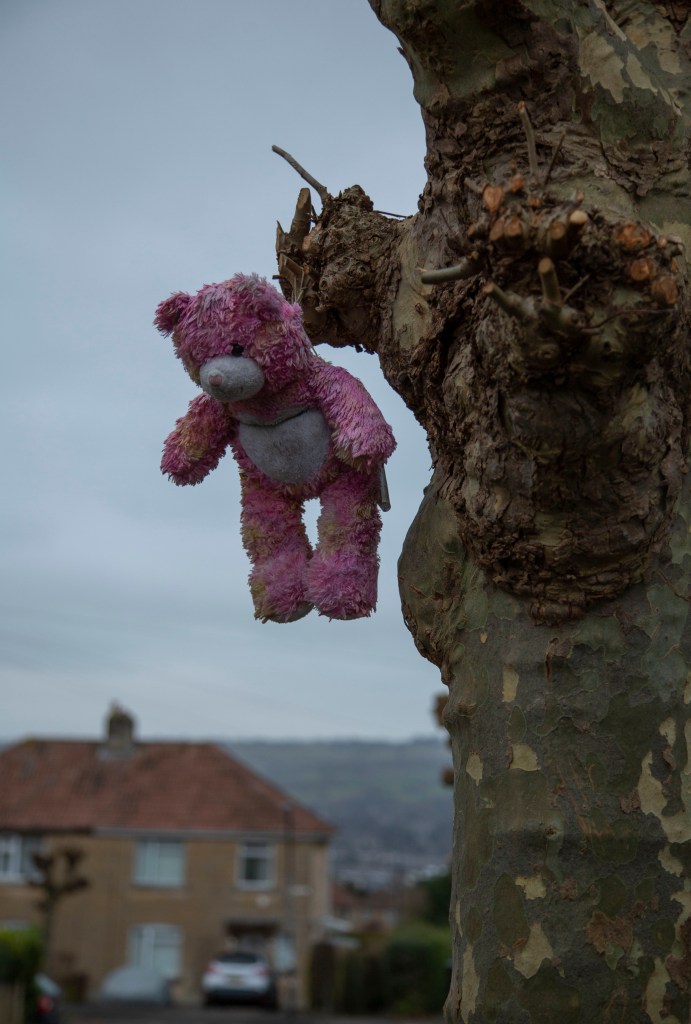
We can read images, especially advertising images, in three ways; ‘Dominant’ – reading the image as the photographer intends, ‘Oppositional’ – not seeing what the intentions is or interpreting the image in a different way to the intention, and ‘Negotiated’ – reading the intended meaning of and image but also seeing a new meaning. Often images in isolation can produce one meaning but when paired or placed within a series of images, takes on a new meaning all together. An example of this can be seen in these images (figs x -x) that were discussed at a recent tutorial. In isolation the image of the left toy bear initially elicited a reading of ‘lost child hood’ or ‘play’, as did the image of the rope swing which offered a similar reading by my peers.
Fig 2. Untitled, Tim Beale, 2021Fig 3. Untitled, Tim Beale 2021
However, when places side by side the reading of these paired images was one of a more sinister nature, much darker than the melancholy of the individual images. The bear looks all the more ‘Strung Up’ and rope swing becomes a ‘Hang man’s noose’. These readings are Oppositional to my intent when capturing these images, my initial intent was to illustrate the ‘Lost play’ lockdown has produced.
Fig 4. Pairing creates new readings
References:
Burgin, V 1967 “Looking at Photographs in “the photography reader” Wells, L. 2003, Routledge.
Barthes, R 1977 “Rhetoric of the Image” Image-Music-Text, London:Fontana
Images
Figure 1 Lexus RX300 Advert from National Geographic magazine July 2001
Much of my practice has been subjective and engaged the use of constructed or staged image making, either through directed figures, often myself as performed self-portraits (fig 1) or via digital manipulation as photomontages (fig 2). Much of the work produced during the last module was influenced by the repeated use of the ‘Ophelia’ icon within the photographs of Tom Hunter and Gregory Crewdson. I wrote about this in more detail in my CRJ: https://thespacebetween.photo.blog/2020/10/09/the-photographic-tableau/
“Hunter makes the art-historical connection quite explicit to anybody with some knowledge of European art.” [Smith & Lefley 2015:127]
Figure 1. Tim Beale 2020 ‘Ophelia’
Figure 2. Tim Beale 2020 ‘Untitled’
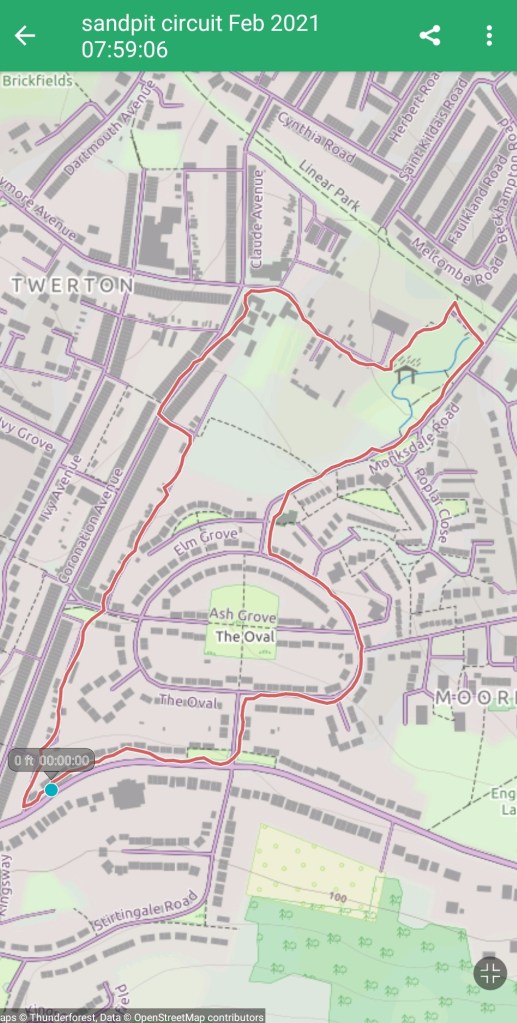
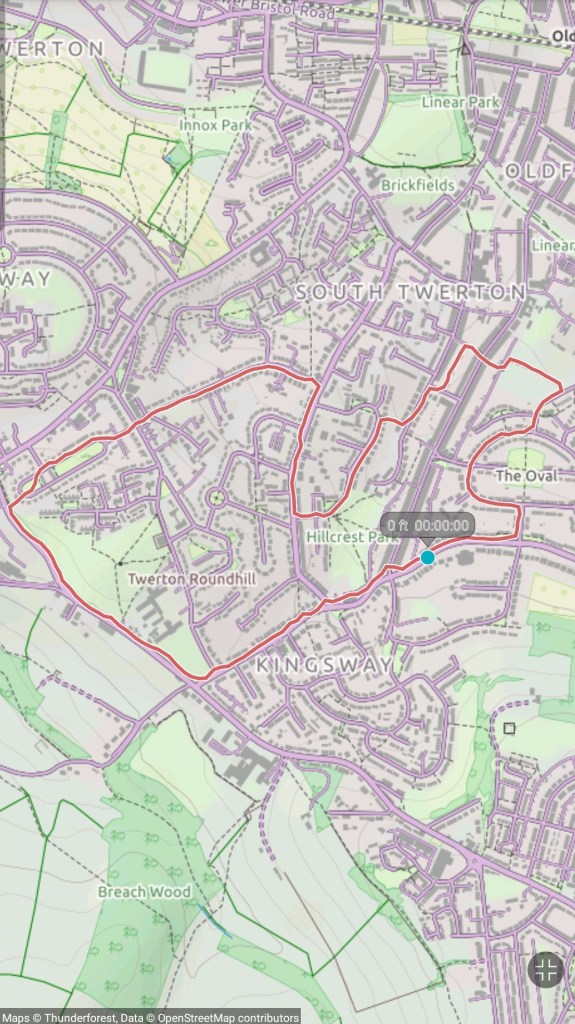
However, the images I have recently taken take on a more objective approach, as straight photographs of that thing at that time. The choice to create straight object images was a result of the 3rd national lock down and my unease of taking out my full photographic kit. I feel that much of these objective images are more for research in location for later images. As such I have begun to log my walking routes, limiting myself to no more than a 2 hour walk and often in a loop.
“There is a lot to dig deeper in with Twerton/shops – what is it that makes a shop stand out – why is McColls different to Aldi, different to Morrisons, different to Waitrose, what is it that stands out when you visit those shops? The story might emerge from the direct experience rather than the photographic.” [Pantall.C False Indexes Forum: FF]
I’m now at the stage of thinking and research, trying to build up a narrative for these latest images. Over the next few weeks, I plan on revisiting a particular area of Bath, Twerton as I feel I have a strange affinity for the area. This probably because it reminds me of where I grew up but as it is one of Bath’s most deprived areas, I feel there it is underrepresented. There’s a story to be told, I just need to find it.
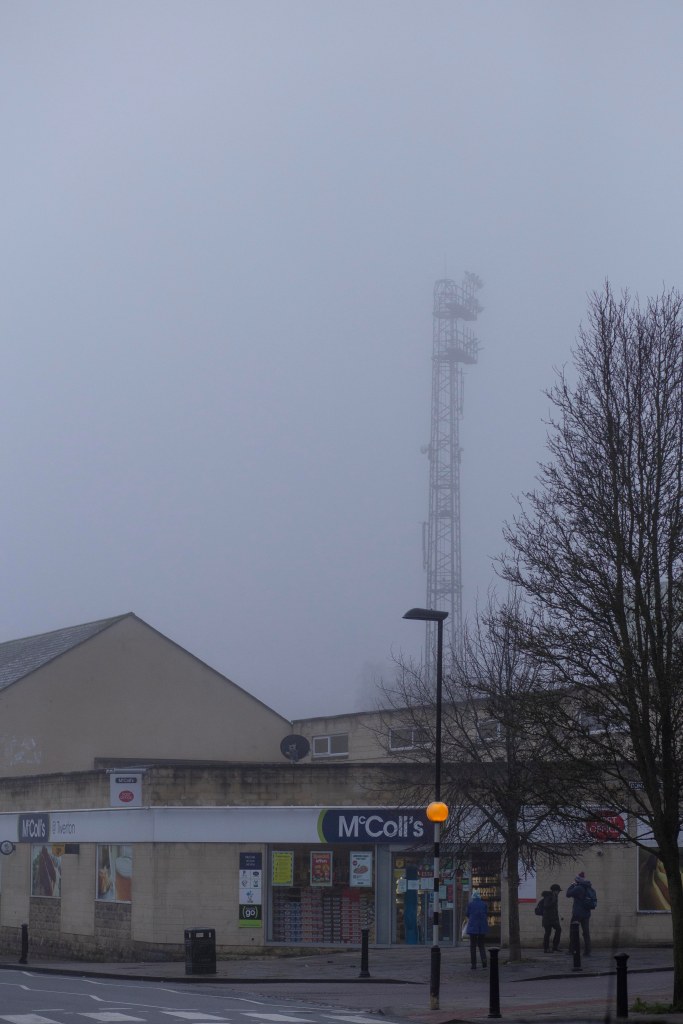
The fog in figure 3 has added a unique quality that I could not recreate artificially, as a result I feel this image takes on an ethereal quality. The lighting tower, dominates the small shop, looking no unlike a prison watch tower or prehistoric predator. We see shoppers, in the lower section of the image, huddled waiting their turn to shop for the essentials.
Figure 3. Tim Beale 2021 ‘Untitled’
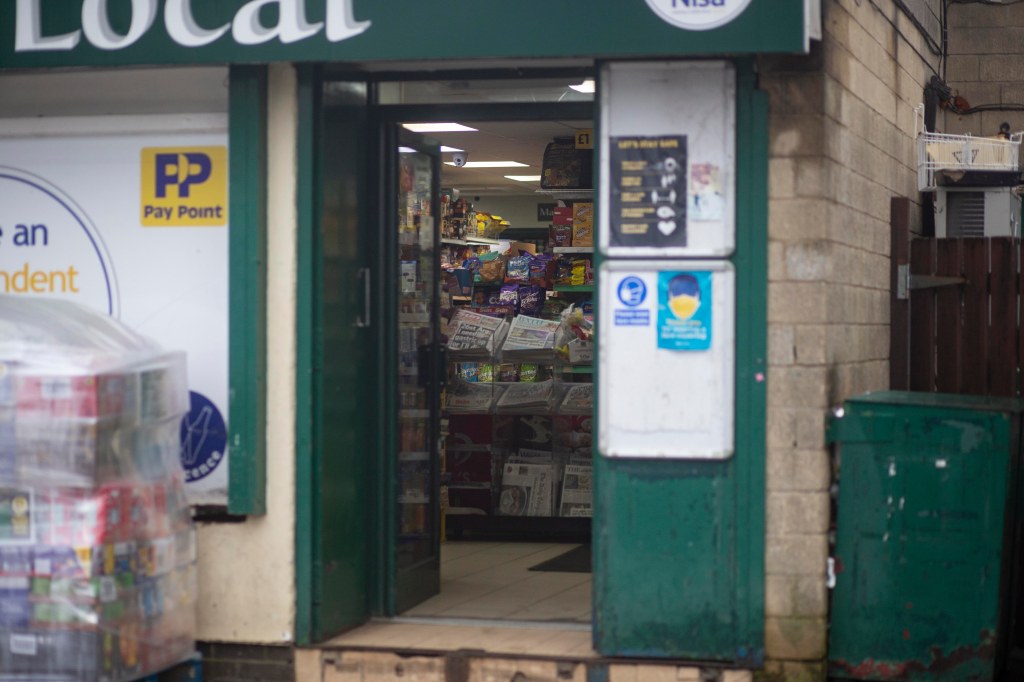
I took this shot of the newsagents with a view to capturing something of the essence of a typical UK “local” shop (Fig 4). The headlines from each newspaper came be seen and read through the open door. I’m not entirely happy with this one and plan to revisit at night as I feel the dynamics of lighting will change the feel greatly.
Figure 4. Tim Beale 2021 ‘untitled’
Figure 5. Kelli Connell 2010 ‘Next Door’
Figure 6. Kelli Connell images from ‘Double life’
As we look to a more eased lock down, I can start to schedule in more involved photo shoots, look to use self-portraiture again. Kelli Connell’s series “Double Life” (Fig 5) is a fascinating use of the constructed image to depict the made-up story of a couple’s everyday life. The photographs have a voyeuristic quality to them, as if we the view are witnessing these live events unfold, through the eyes of the photographer. What has drawn me to these images is the fact that, what we are looking at is not images of two women, but self-portraits of Connell playing both roles in this relationship (Fig 6). Connell’s performance is such a powerful one that we are convinced of the ‘real’ emotions of this relationship. The viewer starts question the fact of the image before them as they realise the women look identical and the image takes on a more surreal quality.
When discussing the constructed images of the surrealists Smith & Lefley write: “They were captivated by the strange ambiguity of photographs that are both ‘fact’ and image at the same time.” [Smith & Lefley 2015:120]
When being interviewed for Blowphoto.com Connell talks about the autobiographical approach to these images:
“I think it’s kind of a mirror reflecting what I think about relationships and what I think of my own self as it evolves the older I get. the earlier images show something you might do in your late twenties, like drinking in a bar or playing pool depicting a really young stage in a relationship and now that I’m older many of the things I’m interested in have naturally evolved so the characters might be drinking wine, renovating a house or going to bed early. or an embrace might be the kind of hug that is more fragile from just being through a more long-term relationship; the kind of embrace that isn’t even possible with someone you have just been with a couple of weeks.” [Connell no date published:Blowphoto.com]
I can see there is some scope to adopt a similar process of further constructing images, going beyond the directed and staged approach. Certainly, over the next couple of weeks I intend to revisit archival images alongside recent photographs with a view to experimenting digitally constructing images to represent my research.
References
Smith, P, & Lefley, C 2015, “Rethinking Photography : Histories, Theories and Education”, Taylor & Francis Group, London. Available from: ProQuest Ebook Central. [7 February 2021]. Created from falmouth-ebooks on 2021-02-07 01:41:12.
Pantall.C, 2021 Tutor feedback from “False Indexes” week 3 forum. Falmouth Flexible MA Photography [Accessed 11.2.2021]
Mac Gowan.A “Kelli Connell interview” Blowphoto.com [Accessed 15.02.2021] http://blowphoto.com/issue-13-press-check/
The ubiquitous nature of the photograph in todays social media based society place it above other forms of representation, including that of written and other visual media. The modern mechanics of the photograph means that an image can be taken and shared world wide quick than it takes to type this sentence. Further more the photograph has bridged the socioeconomic divide created by other means of artistic representation. Owning or creating a work of art, pre-photography, was often limited to those with enough wealth to commission, buy or study artistic practices. Advances in photographic technology has enabled people from across the socioeconomic spectrum.
The public perception of the photograph is often met with scepticism, born from the knowledge of the photographers ability to edit an image “Photoshopped”. The photograph’s indexical ability to prompt the spectator to look through the image, towards the meaning, goes in some way to elevate this learned scepticism. Our natural preference towards looking over reading, the photograph is often, at first glance, taken at face value, only later do we return to question the validity or truth of the image. Snyder & Allen make reference to the cameras ability to capture the ‘truth’ in the book “Photography, vision & representation” stating:
“a photograph may not show us a scene as we ourselves would have seen it, but it is a reliable index of what was.” [Snyder & Allen 1975:149]
In so much as the photograph is a mechanical extension of the photographer and as such a means to capture an image in a very specific way. The photography is not reality as we see and and cannot be but:
“It can be asserted, of course, that while photographs do not always show us a scene as we would have seen it, they are, because of their mechanical origin, an accurate record of the scene as it actually was.” [Snyder & Allen 1975: 157]
When defining the photograph Barthes too holds the view that the photograph is a way of seeing, not the thing itself, but rather the thing as the photographer has seen it at that moment and under those conditions:
“In the daily flood of photographs, in the thousand forms of interest they seem to provoke, ·it may be that the noeme “That-has-been” is not repressed (a noeme cannot be repressed) but experienced with indifference, as a fea ture which goes without saying.” [Barthes 1980:77]
As a way of defining the photograph, Snyder & Allen go on to discuss the many ways in which the photograph differs from view with the naked eye. How the photographer will have chosen a number variables in which to capture the final image, shutter speed, vantage point, depth of field.
“The camera position will determine whether one of two objects within the camera’s field of view will be to the right or the left, in front of or behind, another object.” [Snyder & Allen 1975: 151]
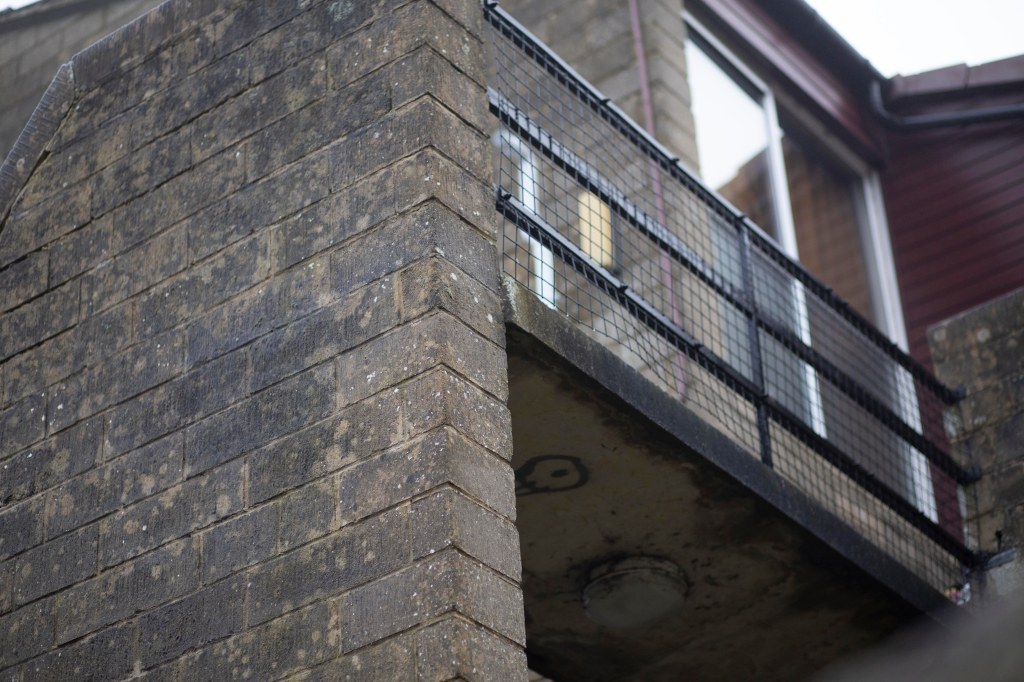
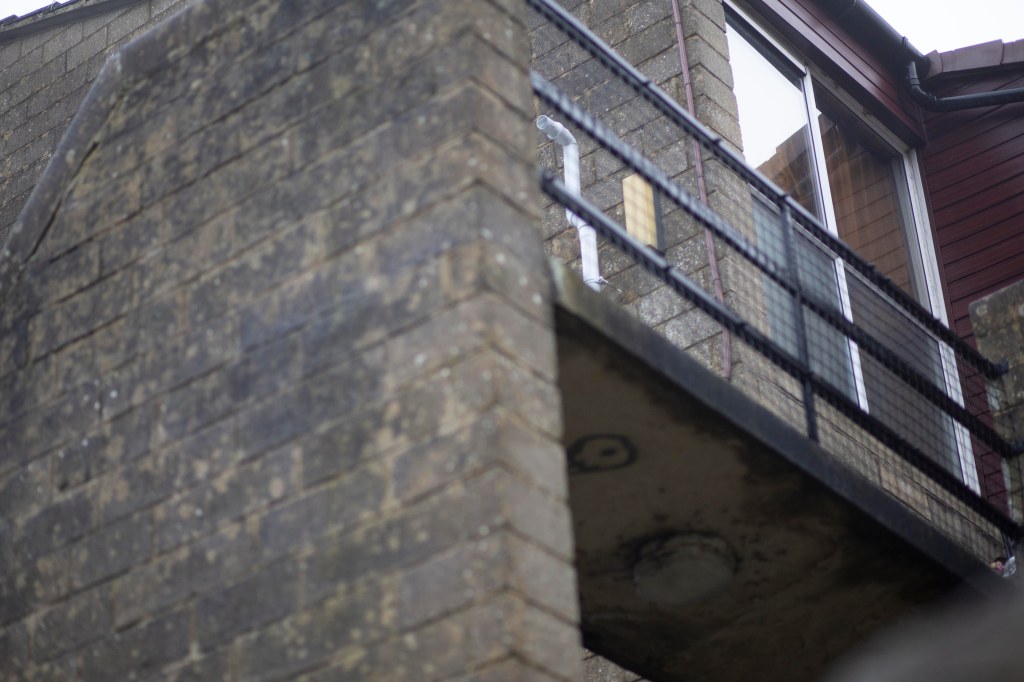
Fig.1 The subtly of changing the focal point will shift emphasis from the bricks in the foreground to the window in the background
This illustrates the way in which despite the photograph looking very different to how we actually see we are conditioned to accept this representation as truth. The analogy of a moving horse is used to illustrate this difference and acceptance:
“We can keep the camera stationary and use a slow shutter speed: the horses will appear as blurs against a stationary background. We can “pan” the cam- era with the horses and use a somewhat faster shutter speed: the horses will be somewhat sharper and the background blurred. We can use an extremely fast shutter speed and “freeze” the horses against a stationary background. All these methods are commonly used and accepted ways of photographing moving things.” [Snyder & Allen 1975:156]
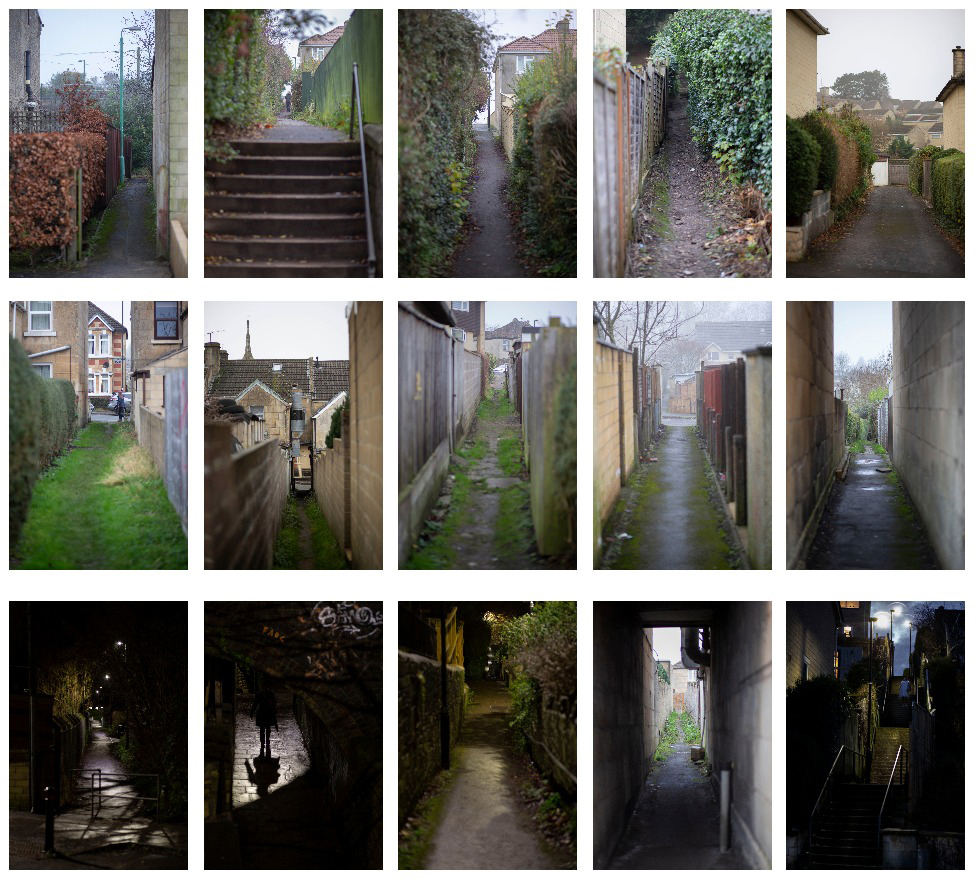
Within my own practice the human choices I make in terms of depth of field, shutter speed, lens type etc is a very conscious process based on perceived outcomes. In the tutor forum I talked about my recent images of alleyways:
“Through self reflection I have set out to create a series of images that represent the places where I grew up. In some instances I have been able to re-visit my childhood haunts back in the midlands, however much of the urban landscape from my earliest memories have since been demolished. Most recently I have looked to my current home city of Bath as the backdrop to these earlier memories. My earliest memories, was as a child, running and playing in the alleyways that separated the houses in our streets. Being aware of the limitations of the means to turn three dimensional reality into a flat image is crucial for any artist, writer or photographer. Photography can be as creative or “artistic” as any other art form, in as much as it can manipulate what the views sees. For example my use of Bath’s alley ways to portray, those in the Midlands (some 120 miles away), it matter not that the buildings are made of a different material. It’s the essence. In terms of the written narrative I would write:
“I recall as a grubby faced boy of about five, using alleyways as a main method of getting from point a to point b. The alleyway was our adventure playground, labyrinth and our domain. Bath then (late 70s/ early 80s) we didn’t use front doors, we were told ‘come ‘round back’ and ‘take your muddy shoes off at the backdoor’. The front door was used for special guests.”
Some 40 years later and 120 miles south I have found an affinity with Bath’s alleyways as something akin to my childhood playground. In some ways its like I’ve changed the vantage point, however rather than moving a step to the left or right, I’ve moved in time.” [Beale 2021:forum text]
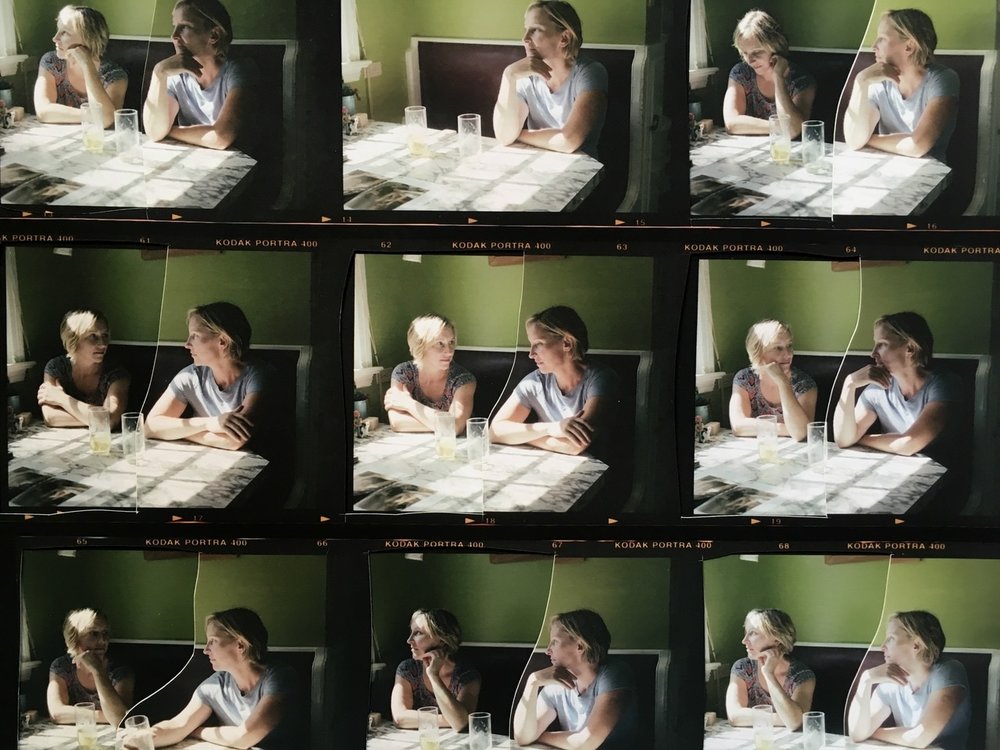
Fig.2 TIm Beale, Alleyways contact sheet 2021
Feedback from my fellow cohort in the tutor webinar affirmed that my intention, of creating the essence of alleyways in the Midlands, was achieved.
“I grew up in Leicester and these images really reminded me of the alleyways I played in as a child too.” [Layla 2021:webinar]
Over the next tow weeks I will be continuing to photograph the suburban landscape around me, rephotographing many of the areas during different weather and lighting conditions. I will also be carrying out further research into urban landscapes, psychogeography and photographers working in a similar way.
References
Barthes. Roland 1980. Camera lucida; reflections on photography. Hill & Wang
Snyder. Joel & Allen. Neil Walsh 1975. Photography, Vision and Representation. The University of Chicago Press
Beale. Tim 3rd Feb 2021. Informing contexts tutor forum. Falmouth University
Perchal Neal. Layal 4th Feb 2021. Informing contexts tutor webinar. Falmouth University
When considering the various characteristics within photography and in particular my own practice. It becomes clear that I adopt a few distinct characteristics when approaching an idea or out shooting and these characteristics drive my own human choices.
The Frame
When considering the idea of an image I will first consider what will fill the frame, not unlike a blank page ready to be written upon. Then I consider what will be outside the frame, what will the view not see, what will they fill in by using their imagination. These two factors are key before even picking up the camera as often this will have a direct bearing on the location of a shoot.
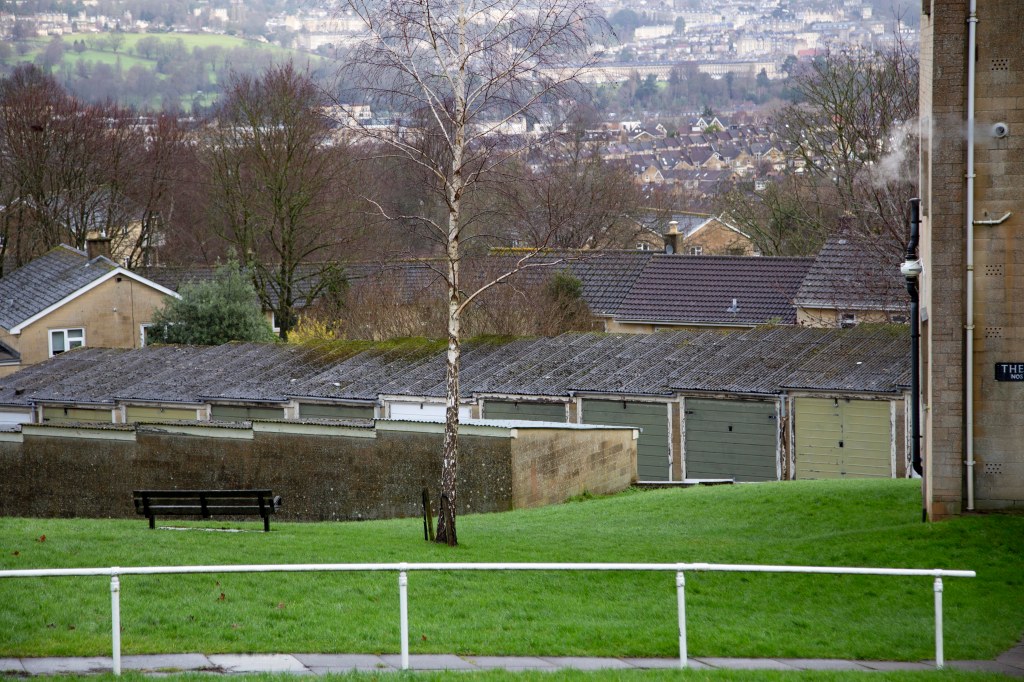
Framing a shot is then a process of working with the environment and the subject. For example, in this image of vernacular garages, the key was to work with the background to juxtapose the garages against the view of the Royal Crescent and Bath countryside. As such we see the use of vantage point to achieve this result.
Fig.1 Tim Beale 2021, ‘Untitled’ Garages & the Royal Crescent, Bath.
“The central act of photography, the act of choose and eliminating, forces a concentration on the picture edge- the line that separates in from out-and on the shapes that are created by it” [Szarkowski 1966:9]
“The Frame ‘isolates’unexpected juxtapositions, creates relationships between ‘facts’ that have been framed, cuts through familiar forms revealing unusual fragments”. [Szarkowski 1966:70]
Focus
I tend to spend time walking without a camera, a kind of psychogeographic exercise in mentally mapping a woodland, city or suburb. Often noting the areas that will work best during particular lighting, time of year, time of day/night or weather.
Fig 2. Tim Beale 2021, ‘Untitled’.
By focus I refer to both the focus of attention (the subject) and focus in a more mechanical sense. Once a shot is in the frame and at the right vantage point, my next consideration is the focus. How to best achieve the impact I desire, what will the viewer need to see and how will they see it, are all questions I have in mind whilst working. There are the obvious traditional methods of setting up a shot using the rile of thirds, depth of field and point of focus. But often it is when choosing to go against this tradition you can unsettle the view, who is conditioned to see in this way. Something akin (for westerners) righting right to left, the reader will still be able to read the text but will have to retrain their brain to do so.
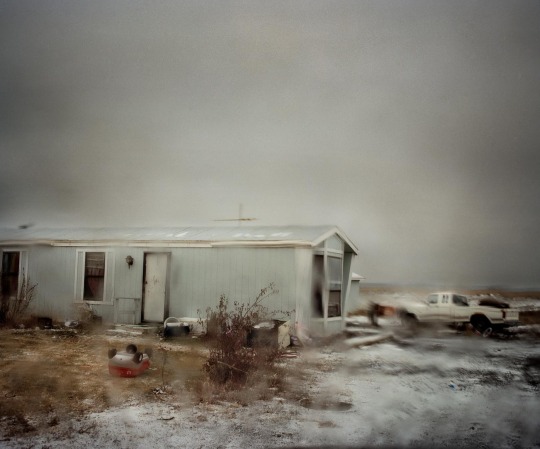
As with Todd Hido’s images shot through ‘rain’ covered car windows, the focus is ephemeral, on the idea of the thing rather than the thing itself.
“Most importantly, I really love dramatic weather. I enjoy outings in those conditions. I feel so good when I’m driving, poking around for pictures, and it’s raining or snowing outside…. Diffused light is has always been the kind of light I’m after. I’m also drawn to backlit scenes, and I often like to shoot straight into the light. Shooting through a foggy dirty, or wet windshield really helps cut the brightness. It also makes for a painterly image.” [Hido 2004:online]
“it’s not just a photograph of the landscape but it is a photograph from my personal perspective. I’m somehow in the picture in a way. That is my breath fogging up the window! It has more of an intimacy I think. It has a subjective, diaristic quality and now that I really think about it—it’s the opposite of something like an ‘authorless’ objective view, which is most often seen from a higher, uncommon viewpoint.” [Hido 2012:online]
“Hido keeps at least three water bottles with him in his car. One time, I watch him spray his windshield before taking a landscape photograph. ‘I’ve learned from sheer disappointment that sometimes I need to take pictures, but it isn’t raining outside,’ he says.
Fig 3. Todd Hido 2010 #9197. From the ‘Roaming’ photo book
Sometimes the artist sprays glycerin on the windshield, for a different kind of effect. It’s a technique he compares to changing paintbrushes. The size, direction and position of drops of water on the car window inform the photograph that results, and within these fictitious raindrops, Hido says he can ‘compose’ the real picture that he wants to see. Ultimately, each photograph is a composition. It is a way of giving shape to a mental state, as opposed to capturing an actual setting.” [Tylevich.K undated:online]
The use of focus/unfocus within an image as in Fig.2 are like our memories, sometimes hazy or unclear and other times pin sharp and crystal clear. This is something that Hido manages to capture with his ‘Roaming’ images, landscapes both in and out off focus.
One of the final considerations is the end result, who the audience is and how the final images will be viewed. This to me have been something of a new choice, having only exhibited in joint exhibitions and one small solo exhibition, my experience is limited. However, in my current practice I have begun to these make choices. If we look to fig 1 again, for the viewer to understand the image they need to see the juxtaposition between the mid ground (garages) and background (landscape) as such the final print will need to be large, perhaps 160x100cm or larger. As my practice and personal project develop so too will the choices I make.
Nathan Jurgenson’s book The Social Photo first sets out to define and place the social photo as a separate entity to the more traditional form of photography. The distinction between the two forms of photography is then simplified into two forms the ‘Object’ and the ‘Experience’ with social photography concerning itself with the experience over the object. As Jurgenson says:
“Traditional analysis of photography fixate on the photo object….the what and how of a social photo is less important than the why.”[Jurgenson 2019:15].
Furthermore there is a need to discard the learned ‘art history’ approach to critically examine social photography, as we would with traditional photography. If we remove a social photo from the steam of social media we risk viewing is as banal [Jurgenson Verso 2019:11-16]. Much of Jurgenson’s views throughout this book can be referred to Susan Sontag’s ‘On Photography’, her views on what was then a newly established art form. On discussing proliferation of the photography she states:
‘The urge to take photographs is in principle an indiscriminate one, for the practice of photography is now identified with the idea that everything in the world could be made interesting through the camera’ [Sontag 1973:111]
The social photo takes the everyday experience of eating and makes it special by the act of posting images of food. As part of a stream of social photos the plate of food becomes a notable experience but an image that once taken out of the stream can bused as an example of the banal or over sharing. [Jurgenson 2019:15-16]. Sontag holds similar thoughts:
‘Nobody ever discovered ugliness through photography. But many, through photographs, have discovered beauty…. Nobody exclaims “Isn’t that ugly! I must take a photograph of it.” Even if someone did say that all it would mean is: “I find that ugly thing… beautiful.”’ [Sontag 1973:85] and ‘This very insatiability of the photographing eye changes the terms of confinement in the cave, our world. In teaching us a new visual code, photographs alter and enlarge our notions of what is worth looking at and what we have a right to observe.’ [Sontag 1973:3]
Sontag and Jurgenson illustrate the way in which photography has altered the way in which we view the world around us. Advances in technology increases the ease in which we create and share images. The mobile phone becomes less of a tool for verbal communication and one for visual, non-verbal communication. With each upgrade the mobile phone manufacturers improve upon the image capturing capabilities of each device. The big selling points are less about how well the device can allow you to talk to each other but the number of mega pixels and how quick you can upload an image. Jurgenson further discusses, early image sharing platforms and the introduction of the faux vintage filters, having a dual purpose, mask the low resolution of early camera phones and to pander to our need for nostalgia. [Jurgenson 2019:20-27]. The mimicking of fragile nature of the physical photo offers up a sense of the digital image being more valuable or precious. This physical nature of the photograph is talked about by Sontag:
‘Photographs, which fiddle with the scale of the world, themselves get reduced, blown up, cropped, retouched, doctored, tricked out. They age, plagued by the usual ills of paper objects; they disappear; they become valuable, and get bought and sold; they are reproduced. …photographs are fragile objects, easily torn or mislaid…’ [Sontag 1973:4]
The concept of the Social detox or Switching off away from devices or social media is one that runs through the book and more so in the second half. Jurgenson rejects these concepts as anything more than moral shaming the users [Jurgenson 2019:70-77]. It can be said we judge the use of social media based on our own nostalgic views of how we grew up. In particular when actively encouraging young people to switch off and go out into the real world like we did at their age. It seems almost ironic that the nostalgia used to entice us to share photos is also the basis on which we look to base the frequency of social media use. Jurgenson asks:
‘why do so many of us feel as though digital connectionputs our integrity as human beings at risk?’ [Jurgenson 2019:74]
We can answer this question with a question. If I visit Prague and photograph the experience then return a year later, with a camera, will the city still be a beautiful? If the moment is not documented does it hold the same level of interest?
‘The worry is that the ubiquity of social photography threatens our ability to really live in the moment.’ [Jurgenson 2019:78]
We are now conditioned to see as if through an eye piece or screen and as such will often walk the city looking for the idea vantage point for a photo, even without a camera and as stated by Sontag:
‘The camera makes reality atomic, manageable, and opaque.’ ‘Photography implies that we know about the world if we accept it as the camera records it. But this is the opposite of understanding, which starts from not accepting the world as it looks.’ [Sontag 1974:23]
And as Jurgenson also says: ‘A crowd of raised phones at an event is like many outstretched eyes capable of sharing an experience in real time with almost anyone.’ [Jurgenson 2019:112]
This is the new way of seeing and sharing and the new norm however Jurgenson fails to see the simple defining difference between social photo reality and reality. The frame is the defining boundary. The photo, social media, mobile devices, cameras are all limited by the frame. Reality has no edges, no frame and is boundless. The frames edge defines real from unreal. In the photographer’s Eye, John Szarkowski states:
‘The central act of photography, the act of choose and eliminating, forces a concentration on the picture edge- the line that separates in from out-and on the shapes that are created by it’ [Szarkowski 1966:9]
Technical advances have shaped and defined photography more than any other medium of art and as we look to the future we can expect the boundary of reality, the frame expanding or disappearing altogether. As such the social photo will evolve and adapt to what will become the new reality.
References
Jurgenson. N 2019. The Social Photo: On photography and social media. Verso books.
Sontag. S 1973. On Photography. Penguin Books
Szarkowski.J 1966. The Photographer’s eye. London: Secker & Warburg
“The space between” is a project born out of my exploration of how the natural and built environment has helped to shape the person I am. This project was born out of my fascination of the emotional bonds we have with our environment, how those bonds and links strengthen during the course of our lives. Often when we recall a memory of a key life event we will associate that memory with place, the house we grew up in, the school we went to, church we married or graveyard are parents are buried.
“Biophilia is idea that humans possess an innate tendency to seek connections with nature and other forms of life.” (Rogers 2019).
Within my images I set out on a personal journey to explore the places of nature that I have a subconscious bond. From an early age I would often spend much of my time escaping to nature, even skipping school so that I could go for long walks in the woods and planning imaginary journeys to Sherwood Forest. Jeff Wall’s tableau photography has been a source of inspiration for my practice so I looked to adopt a similar style to my own work for this project.
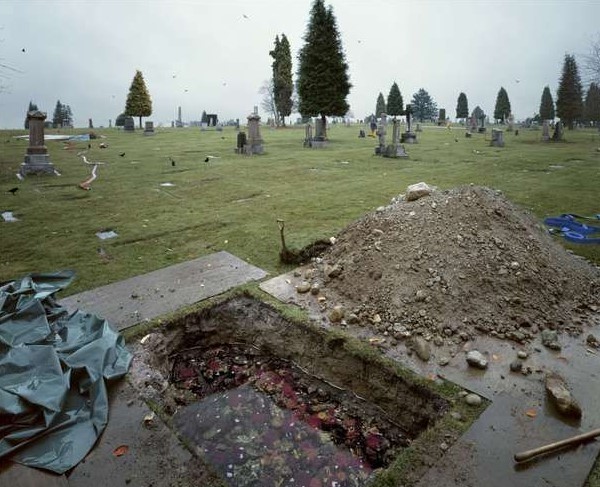
As one of the most prolific users of the tableau is Jeff Wall who’s images are created from scenes he has witnessed or memories, these he meticulously recreates. Wall’s exhibition ‘Tableau Pictures Photographs’ 1996-2013 we see images such as ‘Flooded Grave’ in which an open grave has been filled with water and sea life, such as star fish and sea urchins. This is typical of the way in which Wall plays with the tension between the real and the unreal. For Wall it is the way in which we fill voids with our daydreams, in our daydreams we see what isn’t there (Poel & Schweiger 2014). When exhibiting his work, Wall uses large light boxes to display his colour images, giving them a luminosity that adds a hyper real quality to them which is turn confronts the viewer with the drama in front of them. The images become more than a photo and more akin to a lit stage. Wall a post graduate in art history has a deep understanding of how space is full of relationships and how to construct a visual scene for the viewer.
“they [Wall’s images] are evidence of a detailed comprehension of how pictures should work and are constructed.” (Cotton 2004:51)
Fig 1. Flooded Grave, Jeff Wall 1998-200
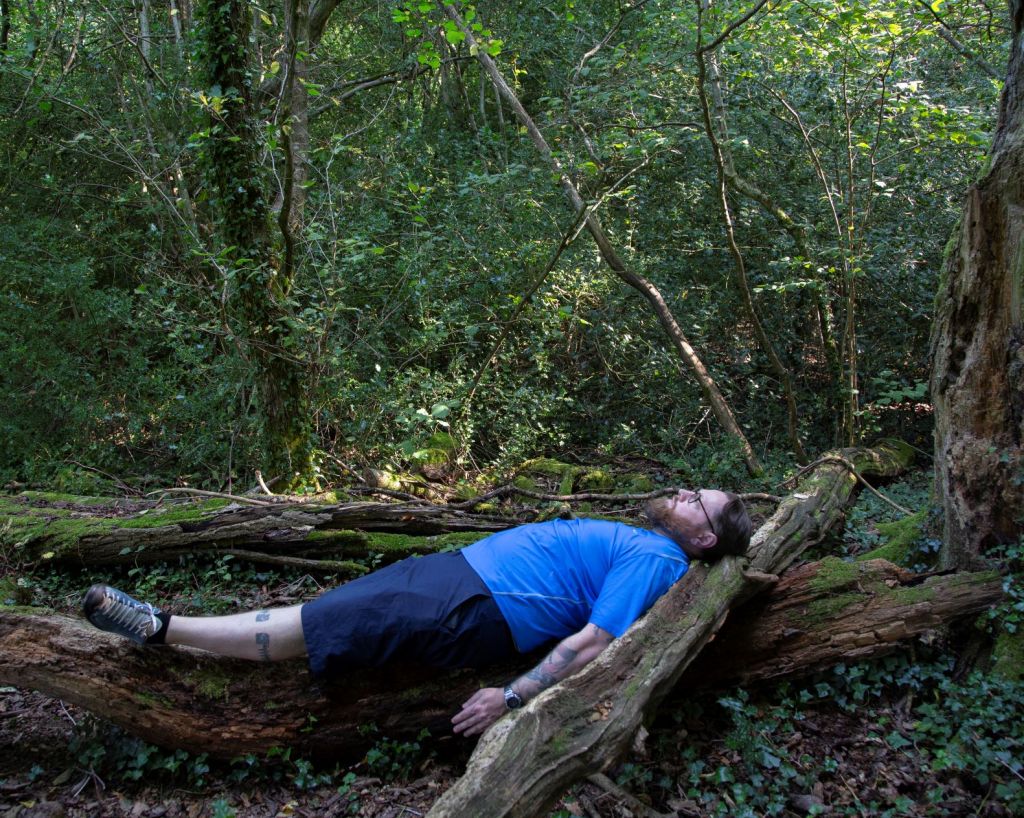
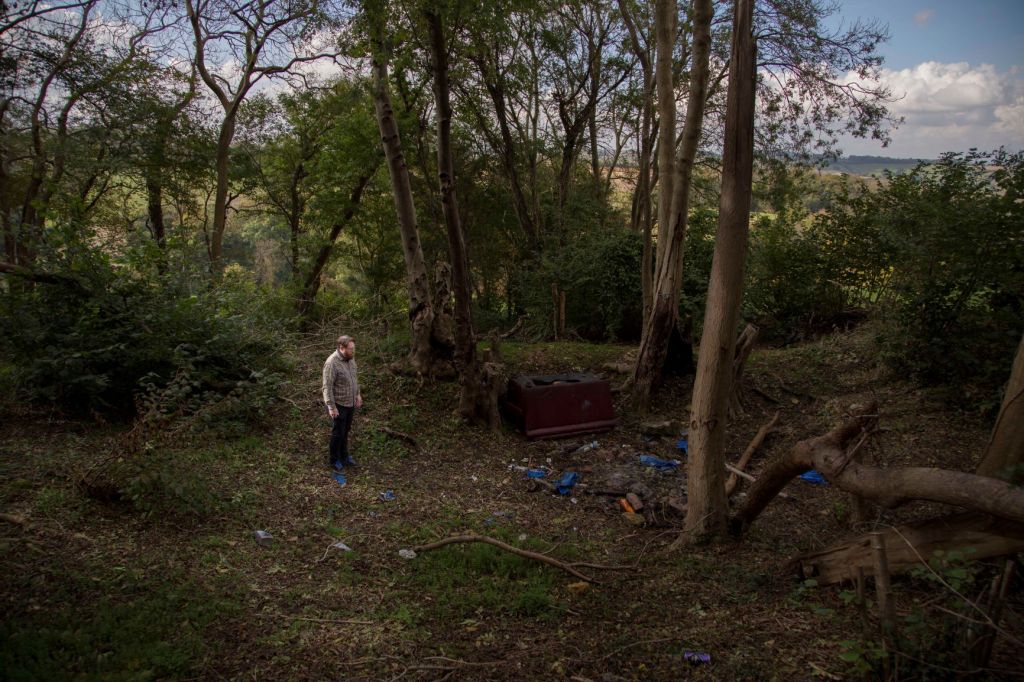
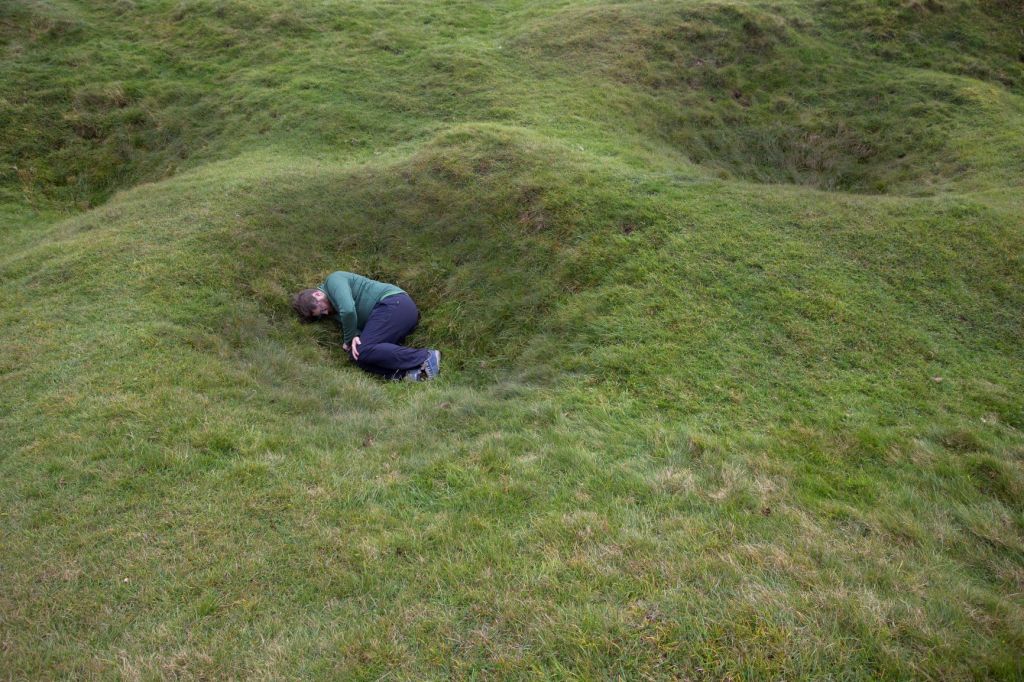
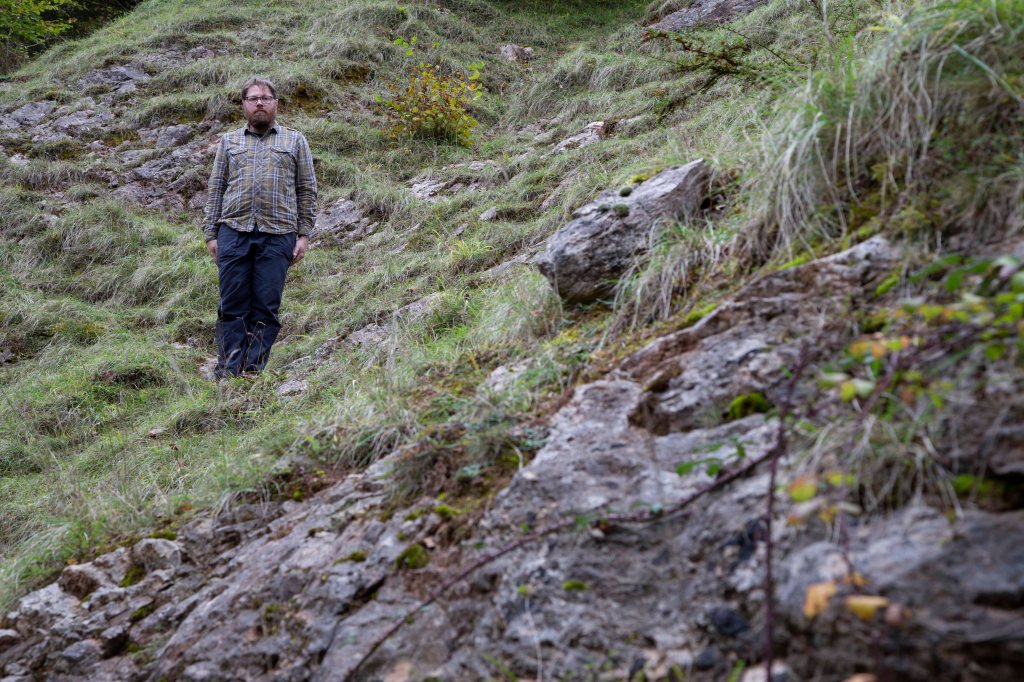
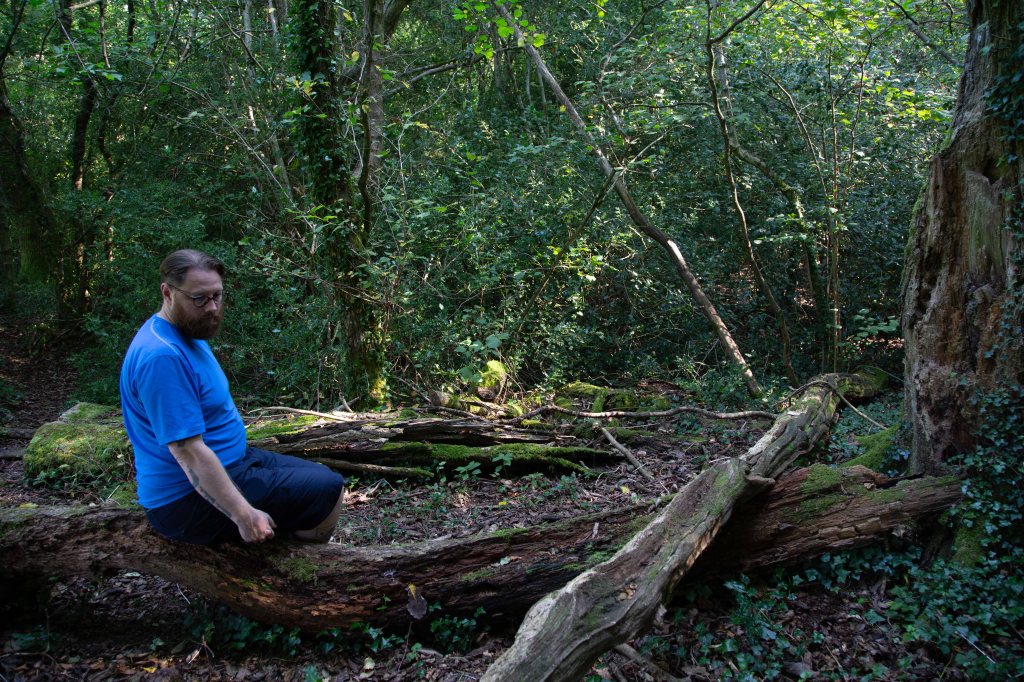
In my own imagery I have attempted to engage the view, giving them a glimpse of a story, just enough to leave them to create their own story. The choice of clothing colour was made prior to the shoot so as to achieve two factors, 1) not to overly blend in with nature and 2) not to stand out so as to distract the viewer’s gaze. The following images were used in my last WIP portfolio as I felt the to be reflect what I’d set out to achieve.
Fig 2. I come from a broken home, Tim Beale. 2020
Fig 3. Birth, Tim Beale. 2020
I felt that these images Figures 2 & 3 worked well as they have a stronger feel, the colours work, there is enough to tell a story without over complicating the image. Fig 2 was shot with 18th Century paintings in mind, particularly the work of Gainsborough. Making the undesirable landscape picturesque. Fig 3 uses the contours of the environment to create a womblike image.
Fig 4. Untitled, Tim Beale. 2020
Fig 5. Untitled, Tim Beale. 2020
Fig 4 I feel didn’t quite work for me, the angle of looking up feels awkward and the distance from camera not quite right. Fig 5 the lighting was spot on as was the location, however the choice in clothing and colour pallet all wrong.
July 2020, shortly after the initial lockdown ended I took a trip back up to the midlands, Derby, to visit my Dad and step mum. This was also an opportunity to walk the streets, where I once played and visit some of the places that helped shape the person I am today. Then in September my dad died unexpectedly, this sudden loss has had a profound effect on me. My immediate response to the news was to try to escape and loose myself in the woods. I found this time spent, walking and thinking about my dad and my childhood has given me sense of clarity and focus.
I grew up in Derby, an industrial city made up of vernacular terraced housing and Victorian industrial buildings but surrounded by some of the most stunning landscapes in the country. The city was made for work and as such the people who live there are good practical, hard working people. Now some 20 years on after leaving Derby I find myself living in Bath, a city built for pleasure with grand Georgian houses. Two very different cities however each city has a communality (and like most UK towns and cities), the need to maintain something of nature. Walking the streets of our cities you can see nature given a space to flourish, gardens, parks or avenues of trees lining the roads. This notion of suburban nature is something I plan on exploring more during the next few months.
Fig. 6 George Shaw, Scenes from the Passion, 2002
Fig. 7 George Shaw, Scenes from the Passion, 2002
Fig. 8 George Shaw, Scenes from the Passion, 2002
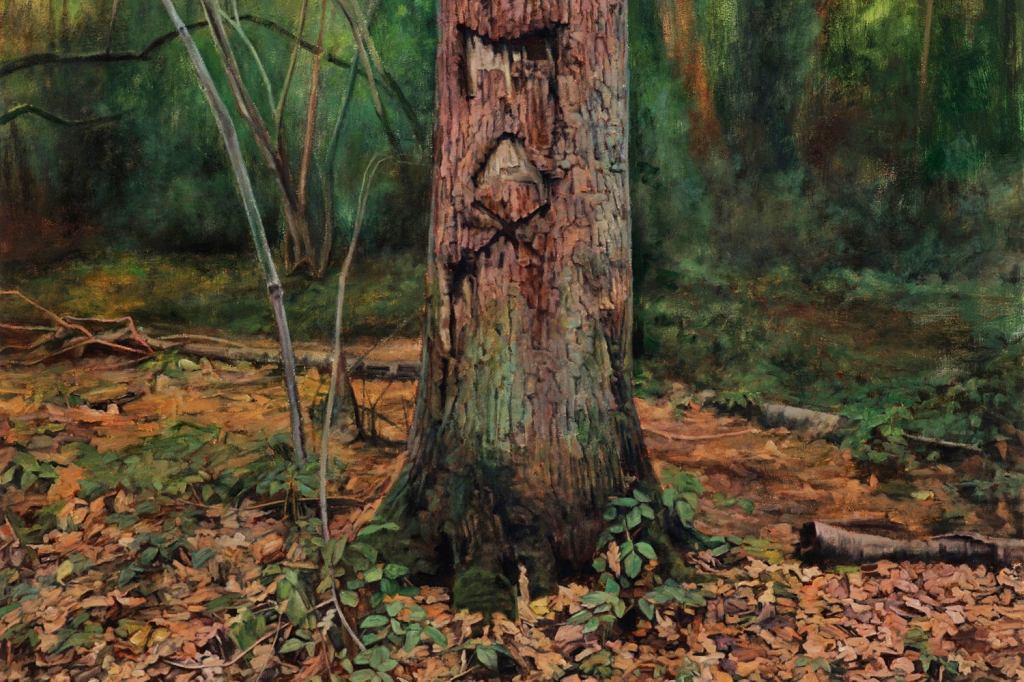
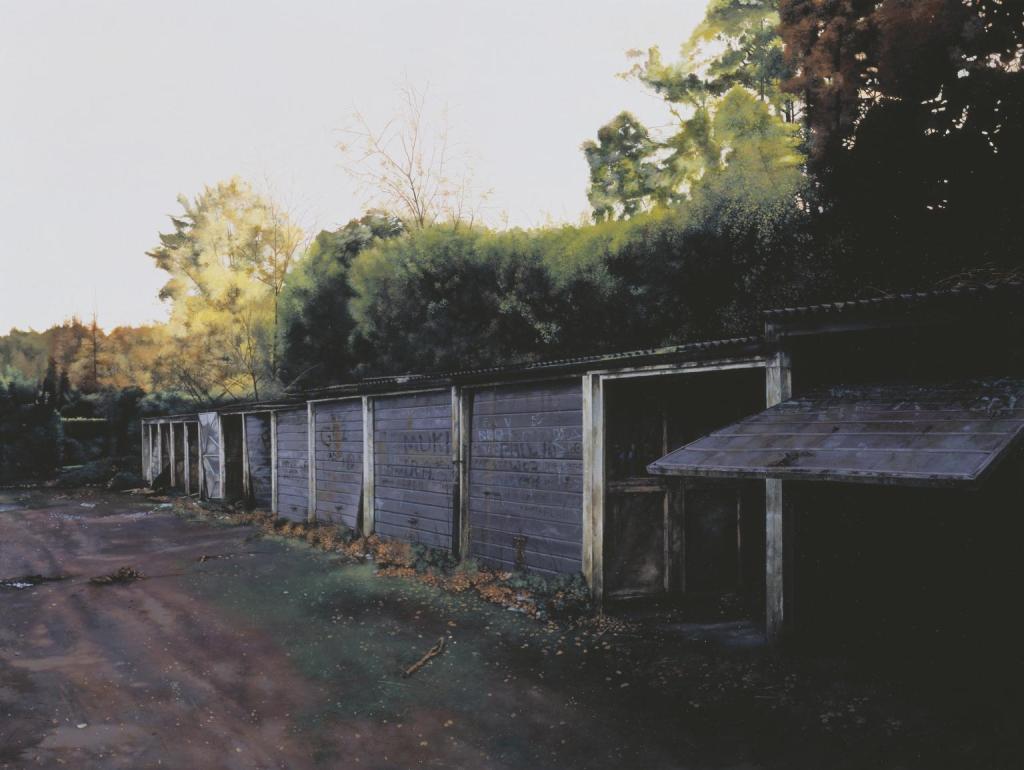
I was recently introduced to the work of a painter who also comes from the midlands George Shawafter sharing a number of my recent photographic works with a friend as he felt their were a number of striking similarities between our practices. Shaw who produces realistic images using humbrol paint on board, a paint I am familiar with from hours spent building airfix models as a kid with my dad. This unconventional medium for painting fits well with Shaw’s unconventional subject matter of council estates in the midlands. Again another similarity with my own upbringing in the midlands.
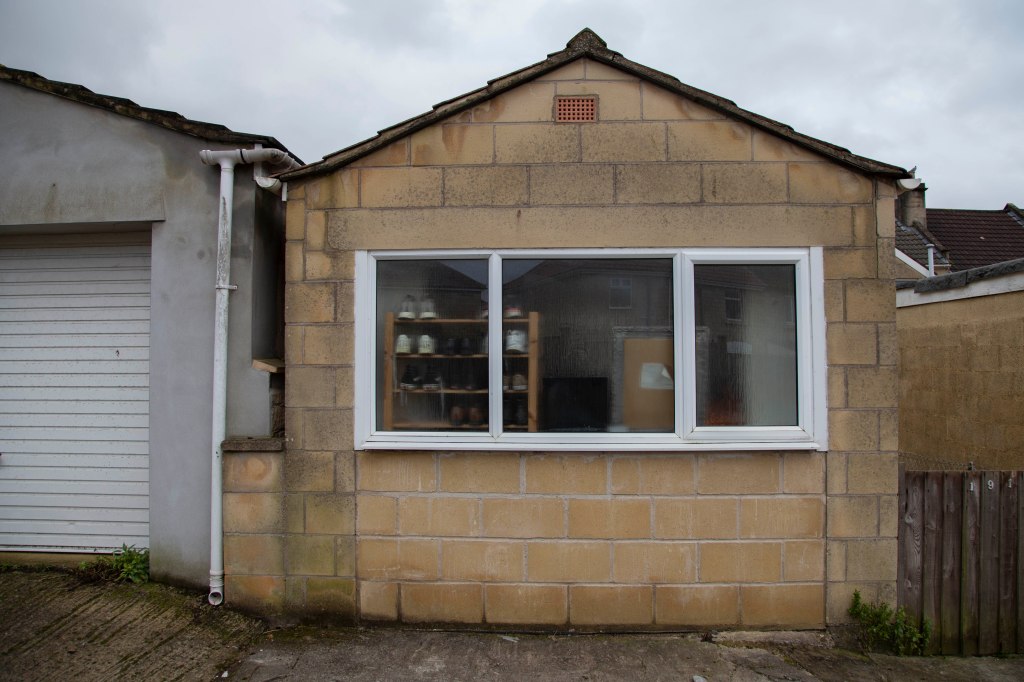
On first viewing Shaw’s paintings of middle England, I was struck with how the image, which has a photographic quality to it, seemed so familiar. Looking through a batch of recent images of alleyways and side streets I can across my own, unwitting, interpretation. Shaw’s images brought back memories of growing up in the midlands and as such the realisation hit me that this is why I have this odd fascination with alleyways and back streets.
“The drizzly visions of an empty, every man England transcend their bleak settings, inviting viewers to project on to them their own childhood ennui. A rope dangling from a tree, a lock-up garage left open, a broken goalpost: each one suggests possible youthful adventures – or traumas.” Tim Jonze (Jonze 2019:online)
Fig 9. Self portrait behind Dad’s house. Tim Beale 2020
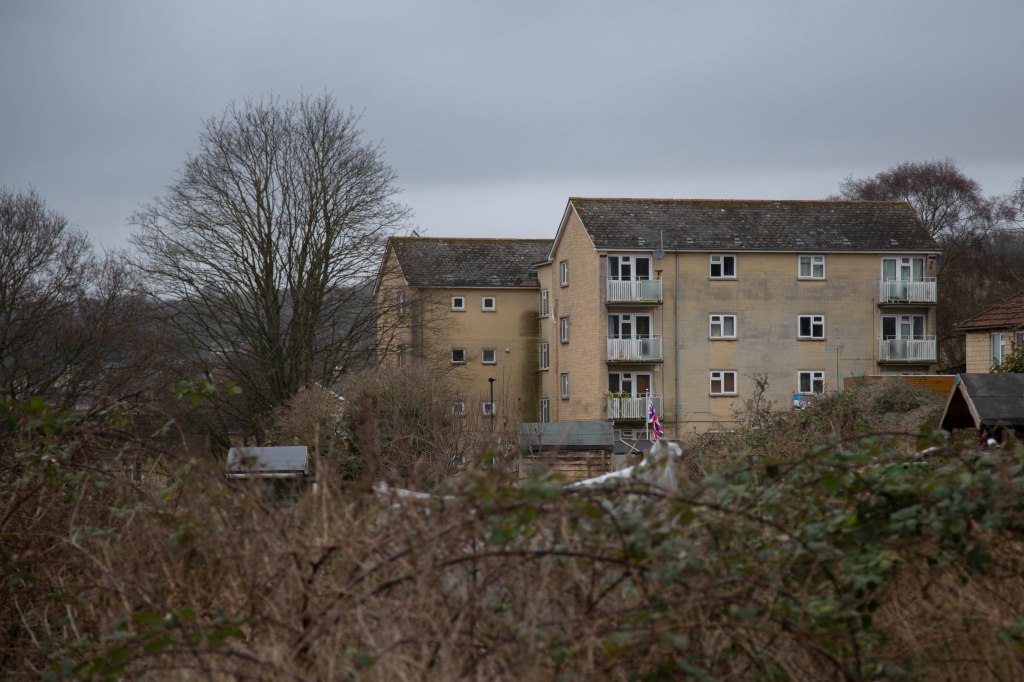
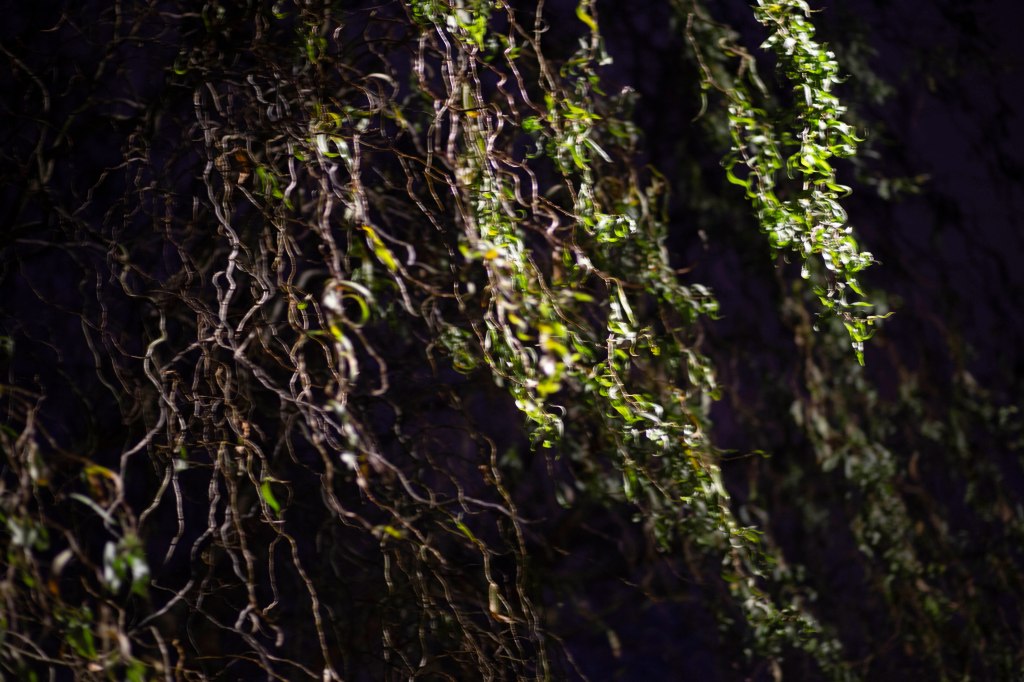
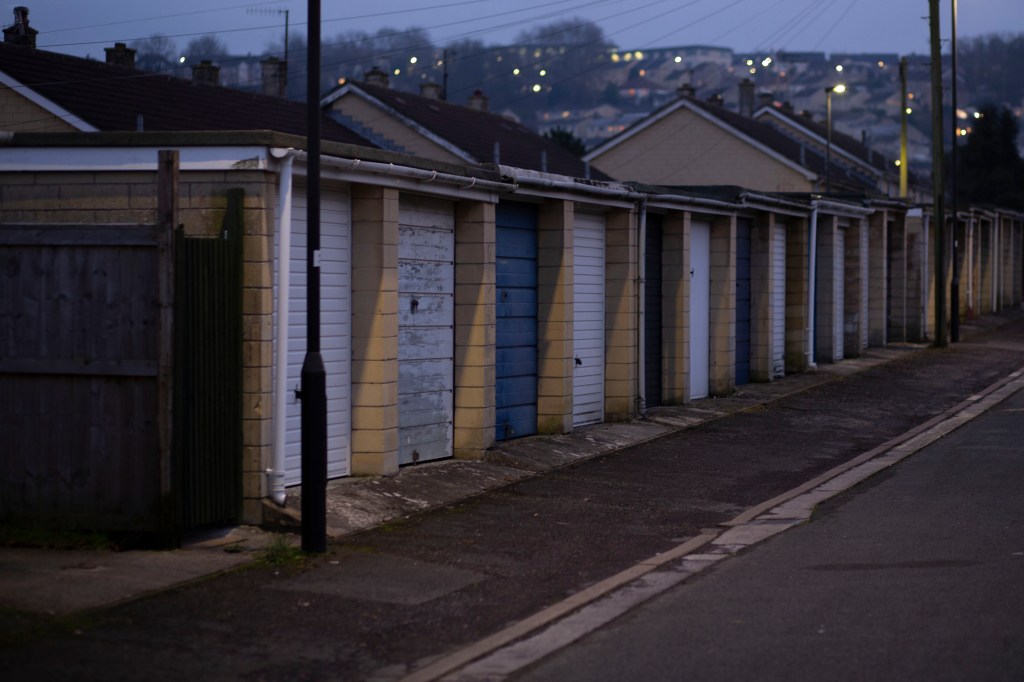
With a desire to explore city nature further,I took to the streets of Bath, not the grand Georgian city people are familiar with but the out of town suburban areas on the outskirts, my Bath.I want to remain true to the core concept of how nature influences our mental state, be it positive or negative, whilst documenting the use of nature in suburban places, such as those I grew up in.
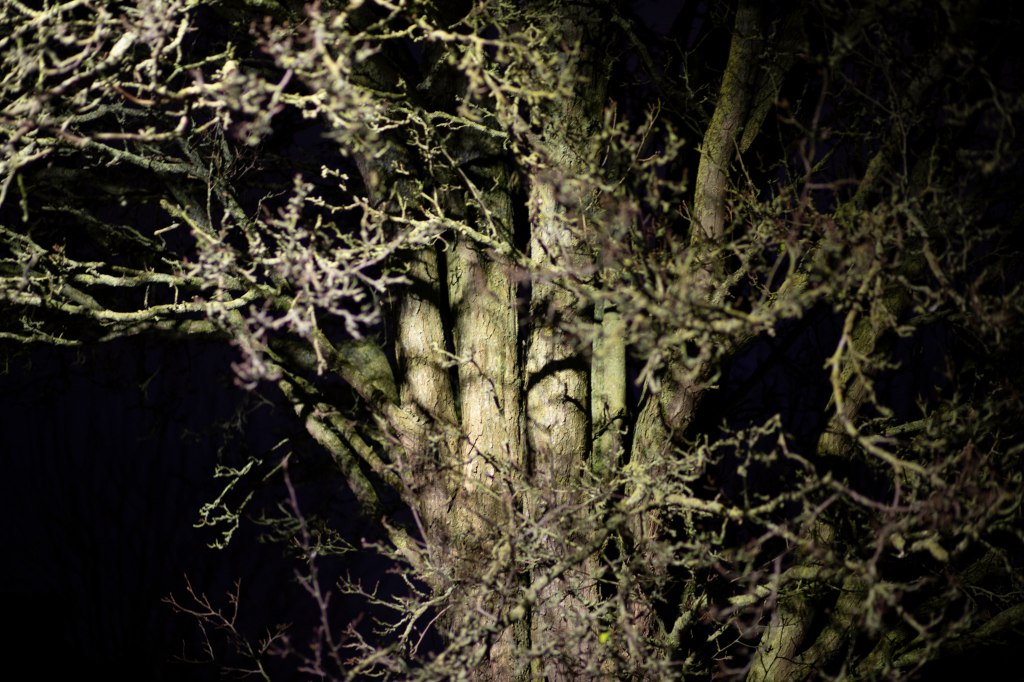
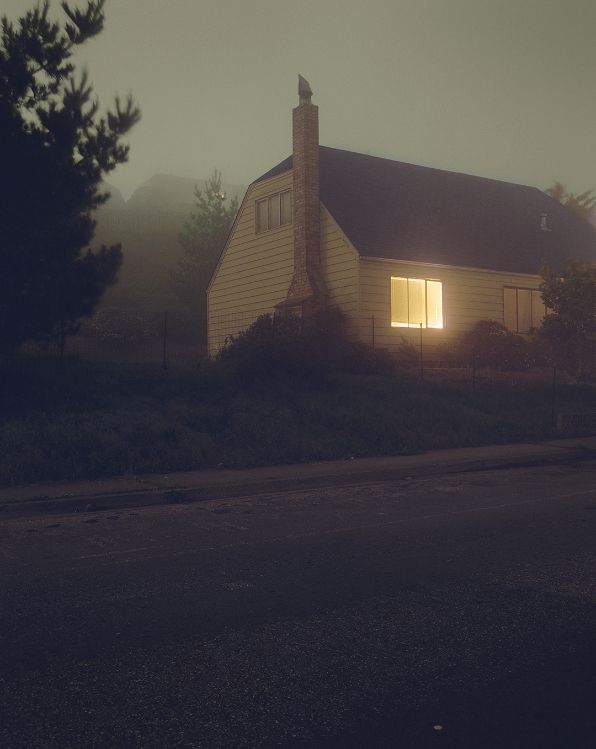
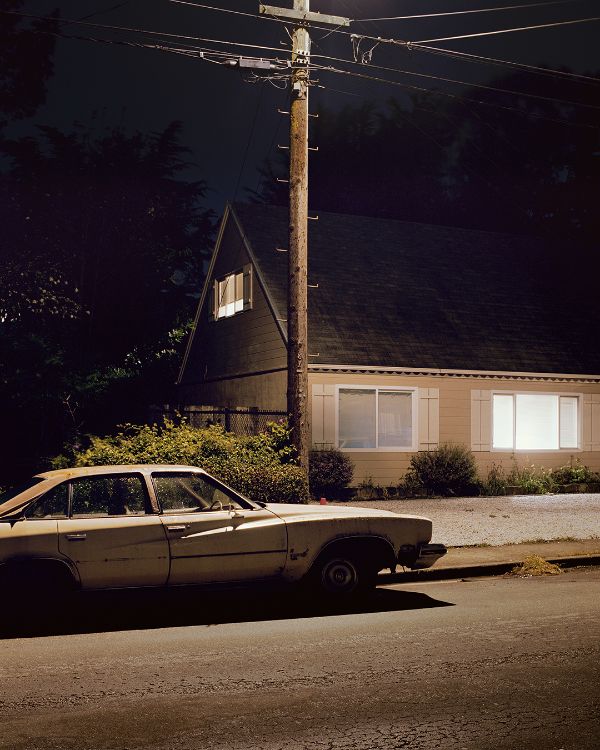
More recently I’ve been inspired by Todd Hido’s – House hunting series of images and have begun shooting at night. I saw in Hido’s images of suburban housing, a sense of mystery, suspense and just a little threat. Hido drives along ‘anonymous’ American streets, most likely in his home of San Francisco Bay area in the US, at night using the light from street lamps to capture images homes devoid of inhabitants.
‘I take photographs of houses at night because I wonder about the families inside them,’ ‘I wonder about how people live, and the act of taking that photograph is a meditation.’ Todd Hido (Christie’s 2017:YouTube)
Fig 10. Todd Hido, 1997. #2027-b
Fig 11. Todd Hido, 1997. #2027-a
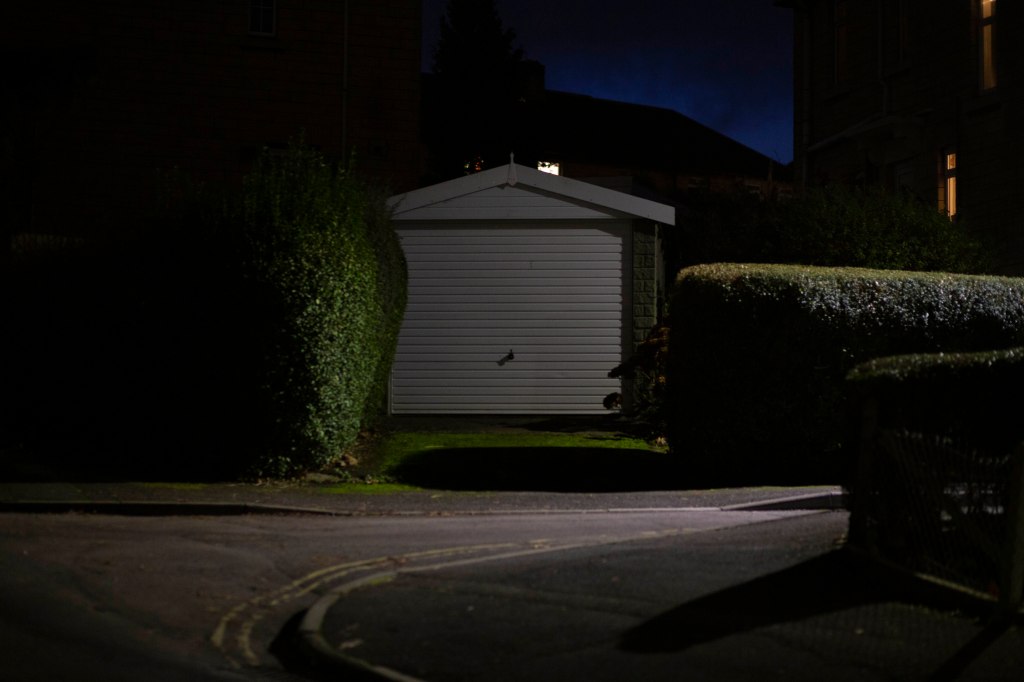
I chose to photograph at night as the quality and effect street lighting can give offers something quite unique. I could have chosen to introduce lighting with flesh or lamp but this seemed unnatural, forced and unnecessary. Trees take on a more central role not having to compete with houses, as these recede into the background. Initially I dismissed the out of focus, blurred images but the more I looked at these the more they spoke to me. The fact that they are blurred not unlike our memories of growing up, some are clear and sharp whereas others are hazy and unfocused.

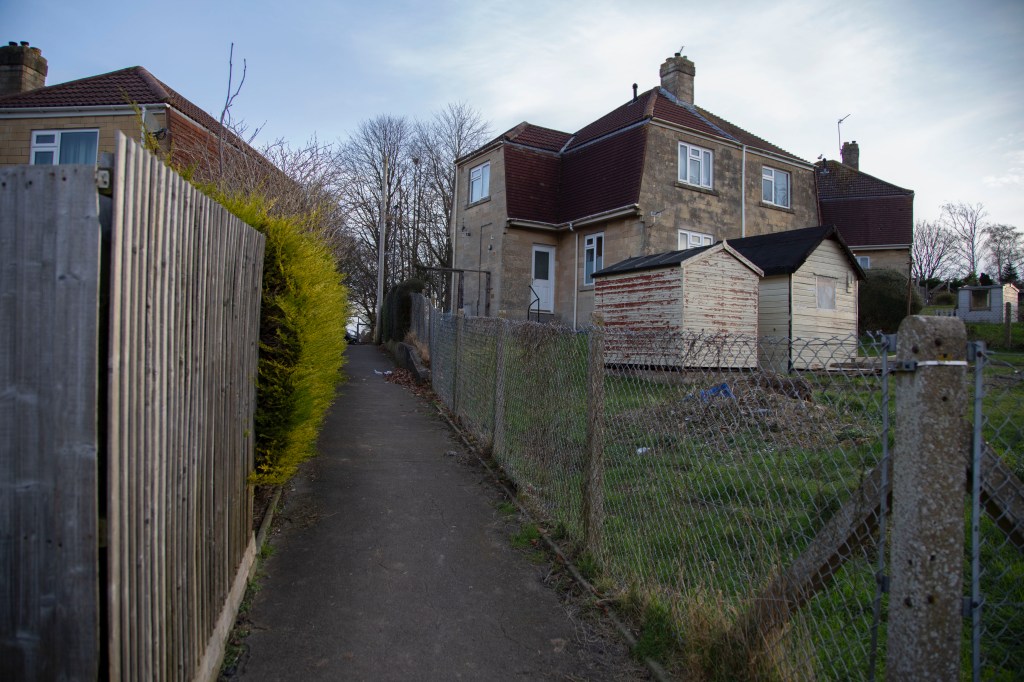
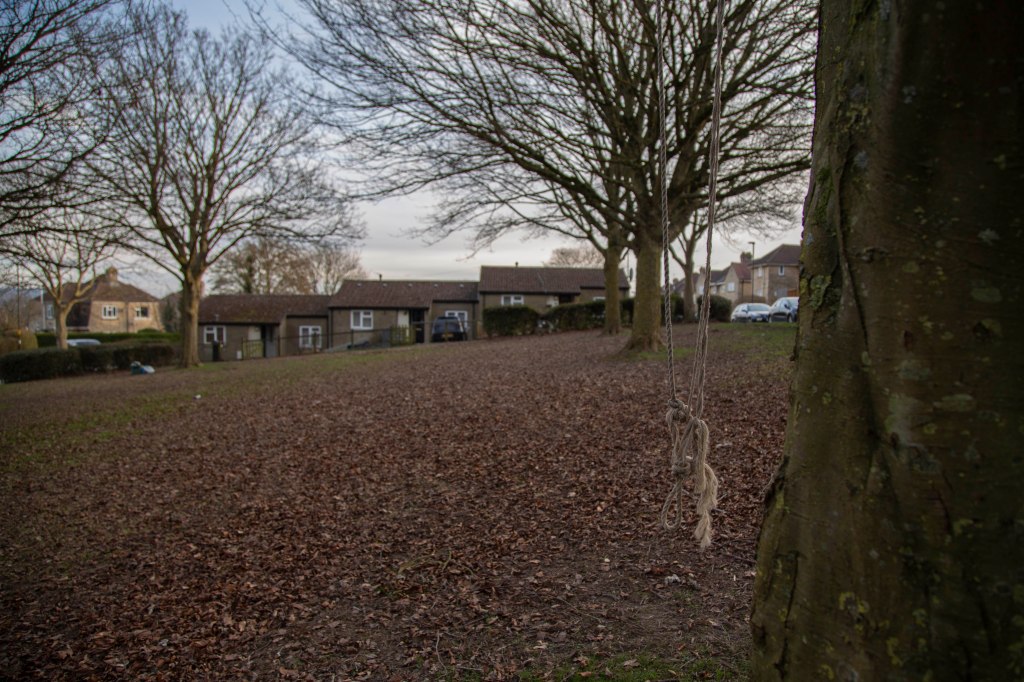
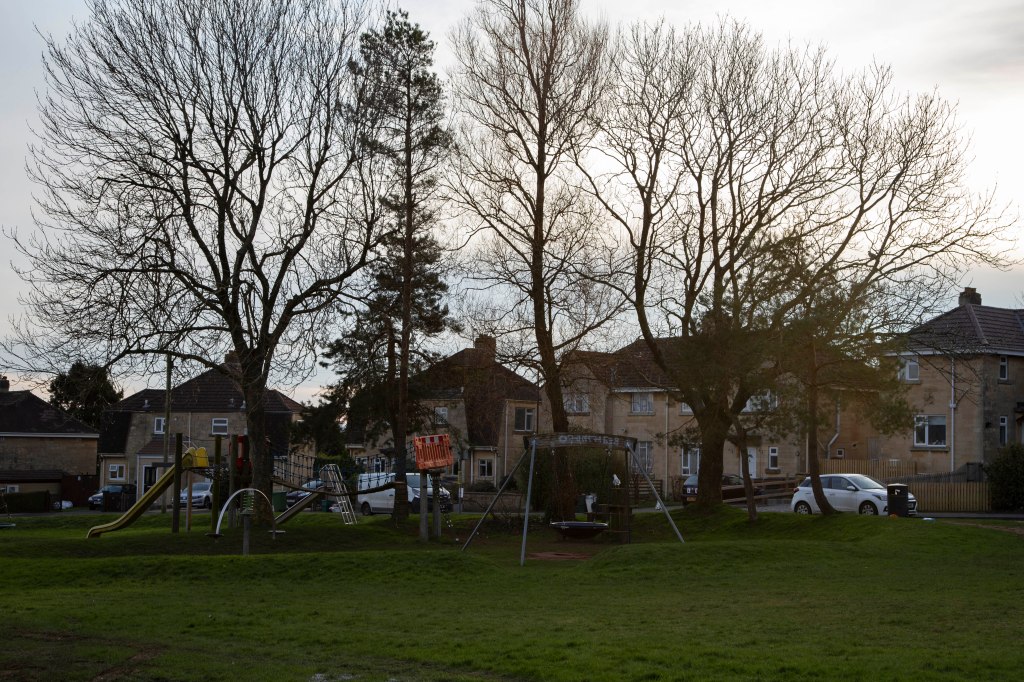
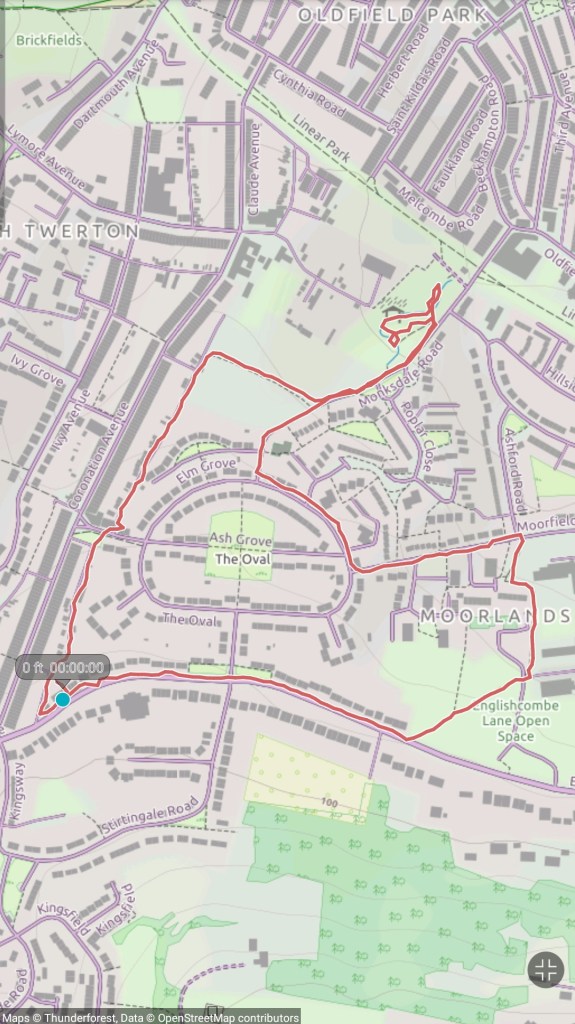
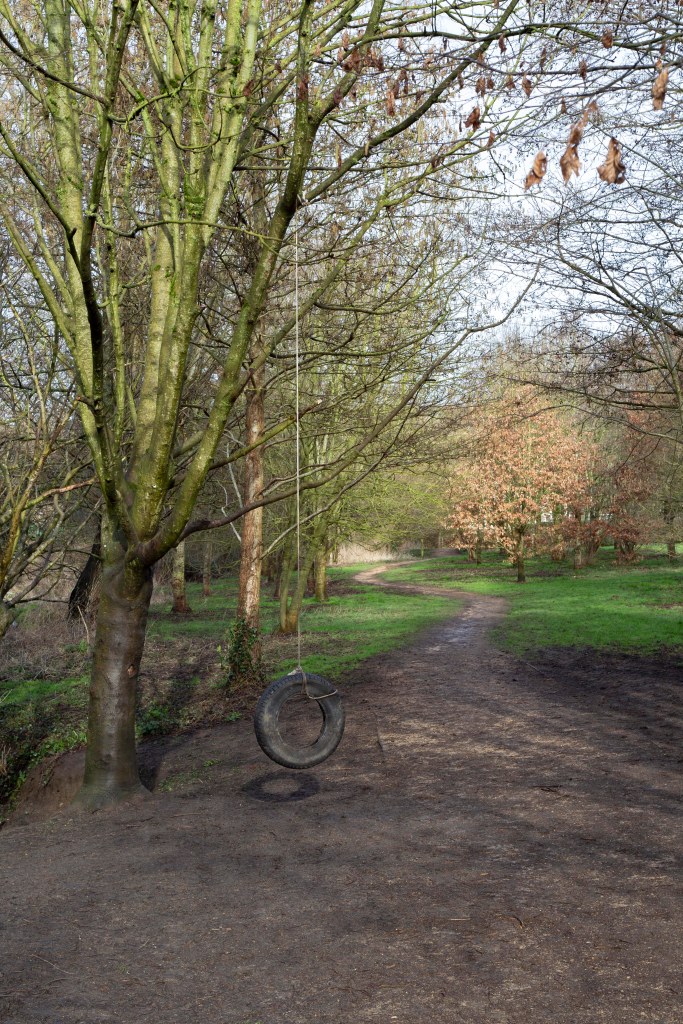
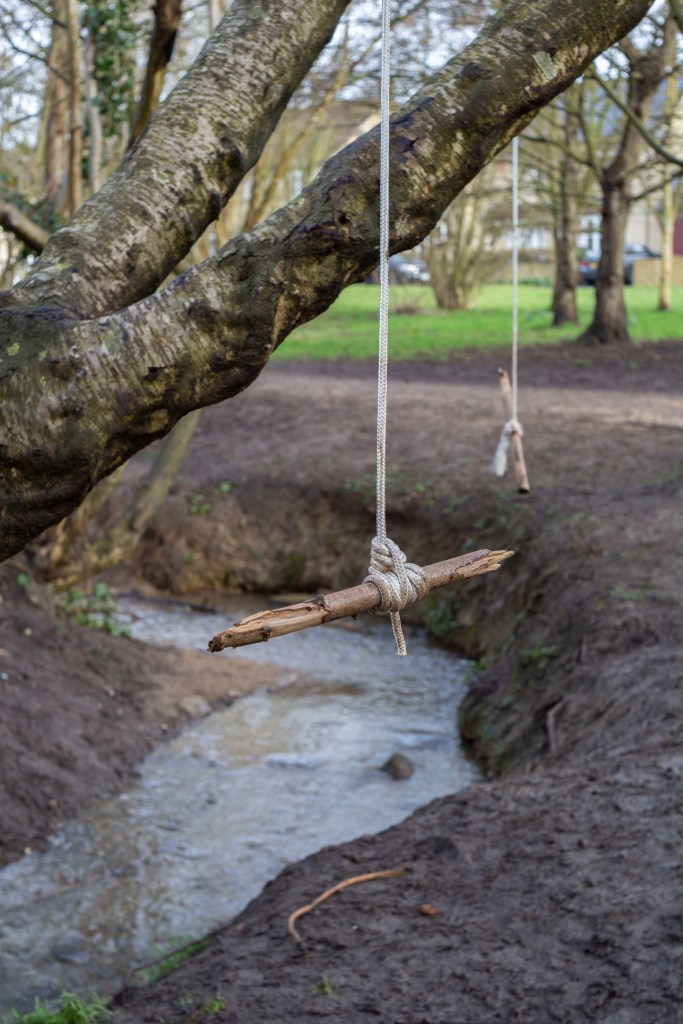
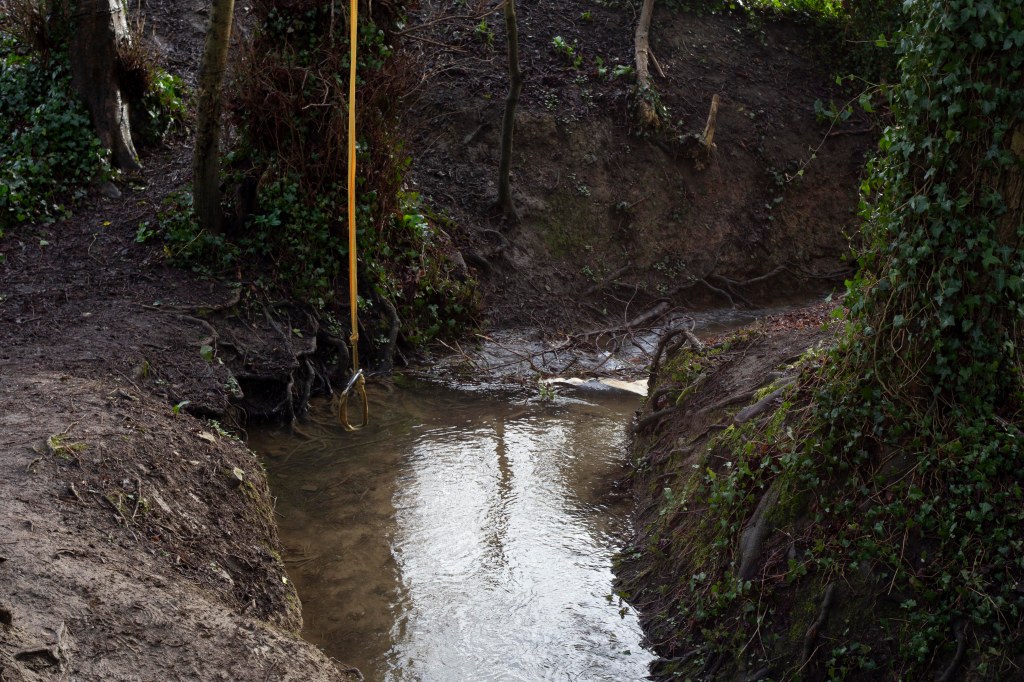
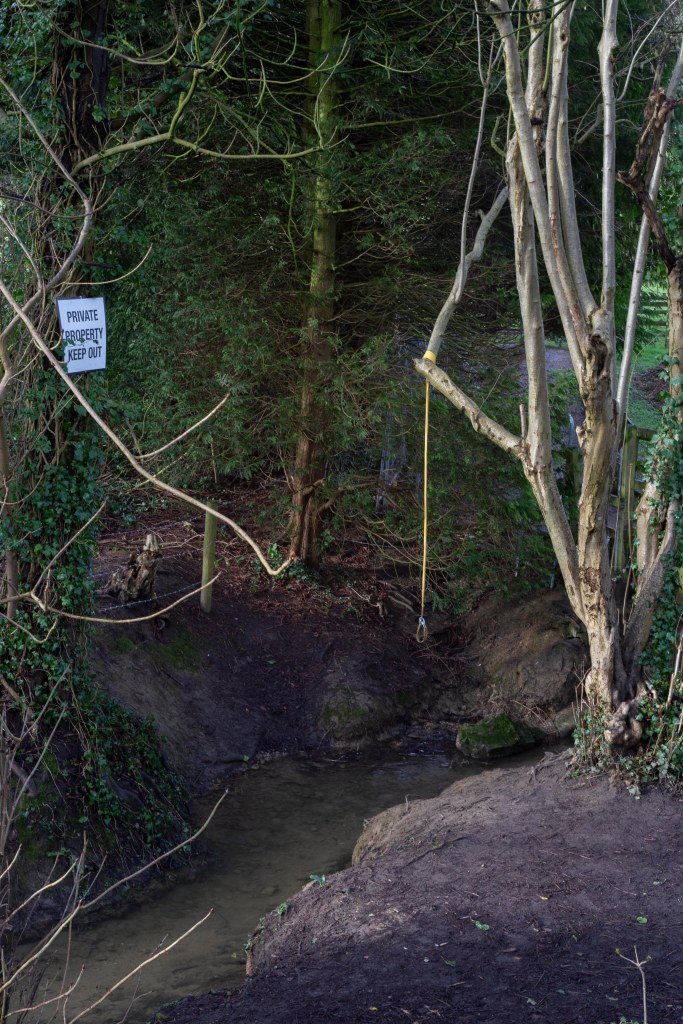

 The Space Between