My practice involves a great deal of research, which I feel stems from a career in the heritage sector. One of the challenges I am faced with is how to use this research within the context of a photographic body of work. I took the opportunity to visit two exhibitions of photographers
Cloe Drew Mathews’ exhibition “Thames’s log” at the Martin Parr foundation, a culmination of five-year worth of picture taking along the river Thames. Mathews starts the journey from the source of the UK’s largest river, down to the estuary mouth. The resulting body of work examines the various relationships towards water, rituals, festivals, traditions, and its modern use.
Each image in the exhibition is framed, simply in a standard gallery style, however, for each of the images Mathews includes an information box, the images themselves are straight documentary pieces. These boxes contain information relating to the corresponding image, text informing the viewer of what is happening, the date, time of day, weather conditions and position on the Thames. The format of the information makes me think of shipping forecasts played on the radio, which seems fitting for the subject matter.
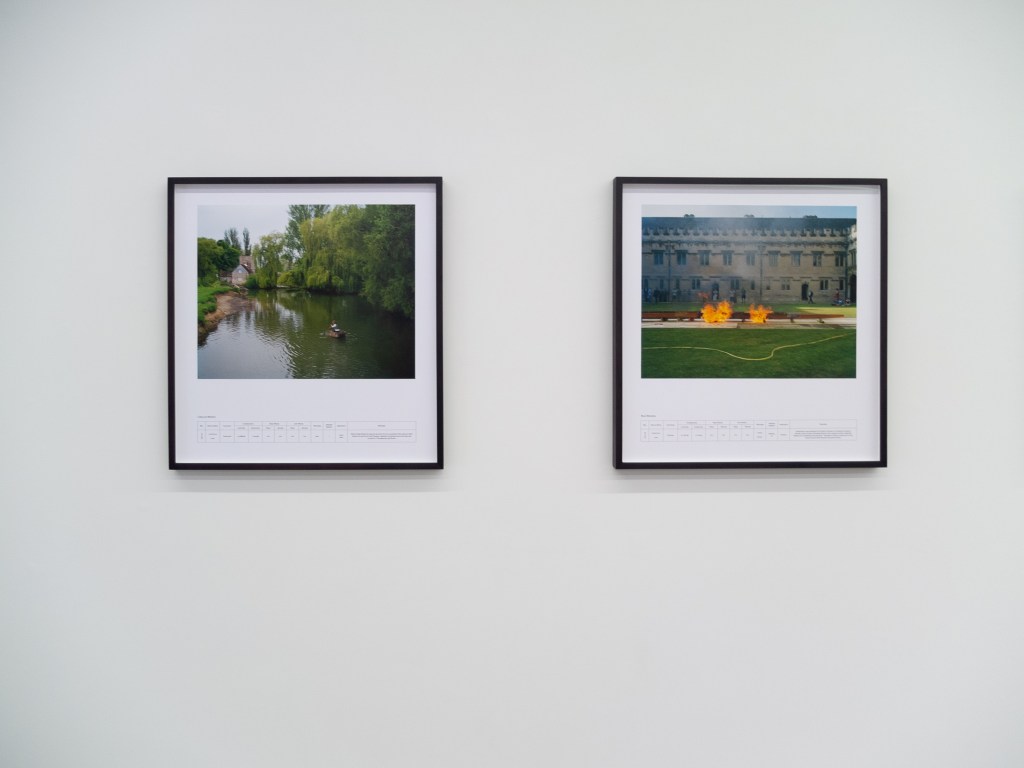
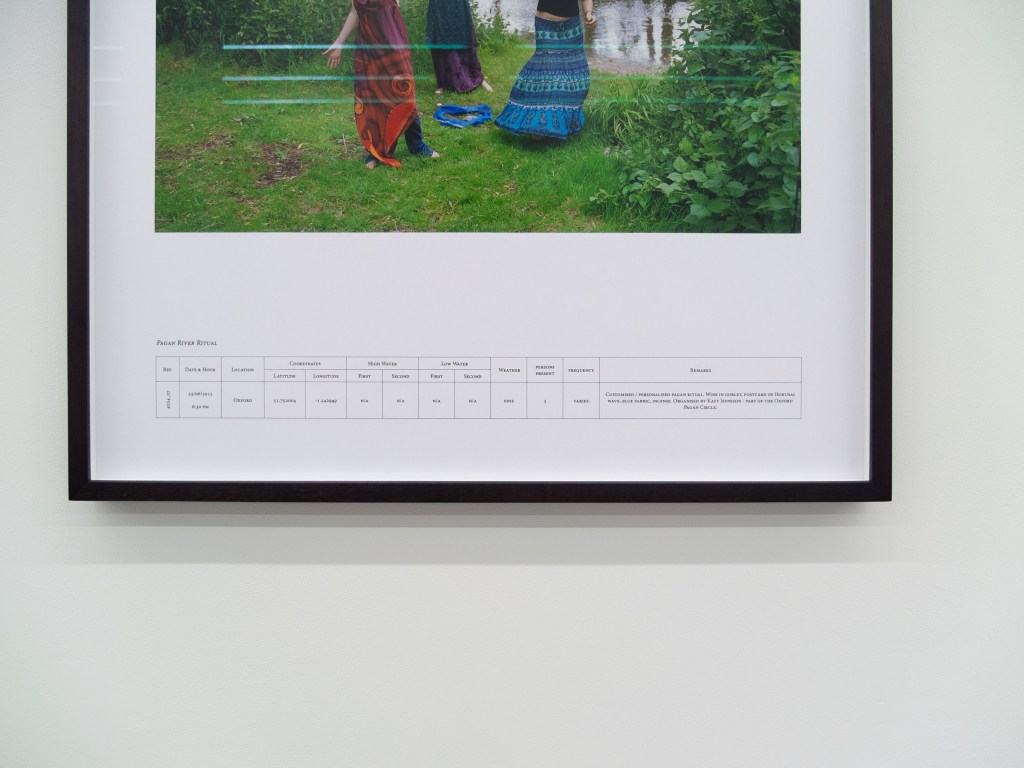
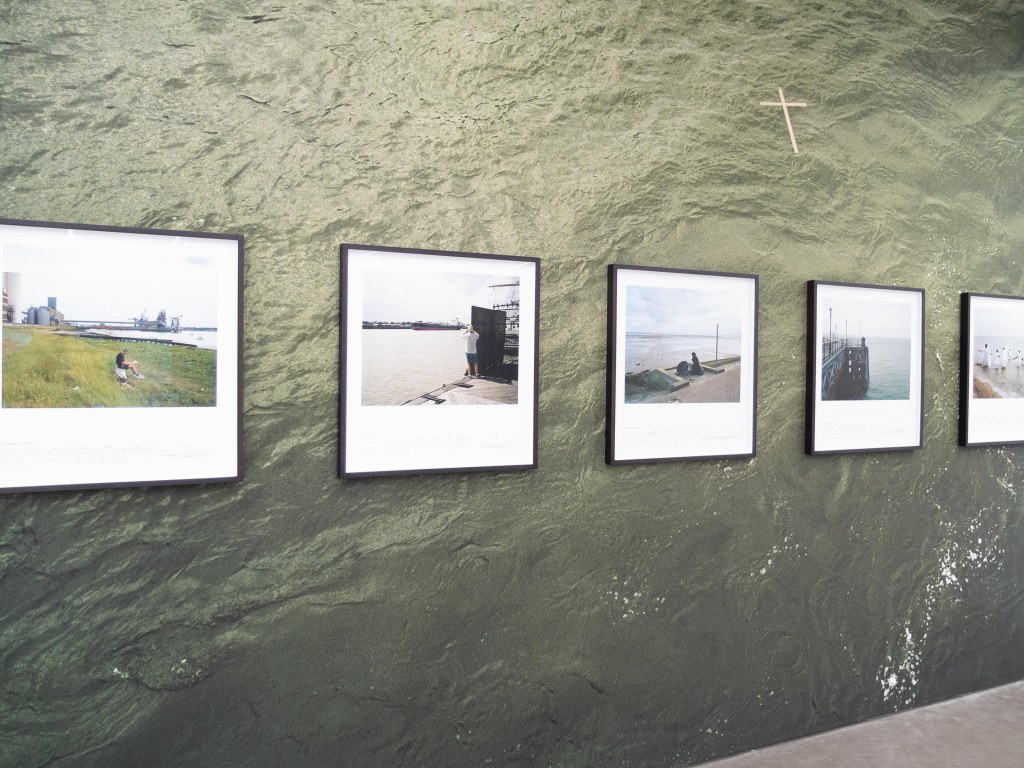
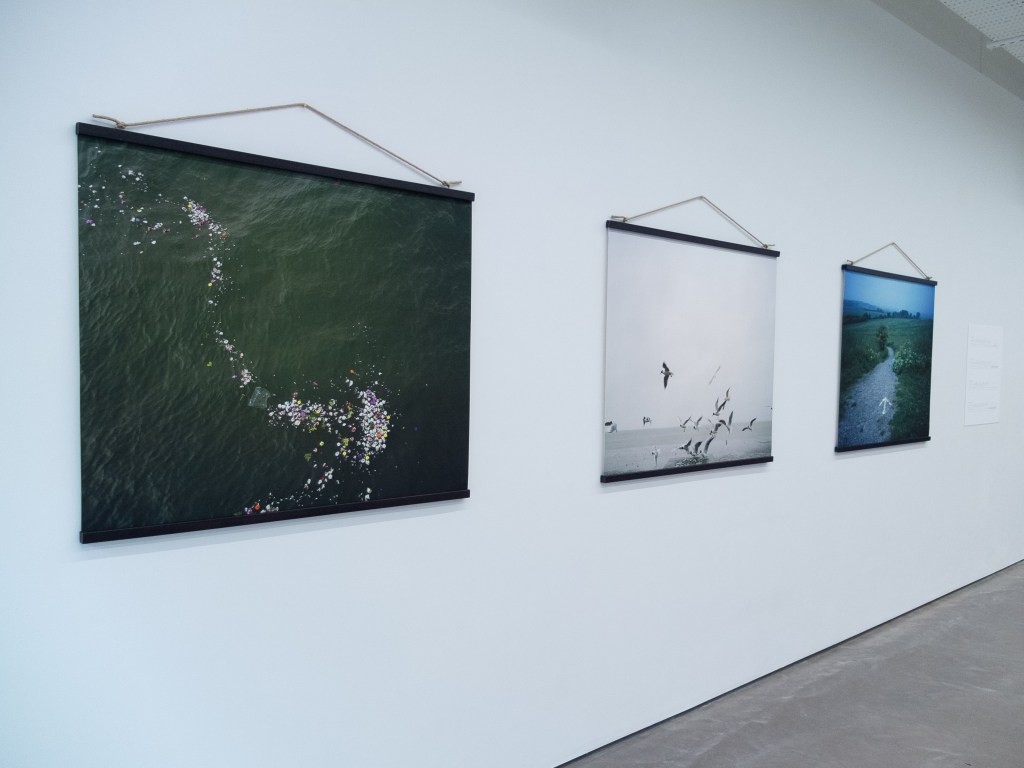
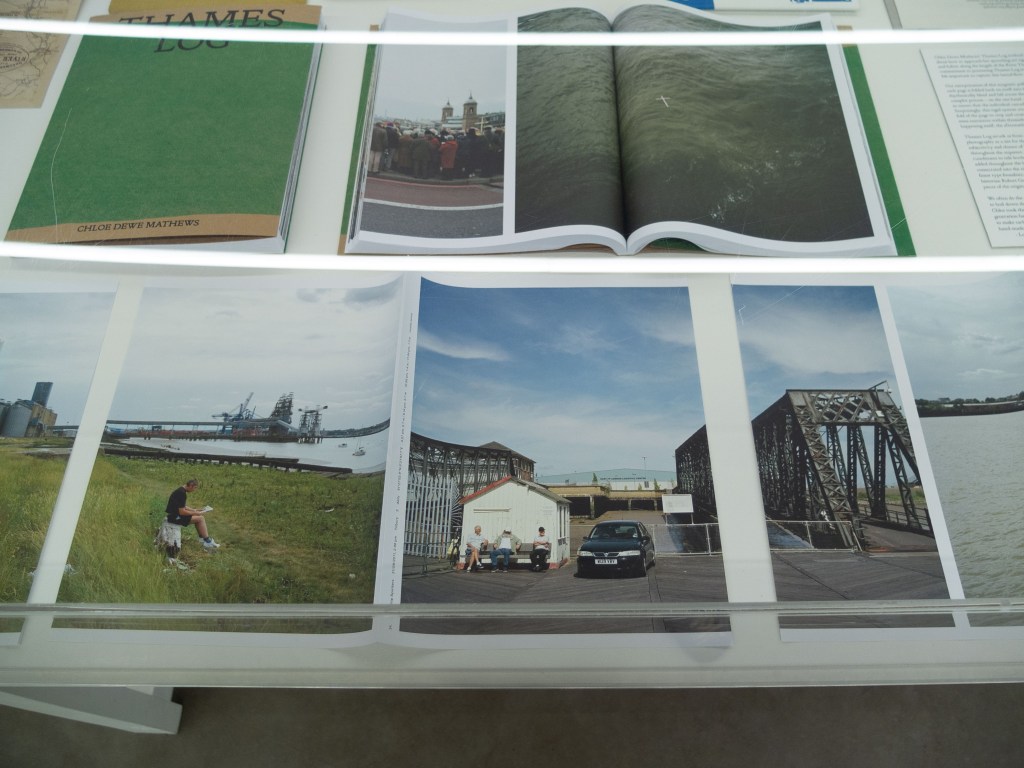
Included in the exhibition was a series of images printed on canvass, hung in a more contemporary way using sections of wood and rope. This method of showing Mathews’ images set them apart for the main body, I am not entirely sure this worked in this format, as the images them lost their narrative, the viewer is then faced with locating the information on a separate panel. The overall feel of this part of the exhibition seemed a little disjointed.
The exhibition shows the viewer just a small portion of the 5 year project with an accompanying book available for purchase that encompasses the project fully.
The Royal Photographic Society’s “in Progress” exhibition, crated by Aaron Schuman features solo projects from five leading photographers and photo-based artists Adawma Jalloh, Alba Zari, Hoda Afshar, Wildine Cadet and Laia Abril. New works and works-in-progress exploring topics such as personal history, cultural identity, migration, displacement, belief, and memory.
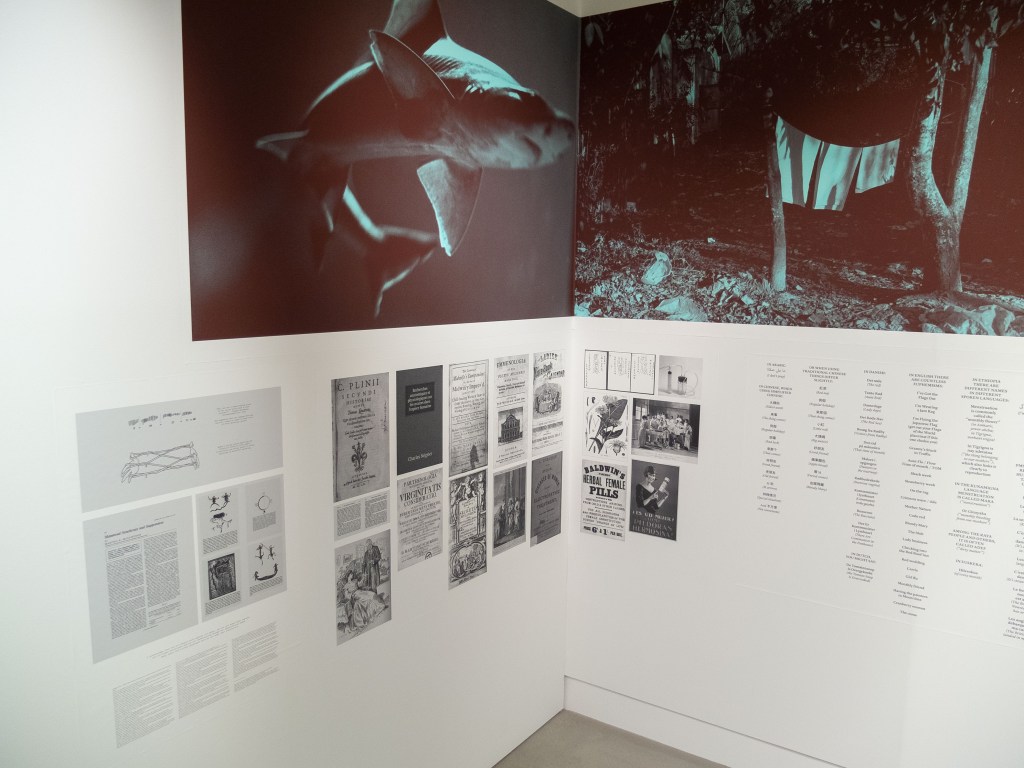
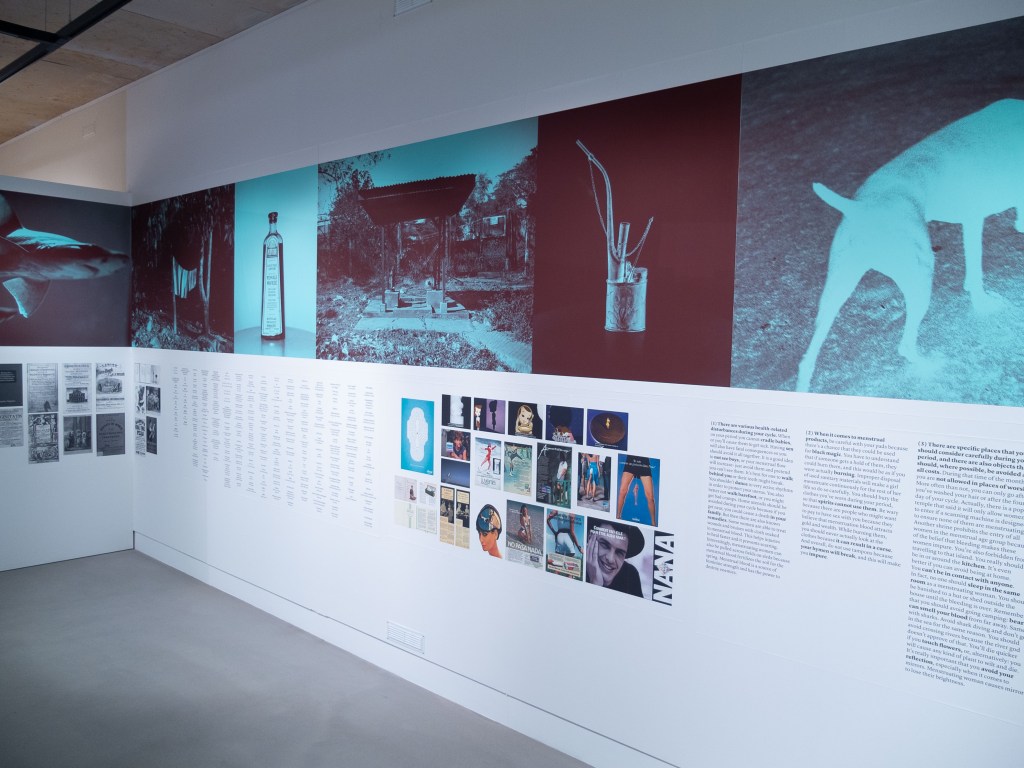
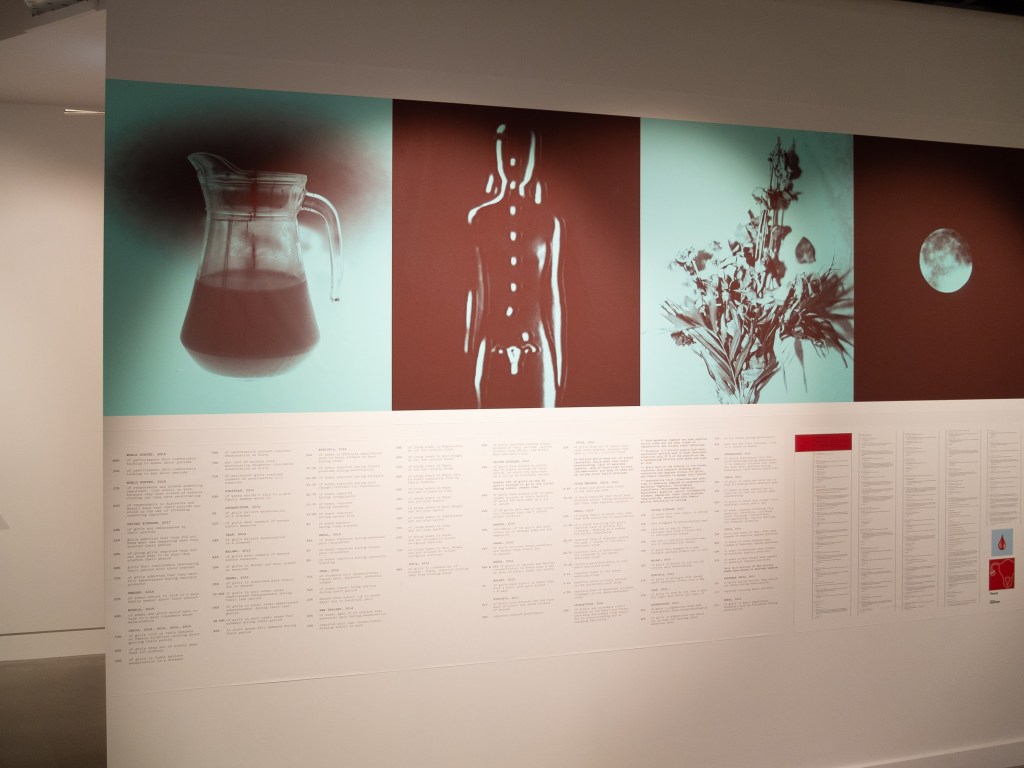
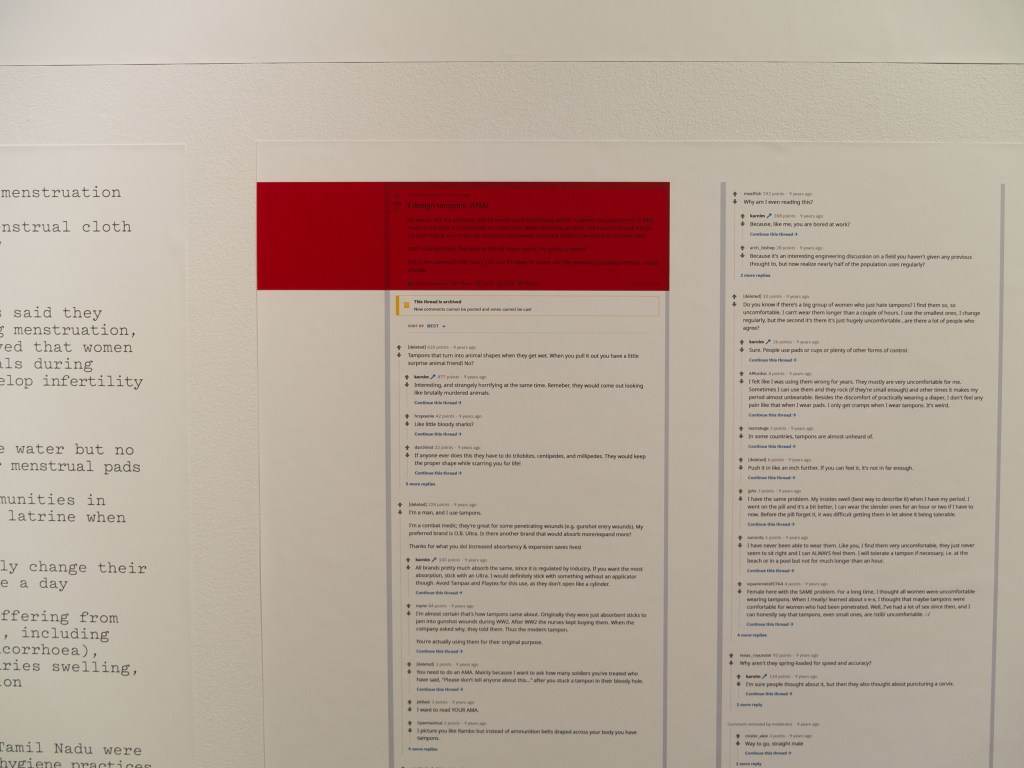
The photographic artist Laia Abril stood out for me with her research-based project “Menstruation Myths” is part (or one chapter) of her new long-term project “History of Misogyny” telling intimate stories that raise uneasy and hidden realities related with sexuality, and gender equality.
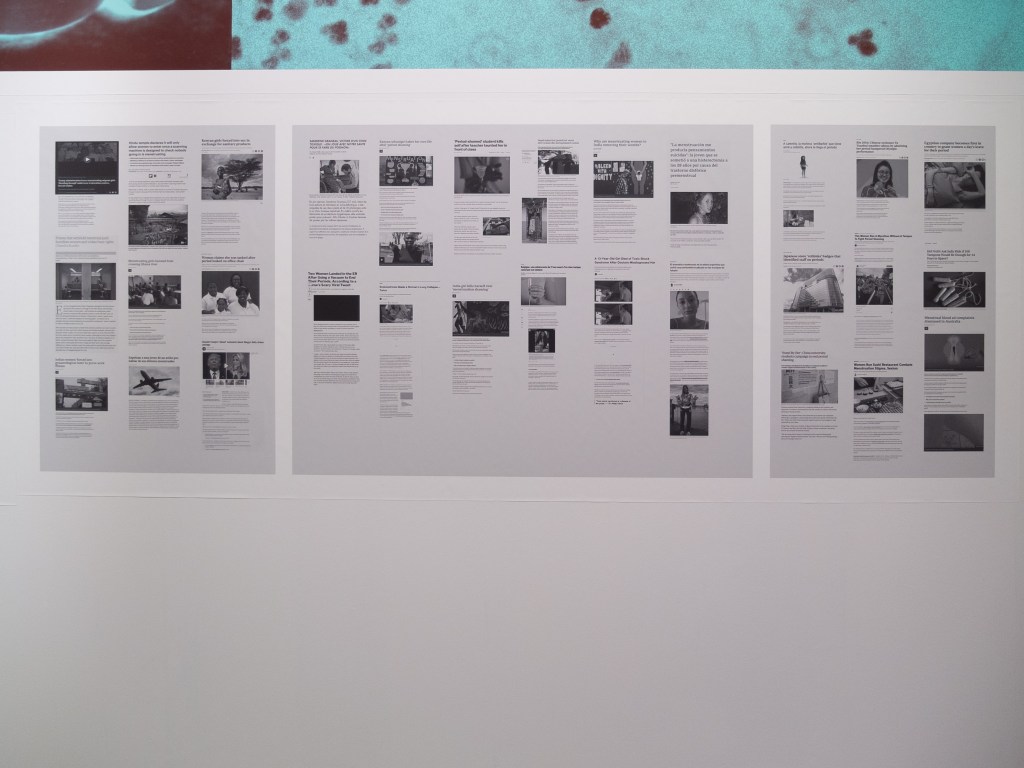
Rather than a standard format of printed images in frames the exhibition uses printed vinyl applied directly to the gallery walls. Images are interplayed with texts, screenshots of conversation threads. The photographic images are processed, monochromatic, in blues and deep (almost black) red, metaphors of blood are used, in some cases subtly and in other cases in ways more obvious, such as the jug of blood or shark images.
“I decided to tackle this question when I realized that I myself was a little embarrassed when it came to talking about it,” “That I hardly ever did. Only sometimes with girlfriends. And then, when I have my period, I don’t put my tampons on the table, I go to the bathroom with my bag. Privacy or embarrassment? “The start of a long investigation, anyway. In this way: “I left to do journalism, but I didn’t want to stick to a news calendar that wasn’t mine. I wanted to deal with subjects close to me. I also started with eating disorders, after having been bulimic for ten years. And I look for the “holes” in society: female sexuality is one of them. The rules too. ” “I then look for metaphors that synthesize my point, to arouse curiosity and encourage people to read my texts.” [Abril 2017:Liberation.fr]
What I have learned from each of these exhibitions is that research material can be used in more challenging ways, sitting alongside images. The text is then used to anchor each image creating a visual journey for the viewer. As a viewer I enjoyed the seeing the process of each project and felt that I had a deep sense of what each photographer had set out to achieve. Within my own practice I can see how using the research text alongside images, archival materials, and interview statements to build up a clear narrative.
References
https://www.liberation.fr/vous/2017/10/24/regles-des-croyances-menstrueuses_1605420/ [Accessed 17.07.2021]
Figures
Figure 1 Chloe Drew Mathews, Martin Parr Foundation “Thames Log” exhibition visited 02.07.2021
Figure 2 Laia Abril, Royal Photographic Society “In progress” exhibition visited 02.07.2021
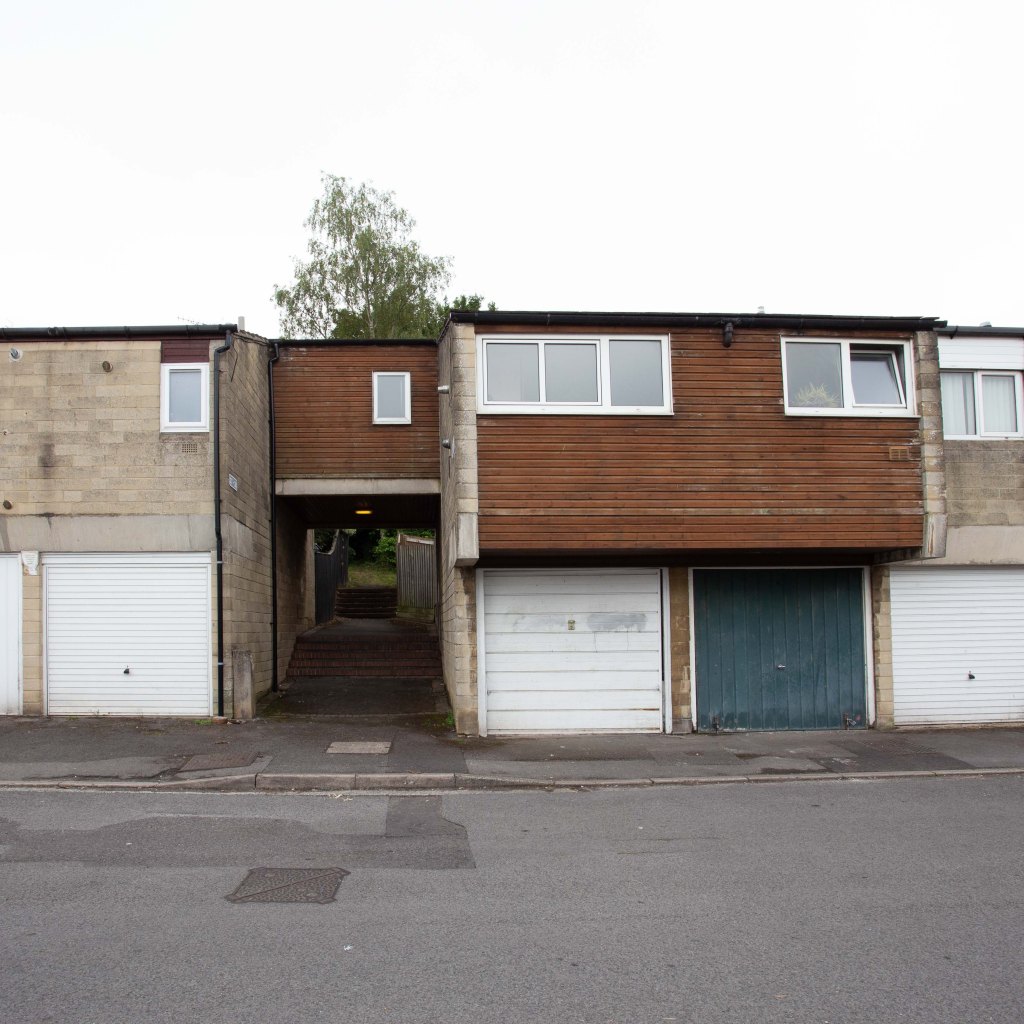
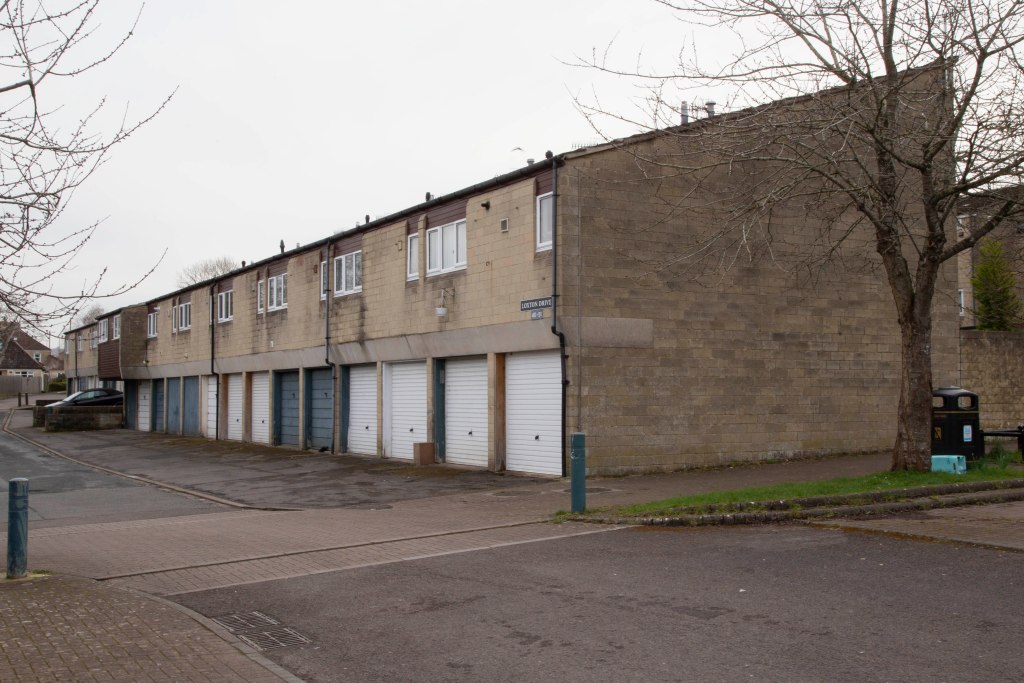
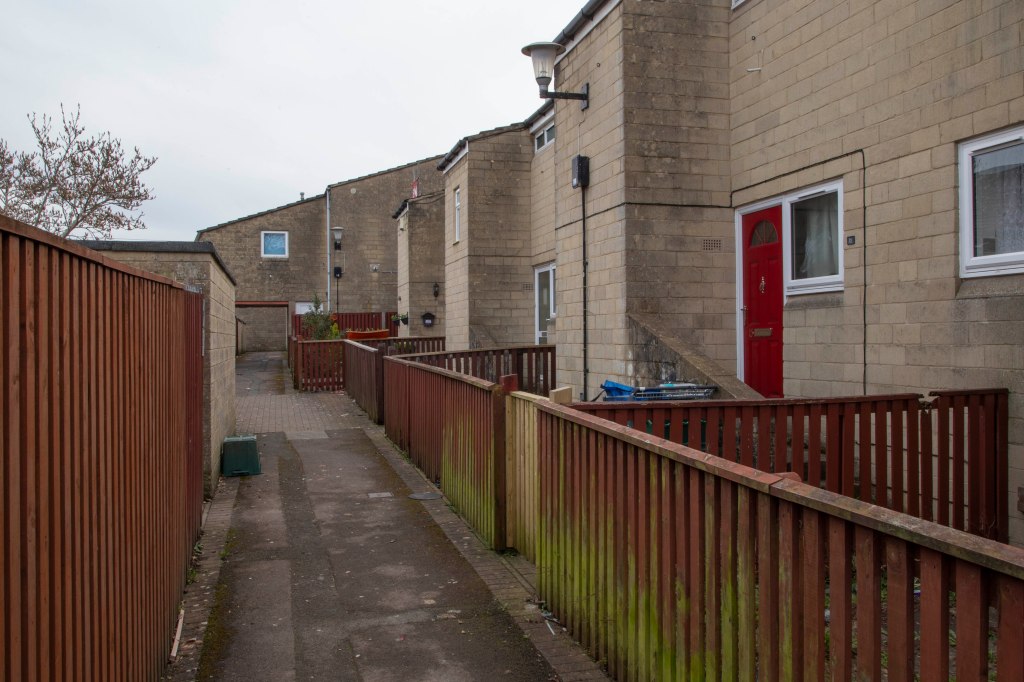
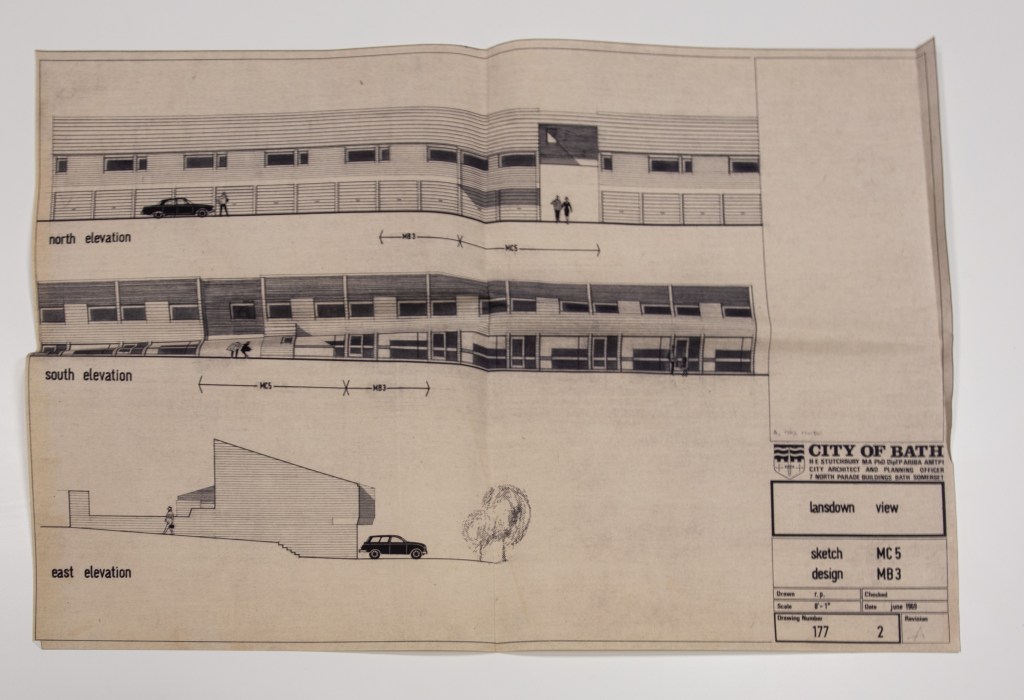
Figure 3 Tim Beale WIP images alongside the 1970 plans for Twerton courtesy of Bath Records Office
 The Space Between