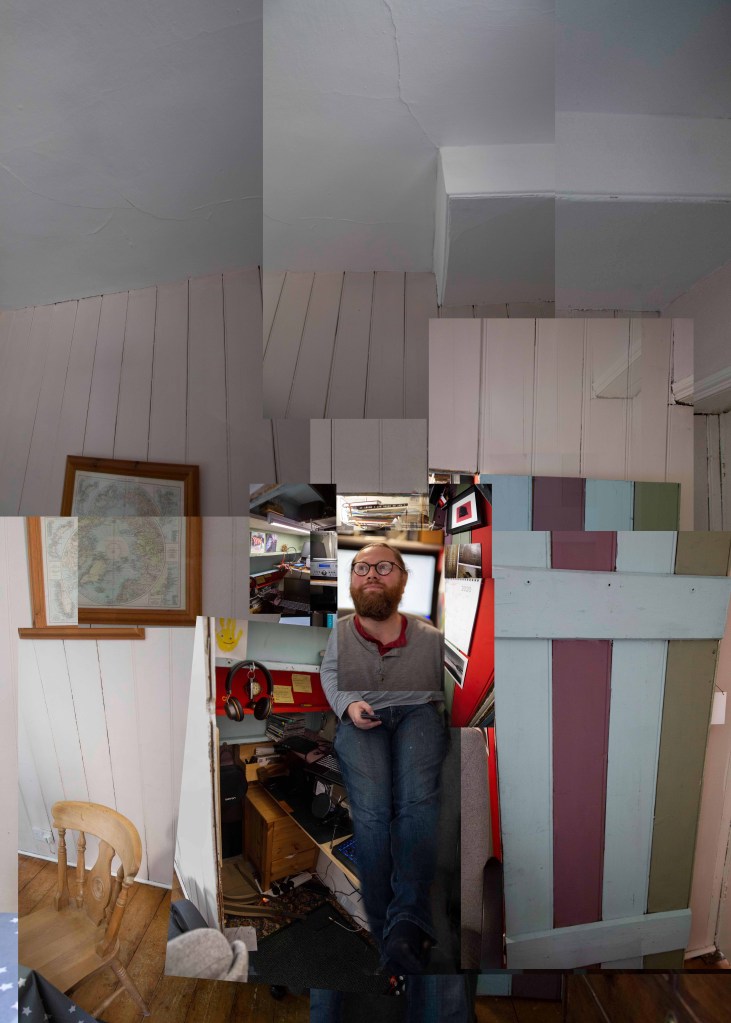
This week, after some great one to one feedback from my tutor, I started to explore self portraiture. I have often used this in my practice as a form of experimentation, either with new ideas, equipment or replicating a particular photographic style I liked. For my project I started looking at ways in which to include my personal space, and objects that make form an integral part of it, in my self portraits. My ‘Study’ self portrait shows my workspace that I created under ours stairs, I aimed to show the organised chaos of the space whilst my portrait shows an thoughtful and optimistic me.
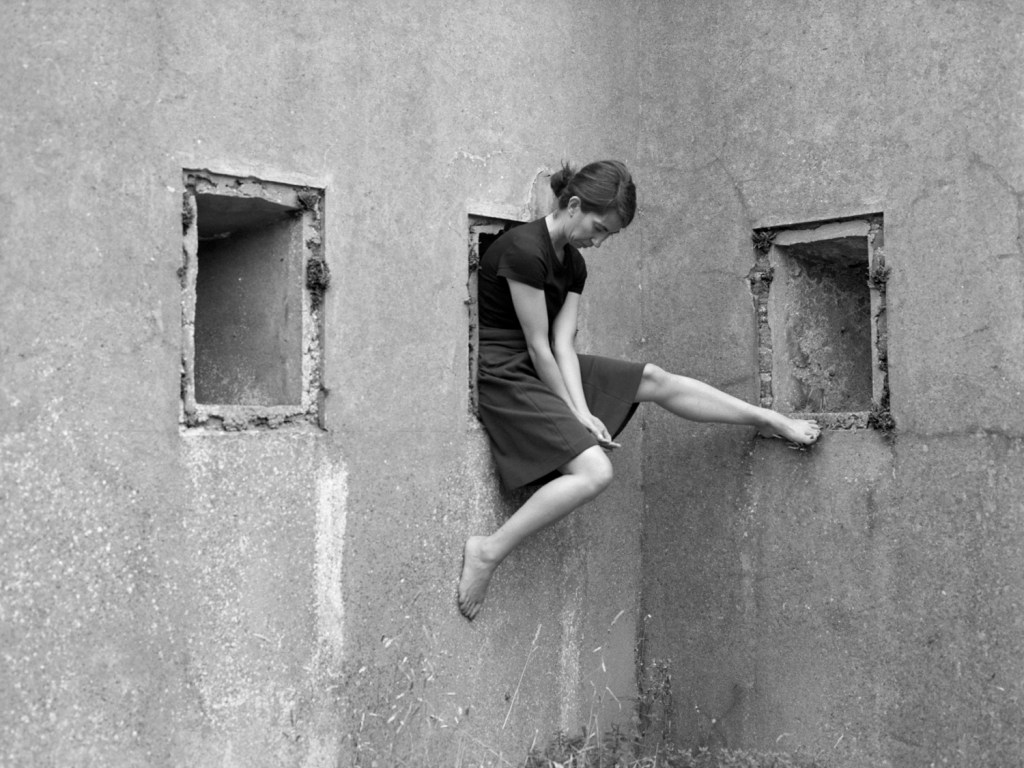
I have also looked at what other photographers, who produce self portraits, are doing. Initially I looked at a photographer my tutor brought to me attention, Clare Rae. Rae’s work, sees her taking the role of performer in her images as she enacts different scenes. There is an almost uncomfortable nature about the images, the way in which she seems to perch on or near objects. Each image has been carefully composed to give the viewer a sense of unease and anticipation. I am particularly drawn to the ‘Never stand on two feet’ series that show’s Rae in different spaces, her choice of pose conveying how her body interacts within each space. I can see how this type of ‘performing’ for the viewer can impact on how a space is interpreted. This I feel, could be a useful method within my own practice.
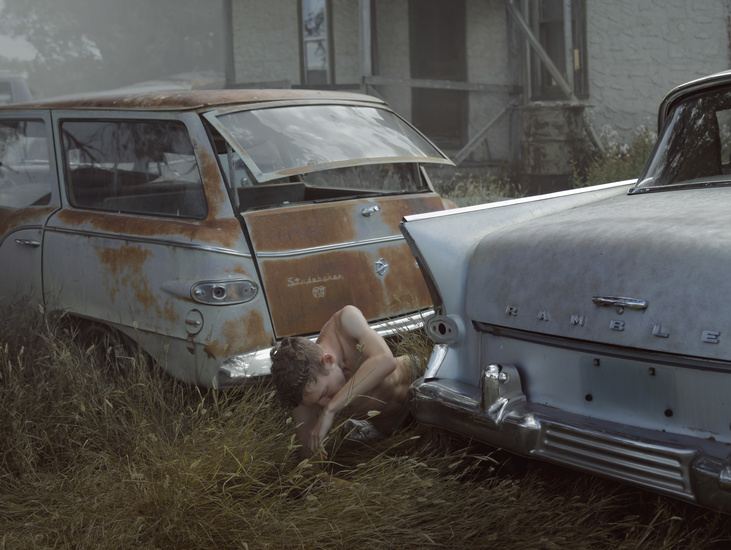
My research also drew me to the work of Kyle Thompson, who’s self portraits are often taken in abandoned houses or woodland. His series (similarly titled) ‘The spaces between’ portrays images of Thompson in the spaces we tend to dismiss, walk past or avoid. He describes his practice as ‘encapsulating the ephemeral narrative, a nonexistent story line that only lives for a split moment.’ however I would argue that the context for each images takes the viewer on a journey and exploration of place, with each scene less so a ‘split moment’ as part of a bigger picture. As with Rae’s work we see the photographer as performer, model and subject, as a way of engaging the viewer. In his series ‘open stage’ (http://www.kylethompsonphotography.com/open-stage#13), Thompson pairs self portraits with wider shots of what he calls the ‘scene’, in other words the stage to which his performance was set upon. His work, to me, is less ephemeral, but has a more isolating and starkness that leaves the viewer (me) with a sense of unease.
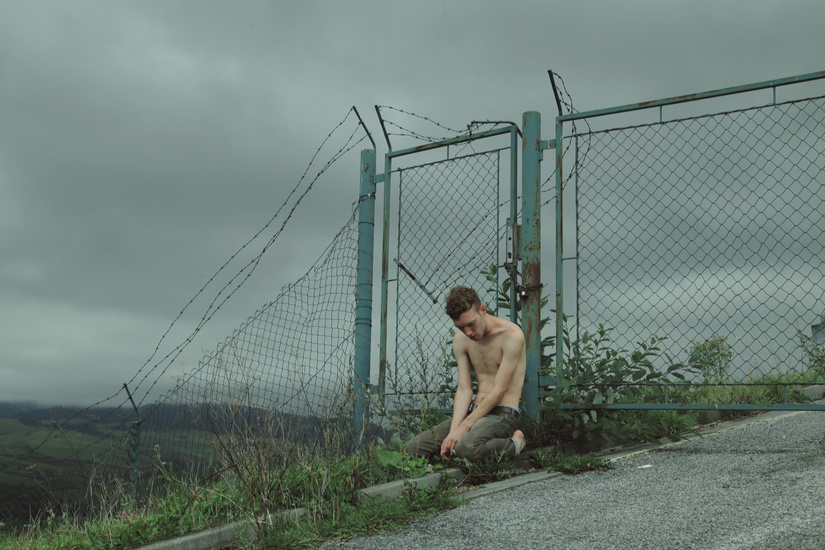
Over the next six weeks or so I will concentrate on self portraiture, experimenting with spaces, lighting and colour. I also want to research more about how colour can be used to ‘set a scene’ or influence am emotion in the viewer.
 The Space Between