PHO705: Quiet protests

“To value photography as art is not however to denigrate photography in the service of different ends. We owe a debt to the cameramen who worked in Vietnam, for example. Photographs like theirs encourage us to resist what evil it may be in our power to correct.” [Adams 71:1996] 

Do environmental photographers, such as Edward Burtynsky and George Steinmetz produce meaningful images of protest or works of art that offer the viewer a means of escape? When looking at images of fauna in their natural habitats I find myself asking this question. By the simple act of exhibiting images in a gallery we now longer see them as referents for the evils of the world but art, and in doing so they lose their truth value. 

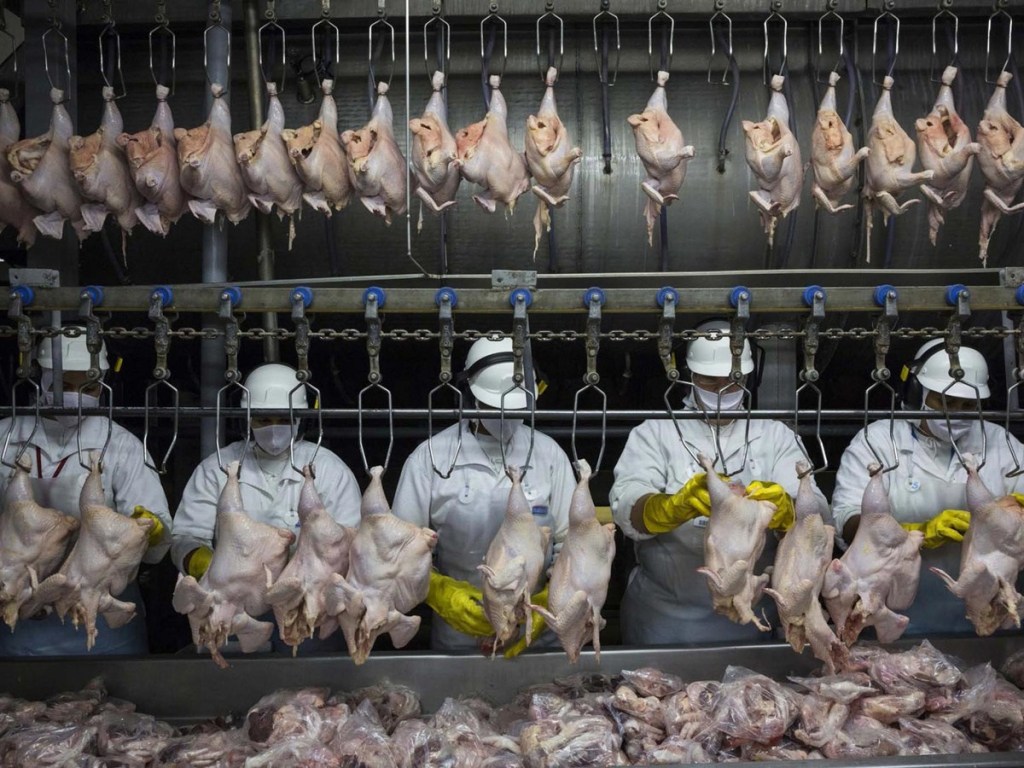
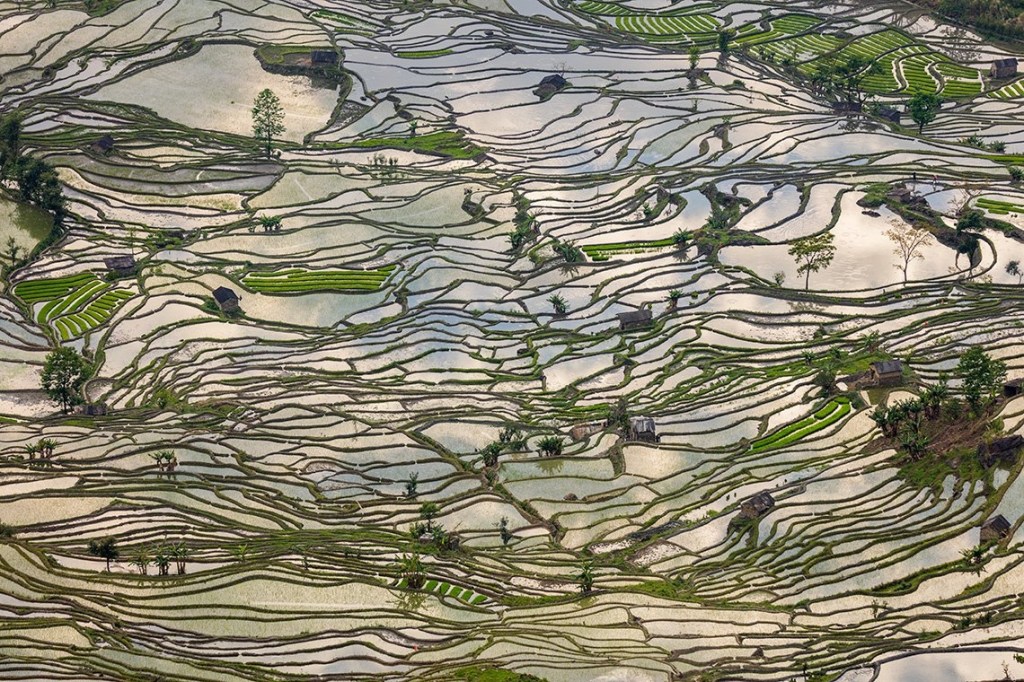
Steinmetz a photographer for the New York Times and National Geographic, who concerns himself with the subjects of remote landscapes, climate change, and humanity’s ever increasing need for food. Steinmetz’s practice is dominated by his aerial photography of grand landscapes, manufactured land, or agriculture in action.  The impact of which one first viewing may appear picturesque, abstract or alien but rarely disturbing. More impactful and immediate are Steimetz’s images we see from inside industrial complexes or farm facilities, workers in action or live stock in distress (figure 2). The presence of humans and their involvement in the distress of other, brings home the reality and truth value of the photograph. Without the accompanying text the aerial landscape do not hold the same weight as those that are more environmentally engaged, the obvious human intervention on the landscape or brutality towards livestock. There are two sides to Steinetz’s work, a disjoint, that of the commercial and the concerned.  
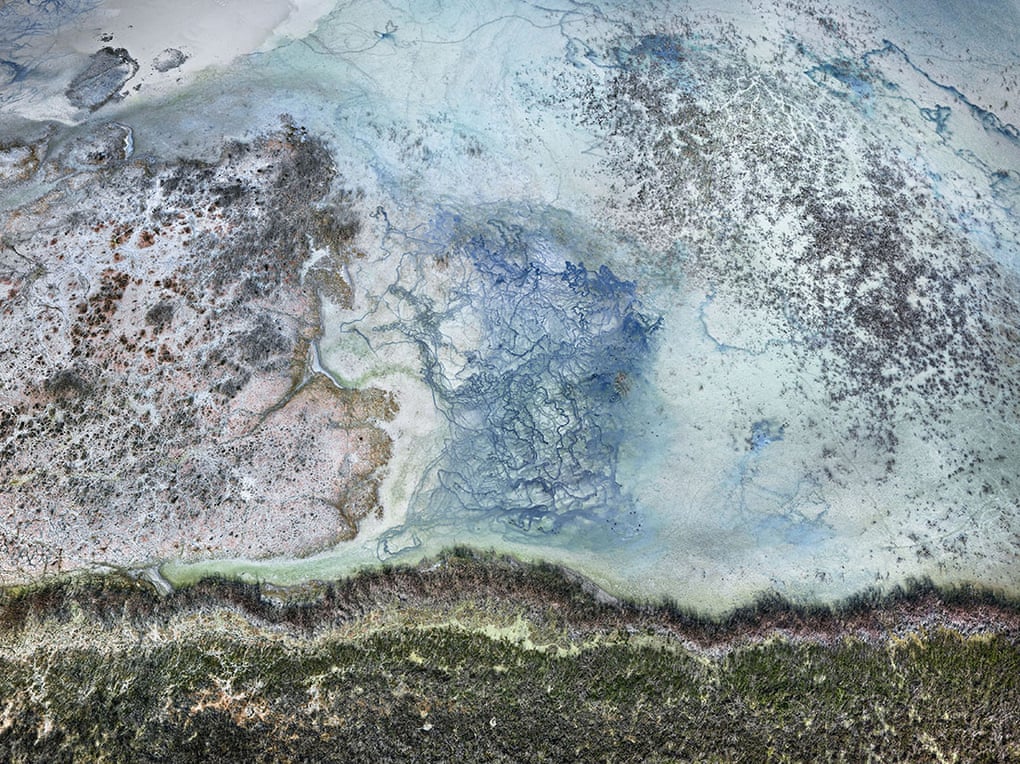
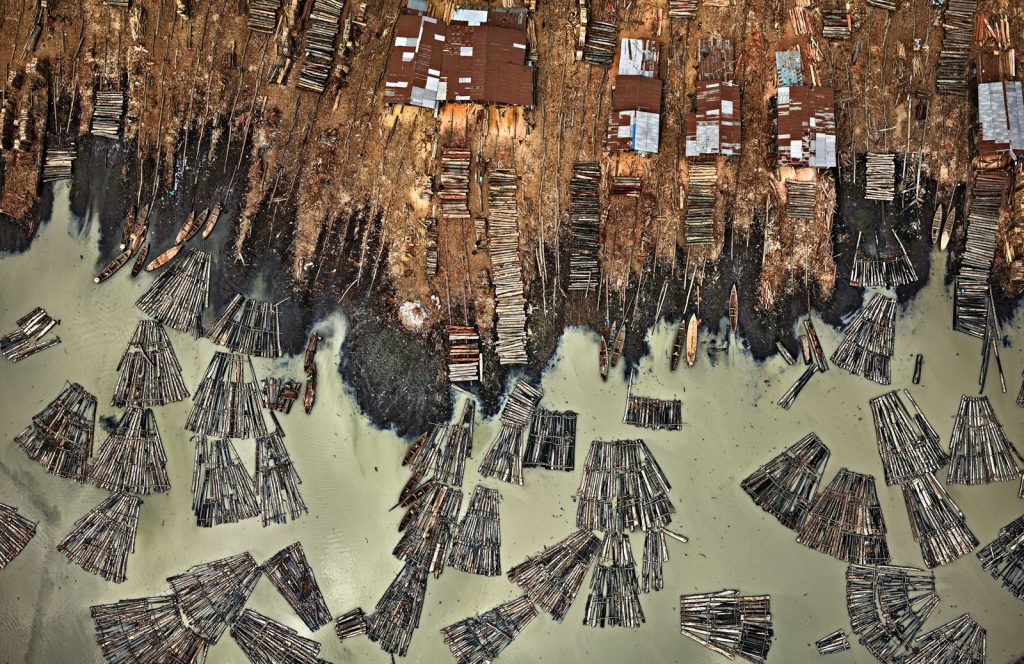
Meanwhile Edward Burtynsky offers us a more abstract of the world around us, as his concern for the world we are leaving behind us is that of a stripped landscape. These images offer us a alternative view of the world, something alien and yet there is something familiar. There is no question here that these are not photographs of protest, they do not shout at the viewer. What they do is offer the view the space to reflect, to stop and think. I his own words Burtynsky reflects on the impact of globalism and the needs of humankind: 

“But all these things have one thing in common, which is that this is the world that is necessary – in the background, humming away – to allow us to live the lives we do. When you buy that new thing, where does it come from? And where does it go when you’ve thrown it away? Because there’s no such place as away” [Burtynsky in Davies 701:2020] 
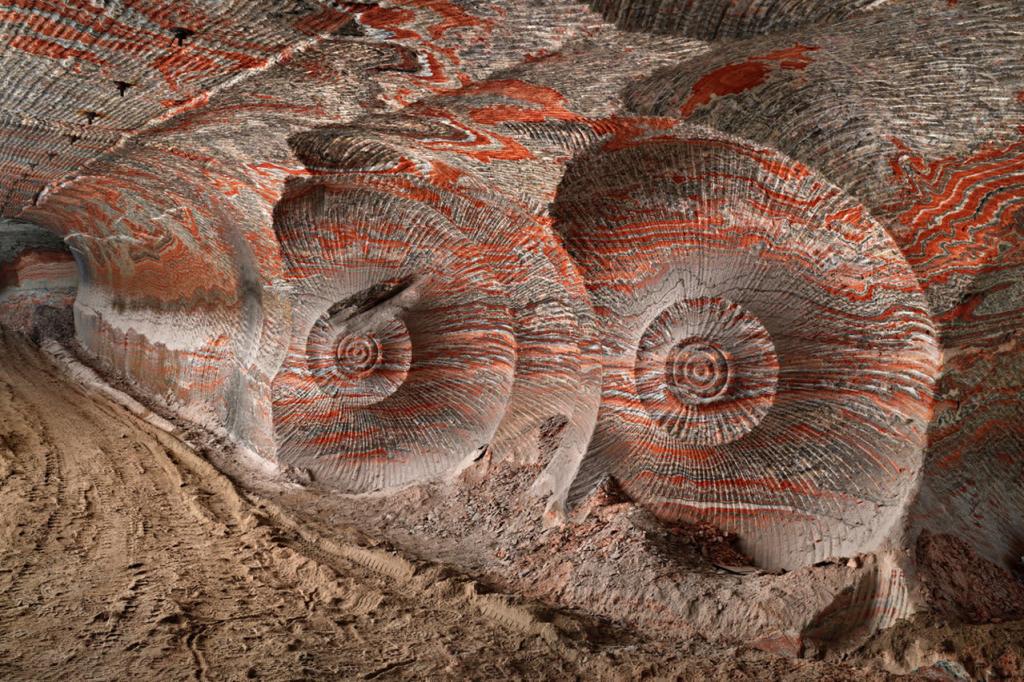
The work of Burtynsky reminds me of what Robert Adams states, in his essay “Photographing evil”: 

“Art can convincingly speak through form for significance bears upon the problem of nihilism and is socially constructive. Restated, photography as art does address evil, but it does so broadly as it works to convince us of life’s value; the darkness that art combats is the ultimate one, the conclusion that life is without worth and finally better of ended.” [Adams 70:1996] 

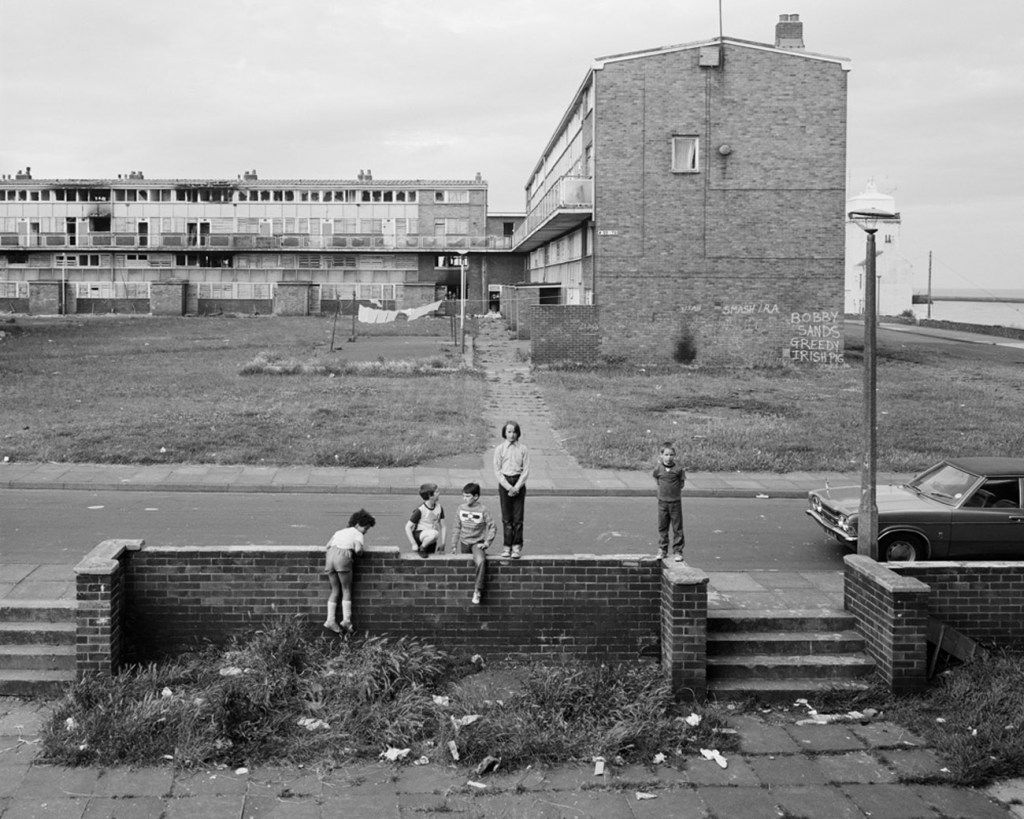
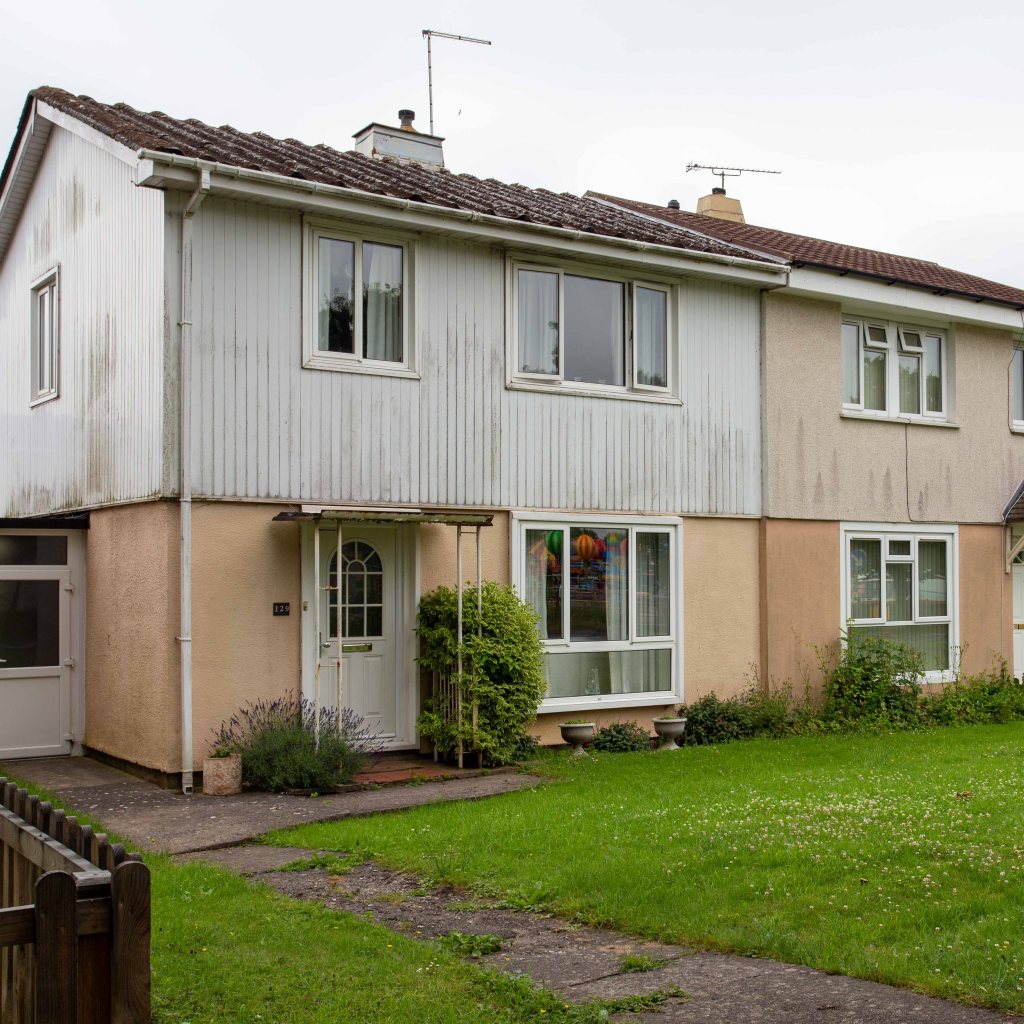
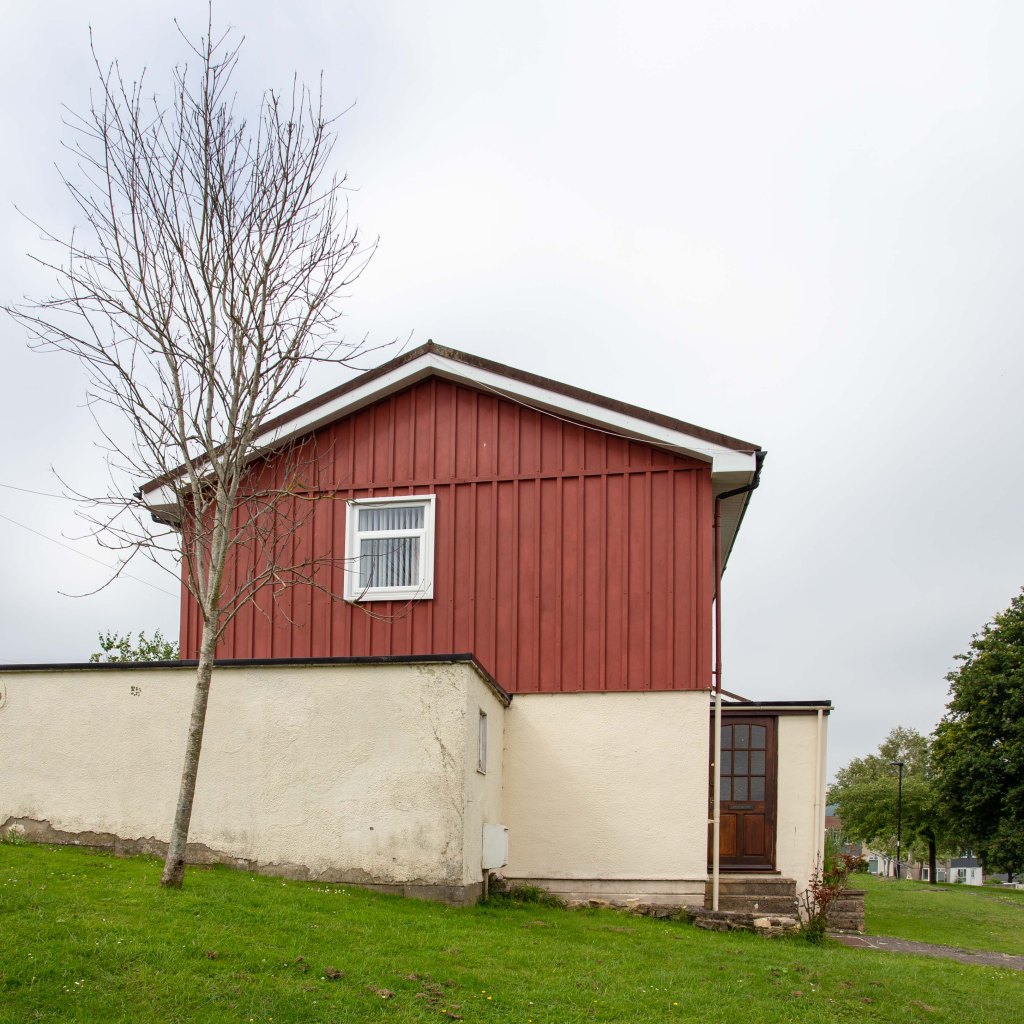
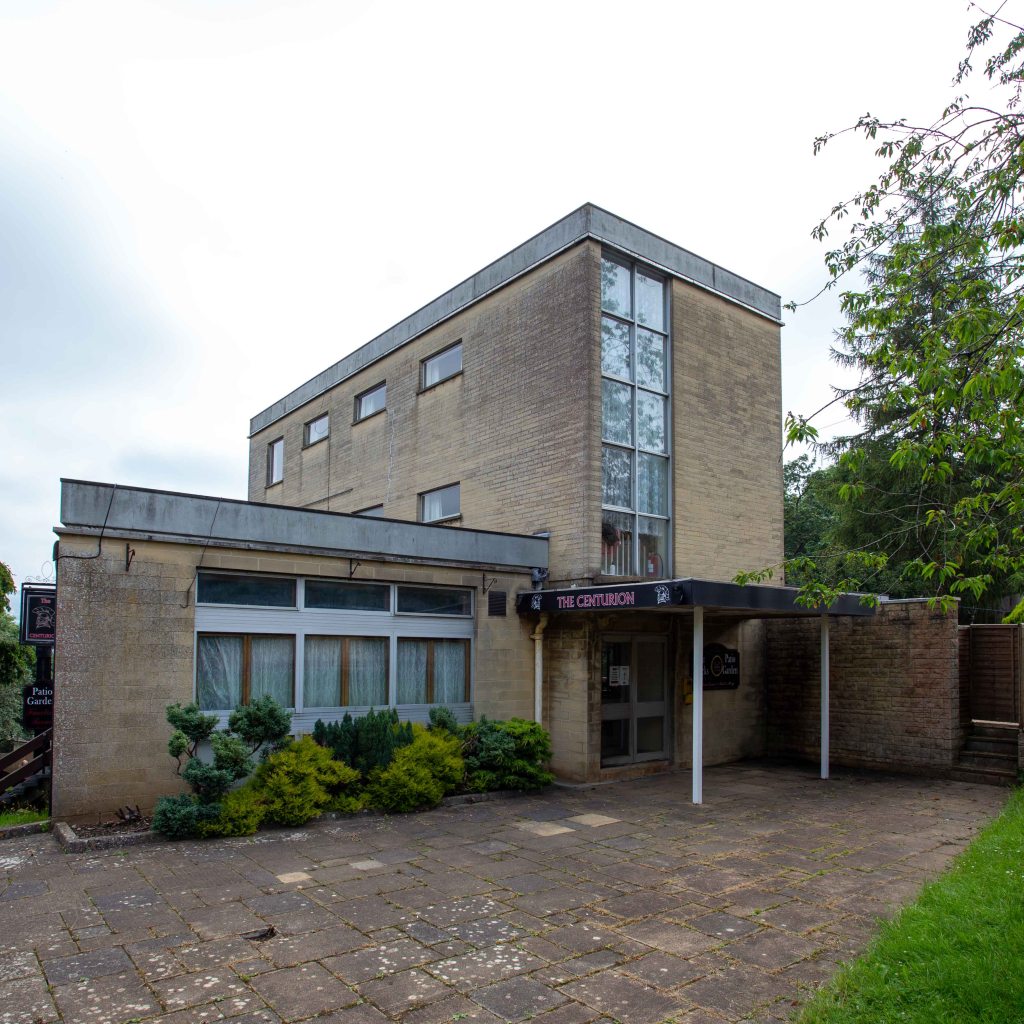
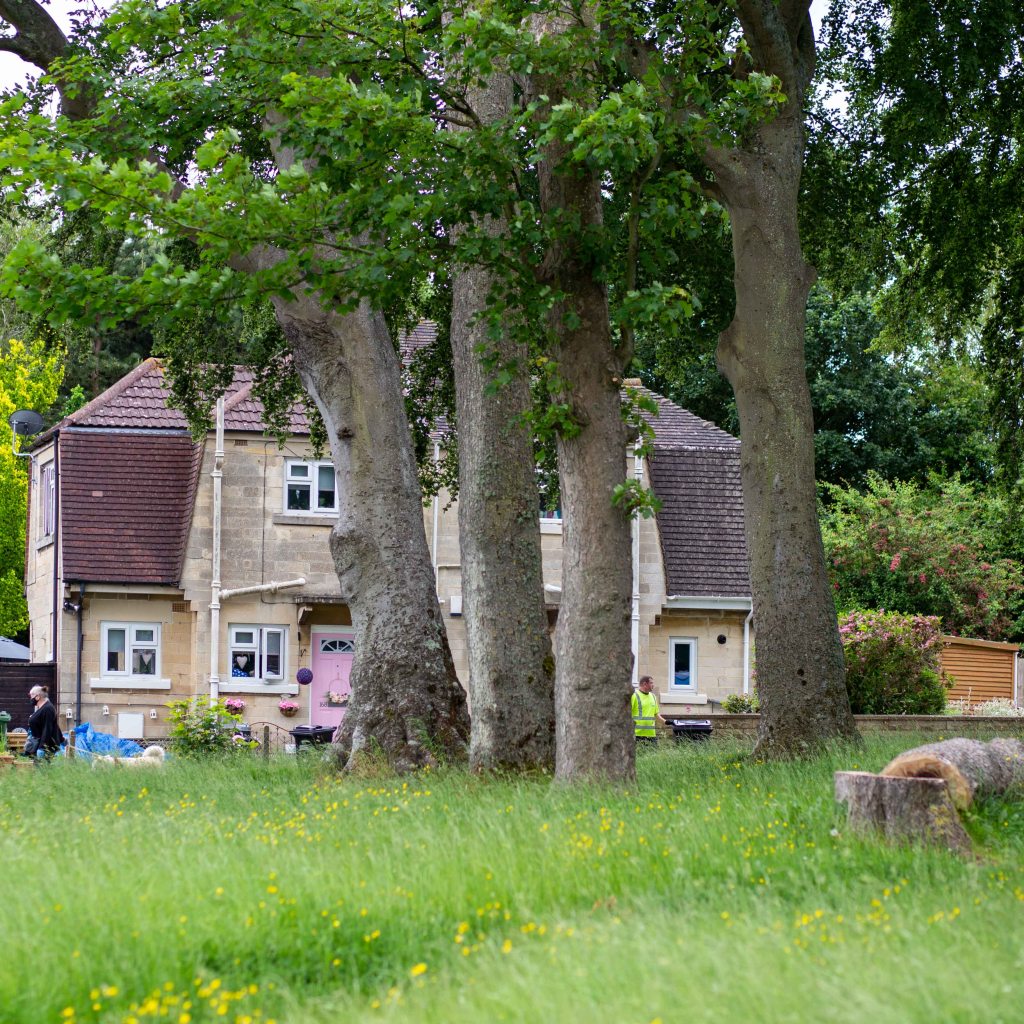
What makes for a greater impact when gazing on environmental photographs, landscapes, is when there is human presence. This give a scale to the thing; we can see and compare our reality against what we are being shown. Within my own practice the familiar landscape of vernacular buildings are used as metaphor for socioeconomic discord. I do not show off Bath’s grand Georgian architecture but the homes of the people who service the city and the millions who visit. When viewed I know that this is not art but documentary, it is a quiet kind of protest. 
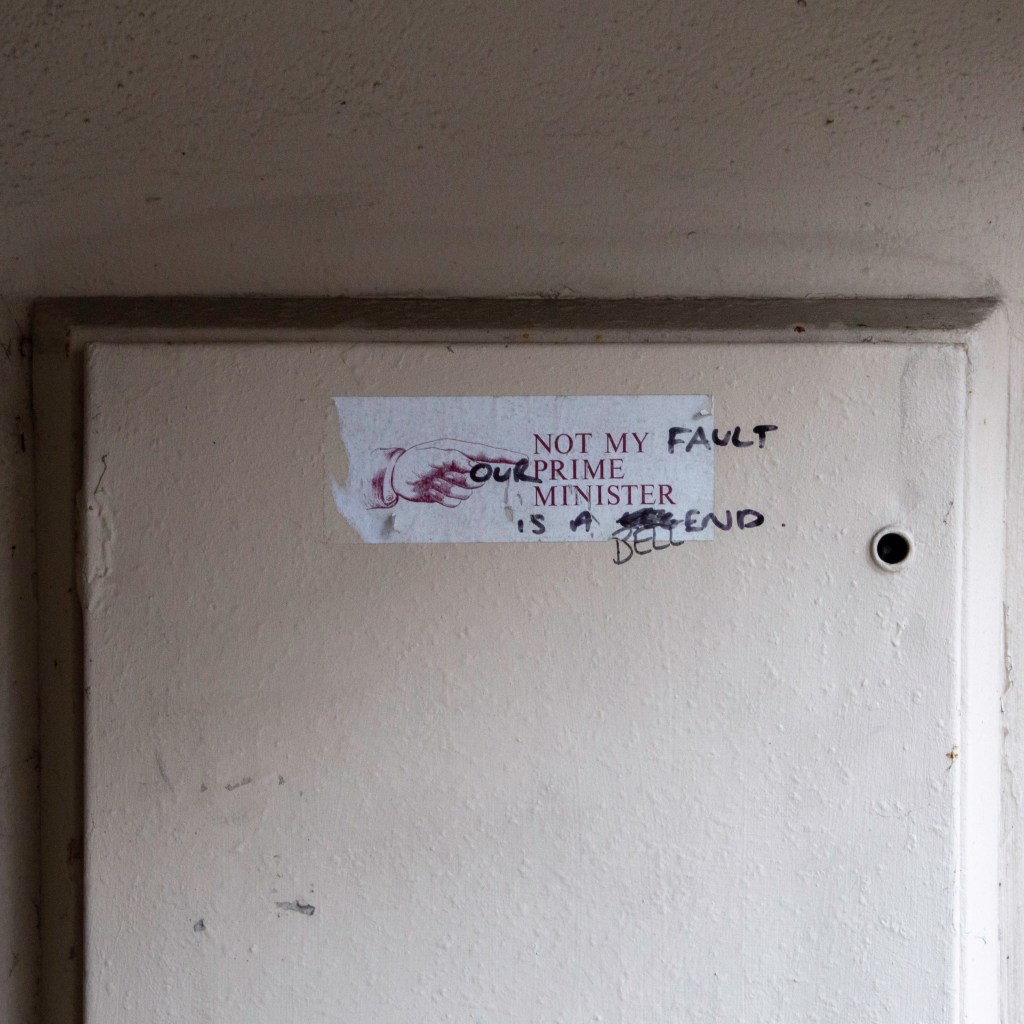
Figure 6 “Not our Prime Minister” 2021 Tim Beale

References 

Adams, R “Beauty in photography” 1996 Aperture 

Davies, L “Edward Burtynsky” The journal of The Royal Photographic Society Nov/Dec 2020 Vol 160/No.9 

Images 

Figure 1 Steinmetz, G  “The terraced Yuanyang rice fields in Yunnan province, China” https://www.canon-europe.com/pro/stories/george-steinmetz-storytelling-aerial-photography/ 

 Figure 2 Steinmetz, G “Feed the planet” https://georgesteinmetz.photoshelter.com/gallery/Feed-the-Planet/G0000lrER6EZBBQA/ 

Figure 3 Burtynsky, E  “Uralkali Potash Mine #4, Russia” 2017 https://www.format.com/magazine/features/photography/edward-burtynsky-photography-anthropocene-project 

Figure 4 Burtynsky, E “Phosphorus Tailings Pond, Florida” https://www.theguardian.com/artanddesign/2016/sep/15/edward-burtynsky-photography-interview 

Figure 5 Burtynsky, E “Saw Mills #1, Lagos” https://www.newyorker.com/magazine/2016/12/19/edward-burtynskys-epic-landscapes 

Figure 6 Beale, T “Not our Prime Minister” from The Right to this City series, 2021
PHO705: Walking the same path

There is something to travelling the same route or visiting the same spot time and time again. You start to see things other may miss, the little details, the way light hits the side of a building at a specific time of day or year, the progress of the developing world, or its slow decay. As I move across Bath, from grand Georgian town houses in the centre, out to the grey monochrome of 1960’s Brutalist cramped estates, I am drawn to these less well of areas. There is a greater sense of community here, I think because people have to work harder to live here, they value what is around them more. Often though the well-manicured front gardens of suburban homes are juxtaposed next to poorer dilapidated homes. Like many photographers before me I feel drawn to what is familiar and having grown up in social housing, I feel a kinship to the people of areas such as Twerton, Southdown and Moorfields. I record the places I find as a way of building up a social history of a city that is famed for its tourist hotspots, rather than its many struggling residents.  

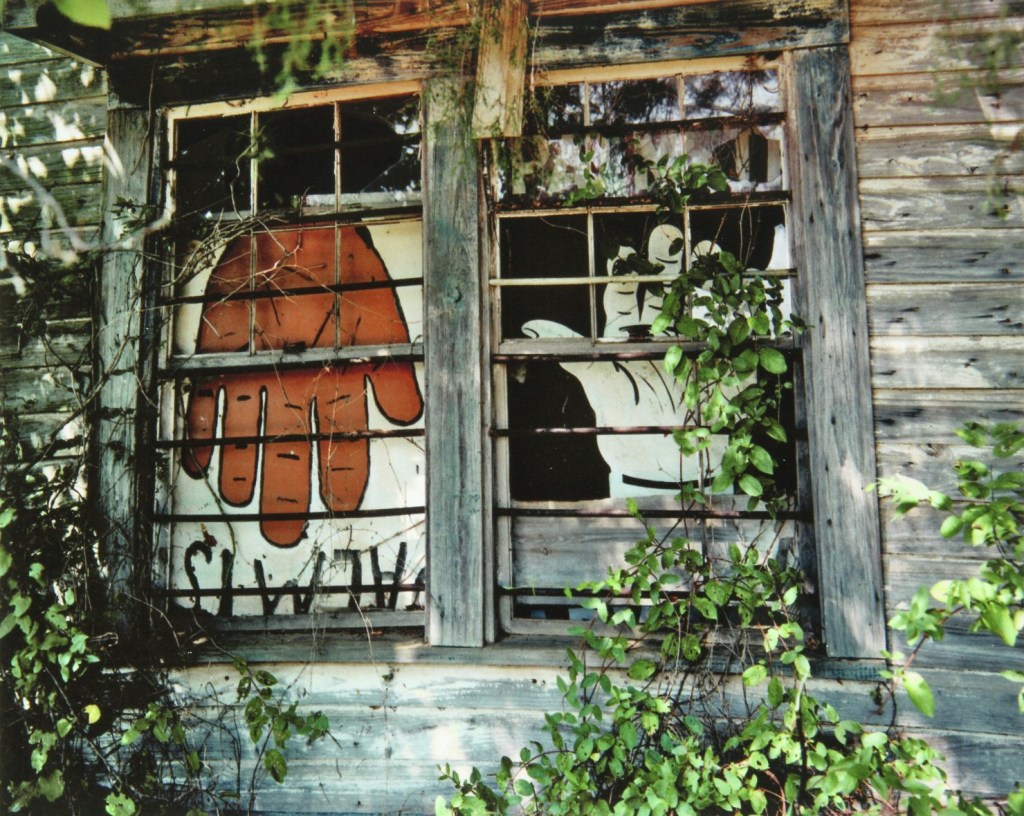
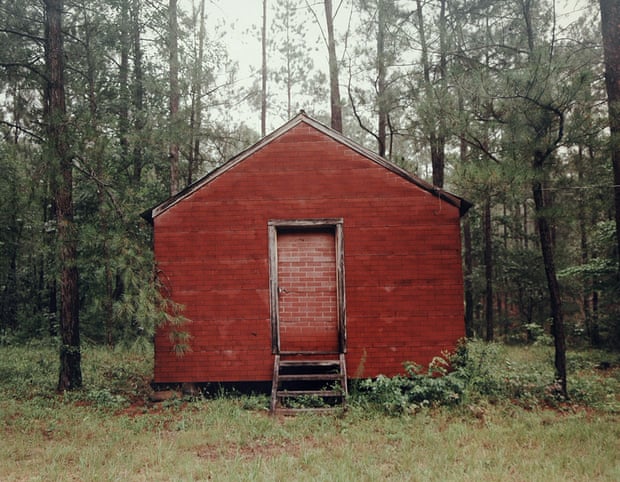
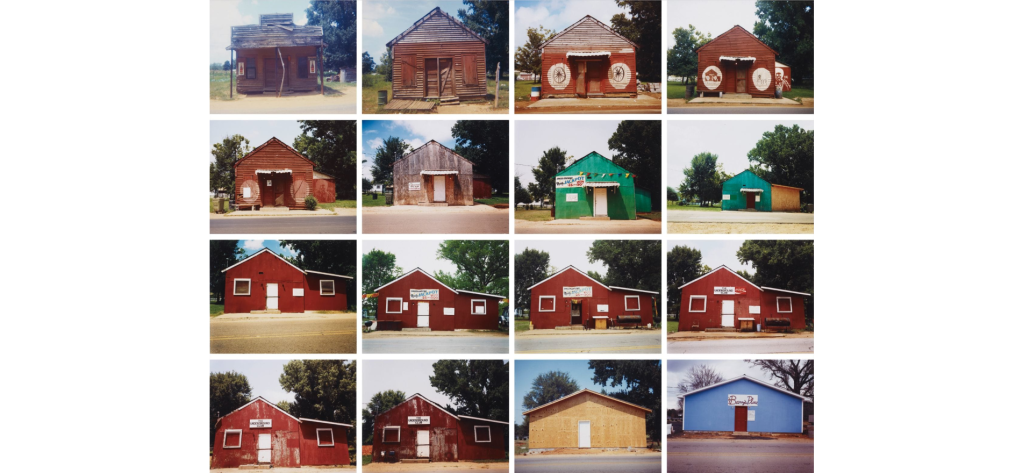
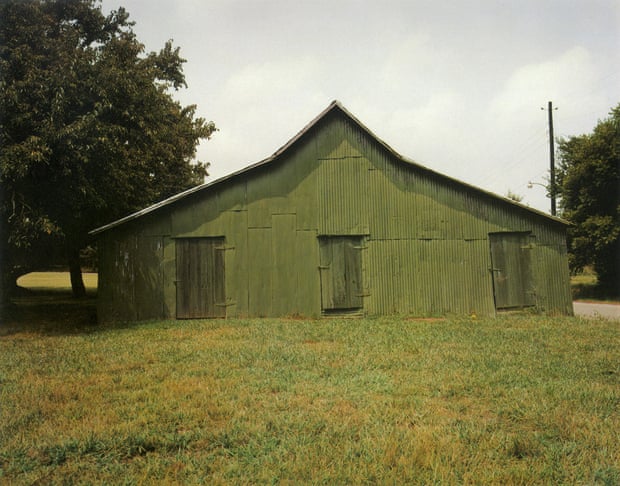
A fellow Falmouth University student put me onto the work of American artist William Christenberry, who has recorded the changing appearance of the deep south’s natural landscape and vernacular architecture in diverse formats and media since the early 1960s. His color photographs of loan dilapidated houses, rusted signage, winding dirt roads, and weathered exteriors present, prolonged studies of place that chronicle the passage of time. We can see in Christenberry’s imagery the influence of Walker Evans, in the way he documents the social landscape in all its grit and detail. When talking about photographing Hale county, one of the poorest areas in the American south Christenberry says: 

“This is and always will be where my heart is,” “It is what I care about. Everything I want to say through my work comes out of my feelings about that place – its positive aspects and its negative aspects.” [Christenberry 2005:Guardian online] 

Much of what Christenberry shows the viewer is in isolation to its surroundings, a warehouse, church, or detail of a window, is shown alone and devoid of human interaction. His images are simple things, often using a box brownie and occasionally an 8×10, there is a softness to the finished image, almost avoiding the technical constraints of image making we know today. Many of these images were later used by Christenberry as source material, to create sculptures, painting and collages.  

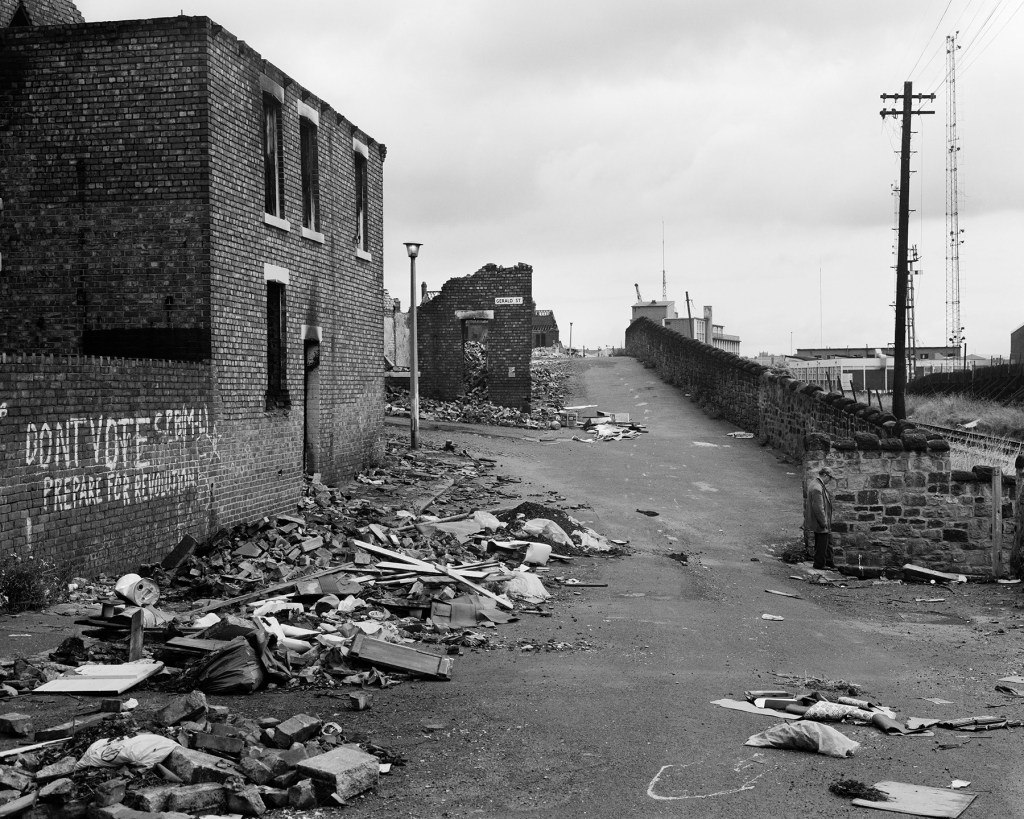
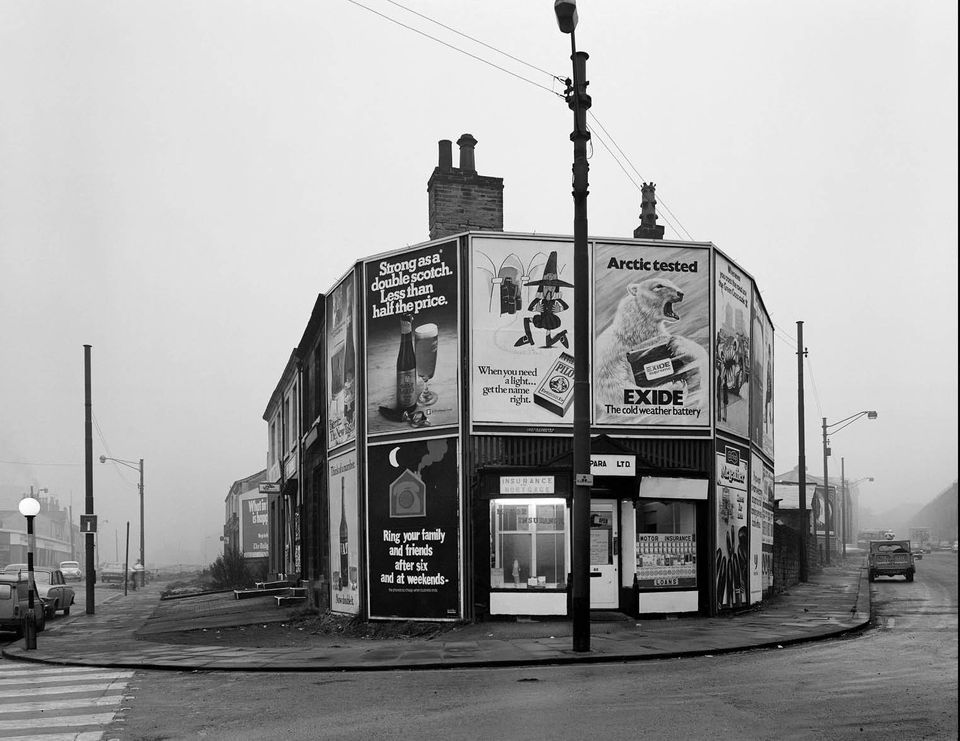
In sharp contrast on the other side of the pond we had the photographer Chris Killip photographing the industrial landscape of northern England. Almost in polar opposition to Christenberry, Killip’s images are in sharp monochrome and feature people within their social landscape. Killip was also heavily influenced by Walker Evans and states: 

“It was Evan’s coolness, about surviving McCarthyism, and all the things that Evans survived; and still you knew he had a distinct political position: it was in the work. Evans gave me a great heart about that. He had navigated much more difficult circumstances that I had. In America, he had to live through a much more charged political situation than the liberalism of England. In America, it’s much more of a minefield for people who are not of the Right.” [Killip  2012:aperture magazine] 

But its Killips images of the urban landscape that speak to me, the use of deep contrasted black and white adds to the bleakness of the subject matter. Unlike Christenberry, there’s little mystery to Killips images, all is laid bare for all to see. The harsh reality of homes crammed in with industrial units and yet the sense of unity of the people who dwell there. Not unlike the residents of the outskirts of Bath, these are people doing the best with what they have.  

I feel that my own practice sits in a place somewhere in-between that of Killip and Christenberry, using a mix of isolated images of place alongside those of communities to create a contemporary view of the reality of living in the UK today. 

References 

https://www.lensculture.com/articles/william-christenberry-william-christenberry

https://www.theguardian.com/artanddesign/2016/dec/04/william-christenberry-obituary

https://www.phillips.com/detail/william-christenberry/UK040213/70

https://www.galleriesnow.net/shows/william-christenberry-summer-winter/

https://chriskillip.com/interviews.html

https://www.theartnewspaper.com/news/british-photographer-chris-killip-remembered-after-battle-with-cancer

https://www.x-traonline.org/article/photography-at-the-end-of-industry

Images

Figure 1 William Christenberry “Green warehouse” 1978, “Palmist building” 1961, “Red Building in forest” 1983 various buildings of the south.

Fgure 2 Chris Killip “Demolished housing Wallsend” 1977, “Shop fronts, Huddersfield” 1974, “housing Estate, North shields, Tyneside” 1981

PHO705 – Week 2: – A Wave of Gentrification

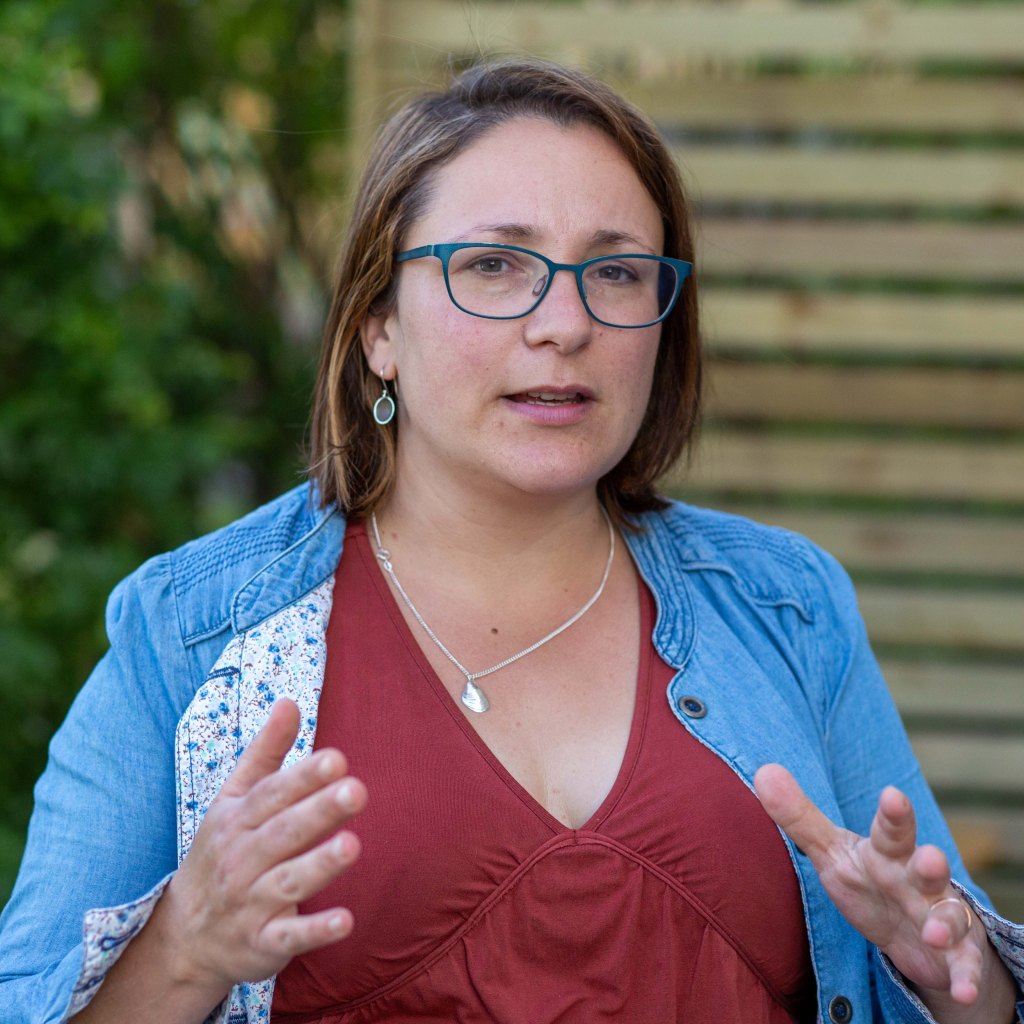
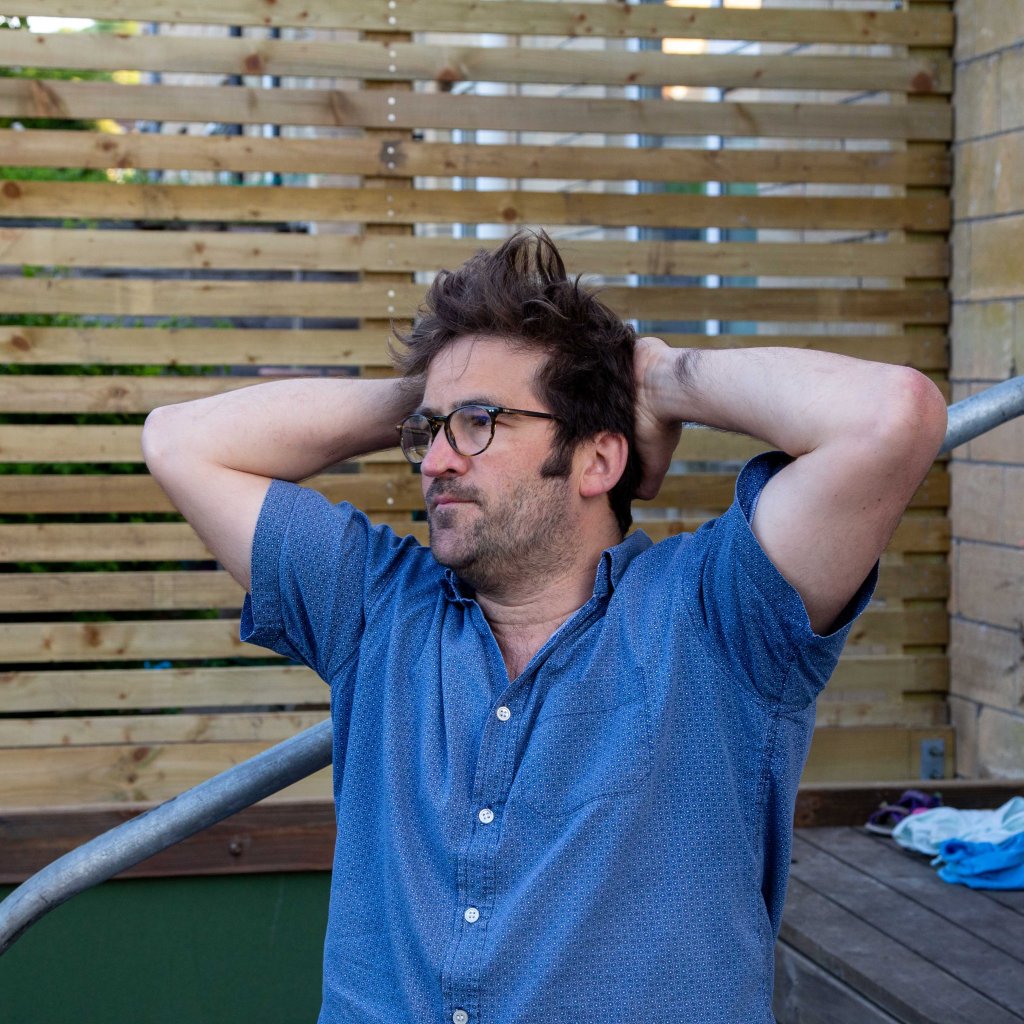
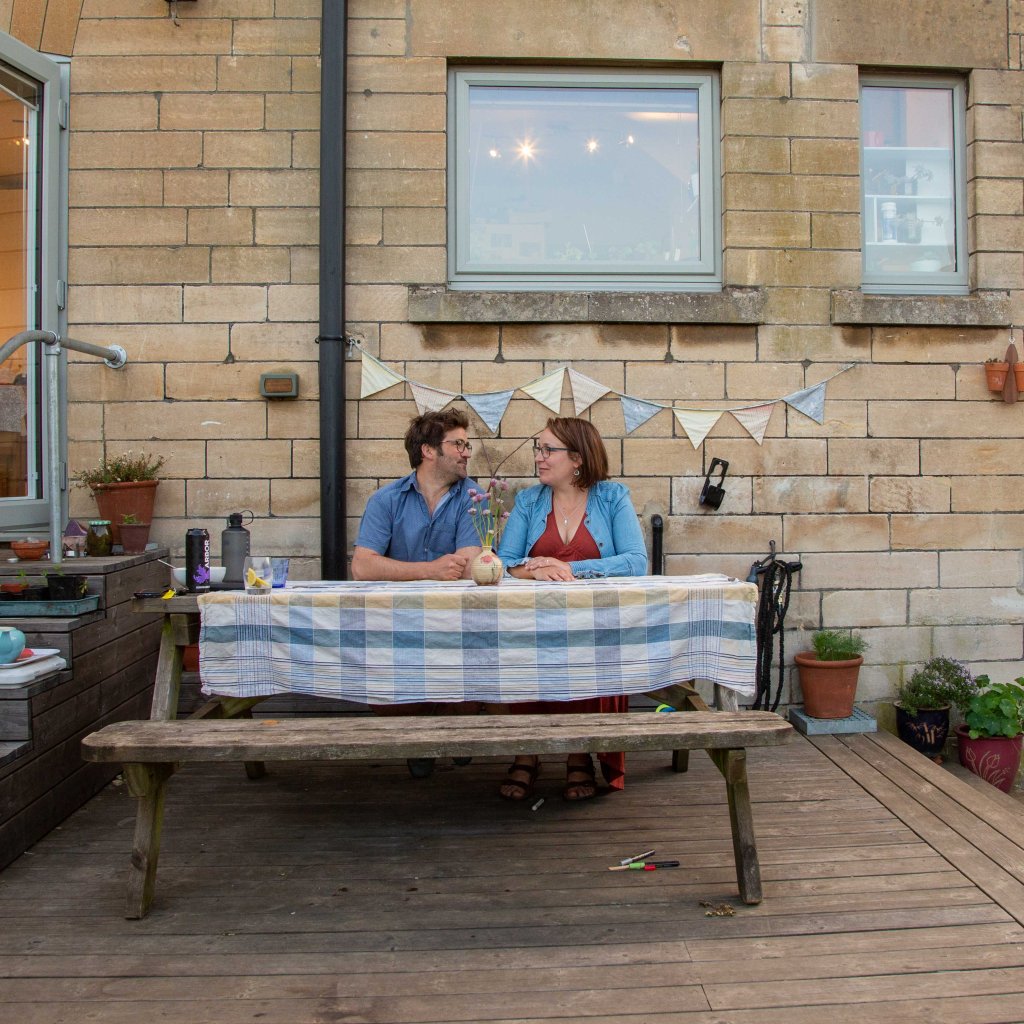
As I continue to interview the residents of Bath, as I explore its suburban landscape, I met with Christine and Phil. A professional couple living with their two children in the south of Bath having moved here in 2017 from Canada. Having initially rented they now own their house and have become integral parts of active community in that area.  

We definitely are the ‘Gentrification wave’ of Bath. Of this area. I don’t want people, that don’t have the same resources we did, to just think we have money and that we can just spend it. [When we started out] I definitely had money from my dad, but we just worked a lot. It’s not been easy.” [Christine 2021:interview] 

This part of Bath sits alongside some of the most socially deprived areas, and as such often sees an over spill of antisocial behavior and crime. However, despite this there is a real sense of community here, with active groups coming together to improve the neighborhood for everyone’s benefit.  

“Its something that shocked me at first, in this neighborhood we have quite a few [whispers] ‘quite rough families around’. So, I wasn’t sure if we’d be happy here, lots of antisocial behavior. But then by meeting people from school and the community we really got on with, I realised that the antisocial people are like just 1%. 1% that make a lot of noise, but most people around here are so freaking nice.” [Christine 2021:interview] 

“For me it’s much more about growing a network of friends in a community. That’s the strongest thing for me [about living in this area of Bath] trying to encourage this feeling of community and friendship, know that there’s a lot of opportunities, for friendship where we are.”  [Phil 2021:interview] 

The choice to live in the South of the city was one of economics, initially at least but now the location, close to the outskirts means a quick escape from the city into wilderness. As for many, Christine and Phill are planning an extension to their home. The prohibitive cost of property in Bath eliminates the option to sell up and move to a larger property.  

According to the National Housing Federation, average house prices are now 14 times the average earnings in Bath and north-east Somerset – a figure that has nearly trebled since 1999. A family must earn at least £87,106 to afford a mortgage in the area.” [Wall 2018:online] 

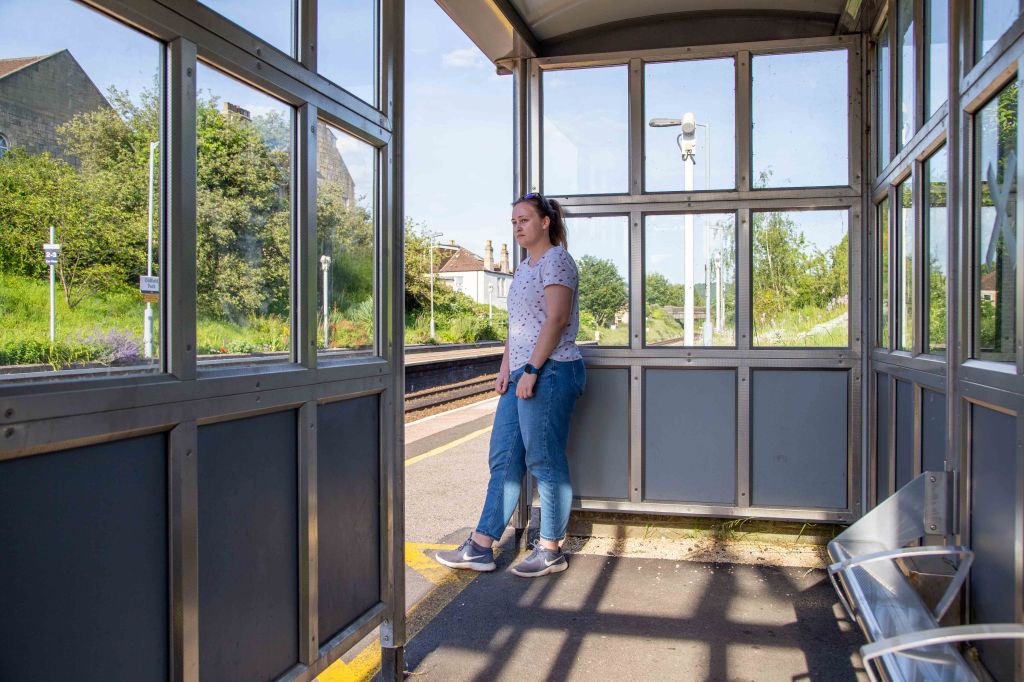
Given that the average household income for Bath is £38,000 it is easy to see why so many struggle to get onto the property ladder. In an interview with Caitlin, an ex-Bath Spa student and recent resident to Bath, she discussed the fact that many people who live and rent in Bath will more often than not look to move to towns further afield when looking to buy: 

“You get a lot of people that rent here but then when they look to buy, they have to look outside of Bath. They tend to migrate out rather than in.” [Caitlin 2021:interview] 

The cost of renting and buying in Bath seems to stem from two key issues, the influx of financially successful people from London and the southeast, and the lack of family homes due to the vast number of HMOs (House of Multiple Occupancy) such as student houses and holiday lets.  

“People have gone from owning a property in London. The next step is to own a property in the countryside and still be close to London.” [Phil 2021:interview] 

This issue of cost of living in the city has lead me to research the work of the French theorist Henri Lefebvre, who in 1968 published “Le Droit à la ville:The right to the city”, an influential piece of literature that has been used across the globe as a manifesto for city development and the wellbeing of its occupants. Lefebvre outlined that the right to the city meant, the right to affordable housing, a decent school for the young, accessible services, reliable public transport, but most of all the right to live and be happy in the city. Fifty years on it seems not a lot has progressed, certainly in Bath, where developers are only building luxury apartments. We find that inequalities are ever present in Bath with pockets of deprivation, mostly found in the outskirts to the Southwest city. 

Despite Bath’s appearance as a wealthy city devoid of social issue this is far from the truth and sadly the same issues that all cities across the UK face, to a greater or lesser degree. As highlighted in a recent council report: 

“Approximately 12% of children in Bath and Northeast Somerset were living in poverty in 2017/18, increasing to approximately 19% when housing costs had been taken into account.” [BathNES 2019:report] 

Despite such harsh figures the local council and central government appear to be doing very little to solve these issues. Reviewing the 50 years since the publishing of “The Rights to the City” Anrea Gibbons writes about the Tory’s approach to housing: 

There is so much to say about a system that increasingly treats housing as a means to accumulate capital, never as a home. A creeping worldview that only understands the value of housing as a commodity, as something to be bought and sold, speculated in, land banked. To them, where you live is only a piece of property subject to global markets, real estate whose value is tied to location and status rather than its conditions, the wellbeing or stability of its tenants, its impact on the neighborhood.” [Gibbons 2018:48] 

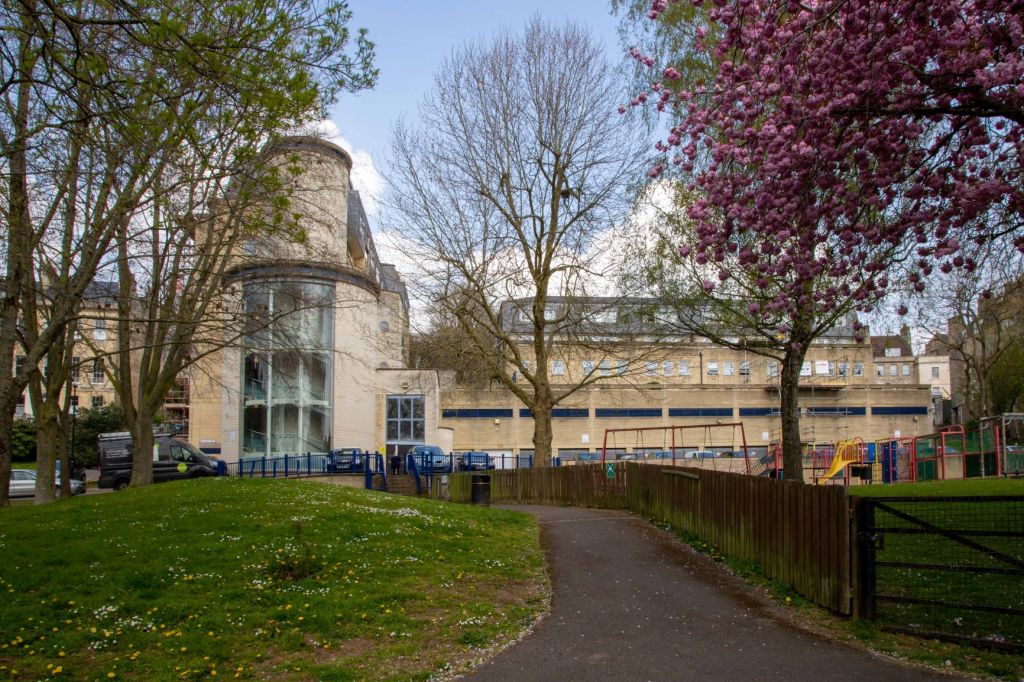
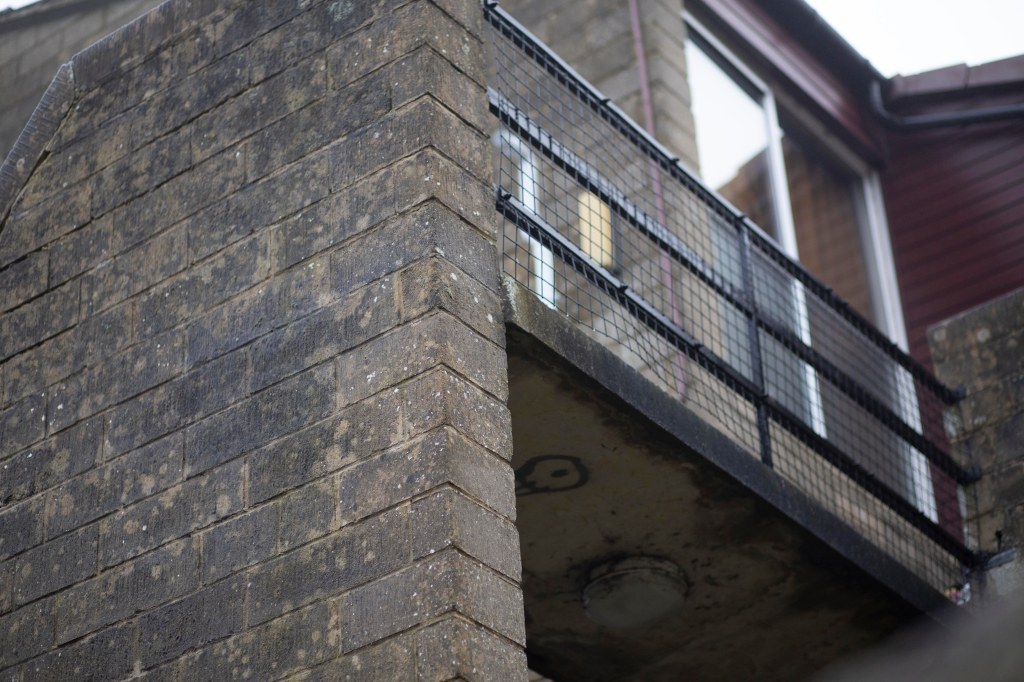
Over the past four years that I have lived in Bath I have seen a sizable number of developments across the city and see more in production as I write this. These have consisted of luxury two-bedroom apartments, student halls, hotels, and overpriced housing estates. Increasingly often developers attempt to get away with reducing the number of “affordable” housing they include in their new estates for few of loss of profits. So called “Affordable” housing in Bath is a fallacy given that the government requirements for a house to be classed as affordable is for it to be 20% below market value. The new housing coming onto the market has an average value of £600,000. This would place a so-called “affordable” house at £480,000. Incidentally, the last piece of social housing to be built in Bath was 1972.  

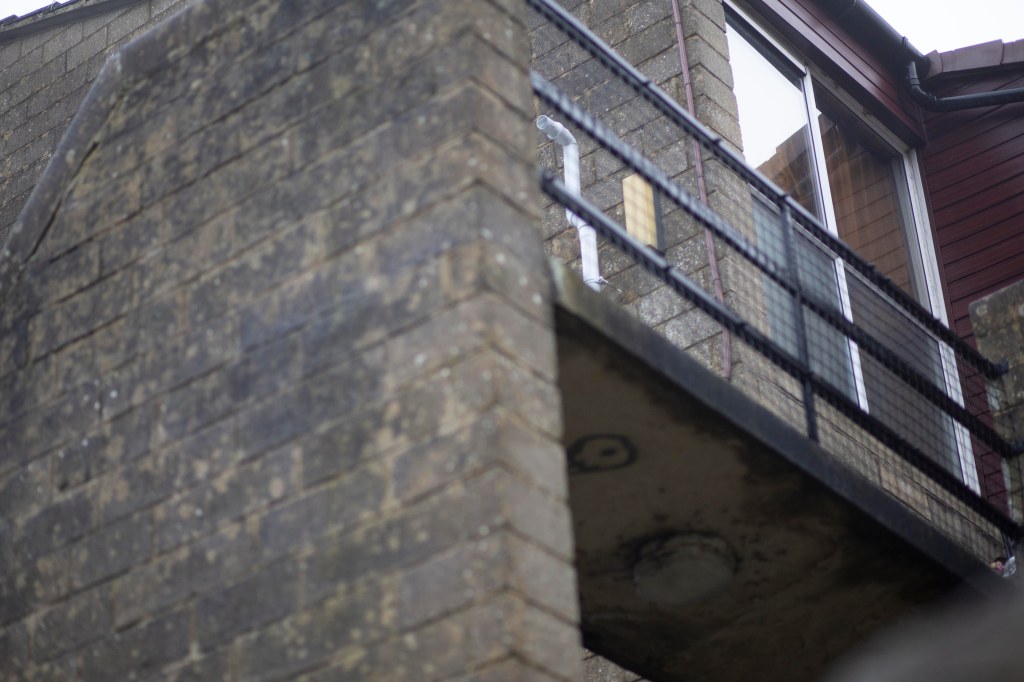
Figure 6 “The last social housing in Bath” Tim Beale 2021

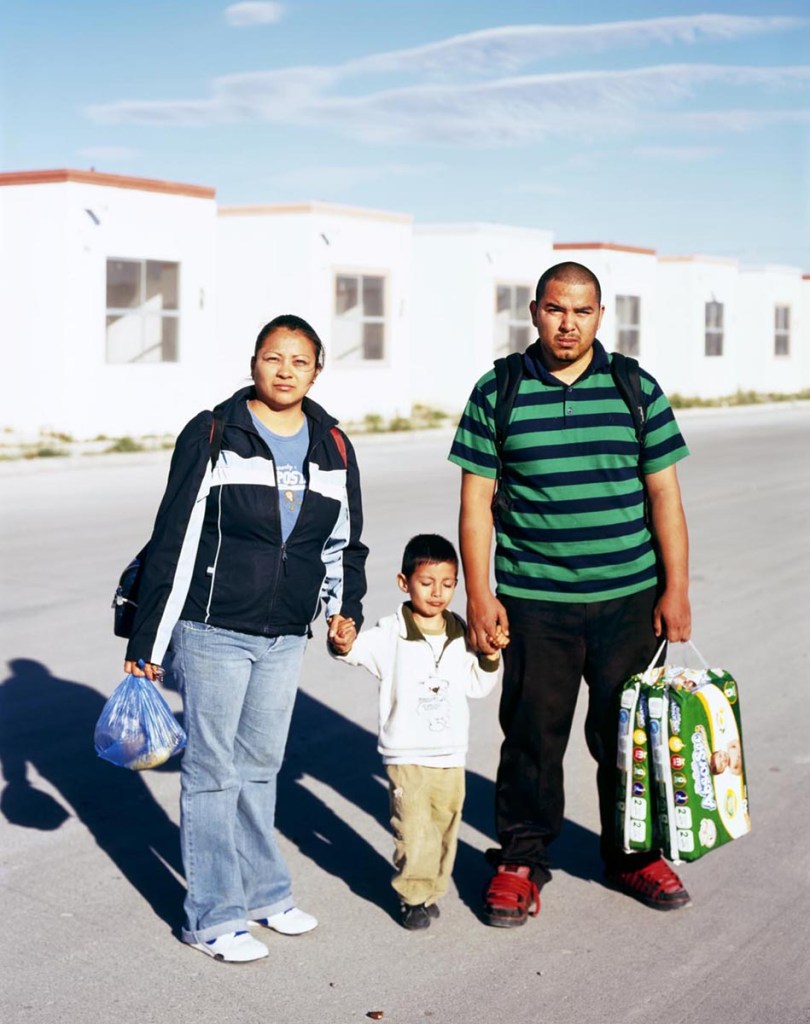
In his series Suburbia Mexicana Alejandro Cartagena uses urban landscapes and portraiture as a medium to represent the Mexican urban sprawl and rapid development around the metropolitan area of Monterrey. His images tell of the inhabitants and the struggles they face in these new fragmented cities.  

“The different aspects of Suburbia mexicana propose alternate narratives, which depict a global issue from a local perspective. Ii feel that my commitment as a photographer is not to denounce our need for a household, but rather to point out the struggle we face following the ideals of a capitalistic system while striving for fairer cities in which to live.” [Cartagena 2009:online] 

Cartagena’s portraits are simple and hold a truth to them, the way his subjects stand or sit. The topographical images of the cities site alongside the portraits and offer the viewer a real sense of place. This body of work really resonates with my own practice as I stive to capture people in a naturistic way, avoiding the deadpan look of other contemporary documentarists. The architectural and topographic images I am aiming to capture are ones that do not dwell or exploit the dilapidation of socially deprived areas, capturing the simple beauty.  

References 

History of Social Housing http://museumofbatharchitecture.org.uk/wp-content/uploads/2012/08/Bath-History-of-Social-Housing-booklet.pdf [Accessed 15.06.21}

Bath and Northeast Somerset Council “Inequalities report” 2019  https://www.bathnes.gov.uk/services/your-council-and-democracy/local-research-and-statistics/wiki/socio-economic-inequality [Accessed 14/06/2021]

Gibbons A “The Right to the City: A Verso report” 2018 Verso Books 

Wall T, 2018 Guardian online https://www.theguardian.com/society/2018/sep/02/tensions-rise-in-bath-exodus-of-londoners-prices-out-local-families [Accessed 14/06/2021] 

Bath and Northwest Somerset Council https://www.bathnes.gov.uk/services/your-council-and-democracy/local-research-and-statistics/wiki/socio-economic-inequality [Accessed 14/06/2021] 

Cartagena A “Suburbia Mexicana”  https://alejandrocartagena.com/h/home/suburbia-mexicana-people-of-suburbia/ [Accessed 14/06/2021] 

Images 

Figures 1-6 Work in progress images 2021 Tim Beale

Figures 7&8 “Suburbia Mexicana” Alejandro Cartagena https://alejandrocartagena.com/h/home/suburbia-mexicana-people-of-suburbia/ [Accessed 14/06/2021] 

PHO702: Week 2 Reflection

What sort of truth does the photograph offer? 

The ubiquitous nature of the photograph in todays social media based society place it above other forms of representation, including that of  written and other visual media. The modern mechanics of the photograph means that an image can be taken and shared world wide quick than it takes to type this sentence. Further more the photograph has bridged the socioeconomic divide created by other means of artistic representation. Owning or creating a work of art, pre-photography, was often limited to those with enough wealth to commission, buy or study artistic practices. Advances in photographic technology has enabled people from across the socioeconomic spectrum. 

The public perception of the photograph is often met with scepticism, born from the knowledge of the photographers ability to edit an image “Photoshopped”. The photograph’s indexical ability to prompt the spectator to look through the image, towards the meaning, goes in some way to elevate this learned scepticism. Our natural preference towards looking over reading, the photograph is often, at first glance, taken at face value, only later do we return to question the validity or truth of the image. Snyder & Allen make reference to the cameras ability to capture the ‘truth’ in the book Photography, vision & representation stating:  

“a photograph may not show us a scene as we ourselves would have seen it, but it is a reliable index of what was.” [Snyder & Allen 1975:149]  

In so much as the photograph is a mechanical extension of the photographer and as such a means to capture an image in a very specific way. The photography is not reality as we see and and cannot be but:  

“It can be asserted, of course, that while photographs do not always show us a scene as we would have seen it, they are, because of their mechanical origin, an accurate record of the scene as it actually was.” [Snyder & Allen 1975: 157] 

When defining the photograph Barthes too holds the view that the photograph is a way of seeing, not the thing itself, but rather the thing as the photographer has seen it at that moment and under those conditions: 

“In the daily flood of photographs, in the thousand forms of interest they seem to provoke, ·it may be that the noeme “That-has-been” is not repressed (a noeme cannot be repressed) but experienced with indifference, as a fea ture which goes without saying.” [Barthes 1980:77] 

As a way of defining the photograph, Snyder & Allen go on to discuss the many ways in which the photograph differs from view with the naked eye. How the photographer will have chosen a number variables in which to capture the final image, shutter speed, vantage point, depth of field.  

“The camera position will determine whether one of two objects within the camera’s field of view will be to the right or the left, in front of or behind, another object.” [Snyder & Allen 1975: 151] 

This illustrates the way in which despite the photograph looking very different to how we actually see we are conditioned to accept this representation as truth. The analogy of a moving horse is used to illustrate this difference and acceptance: 

“We can keep the camera stationary and use a slow shutter speed: the horses will appear as blurs against a stationary background. We can “pan” the cam- era with the horses and use a somewhat faster shutter speed: the horses will be somewhat sharper and the background blurred. We can use an extremely fast shutter speed and “freeze” the horses against a stationary background. All these methods are commonly used and accepted ways of photographing moving things.” [Snyder & Allen 1975:156] 

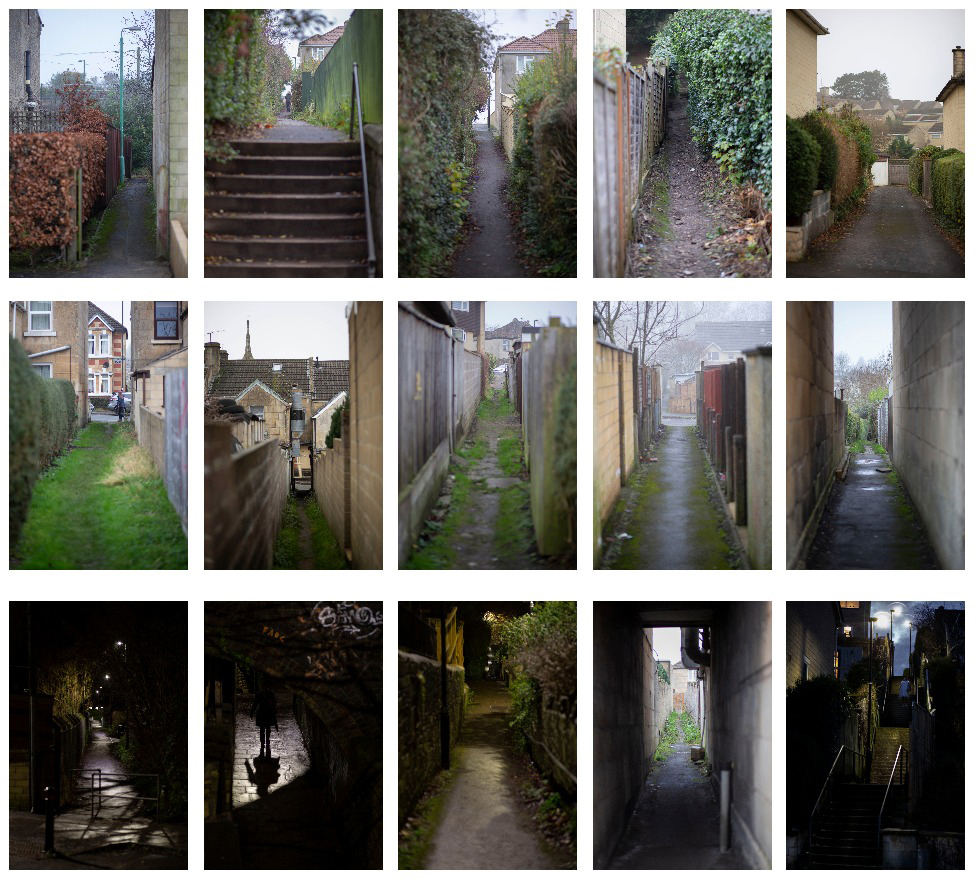
Within my own practice the human choices I make in terms of depth of field, shutter speed, lens type etc is a very conscious process based on perceived outcomes. In the tutor forum I talked about my recent images of alleyways: 

“Through self reflection I have set out to create a series of images that represent the places where I grew up. In some instances I have been able to re-visit my childhood haunts back in the midlands, however much of the urban landscape from my earliest memories have since been demolished.  
Most recently I have looked to my current home city of Bath as the backdrop to these earlier memories. My earliest memories, was as a child, running and playing in the alleyways that separated the houses in our streets. Being aware of the limitations of the means to turn three dimensional reality into a flat image is crucial for any artist, writer or photographer. Photography can be as creative or “artistic” as any other art form, in as much as it can manipulate what the views sees. For example my use of Bath’s alley ways to portray, those in the Midlands (some 120 miles away), it matter not that the buildings are made of a different material. It’s the essence. In terms of the written narrative I would write: 

“I recall as a grubby faced boy of about five, using alleyways as a main method of getting from point a to point b. The alleyway was our adventure playground, labyrinth and our domain. Bath then (late 70s/ early 80s) we didn’t use front doors, we were told ‘come ‘round back’ and ‘take your muddy shoes off at the backdoor’. The front door was used for special guests.” 

Some 40 years later and 120 miles south I have found an affinity with Bath’s alleyways as something akin to my childhood playground. In some ways its like I’ve changed the vantage point, however rather than moving a step to the left or right, I’ve moved in time.” [Beale 2021:forum text] 

Feedback from my fellow cohort in the tutor webinar affirmed that my intention, of creating the essence of alleyways in the Midlands, was achieved.  

“I grew up in Leicester and these images really reminded me of the alleyways I played in as a child too.” [Layla 2021:webinar] 

Over the next tow weeks I will be continuing to photograph the suburban landscape around me, rephotographing many of the areas during different weather and lighting conditions. I will also be carrying out further research into urban landscapes, psychogeography and photographers working in a similar way.

References

Barthes. Roland 1980. Camera lucida; reflections on photography. Hill & Wang

Snyder. Joel & Allen. Neil Walsh 1975. Photography, Vision and Representation. The University of Chicago Press

Beale. Tim 3rd Feb 2021. Informing contexts tutor forum. Falmouth University

Perchal Neal. Layal 4th Feb 2021. Informing contexts tutor webinar. Falmouth University

PHO702: Week 1 Reflection – Photography Characteristics & Human Choices

When considering the various characteristics within photography and in particular my own practice. It becomes clear that I adopt a few distinct characteristics when approaching an idea or out shooting and these characteristics drive my own human choices.  

The Frame  

When considering the idea of an image I will first consider what will fill the frame, not unlike a blank page ready to be written upon. Then I consider what will be outside the frame, what will the view not see, what will they fill in by using their imagination. These two factors are key before even picking up the camera as often this will have a direct bearing on the location of a shoot.  

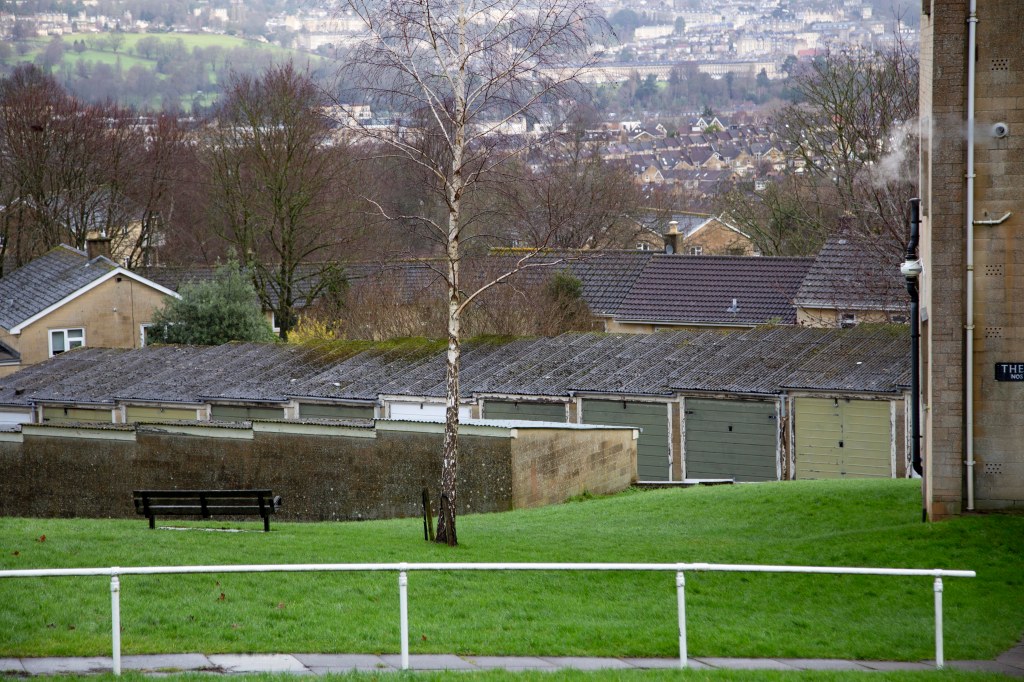
Framing a shot is then a process of working with the environment and the subject. For example, in this image of vernacular garages, the key was to work with the background to juxtapose the garages against the view of the Royal Crescent and Bath countryside. As such we see the use of vantage point to achieve this result.  

Fig.1 Tim Beale 2021, ‘Untitled’ Garages & the Royal Crescent, Bath.

The central act of photography, the act of choose and eliminating, forces a concentration on the picture edge- the line that separates in from out-and on the shapes that are created by it [Szarkowski 1966:9] 

The Frame isolates unexpected juxtapositions, creates relationships between ‘facts’ that have been framed, cuts through familiar forms revealing unusual fragments”. [Szarkowski 1966:70] 

Focus 

I tend to spend time walking without a camera, a kind of psychogeographic exercise in mentally mapping a woodland, city or suburb. Often noting the areas that will work best during particular lighting, time of year, time of day/night or weather. 

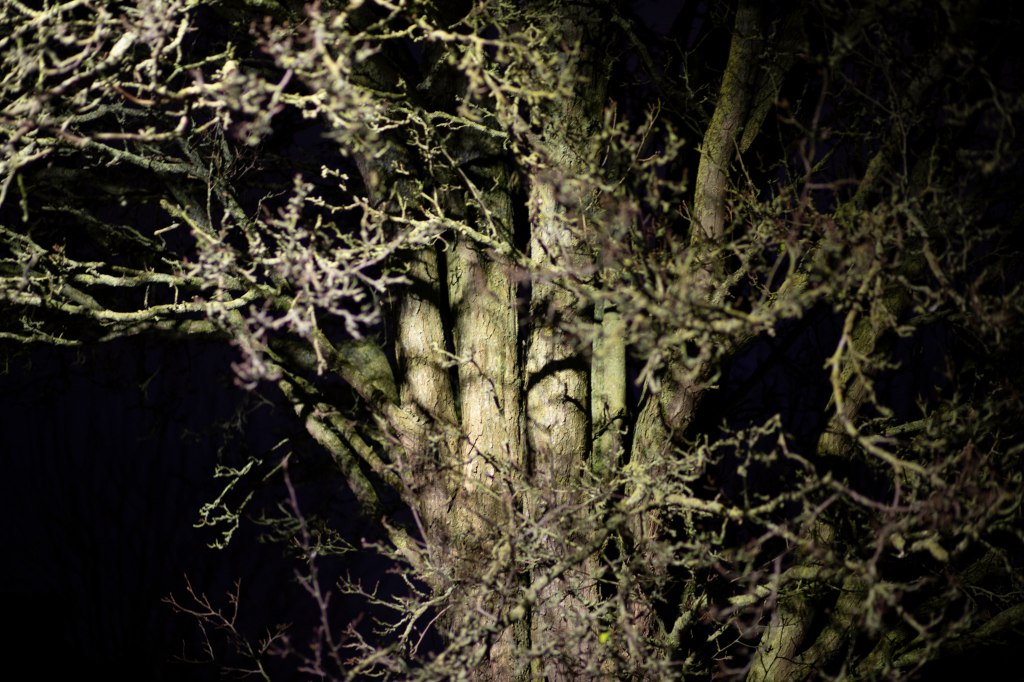
Fig 2. Tim Beale 2021, ‘Untitled’.

By focus I refer to both the focus of attention (the subject) and focus in a more mechanical sense. Once a shot is in the frame and at the right vantage point, my next consideration is the focus. How to best achieve the impact I desire, what will the viewer need to see and how will they see it, are all questions I have in mind whilst working. There are the obvious traditional methods of setting up a shot using the rile of thirds, depth of field and point of focus. But often it is when choosing to go against this tradition you can unsettle the view, who is conditioned to see in this way. Something akin (for westerners) righting right to left, the reader will still be able to read the text but will have to retrain their brain to do so.  

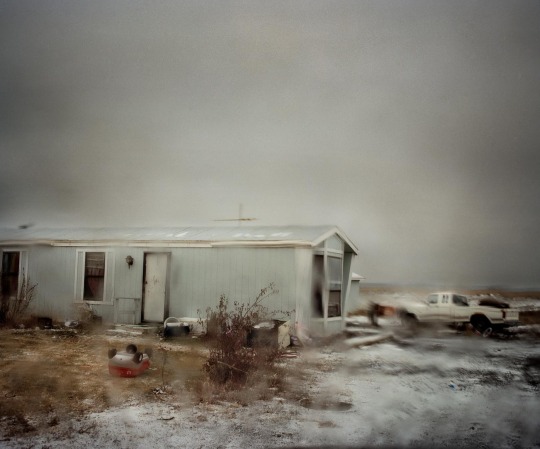
As with Todd Hido’s images shot through ‘rain’ covered car windows, the focus is ephemeral, on the idea of the thing rather than the thing itself.  

“Most importantly, I really love dramatic weather. I enjoy outings in those conditions. I feel so good when I’m driving, poking around for pictures, and it’s raining or snowing outside…. Diffused light is has always been the kind of light I’m after. I’m also drawn to backlit scenes, and I often like to shoot straight into the light. Shooting through a foggy dirty, or wet windshield really helps cut the brightness. It also makes for a painterly image.” [Hido 2004:online] 

“it’s not just a photograph of the landscape but it is a photograph from my personal perspective. I’m somehow in the picture in a way. That is my breath fogging up the window! It has more of an intimacy I think. It has a subjective, diaristic quality and now that I really think about it—it’s the opposite of something like an ‘authorless’ objective view, which is most often seen from a higher, uncommon viewpoint.” [Hido 2012:online] 

“Hido keeps at least three water bottles with him in his car. One time, I watch him spray his windshield before taking a landscape photograph. ‘I’ve learned from sheer disappointment that sometimes I need to take pictures, but it isn’t raining outside,’ he says. 

Fig 3. Todd Hido 2010 #9197. From the ‘Roaming’ photo book

Sometimes the artist sprays glycerin on the windshield, for a different kind of effect. It’s a technique he compares to changing paintbrushes. The size, direction and position of drops of water on the car window inform the photograph that results, and within these fictitious raindrops, Hido says he can ‘compose’ the real picture that he wants to see. Ultimately, each photograph is a composition. It is a way of giving shape to a mental state, as opposed to capturing an actual setting.” [Tylevich.K undated:online] 

The use of focus/unfocus within an image as in Fig.2 are like our memories, sometimes hazy or unclear and other times pin sharp and crystal clear. This is something that Hido manages to capture with his ‘Roaming’ images, landscapes both in and out off focus.

One of the final considerations is the end result, who the audience is and how the final images will be viewed. This to me have been something of a new choice, having only exhibited in joint exhibitions and one small solo exhibition, my experience is limited. However, in my current practice I have begun to these make choices. If we look to fig 1 again, for the viewer to understand the image they need to see the juxtaposition between the mid ground (garages) and background (landscape) as such the final print will need to be large, perhaps 160x100cm or larger. As my practice and personal project develop so too will the choices I make.  

References 

Hidio.T ‘Roaming’ Interview with Shuman.A, 2004, SeeSaw Magazine. [Accessed 01.02.2021] http://www.aaronschuman.com/roaming_pages/roaming_interview.html 

Hido.T Rose Gallery interview with Augschoell.D and Jasbar.J, 2012, ahorn magazine. [Accessed 01.02.2021] http://www.rosegallery.net/blogarchive/2012/06/29/interview-with-todd-hido 

Tylevich.K ‘Roaming’ text from the Todd Hido website [accessed 01.02.2021] http://www.toddhido.com/roaming.html 

Szarkowski.J 1966. The Photographer’s eye. London: Secker & Warburg 

Images 

Fig.1 Beale.T ‘Untitled’ 2021 

Fig.2 Beale.T ‘Untitled’ 2021 

Fig.3 Hido.T ‘Roaming: #9197’, 2010. [Accessed 01.02.2021]  http://www.toddhido.com/landscapes.html  

PHO704: Week 10 The Digital Image

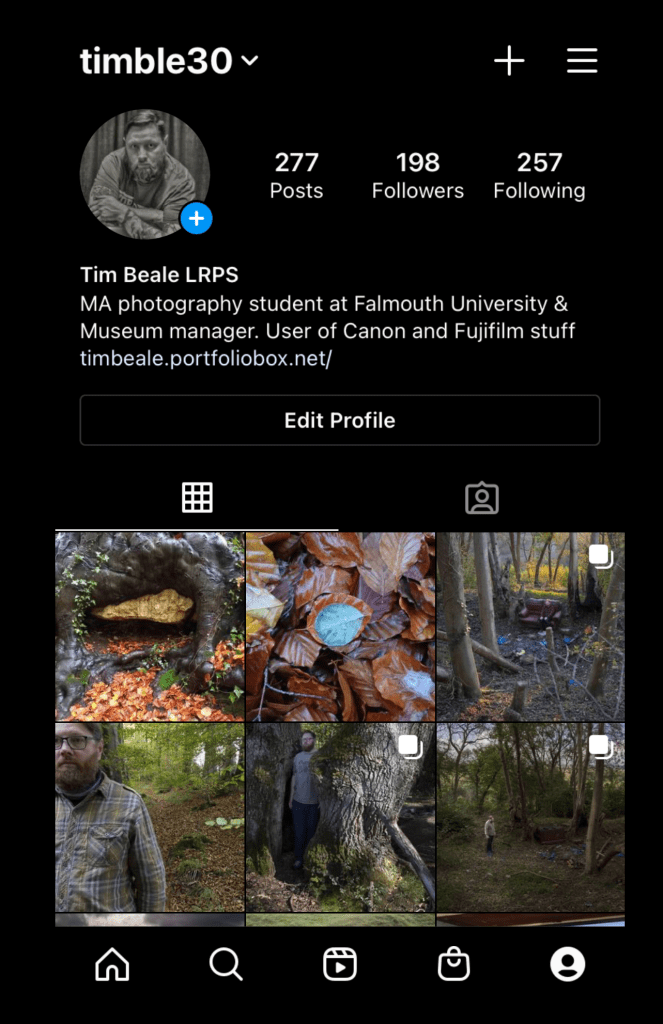
The ‘User’, screen shot from Instagram account, Tim Beale 2020

The digital revolution saw the term ‘user’ come in to describe anyone purchasing electronic goods any thing from tablets, PCs, smart phones to digital cameras. The term ‘user’ had up until then been exclusively reserved for describing drug addicts. This misnomer perhaps isn’t as unfitting as it first seemed, especially given our constant craving for the latest gadget, app or game. Mobile phone and  camera manufacturers have seem this and acting a the proverbial ‘dealer’ see to it that we get our fix on a regular basis. If these manufacturers are the dealers, social media such as tic toc, facebook and instagram are the cartel ensuring we have the base need.  

Taking a photograph used to require patience, focus and the attention of the photographer. However with the demand for images and the ease of which to take these the ‘photographer’ has become almost redundant. The evolution of digital image has done away with the camera, such as we think of it, replacing with the ‘cameraless’ CCTV, webcam, smartphone and satellite. 300 million images uploaded daily1. The virtual stuttering of shutterless image makers we view the world on a screen at the back of a device rather than experience it. As with live music where the crowd are fixated on the screen they hold aloft, capturing that memory, experience of the live performance, to say ‘I was there’ when posting on YouTube, but were they ‘really’ there. 

So too the self portrait has evolved into a tool for self promotion, be it from a commercial sense or the need for personal glorification.  When discussing the self portraiture of K8 Hardy, Lauren Cornell states ‘Her vignettes don’t only offer a glimpse of her life and milieu, they reflect an intimate approach to self-portraiture that has yielded to a pop culture that compels us to narrate our lives in the first person. When we take photographs today, we always care about who, besides us, might see them.’2 

This throws into question, can a photographer who uses self-portraiture in their practice gain public awareness from platforms such as Instagram given the over saturation of selfies. 

In relation to this new generation of digital image makers the film maker and photographer Win Wenders discusses his Polaroid’s of the 70s and 80’s: 

 ‘You produce something that in itself, a singular moment. As such it had a certain sacredness. That whole notion is gone. The culture has changed. It has all gone. I really don’t know why we stick to the word photographer anymore. There should be a different term, but nobody cared about finding it’. 

This statement was made during an interview with Sean O’Hagen for the Guardian news paper3. I feel O’Hagen mis-translated Wenders’ words to mean that this was the ‘end of photography’ however as I understand it he was in fact referring to the evolution of the image for a personal record to one that is instantly transmitted to the world. Photography certainly isn’t dead it’s just a different beast, the new digital era that we must embrace or be brushed aside.  

References

1 Marr. B (2018),Forbes report [online] https://www.forbes.com/sites/bernardmarr/2018/05/21/how-much-data-do-we-create-every-day-the-mind-blowing-stats-everyone-should-read/?sh=51112cf660ba %5BAccessed 27.11.2020]

2Cornell. L (Nov 24, 2015)Aperture Magazine ‘Self-portraiture in the first person age’.

3 O’Hagan. S (2017), The Guardian [online], ‘Wim Wenders on his Polaroids – and why photography is now over’,  https://www.theguardian.com/artanddesign/2017/oct/12/wim-wenders-interview-polaroids-instant-stories-photographers-gallery [Accessed 27.11.2020]

PHO704: Week 8 Reflection

This week in both the live webinar with Brian Griffin and source material reading the question of are there any great photographers being produced today? 

For Griffin ‘there are perhaps only one or two great photographers produced in each country for each generation. The rest are crap! What commissions there are just are boring and with modern technology pretty much anyone can go out there and shoot what’s being asked ’ a very frank statement but is it true? Perhaps there is something to it, in Sean O’Hagan’s article for the Guardian1 he questions the future of photography in the advent of technological advances: 

‘For all that, no amount of technology will turn a mediocre photographer into a great one. Nor, in conceptual terms, will it transform a bad idea into a good one. For that you would still need to possess a rare set of creative gifts that are still to do with seeing, with deep looking.’ 

This statement rings true as a result of beginning this masters and working on my project I have looked deeper into the ‘why’ of what I doing. Questioning my every decision about location, set up, lighting and motive of why I’m doing what I’m doing. Griffin in his lecture also goes onto say ‘photographers don’t take their time anymore, they simply look through the screen and click. Portrait shoots are over in minutes, and look boring, there’s no creativity’2 I agree with this statement and have often taught this when running workshops. I have set challenges with beginner photographers to limit the number of shots they take in a day to 24, simulating the number of available shots per role of film.  

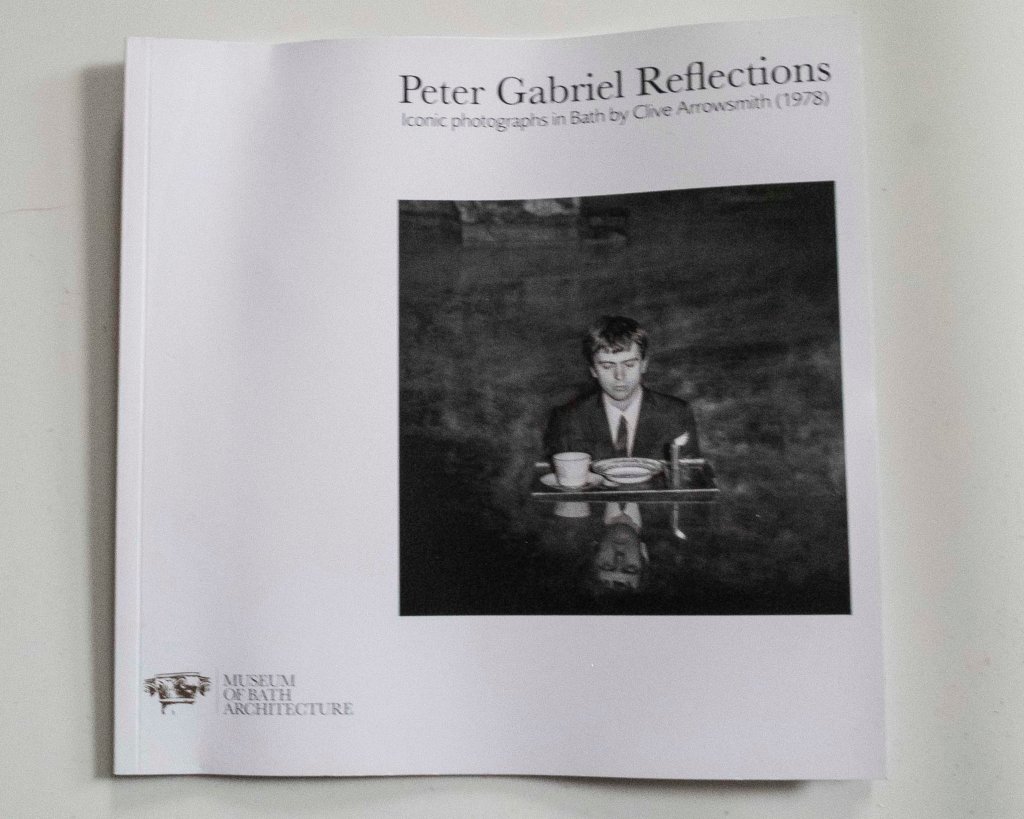
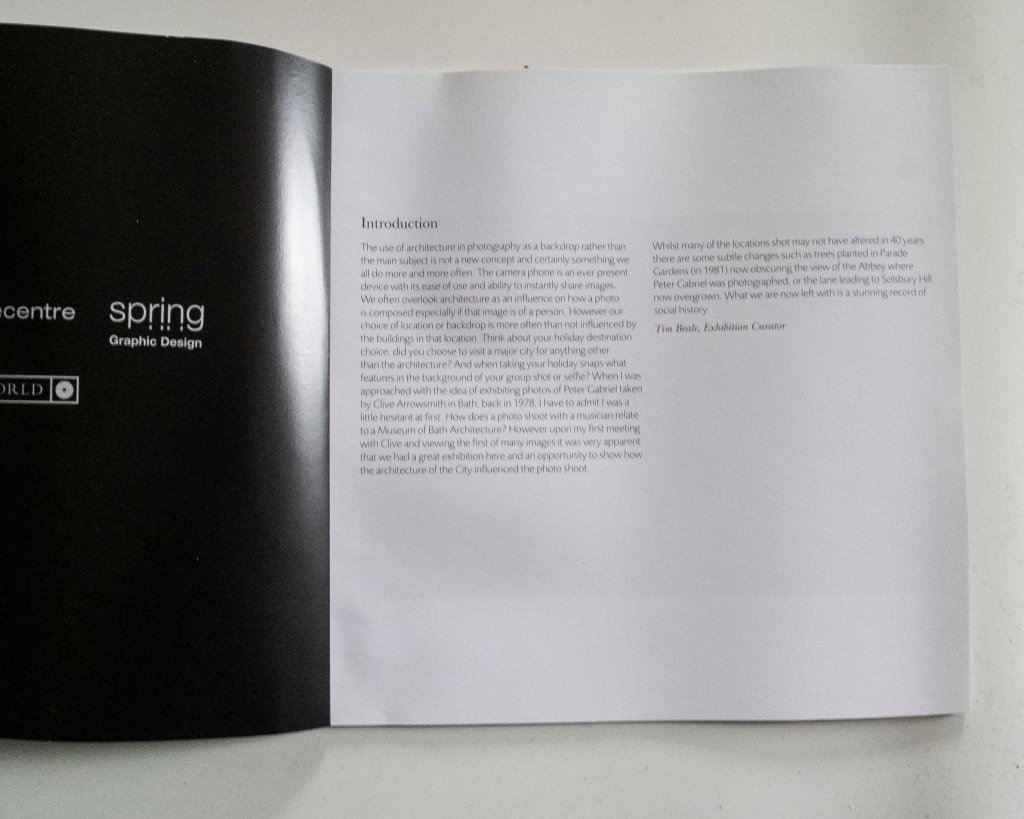
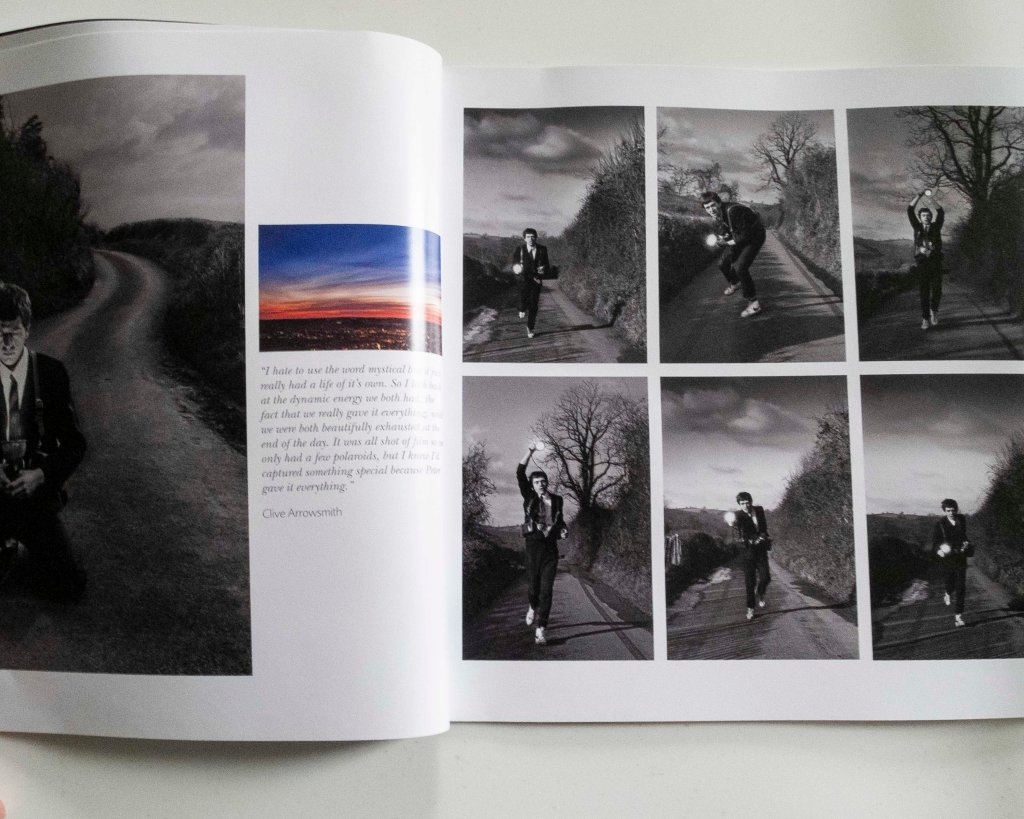
Also this week after reading ‘Beyond the exhibition: from catalogue to photobook’ I found to be in agreement with the notion that catalogues, pamphlets and guides are significant records of an exhibition and without this record the exhibition is at risk of disappearing . I produced a guide book for the ‘Peter Gabriel Reflections: Photography of Clive Arrowsmith’3 it was intended as a) a source of secondary income b) souvenir of the exhibition for visitor c) a way of people experiencing the exhibition that could not attend and d) a record of the exhibition for our archives. One the the failings of the guide and a reason I cannot call it a true catalogue is the lack of an inventory of images, this exists in an exhibition folder separately.  

I found this week’s forum, looking at our peer’s websites and those they like, very useful, informative and inspiring. I clearly need to up my game with both my CRJ blog and practice website. Some google analytics pointers I pick up from feed back were: 

  • Include links to other photographers work increases google presence 
  • Create content that holds the viewers attention. The longer they stay on your site is an area google looks at 

I also found it useful to look at other established photographers websites and glean inspiration from these. Some websites I like are visually dynamic but wouldn’t suit my style whilst others would, being much more simplistic with a natural flow.  

References:

1 O’Hagan. S (2012), Guardian Newspapers Limited. Photography: A Guardian Masterclass: The world’s most expensive photograph …is of a scene that doesn’t exist. 

2 Griffin. B (2020) Falmouth University live webinar.

3 Keane, T. (2019) Hyperallergic: British Rock Meets Modernism. [Online] Available from: https://hyperallergic.com/480967/peter-gabriel-reflections-the-museum-of-bath-architecture-clive-arrowsmith/ [Accessed 08/11/2020]

PHO704: Week 4 – Personal Projects and Five year plan

Having gone back through week 3 and this week’s course material and reading resources I feel I have a much better grasp of direction I want to take my practice. The paper “The power of the personal project”1 was particularly enlightening as I was initially surprised to read how modern commercial photographers need to create personal projects to attract clients. This makes perfect sense, given the image market is saturated with technically good photos, personal projects act as a platform to be seen above all the faceless images. This reminds me of the time spent as a camera club member and reasons for leaving. Almost each week there would be a competition with different theme, looking at the entries it became apparent very few images could be linked to any one photographer due to the lack of personality. Technically these images would be spot on but appear pedestrian or vernacular.

The city I live in, Bath, has a healthy audience of gallery and museum goers who would be my target audience not only for exhibitions but also running photo walks and workshops (as a way of supplementing my income).I’m now in my last week of paid work so in the process of re-assessing my career aspirations beyond the next few months. My day job, in the (soon to be obsolete) heritage sector, has been a way of supporting my photographic practice. In the short term I am looking for work to support me short term whilst I build my practice.

For me the next five years will be crucial in building up a career in photography. As up until now photography has been my passion outside of work but what the MA has shown me is that there can be a viable way to turn that passion into a working career. I see myself with a mix of creating and curating exhibitions of my personal project and those of fellow photographers, whilst working on commissions. I am one step closer to this having agreed to a really exciting commission (however sworn to secrecy at this stage).

As the high street has been in decline, even before Covid 19, I have been looking a retail units that can be used as exhibition space. Organisations such as local councils, Historic England and the Arts Council are currently looking at ways to save the high street with grants being offered to projects. I am hopeful that I can use this as a platform to start my practice professionally. Despite Bath having a strong base in photography, the RPS was unitil recently based here and Lacock Abbey close by, there lacks a space for photographers to exhibit on a regular basis. My ambition is to create such a space, utilising my 15 years experience of managing museums and cultural venues.

Resources

1 Scott. G, (2016) [Article] Journalism Practice, Professional Photography: the new global landscape explained, ‘The Power of the Personal Project’, pp. 82-109.