PHO705: Quiet protests

“To value photography as art is not however to denigrate photography in the service of different ends. We owe a debt to the cameramen who worked in Vietnam, for example. Photographs like theirs encourage us to resist what evil it may be in our power to correct.” [Adams 71:1996] 

Do environmental photographers, such as Edward Burtynsky and George Steinmetz produce meaningful images of protest or works of art that offer the viewer a means of escape? When looking at images of fauna in their natural habitats I find myself asking this question. By the simple act of exhibiting images in a gallery we now longer see them as referents for the evils of the world but art, and in doing so they lose their truth value. 

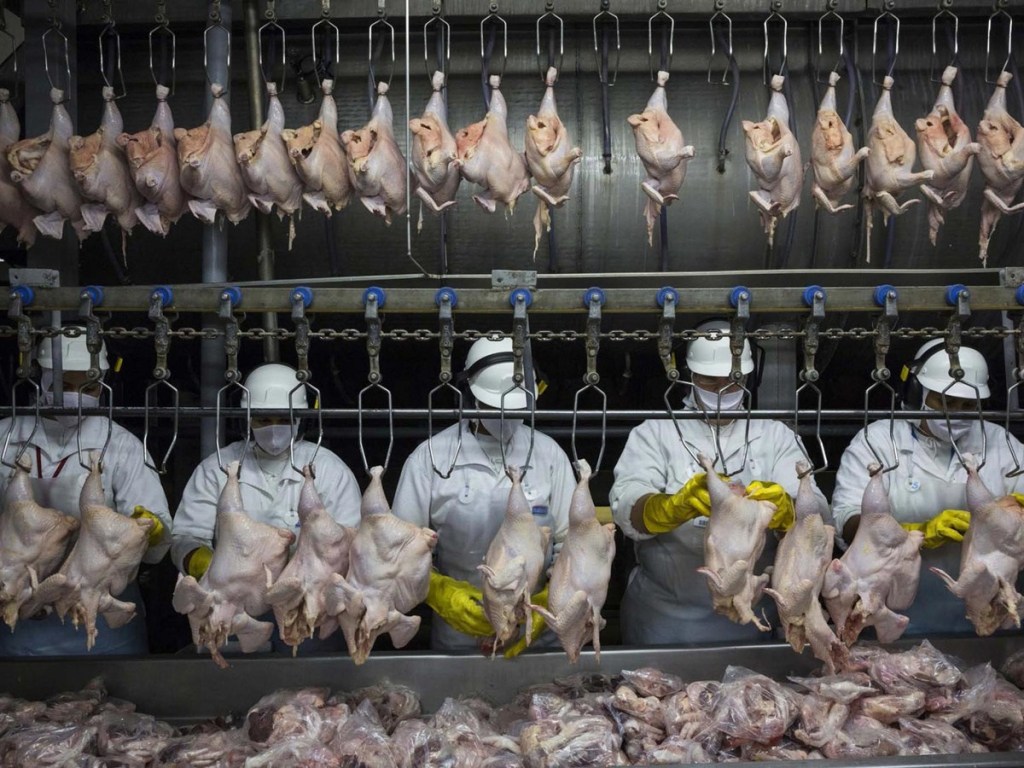
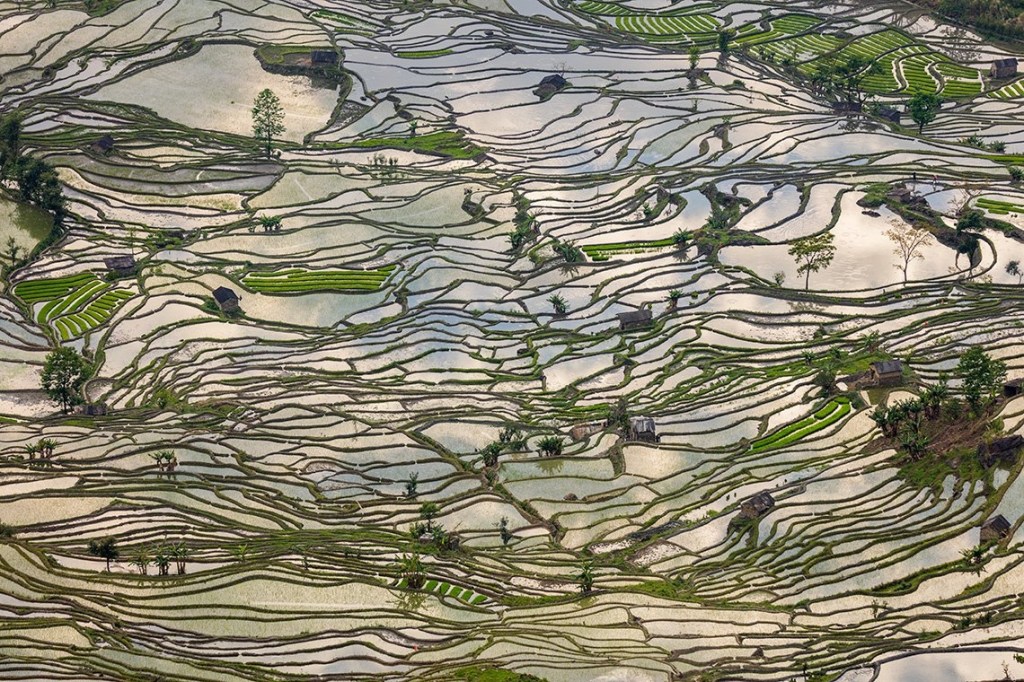
Steinmetz a photographer for the New York Times and National Geographic, who concerns himself with the subjects of remote landscapes, climate change, and humanity’s ever increasing need for food. Steinmetz’s practice is dominated by his aerial photography of grand landscapes, manufactured land, or agriculture in action.  The impact of which one first viewing may appear picturesque, abstract or alien but rarely disturbing. More impactful and immediate are Steimetz’s images we see from inside industrial complexes or farm facilities, workers in action or live stock in distress (figure 2). The presence of humans and their involvement in the distress of other, brings home the reality and truth value of the photograph. Without the accompanying text the aerial landscape do not hold the same weight as those that are more environmentally engaged, the obvious human intervention on the landscape or brutality towards livestock. There are two sides to Steinetz’s work, a disjoint, that of the commercial and the concerned.  
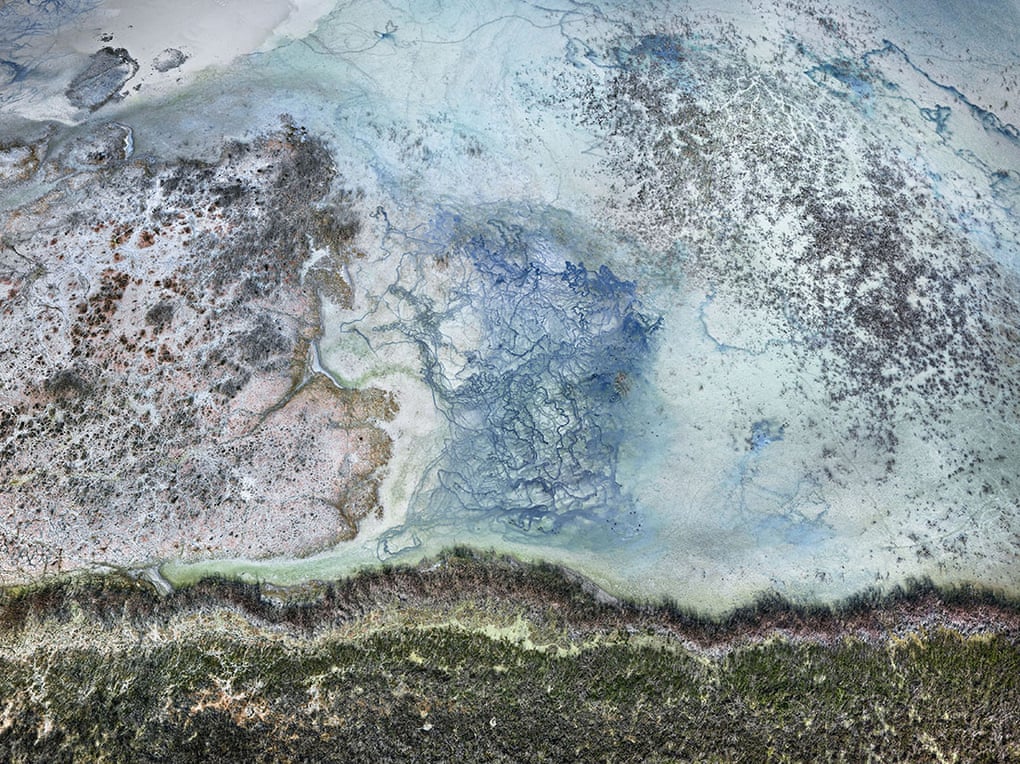
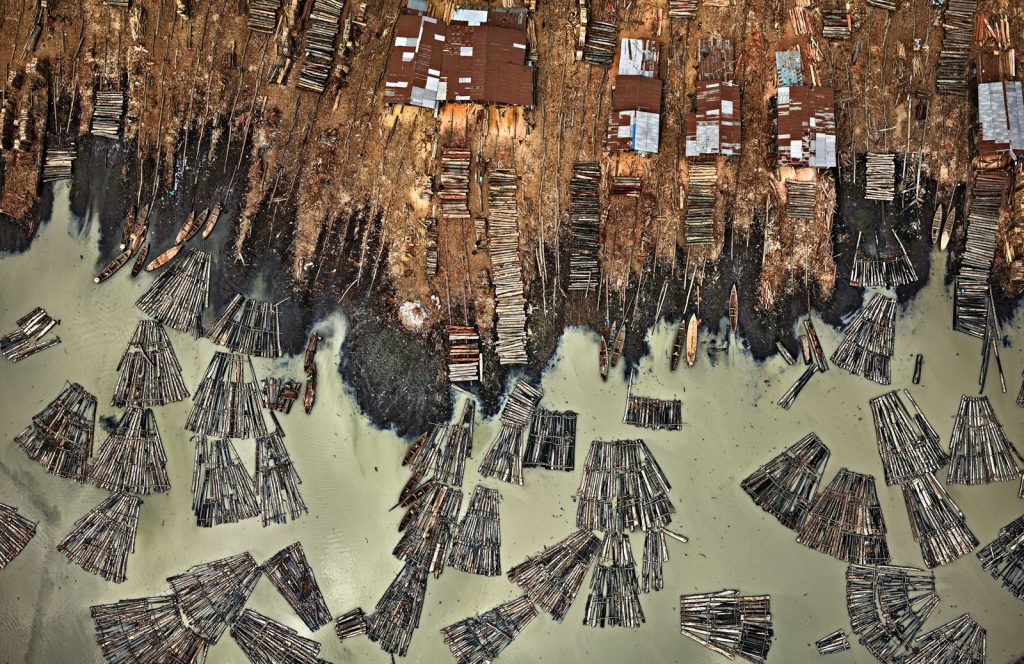
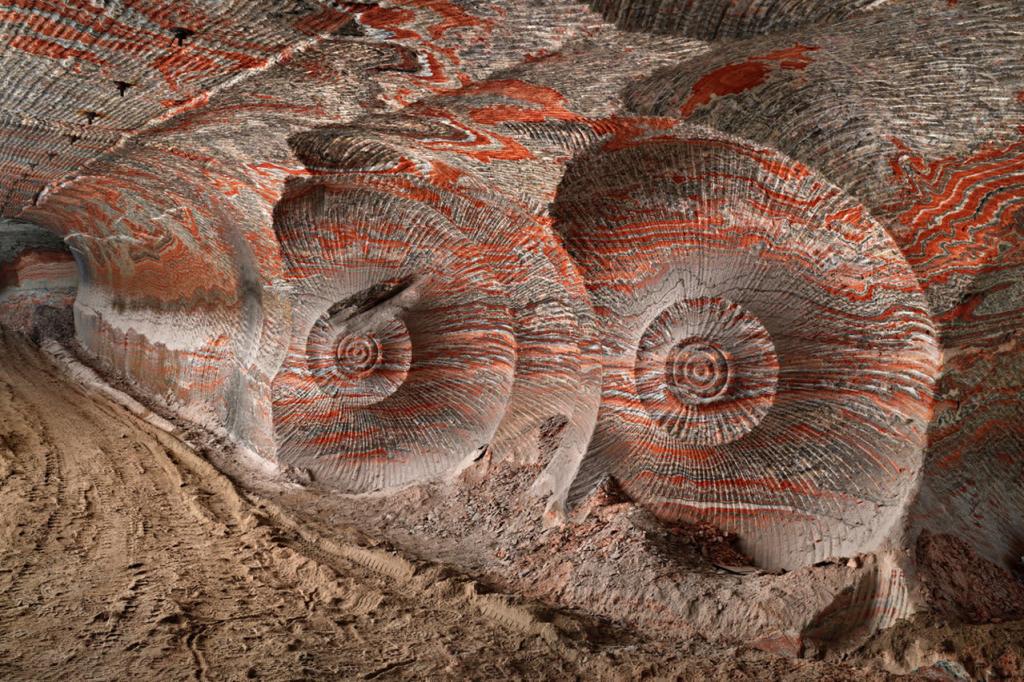
Meanwhile Edward Burtynsky offers us a more abstract of the world around us, as his concern for the world we are leaving behind us is that of a stripped landscape. These images offer us a alternative view of the world, something alien and yet there is something familiar. There is no question here that these are not photographs of protest, they do not shout at the viewer. What they do is offer the view the space to reflect, to stop and think. I his own words Burtynsky reflects on the impact of globalism and the needs of humankind: 

“But all these things have one thing in common, which is that this is the world that is necessary – in the background, humming away – to allow us to live the lives we do. When you buy that new thing, where does it come from? And where does it go when you’ve thrown it away? Because there’s no such place as away” [Burtynsky in Davies 701:2020] 
The work of Burtynsky reminds me of what Robert Adams states, in his essay “Photographing evil”: 

“Art can convincingly speak through form for significance bears upon the problem of nihilism and is socially constructive. Restated, photography as art does address evil, but it does so broadly as it works to convince us of life’s value; the darkness that art combats is the ultimate one, the conclusion that life is without worth and finally better of ended.” [Adams 70:1996] 

What makes for a greater impact when gazing on environmental photographs, landscapes, is when there is human presence. This give a scale to the thing; we can see and compare our reality against what we are being shown. Within my own practice the familiar landscape of vernacular buildings are used as metaphor for socioeconomic discord. I do not show off Bath’s grand Georgian architecture but the homes of the people who service the city and the millions who visit. When viewed I know that this is not art but documentary, it is a quiet kind of protest. 
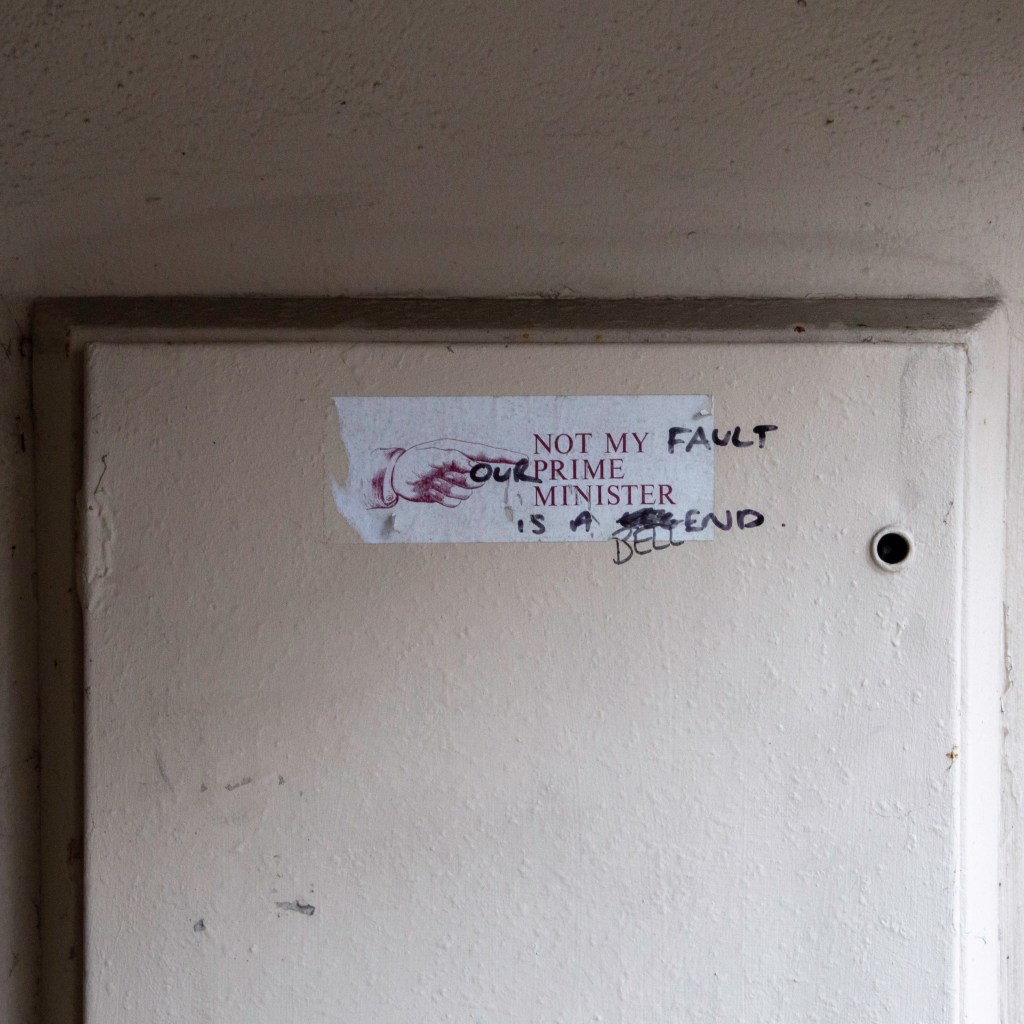
Figure 6 “Not our Prime Minister” 2021 Tim Beale

References 

Adams, R “Beauty in photography” 1996 Aperture 

Davies, L “Edward Burtynsky” The journal of The Royal Photographic Society Nov/Dec 2020 Vol 160/No.9 

Images 

Figure 1 Steinmetz, G  “The terraced Yuanyang rice fields in Yunnan province, China” https://www.canon-europe.com/pro/stories/george-steinmetz-storytelling-aerial-photography/ 

 Figure 2 Steinmetz, G “Feed the planet” https://georgesteinmetz.photoshelter.com/gallery/Feed-the-Planet/G0000lrER6EZBBQA/ 

Figure 3 Burtynsky, E  “Uralkali Potash Mine #4, Russia” 2017 https://www.format.com/magazine/features/photography/edward-burtynsky-photography-anthropocene-project 

Figure 4 Burtynsky, E “Phosphorus Tailings Pond, Florida” https://www.theguardian.com/artanddesign/2016/sep/15/edward-burtynsky-photography-interview 

Figure 5 Burtynsky, E “Saw Mills #1, Lagos” https://www.newyorker.com/magazine/2016/12/19/edward-burtynskys-epic-landscapes 

Figure 6 Beale, T “Not our Prime Minister” from The Right to this City series, 2021
PHO702: Week 1 Reflection – Photography Characteristics & Human Choices

When considering the various characteristics within photography and in particular my own practice. It becomes clear that I adopt a few distinct characteristics when approaching an idea or out shooting and these characteristics drive my own human choices.  

The Frame  

When considering the idea of an image I will first consider what will fill the frame, not unlike a blank page ready to be written upon. Then I consider what will be outside the frame, what will the view not see, what will they fill in by using their imagination. These two factors are key before even picking up the camera as often this will have a direct bearing on the location of a shoot.  

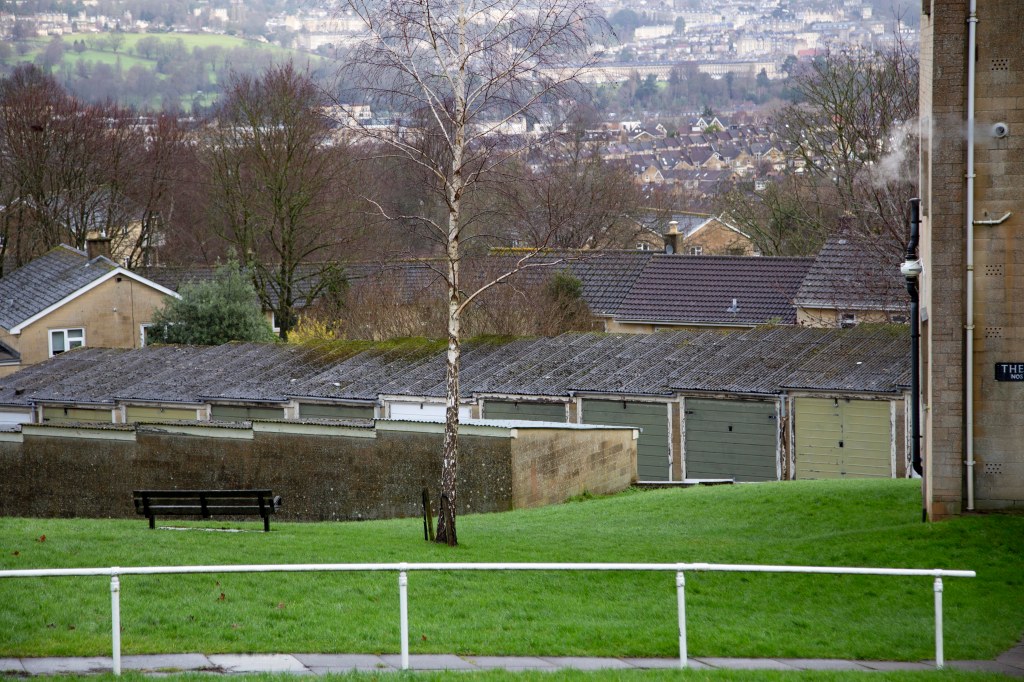
Framing a shot is then a process of working with the environment and the subject. For example, in this image of vernacular garages, the key was to work with the background to juxtapose the garages against the view of the Royal Crescent and Bath countryside. As such we see the use of vantage point to achieve this result.  

Fig.1 Tim Beale 2021, ‘Untitled’ Garages & the Royal Crescent, Bath.

The central act of photography, the act of choose and eliminating, forces a concentration on the picture edge- the line that separates in from out-and on the shapes that are created by it [Szarkowski 1966:9] 

The Frame isolates unexpected juxtapositions, creates relationships between ‘facts’ that have been framed, cuts through familiar forms revealing unusual fragments”. [Szarkowski 1966:70] 

Focus 

I tend to spend time walking without a camera, a kind of psychogeographic exercise in mentally mapping a woodland, city or suburb. Often noting the areas that will work best during particular lighting, time of year, time of day/night or weather. 

Fig 2. Tim Beale 2021, ‘Untitled’.

By focus I refer to both the focus of attention (the subject) and focus in a more mechanical sense. Once a shot is in the frame and at the right vantage point, my next consideration is the focus. How to best achieve the impact I desire, what will the viewer need to see and how will they see it, are all questions I have in mind whilst working. There are the obvious traditional methods of setting up a shot using the rile of thirds, depth of field and point of focus. But often it is when choosing to go against this tradition you can unsettle the view, who is conditioned to see in this way. Something akin (for westerners) righting right to left, the reader will still be able to read the text but will have to retrain their brain to do so.  

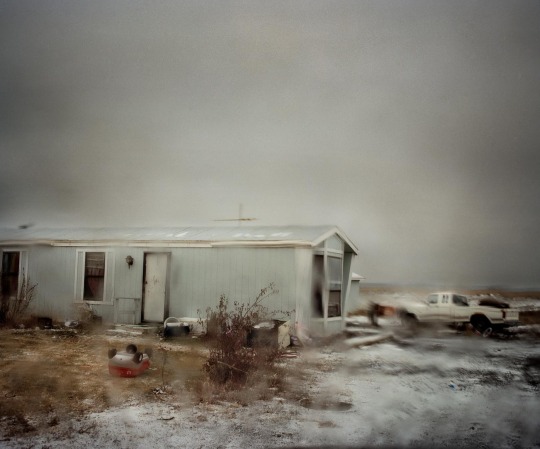
As with Todd Hido’s images shot through ‘rain’ covered car windows, the focus is ephemeral, on the idea of the thing rather than the thing itself.  

“Most importantly, I really love dramatic weather. I enjoy outings in those conditions. I feel so good when I’m driving, poking around for pictures, and it’s raining or snowing outside…. Diffused light is has always been the kind of light I’m after. I’m also drawn to backlit scenes, and I often like to shoot straight into the light. Shooting through a foggy dirty, or wet windshield really helps cut the brightness. It also makes for a painterly image.” [Hido 2004:online] 

“it’s not just a photograph of the landscape but it is a photograph from my personal perspective. I’m somehow in the picture in a way. That is my breath fogging up the window! It has more of an intimacy I think. It has a subjective, diaristic quality and now that I really think about it—it’s the opposite of something like an ‘authorless’ objective view, which is most often seen from a higher, uncommon viewpoint.” [Hido 2012:online] 

“Hido keeps at least three water bottles with him in his car. One time, I watch him spray his windshield before taking a landscape photograph. ‘I’ve learned from sheer disappointment that sometimes I need to take pictures, but it isn’t raining outside,’ he says. 

Fig 3. Todd Hido 2010 #9197. From the ‘Roaming’ photo book

Sometimes the artist sprays glycerin on the windshield, for a different kind of effect. It’s a technique he compares to changing paintbrushes. The size, direction and position of drops of water on the car window inform the photograph that results, and within these fictitious raindrops, Hido says he can ‘compose’ the real picture that he wants to see. Ultimately, each photograph is a composition. It is a way of giving shape to a mental state, as opposed to capturing an actual setting.” [Tylevich.K undated:online] 

The use of focus/unfocus within an image as in Fig.2 are like our memories, sometimes hazy or unclear and other times pin sharp and crystal clear. This is something that Hido manages to capture with his ‘Roaming’ images, landscapes both in and out off focus.

One of the final considerations is the end result, who the audience is and how the final images will be viewed. This to me have been something of a new choice, having only exhibited in joint exhibitions and one small solo exhibition, my experience is limited. However, in my current practice I have begun to these make choices. If we look to fig 1 again, for the viewer to understand the image they need to see the juxtaposition between the mid ground (garages) and background (landscape) as such the final print will need to be large, perhaps 160x100cm or larger. As my practice and personal project develop so too will the choices I make.  

References 

Hidio.T ‘Roaming’ Interview with Shuman.A, 2004, SeeSaw Magazine. [Accessed 01.02.2021] http://www.aaronschuman.com/roaming_pages/roaming_interview.html 

Hido.T Rose Gallery interview with Augschoell.D and Jasbar.J, 2012, ahorn magazine. [Accessed 01.02.2021] http://www.rosegallery.net/blogarchive/2012/06/29/interview-with-todd-hido 

Tylevich.K ‘Roaming’ text from the Todd Hido website [accessed 01.02.2021] http://www.toddhido.com/roaming.html 

Szarkowski.J 1966. The Photographer’s eye. London: Secker & Warburg 

Images 

Fig.1 Beale.T ‘Untitled’ 2021 

Fig.2 Beale.T ‘Untitled’ 2021 

Fig.3 Hido.T ‘Roaming: #9197’, 2010. [Accessed 01.02.2021]  http://www.toddhido.com/landscapes.html  

PHO702: The social photo: On Photography and Social Media. Nathan Jurgensen 2019

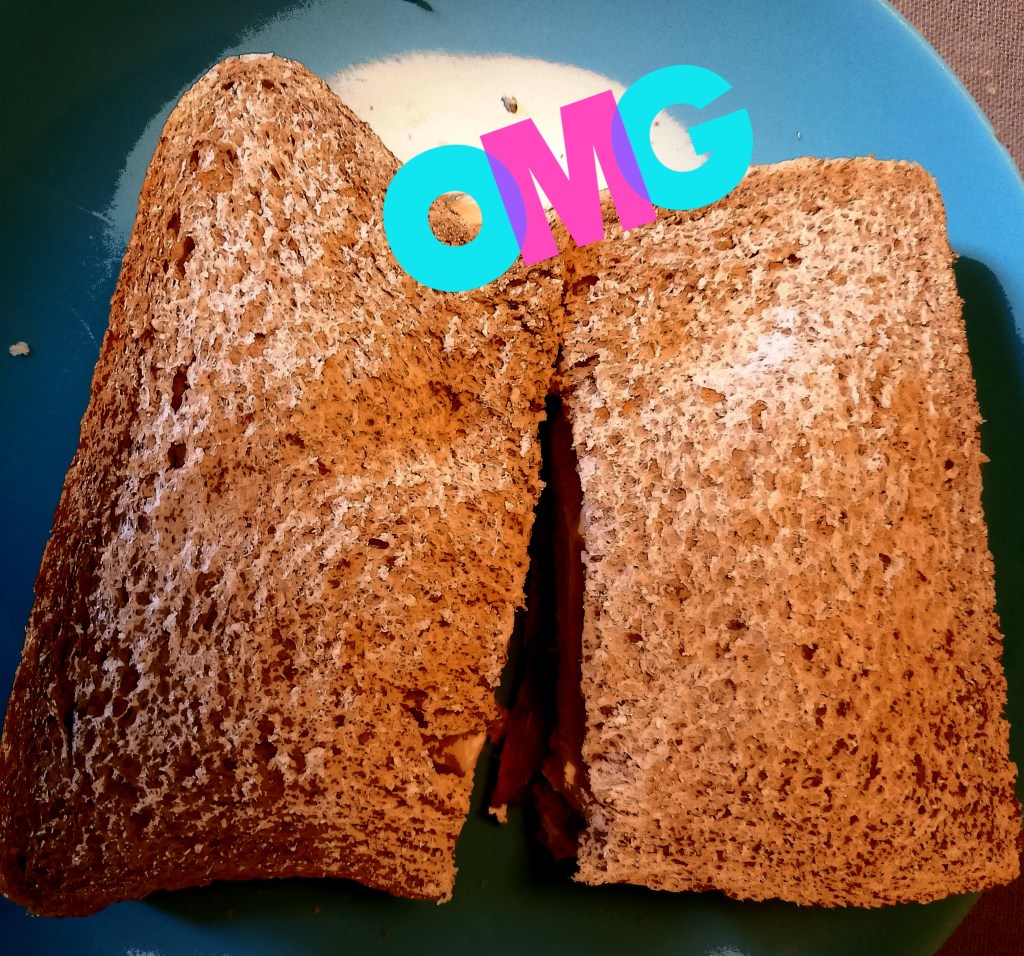
Tim Beale ‘Yesterday’s Lunch’, 2021

Nathan Jurgenson’s book The Social Photo first sets out to define and place the social photo as a separate entity to the more traditional form of photography. The distinction between the two forms of photography is then simplified into two forms the ‘Object’ and the ‘Experience’ with social photography concerning itself with the experience over the object. As Jurgenson says: 

 “Traditional analysis of photography fixate on the photo object….the what and how of a social photo is less important than the why.” [Jurgenson 2019:15]. 

Furthermore there is a need to discard the learned ‘art history’ approach to critically examine social photography, as we would with traditional photography. If we remove a social photo from the steam of social media we risk viewing is as banal [Jurgenson Verso 2019:11-16]. Much of Jurgenson’s views throughout this book can be referred to Susan Sontag’s ‘On Photography’, her views on what was then a newly established art form. On discussing proliferation of the photography she states: 

The urge to take photographs is in principle an indiscriminate one, for the practice of photography is now identified with the idea that everything in the world could be made interesting through the camera’ [Sontag 1973:111]  

The social photo takes the everyday experience of eating and makes it special by the act of posting images of food. As part of a stream of social photos the plate of food becomes a notable experience but an image that once taken out of the stream can bused as an example of the banal or over sharing. [Jurgenson 2019:15-16]. Sontag holds similar thoughts: 

‘Nobody ever discovered ugliness through photography. But many, through photographs, have discovered beauty…. Nobody exclaims “Isn’t that ugly! I must take a photograph of it.” Even if someone did say that all it would mean is: “I find that ugly thing… beautiful.”’ [Sontag 1973:85] and ‘This very insatiability of the photographing eye changes the terms of confinement in the cave, our world. In teaching us a new visual code, photographs alter and enlarge our notions of what is worth looking at and what we have a right to observe.’ [Sontag 1973:3]  

Sontag and Jurgenson illustrate the way in which photography has altered the way in which we view the world around us. Advances in technology increases the ease in which we create and share images. The mobile phone becomes less of a tool for verbal communication and one for visual, non-verbal communication. With each upgrade the mobile phone manufacturers improve upon the image capturing capabilities of each device. The big selling points are less about how well the device can allow you to talk to each other but the number of mega pixels and how quick you can upload an image. Jurgenson further discusses, early image sharing platforms and the introduction of the faux vintage filters, having a dual purpose, mask the low resolution of early camera phones and to pander to our need for nostalgia. [Jurgenson 2019:20-27]. The mimicking of fragile nature of the physical photo offers up a sense of the digital image being more valuable or precious. This physical nature of the photograph is talked about by Sontag: 

‘Photographs, which fiddle with the scale of the world, themselves get reduced, blown up, cropped, retouched, doctored, tricked out. They age, plagued by the usual ills of paper objects; they disappear; they become valuable, and get bought and sold; they are reproduced. …photographs are fragile objects, easily torn or mislaid…’ [Sontag 1973:4] 

The concept of the Social detox or Switching off away from devices or social media is one that runs through the book and more so in the second half. Jurgenson rejects these concepts as anything more than moral shaming the users [Jurgenson 2019:70-77]. It can be said we judge the use of social media based on our own nostalgic views of how we grew up. In particular when actively encouraging young people to switch off and go out into the real world like we did at their age. It seems almost ironic that the nostalgia used to entice us to share photos is also the basis on which we look to base the frequency of social media use. Jurgenson asks: 

‘why do so many of us feel as though digital connection puts our integrity as human beings at risk?’ [Jurgenson 2019:74] 

We can answer this question with a question. If I visit Prague and photograph the experience then return a year later, with a camera, will the city still be a beautiful? If the moment is not documented does it hold the same level of interest?  

‘The worry is that the ubiquity of social photography threatens our ability to really live in the moment.’ [Jurgenson 2019:78] 

We are now conditioned to see as if through an eye piece or screen and as such will often walk the city looking for the idea vantage point for a photo, even without a camera and as stated by Sontag: 

‘The camera makes reality atomic, manageable, and opaque.’ ‘Photography implies that we know about the world if we accept it as the camera records it. But this is the opposite of understanding, which starts from not accepting the world as it looks.’ [Sontag 1974:23] 

And as Jurgenson also says: ‘A crowd of raised phones at an event is like many outstretched eyes capable of sharing an experience in real time with almost anyone.’ [Jurgenson 2019:112] 

This is the new way of seeing and sharing and the new norm however Jurgenson fails to see the simple defining difference between social photo reality and reality. The frame is the defining boundary. The photo, social media, mobile devices, cameras are all limited by the frame. Reality has no edges, no frame and is boundless. The frames edge defines real from unreal. In the photographer’s Eye, John Szarkowski states: 

‘The central act of photography, the act of choose and eliminating, forces a concentration on the picture edge- the line that separates in from out-and on the shapes that are created by it’ [Szarkowski 1966:9]  

Technical advances have shaped and defined photography more than any other medium of art and as we look to the future we can expect the boundary of reality, the frame expanding or disappearing altogether. As such the social photo will evolve and adapt to what will become the new reality.  

References 

Jurgenson. N 2019. The Social Photo: On photography and social media. Verso books. 

Sontag. S 1973. On Photography. Penguin Books 

Szarkowski.J 1966. The Photographer’s eye. London: Secker & Warburg