PHO704: Week 11 Reflection – Finding my, social media, visual language

Week 10 and 11 we looked at the impact of social media on our photographic practice and ways in which to use platforms as Instagram effectively. In week 10 we shared our Instagram links for our peers to review our pages. After reading many of the peer reviews it became clear that those who manage successful Instagram accounts often have more than one, using each account to create a specific feel or visual language. This idea of creating a was further reinforced in week 11, when watching the interview with Maximus Barnet (a fantastic name btw)1. What struck home to me was, during the conversation between Barnet and Anna-Maries Pfab, they discussed how they would look at a photographers Instagram account as a CV. As such there should be a clear, cohesive visual language. I was surprised to learn that rather than attempting to put work out on social media regularly it is better to only use work that truly represents your visual language, less is more almost. I have now created a new Instagram account to better represent my practice that will have a clearer visual language.   

In a similar way websites too need to be streamlined to really show only the work that you want everyone to see rather than a site that covers every aspect of your technical know how. Unfortunately this is what my website looks like currently. I will be spending the next couple of weeks working towards a cohesive and clear visual language. A photographer who I admire greatly and who’s website I enjoy viewing is Jack Latham2. As a photographer who creates stunning photo books, Latham’s website is simplistic and well laid out with projects set out as online books themselves, this gives the viewer a clear idea of what Latham’s work is about and his visual language.  

I now have a clearer marketing plan and specific areas of development for my website and social media accounts. This plan will be added to my overall business plan as it clearly sets out my practice as a brand and how to create a cohesive visual CV with my images, whilst targeting my chosen audiences. I also liked the idea of creating PDF portfolios for all my other work as often there is a tendency to either post on social media or add to my website, just so they don’t sit in folders on my hard drive.  

https://www.instagram.com/tbphotography/

References

1 Pfab. A, Falmouth University MA Photography, Sustainable Prospect Module Week 11 (video): In Conversation with Maximus Barnett, PYLOT magazine (watched 03.12.2020) 
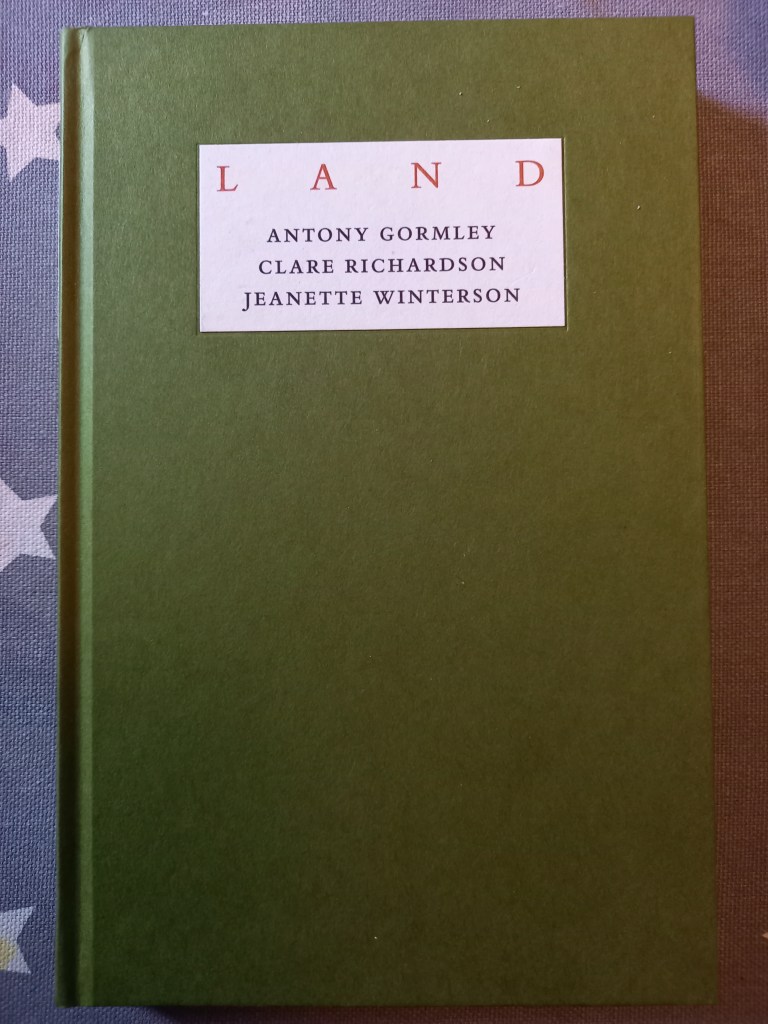
PHO704 – Critical Research: Antony Gormley, Clare Richardson & Jeanette Winterson: ‘Land’

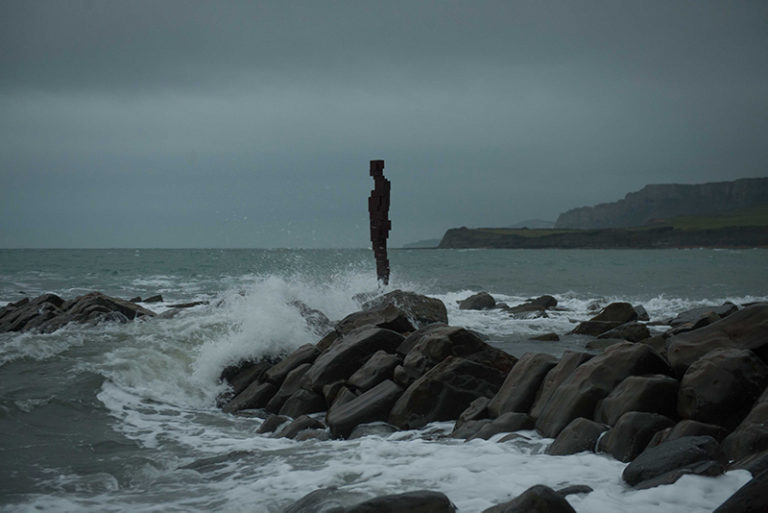
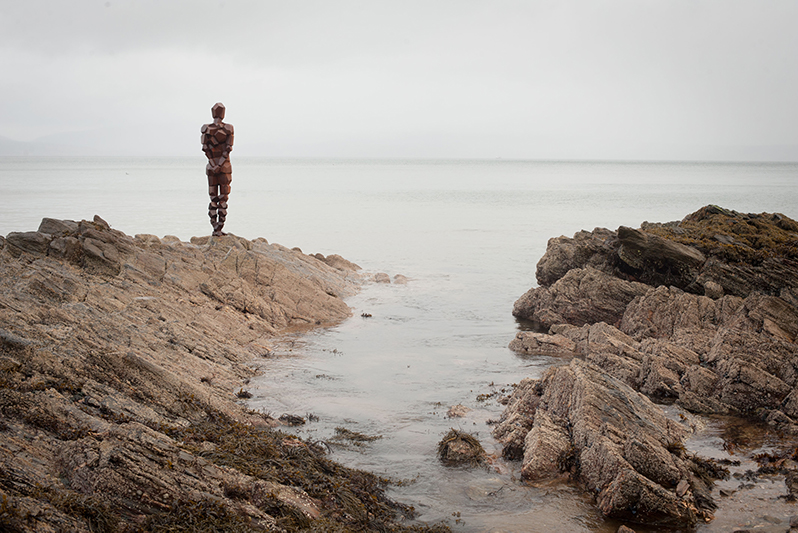
Land is a collaborative book written by Jeanette Winterson with photographs by Clare Richardson of Antony Gormley’s sculptures. The body of work was commissioned by Landmark Trust to celebrate their 50th anniversary and it is an exploration of what it is to be human in remote places across the British isles. Gormley’s sculptures, created out of iron, are solitary figures that appear to stand guide over the landscape and perhaps represent the work done by Landmark Trust in protecting and preserving historic sites. 

Richardson’s images certainly capture the context of the installations, with suitability, passion and sometimes calm contemplation she renders soul to each sculpture. You soon forget that these lone figures are not human, it is quite easy to empathise with them as they stand watch over choppy seas and bleak landscapes.  

Winterson’s words are written in prose throughout the book, creating imagery of their own. These prose not only describe Gormley’s work beautifully but also have a cohesion with Richardson’s images. Of the images ‘Warrior’ is on such image, the loan figure looking out to sea, standing with arms held back behind its back, waiting and watching. Winterson’s words say it much better: 

‘This metal man, both near to and far from our human forms, waits like a warrior-confessor. What is it that you have seen? What is it that you want to say? And I think it would be something to reach the same point of stillness, the end of action and beginning of contemplation.’ J.W 

This way of portraying the lone figure really speaks to me and I can see something of my own work in these photographs. Where I use myself in a woodland landscape, I aim to leave the same ambiguity to my imagery that we see in Gormley’s sculptures. Just hinting at a story to be told, leaving the viewer plenty of room to read and interpret. 

‘Although these works are temporary placements…’ A.G.  

The sculptures where only in place for one year, so this book containing Richardson’s images and Winterson’s word, is the only remaining evidence of this installation. This is not a big ‘coffee table’ photo book but a rather small tome, perhaps A5, hard bound and beautifully printed on Matt paper.  The design of the book is such that you can keep it in your pocket when visiting the landmarks trust locations, to read the words, look at the images and become one of these lone figures. A remote human in a remote place.  

The human body – house of the human being, so fragile, so temporary, and determined to last forever.’ J.W 

Resources

Gormley. A, Richardson. C & Winterson. J (2016) Landmark Trust book, ‘Land’

Richardson. A (website), https://www.clarerichardson.com/books/land/ [viewed 03.12.2020]

PHO704: Week 10 The Digital Image

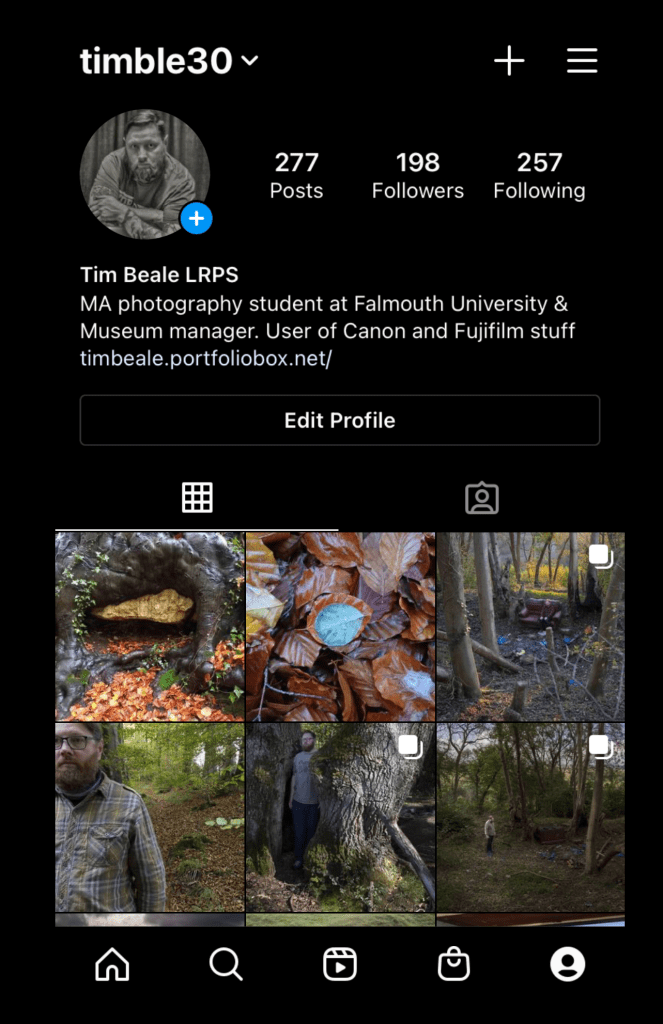
The ‘User’, screen shot from Instagram account, Tim Beale 2020

The digital revolution saw the term ‘user’ come in to describe anyone purchasing electronic goods any thing from tablets, PCs, smart phones to digital cameras. The term ‘user’ had up until then been exclusively reserved for describing drug addicts. This misnomer perhaps isn’t as unfitting as it first seemed, especially given our constant craving for the latest gadget, app or game. Mobile phone and  camera manufacturers have seem this and acting a the proverbial ‘dealer’ see to it that we get our fix on a regular basis. If these manufacturers are the dealers, social media such as tic toc, facebook and instagram are the cartel ensuring we have the base need.  

Taking a photograph used to require patience, focus and the attention of the photographer. However with the demand for images and the ease of which to take these the ‘photographer’ has become almost redundant. The evolution of digital image has done away with the camera, such as we think of it, replacing with the ‘cameraless’ CCTV, webcam, smartphone and satellite. 300 million images uploaded daily1. The virtual stuttering of shutterless image makers we view the world on a screen at the back of a device rather than experience it. As with live music where the crowd are fixated on the screen they hold aloft, capturing that memory, experience of the live performance, to say ‘I was there’ when posting on YouTube, but were they ‘really’ there. 

So too the self portrait has evolved into a tool for self promotion, be it from a commercial sense or the need for personal glorification.  When discussing the self portraiture of K8 Hardy, Lauren Cornell states ‘Her vignettes don’t only offer a glimpse of her life and milieu, they reflect an intimate approach to self-portraiture that has yielded to a pop culture that compels us to narrate our lives in the first person. When we take photographs today, we always care about who, besides us, might see them.’2 

This throws into question, can a photographer who uses self-portraiture in their practice gain public awareness from platforms such as Instagram given the over saturation of selfies. 

In relation to this new generation of digital image makers the film maker and photographer Win Wenders discusses his Polaroid’s of the 70s and 80’s: 

 ‘You produce something that in itself, a singular moment. As such it had a certain sacredness. That whole notion is gone. The culture has changed. It has all gone. I really don’t know why we stick to the word photographer anymore. There should be a different term, but nobody cared about finding it’. 

This statement was made during an interview with Sean O’Hagen for the Guardian news paper3. I feel O’Hagen mis-translated Wenders’ words to mean that this was the ‘end of photography’ however as I understand it he was in fact referring to the evolution of the image for a personal record to one that is instantly transmitted to the world. Photography certainly isn’t dead it’s just a different beast, the new digital era that we must embrace or be brushed aside.  

References

1 Marr. B (2018),Forbes report [online] https://www.forbes.com/sites/bernardmarr/2018/05/21/how-much-data-do-we-create-every-day-the-mind-blowing-stats-everyone-should-read/?sh=51112cf660ba %5BAccessed 27.11.2020]

2Cornell. L (Nov 24, 2015)Aperture Magazine ‘Self-portraiture in the first person age’.

3 O’Hagan. S (2017), The Guardian [online], ‘Wim Wenders on his Polaroids – and why photography is now over’,  https://www.theguardian.com/artanddesign/2017/oct/12/wim-wenders-interview-polaroids-instant-stories-photographers-gallery [Accessed 27.11.2020]

PHO704: Live brief pitch and 1:1 feedback session

During this module I teamed up with some of my fellow cohort, Phil, Stuart, Thomas and Annie, to take up one of the live brief challenges. We chose to work on the Oxfam environmental brief: 

You don’t need to travel to tell a story about climate change, it’s more important your story travels. What stories are on your street? How can you represent these stories through photography? How can you transform this from a local to global storytelling campaign?

You could:

  • Document how people on your street are affected by climate change
  • Use portraiture & interviews to capture people’s perceptions of climate change
  • Show how people on your street are taking action on climate change
  • Find an individual with an interesting story relating to climate change or their campaigning work & document their story

After a couple of brain storming sessions we all agreed on a topic to tackle, the hidden carbon cost of the selfie/social media. We set roles for the group, time line and meeting dates, my role was to research the topic in detail and produce a project proposal. Stuart researched off setting, Phil lead the group and design work, Annie photography and Thomas researched Apps and put the presentation together. The team worked well together as we had a clear aim and set goals within our roles.  

The pitch itself went really well, with Thomas presenting and each of us answering questions as they arose. Ellie and Alyssa from Oxfam where suitably impressed with our idea as we had come at it from a totally different angle. They agreed to take our idea to other Oxfam departments so its just a waiting game now. Fingers crossed! 

1:1 feedback session  

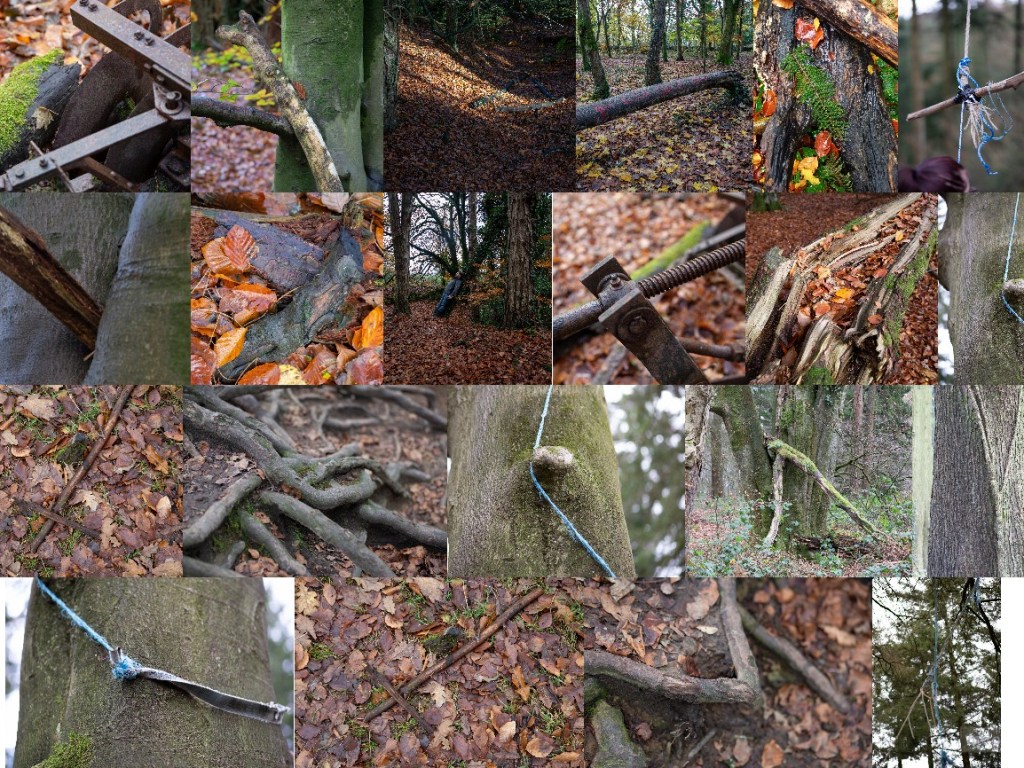
After reviewing my current work in progress at a recent webinar, my tutor, Cemre suggest I look to group my images in to themes as a way of editing. I reviewed the work I had done over the past two months and begun the process of selecting and grouping my images. Using lightroom classic I then created contact sheets. 

During my 1:1 with Cemre we then looked through these groupings we soon started to see images standing out as stronger images in their own right and images that worked better in a group or diptych. It was suggested to look at the virtual white board app Miro as a tool for grouping and selecting images. After a quick trial of the app I can see some interesting diptychs and triptychs appearing. 

Angles, Tim Beale 2020

PHO704: Week 8 Reflection

This week in both the live webinar with Brian Griffin and source material reading the question of are there any great photographers being produced today? 

For Griffin ‘there are perhaps only one or two great photographers produced in each country for each generation. The rest are crap! What commissions there are just are boring and with modern technology pretty much anyone can go out there and shoot what’s being asked ’ a very frank statement but is it true? Perhaps there is something to it, in Sean O’Hagan’s article for the Guardian1 he questions the future of photography in the advent of technological advances: 

‘For all that, no amount of technology will turn a mediocre photographer into a great one. Nor, in conceptual terms, will it transform a bad idea into a good one. For that you would still need to possess a rare set of creative gifts that are still to do with seeing, with deep looking.’ 

This statement rings true as a result of beginning this masters and working on my project I have looked deeper into the ‘why’ of what I doing. Questioning my every decision about location, set up, lighting and motive of why I’m doing what I’m doing. Griffin in his lecture also goes onto say ‘photographers don’t take their time anymore, they simply look through the screen and click. Portrait shoots are over in minutes, and look boring, there’s no creativity’2 I agree with this statement and have often taught this when running workshops. I have set challenges with beginner photographers to limit the number of shots they take in a day to 24, simulating the number of available shots per role of film.  

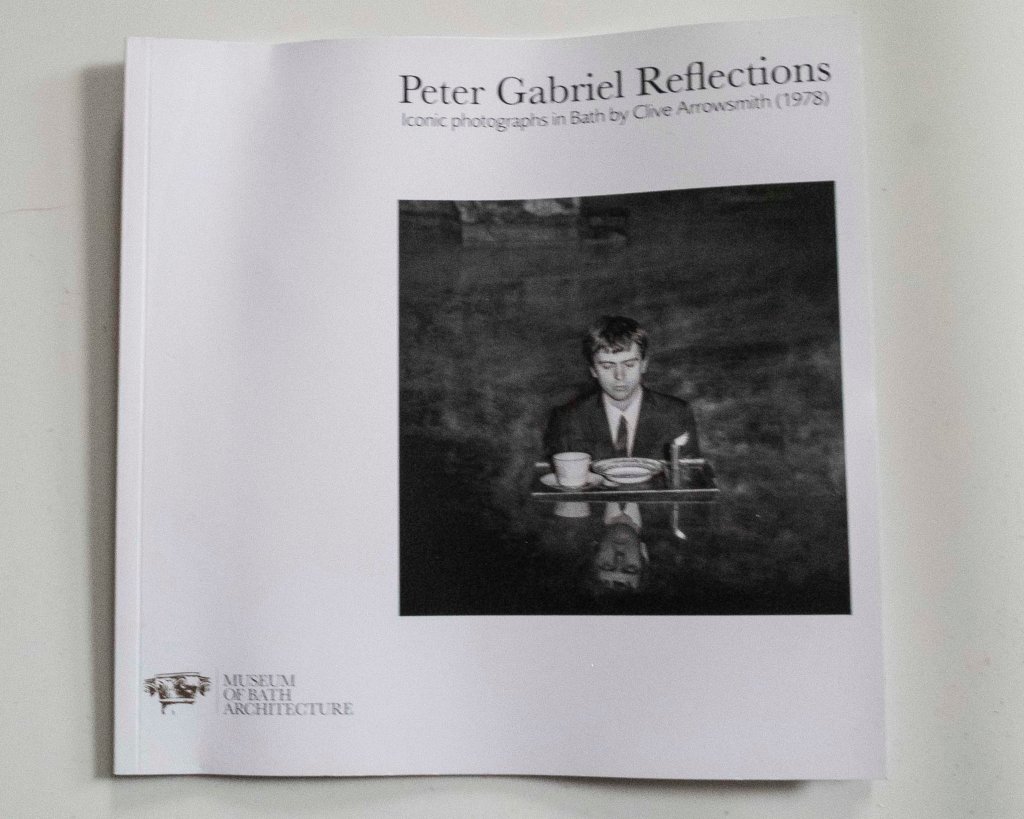
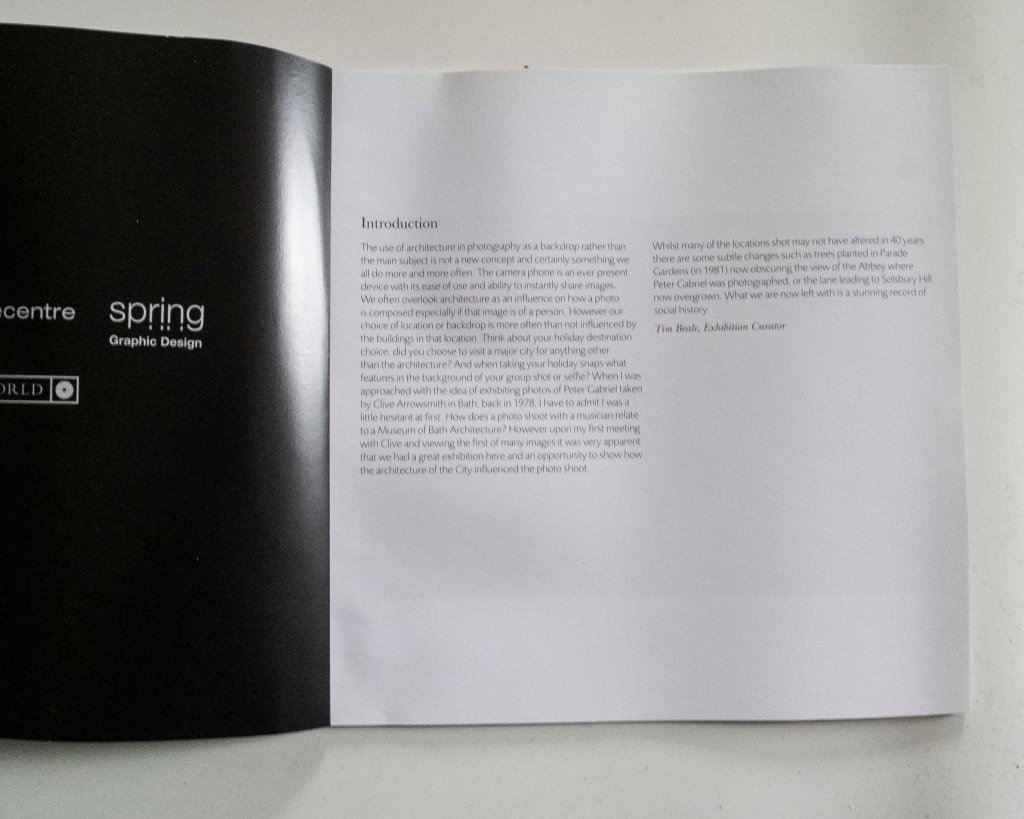
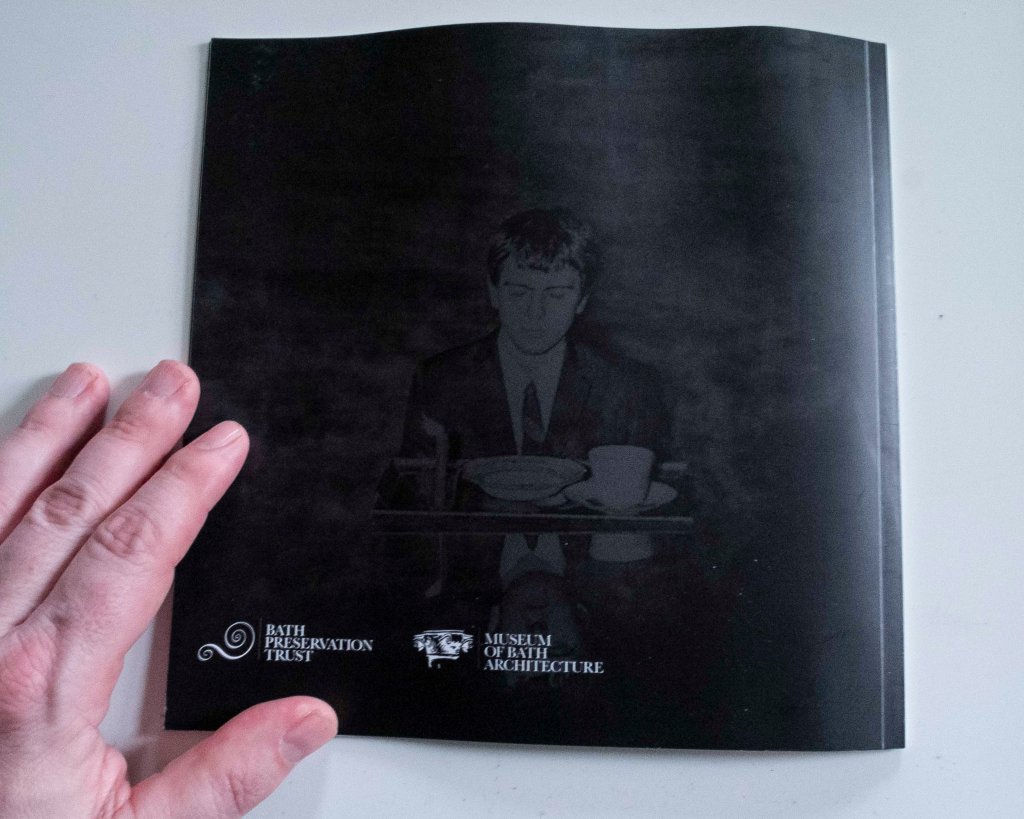
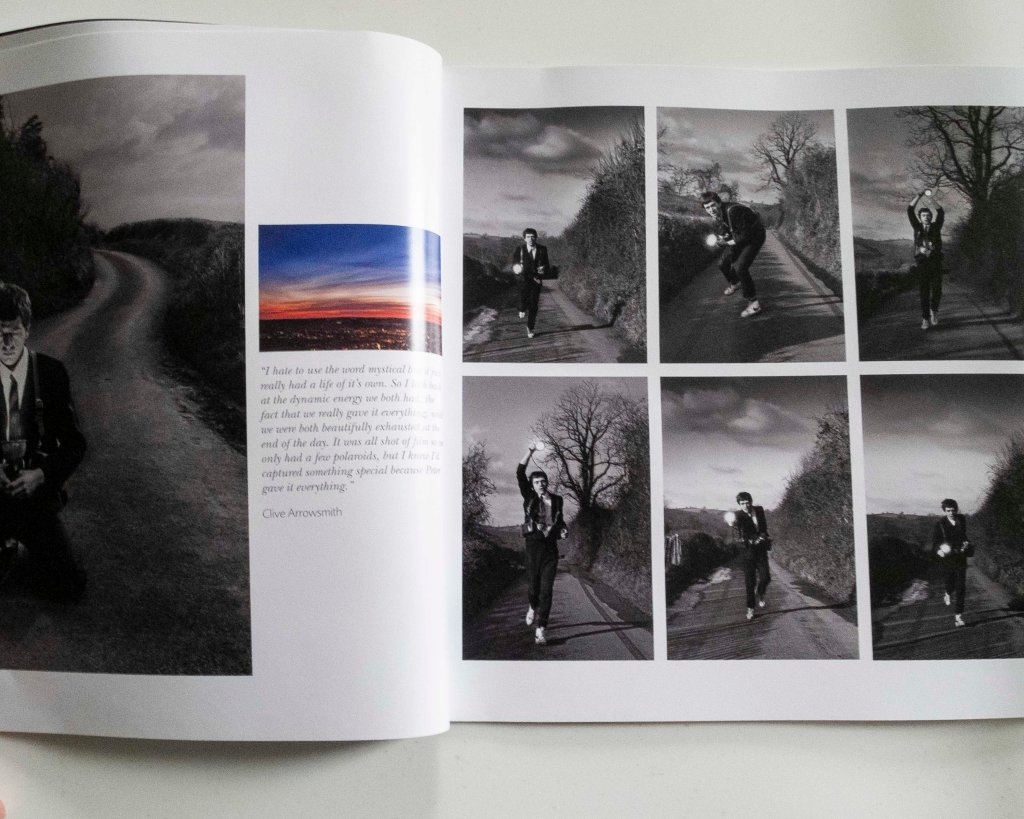
Also this week after reading ‘Beyond the exhibition: from catalogue to photobook’ I found to be in agreement with the notion that catalogues, pamphlets and guides are significant records of an exhibition and without this record the exhibition is at risk of disappearing . I produced a guide book for the ‘Peter Gabriel Reflections: Photography of Clive Arrowsmith’3 it was intended as a) a source of secondary income b) souvenir of the exhibition for visitor c) a way of people experiencing the exhibition that could not attend and d) a record of the exhibition for our archives. One the the failings of the guide and a reason I cannot call it a true catalogue is the lack of an inventory of images, this exists in an exhibition folder separately.  

I found this week’s forum, looking at our peer’s websites and those they like, very useful, informative and inspiring. I clearly need to up my game with both my CRJ blog and practice website. Some google analytics pointers I pick up from feed back were: 

  • Include links to other photographers work increases google presence 
  • Create content that holds the viewers attention. The longer they stay on your site is an area google looks at 

I also found it useful to look at other established photographers websites and glean inspiration from these. Some websites I like are visually dynamic but wouldn’t suit my style whilst others would, being much more simplistic with a natural flow.  

References:

1 O’Hagan. S (2012), Guardian Newspapers Limited. Photography: A Guardian Masterclass: The world’s most expensive photograph …is of a scene that doesn’t exist. 

2 Griffin. B (2020) Falmouth University live webinar.

3 Keane, T. (2019) Hyperallergic: British Rock Meets Modernism. [Online] Available from: https://hyperallergic.com/480967/peter-gabriel-reflections-the-museum-of-bath-architecture-clive-arrowsmith/ [Accessed 08/11/2020]

Surrealism in Photography

Surrealism is periodically recycled as a style and as described by Andy Grundberg in his essay ‘surrealism runs like a pulse through art photography’s modernist presence.’1 In 1924 Andre Breton published his first surrealist manifesto and was based on the Freudian notions of the subconscious mind as a platform for the artist or art photographer. In terms of photography, surrealism can be seen as the precursor to postmodernism ‘As an avatar of deconstructivist practice and theory, it supplies a rationale both for photography’s position within the art world and for those photographic practices that seek to disorient and disrupt our conventional responses to images.’2 

Photographs can be seen as surreal in and of themselves, they act to displace, disrupt and disorientate the viewer. In Susan Sontag’s essay ‘On photography’ she writes: 

‘The photographers who concentrated on interfering with the supposedly superficial realism of the photograph were those who most conveyed photography’s surreal properties’3 

As with surrealist painting, photography alternates between representational and the ‘automatic’ abstract styles. May Ray remains to this day the anthesis of surrealist photography. His images typically switch between these two styles, his images such as ‘Le violon d’Ingres’ are pure constructs, choreographed and designed, whereas his ‘Rayographs’ rely upon a more random act of chance or pure experimentation.  

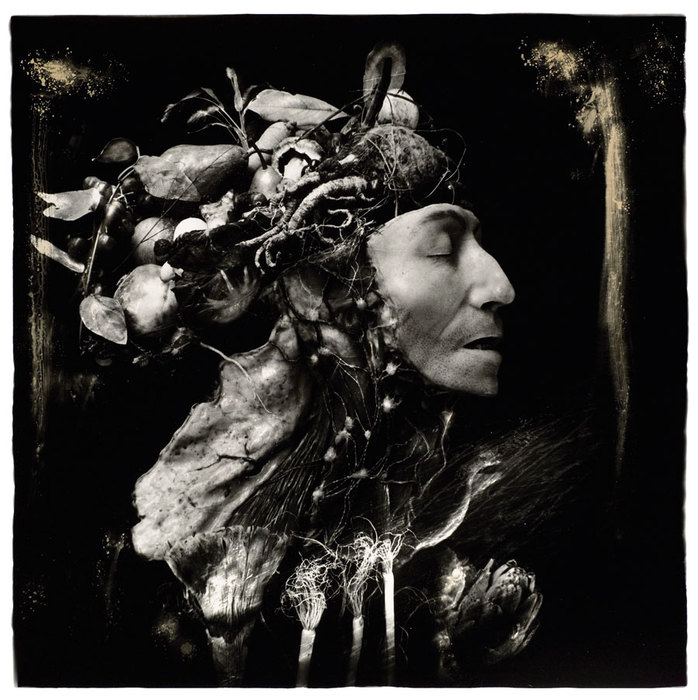
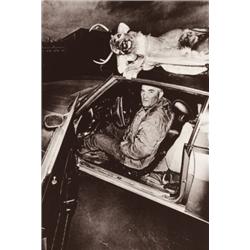
More contemporary photographers have a tendency for the grotesque or theatrical such as the work of Joel-Peter Witkin, Frederick Sommer and Les Krims.  If we first look to the work of Witkin who’s images are meticulously constructed and often grotesque featuring disembodied limbs to create dreamlike still life scenes. Wikin’s image ‘Harvest, 1984’ is something akin to the 17th Century Flemish painters  with their images of fruit and game but offers a more macabre interpretation.  

Harvest, Joel-Peter Witkin

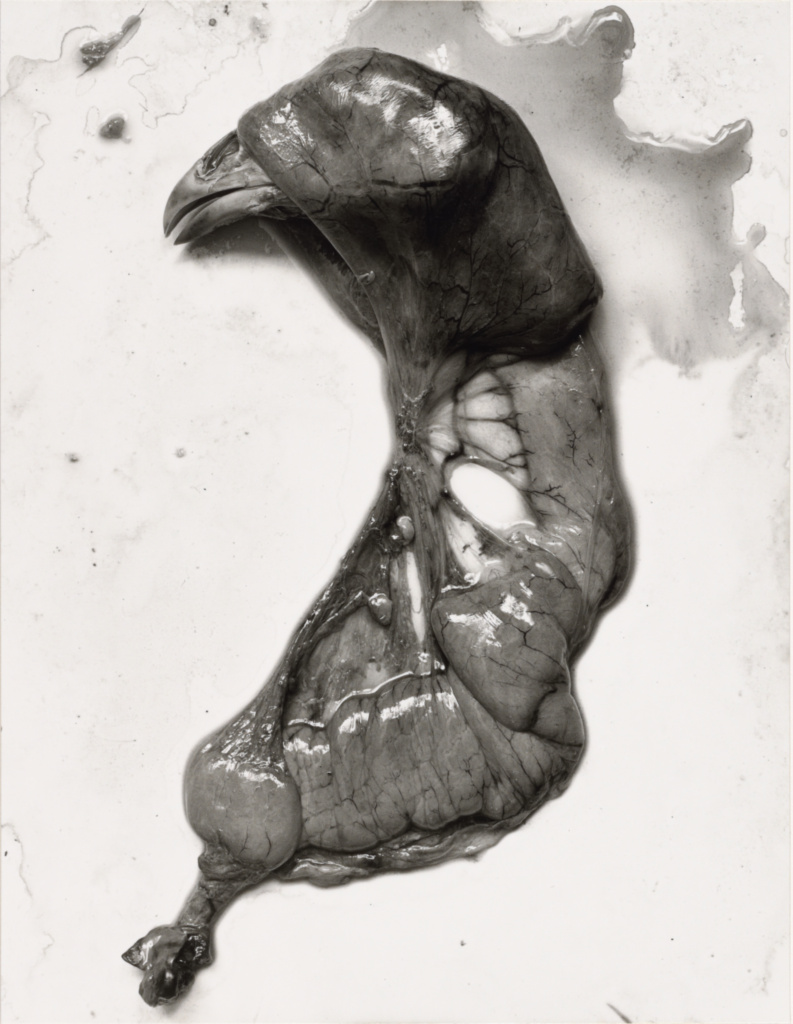
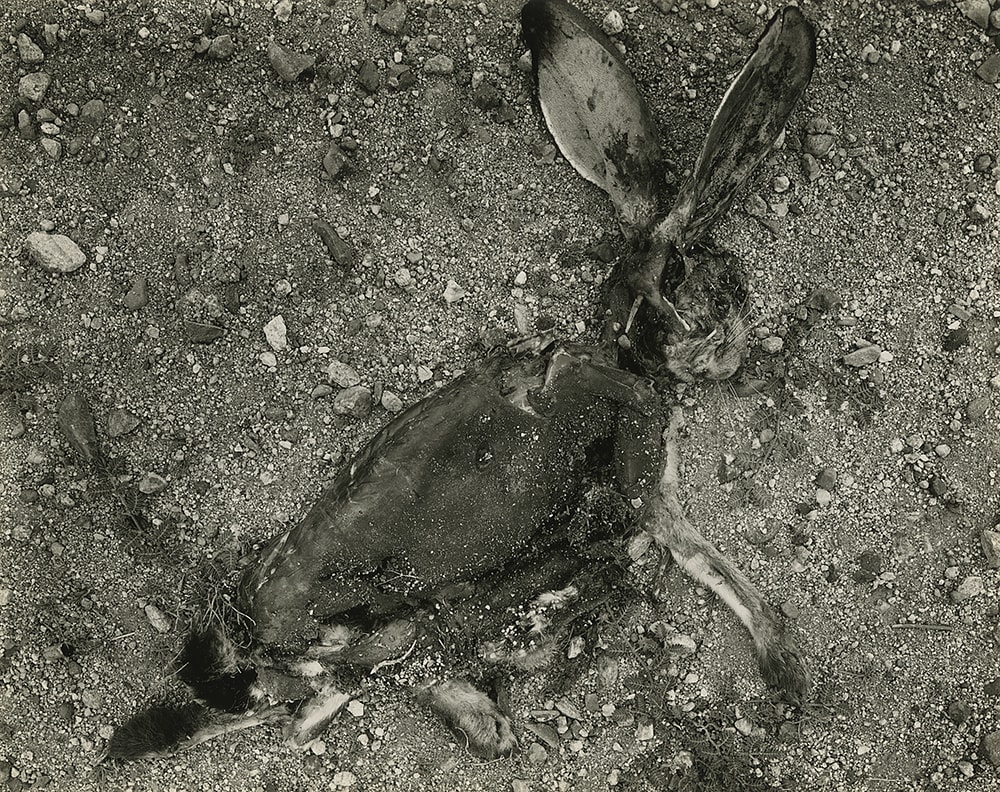
Frederick Sommer’s images can be seen in the same vein as Witkin’s in the use of the grotesque to illicit a reaction from the viewer. However, unlike Wikin, Sommer does not (obviously) arrange his subjects, there are no fancy set pieces.  Images such as ‘Chicken’ and ‘Jack rabbit’ are more automatic in the sense of a document of something found. This sits well within the origins of surrealism and that of tapping into the subconscious.  

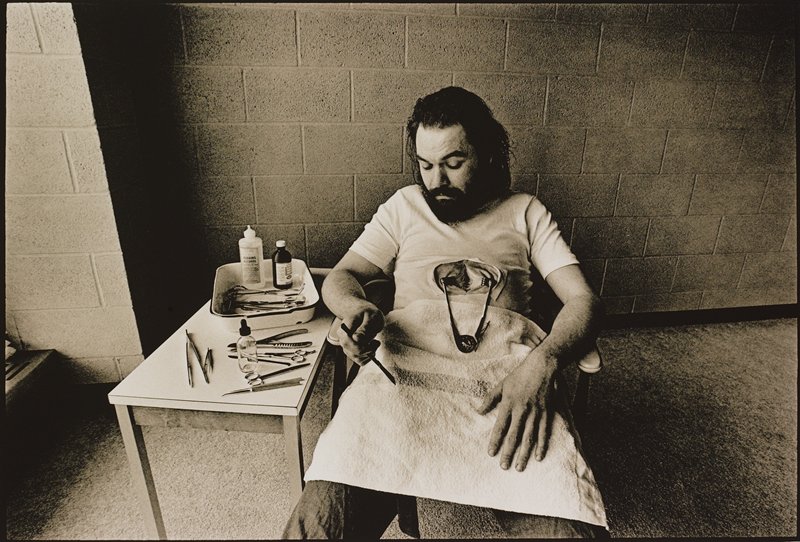
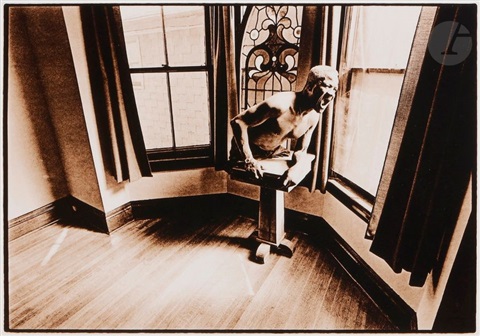
Bridging this divide of styles is Les Krim’s work, that has a mix of autonomous and choreographed images, ‘self-operation’ appears choreographed whilst ‘Deer slayer’ looks to be a documentary image of strangers coming back from a hunt. Of the three photographers I am more drawn to Krim’s work, perhaps because of his use of the human form as in ‘Human Being as a sculpture’ or because there is a simplicity to his work that connects with my subconscious.  

There is something to be said about subtlety, especially in surrealism as all too often images that have been described as surreal are over thought. This was an issue that Breton had with the work of Salvador Dali, in fact many of the Parisian surrealists shunned Dali having said his work to be too contrived and controlled to have come from the subconscious. The same could have been said about Yves Tanguy, who’s work is comparable to that of Dali.  Photographers who work in a similar styling of Dali are Jerry Uelsmann and Clarence John Laughlin, whilst illustrating something dreamlike their images my lack the subtlety that I admire in early surrealist work, especially when comparing to Man Ray’s iconic image ‘Les Larmes’.  

References

1 Grundy. A (1990), Bay Press, The Critical Image: essays on contemporary photography, ‘On the dissecting table: The unnatural coupling of surrealism and photography’ pp. 80. 

2  Grundy. A (1990), Bay Press, The Critical Image: essays on contemporary photography, ‘On the dissecting table: The unnatural coupling of surrealism and photography’ pp. 86. 

3 Sontag. S (1979) Penguin Books, ‘On Photography’ pp. 52. 

PHO704: Week 7 Peer to Peer webinar

The Space between: I come from a broken home, Tim Beale 2020

It was great to meet my fellow cohorts Steven and Hannah this week, learn about their projects and to share where I am with my work. I was able to offer some positive feedback, information and advice, that I hope my peers found useful.

Hannah’s project aligns itself quite closely with what I’m look, where we are both using nature as a metaphor or platform in which to illustrate the context of our projects. Hannah has been looking at therapeutic properties of nature and photography as a means of therapy. She pointed me towards the work of Rosy Martin who is an advocate of photo therapy (previously called Camera Therapy by Jo Spence)1.

“Starting in 1983, working with the late Jo Spence, I evolved and developed a new photographic practice- phototherapy – based upon re-enactment. Through embodiment, I explore the psychic and social construction of identities within the drama of the everyday. My work makes explicit the multiplicity of identities that an individual inhabits, using the ‘self’ as a text to be deconstructed, reviewed, challenged and reconsidered. This work bridges private and public discourses, theory and practice. Themes which I have explored in exhibitions and articles include:- gender, sexuality, ageing, class, desire, memory, location, urbanism, shame, family dynamics, power/powerlessness, health and disease, bereavement, grief, loss and reparation. The work has been exhibited widely, Nationally and Internationally, since 1985.” 2

Much of Martin’s work involves the everyday object as the subject and the act of photographing these objects is as much about the act itself than process of creation of a memory. This can be seen in her ‘too close to home’ series. The rendering of her objects has an almost surreal quality, more so than a pure documentary.

References

1 Dennett. T (2008), Taylor & Francis, [online] ‘Jo Spence’s camera therapy: personal therapeutic photography as a response to adversity’ https://www.tandfonline.com/doi/abs/10.1080/13642530902723041 [Accessed 11.11.2020]

2 Martin. R (1999) ‘Too Close to Home?’ Essay [Online] http://www.rosymartin.co.uk/too_close.html [Accessed 11.1.2020]

PHO704: Week 5 1:1 tutorial

Following a very constructive 1:1 with my course tutor I have had time to reflect upon our discussions around my project and look at next steps forward.

  • Looking at close up / details of the objects that make up a particular space
  • What are the finer details that make that space special, what am I drawn to when visiting it?
  • Do all images need to have a figure in order to tell the same story
  • Further research into the bond between the human psyche and the natural environment

The key discussion was a round how my project has become the Space between birth and death (from womb to tomb), is a psychogeographical journey through life exploring the environment that shapes our life. From the biophilic desire to seek out nature as healer to the genetically imprinted need for a safety. We associate places with memories and often key events in our lives are linked to a specific place. This entry for my CRJ has taken a long time to right as during the past few weeks I have been coming to terms with loosing my father, who died suddenly on the day he was due to come home from hospital. Since my fathers passing a few weeks ago I have been reassessing my connection with life and how this impacts on my project. There are so many key moments in my life that are connected with a place. When thinking back to an experience so much of that is the where. I want to convey this in my project. For me nature is my salvation, where I escape to, where I feel safe away from everyone else. Into natures welcoming embrace.

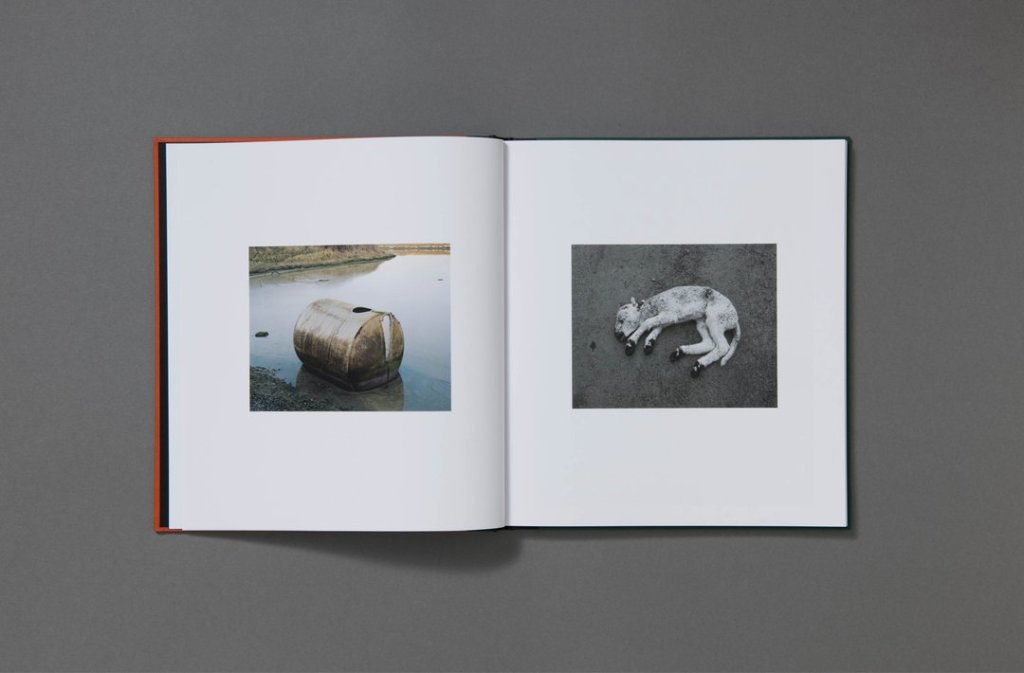
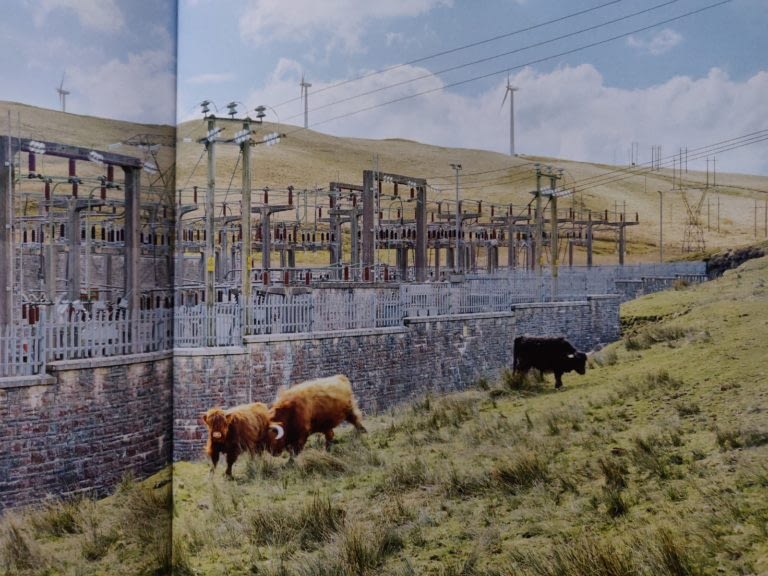
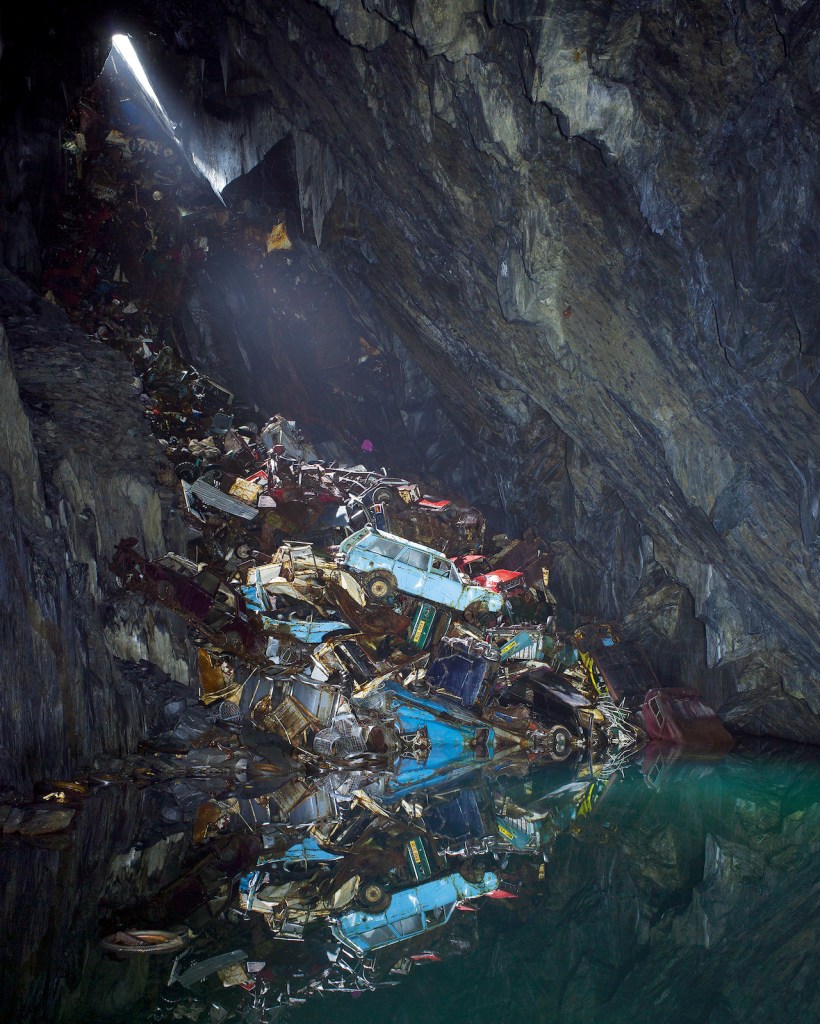
After my tutor’s feedback two pieces of work that I have started look at are Robin Friend’s ‘Bastard Countryside’ and Sam Taylor-Wood’s ‘Still Life’, both very different practices to look at but hold a certain resonance for me. Friend’s book ‘Bastard Countryside’ is a collection of images taken over a fifteen year period and influenced on what Victor Hugo called the ‘bastard countryside’: “somewhat ugly but bizarre, made up of two different natures”. With many images having the appearance of a classical landscape these are off set by the depiction of dilapidated or stark industrial architecture, these images are then paired with detailed shots of industrial waste, obscure debris and the discarded. Overall this appears a bleak representation of the British landscape, however is all the more refreshing for it. Having grown up in the Midlands, an industrial landscape scattered with the lost a forgotten structures of a long gone industry. I enjoy the use of images of the details that are to be found within these landscapes, almost evidence of lives lived.

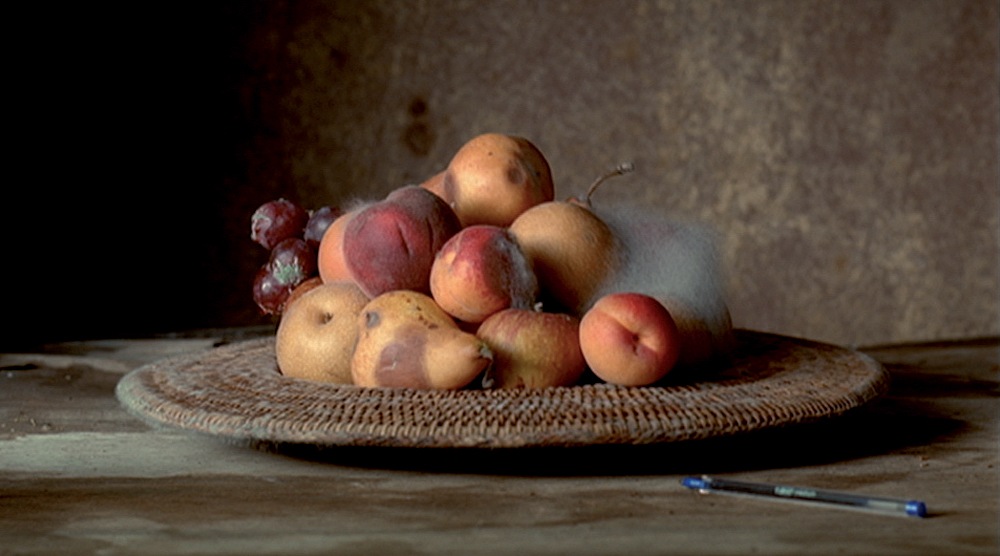
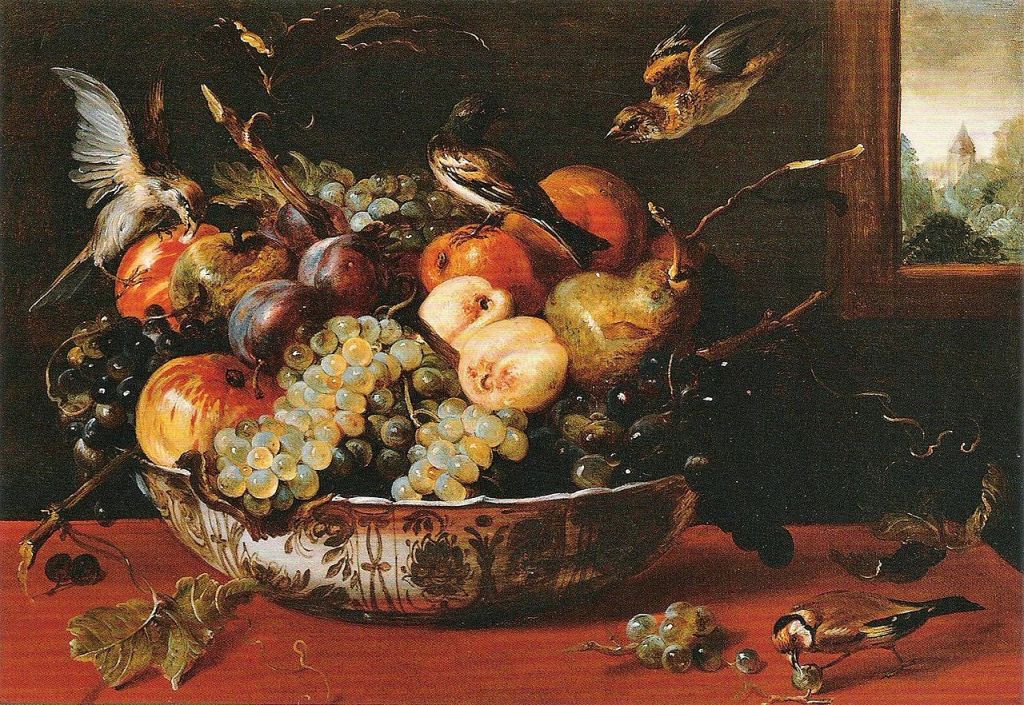
Sam Taylor-Wood’s video-graphical ‘Still Life’ holds a different level of fascination, where Friend looks to capture something of the lost or past, Taylor-Wood looks to depict the transition of time. The use of stop motion photography show’s the decay of fruit, perhaps five weeks or so, over the space of around 4 minutes. The lighting and scene are reminiscent to the early Flemish still life’s of the 17th Century. However as the Flemish painters desire was to show the viewer the wealth and abundance of nature, whereas Taylor-Wood’s videos show us the fragility and mortality of nature. This is a really interesting concept and has peaked my interest but for me I want the viewer to take each image or collection of images and interpret each as a moment in life, rather than the passage of time.

Resources

References

1 Friend.R (2018), [Online] ‘Bastard Countryside‘ [Accessed 1.11.2020]

2 Demos. T.J (2007) [Tate Online] ‘A matter of time’, Taylor-Wood. S (2001) ‘Still Life’, Film, ttps://www.tate.org.uk/tate-etc/issue-9-spring-2007/matter-time [Accessed 1.11.2020]

3 Snyders. F (1625), ‘Still life’ [Image online] https://commons.wikimedia.org/wiki/Category:Still_life_paintings_by_Frans_Snyders [Accessed 1.11.2020]

PHO704: Week 4 – Personal Projects and Five year plan

Having gone back through week 3 and this week’s course material and reading resources I feel I have a much better grasp of direction I want to take my practice. The paper “The power of the personal project”1 was particularly enlightening as I was initially surprised to read how modern commercial photographers need to create personal projects to attract clients. This makes perfect sense, given the image market is saturated with technically good photos, personal projects act as a platform to be seen above all the faceless images. This reminds me of the time spent as a camera club member and reasons for leaving. Almost each week there would be a competition with different theme, looking at the entries it became apparent very few images could be linked to any one photographer due to the lack of personality. Technically these images would be spot on but appear pedestrian or vernacular.

The city I live in, Bath, has a healthy audience of gallery and museum goers who would be my target audience not only for exhibitions but also running photo walks and workshops (as a way of supplementing my income).I’m now in my last week of paid work so in the process of re-assessing my career aspirations beyond the next few months. My day job, in the (soon to be obsolete) heritage sector, has been a way of supporting my photographic practice. In the short term I am looking for work to support me short term whilst I build my practice.

For me the next five years will be crucial in building up a career in photography. As up until now photography has been my passion outside of work but what the MA has shown me is that there can be a viable way to turn that passion into a working career. I see myself with a mix of creating and curating exhibitions of my personal project and those of fellow photographers, whilst working on commissions. I am one step closer to this having agreed to a really exciting commission (however sworn to secrecy at this stage).

As the high street has been in decline, even before Covid 19, I have been looking a retail units that can be used as exhibition space. Organisations such as local councils, Historic England and the Arts Council are currently looking at ways to save the high street with grants being offered to projects. I am hopeful that I can use this as a platform to start my practice professionally. Despite Bath having a strong base in photography, the RPS was unitil recently based here and Lacock Abbey close by, there lacks a space for photographers to exhibit on a regular basis. My ambition is to create such a space, utilising my 15 years experience of managing museums and cultural venues.

Resources

1 Scott. G, (2016) [Article] Journalism Practice, Professional Photography: the new global landscape explained, ‘The Power of the Personal Project’, pp. 82-109.