This week in both the live webinar with Brian Griffin and source material reading the question of are there any great photographers being produced today?
For Griffin ‘there are perhaps only one or two great photographers produced in each country for each generation. The rest are crap! What commissions there are just are boring and with modern technology pretty much anyone can go out there and shoot what’s being asked ’ a very frank statement but is it true? Perhaps there is something to it, in Sean O’Hagan’s article for the Guardian1 he questions the future of photography in the advent of technological advances:
‘For all that, no amount of technology will turn a mediocre photographer into a great one. Nor, in conceptual terms, will it transform a bad idea into a good one. For that you would still need to possess a rare set of creative gifts that are still to do with seeing, with deep looking.’
This statement rings true as a result of beginning this masters and working on my project I have looked deeper into the ‘why’ of what I doing. Questioning my every decision about location, set up, lighting and motive of why I’m doing what I’m doing. Griffin in his lecture also goes onto say ‘photographers don’t take their time anymore, they simply look through the screen and click. Portrait shoots are over in minutes, and look boring, there’s no creativity’2 I agree with this statement and have often taught this when running workshops. I have set challenges with beginner photographers to limit the number of shots they take in a day to 24, simulating the number of available shots per role of film.
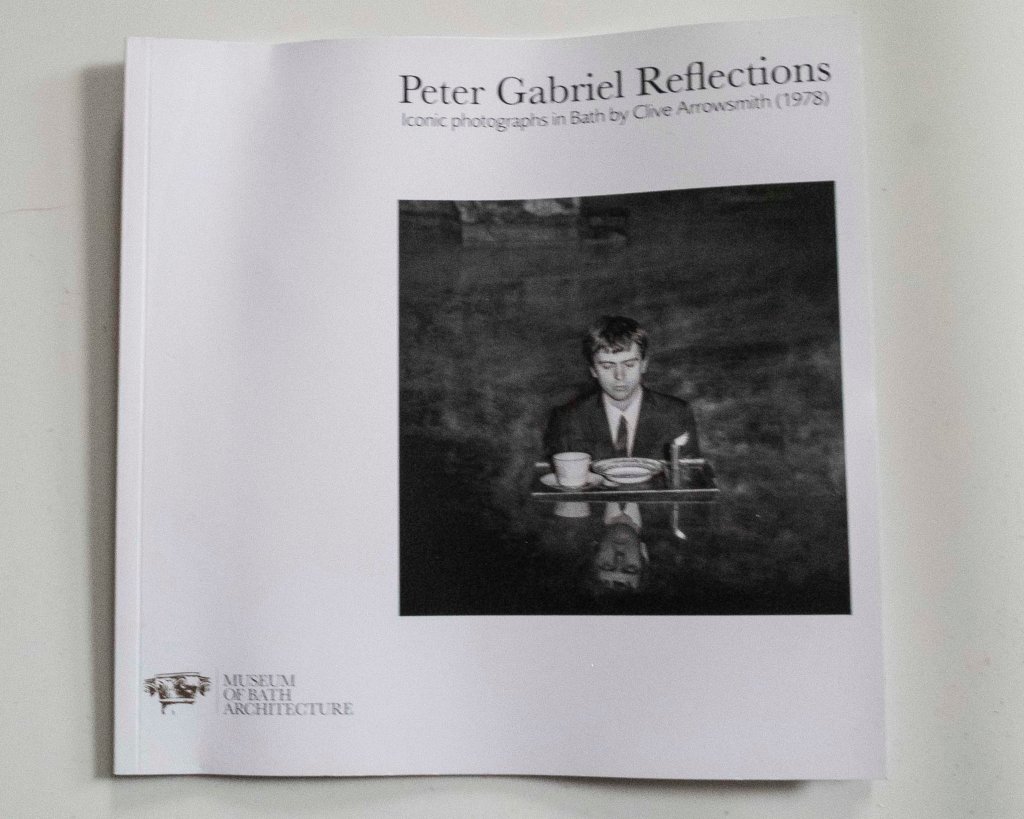
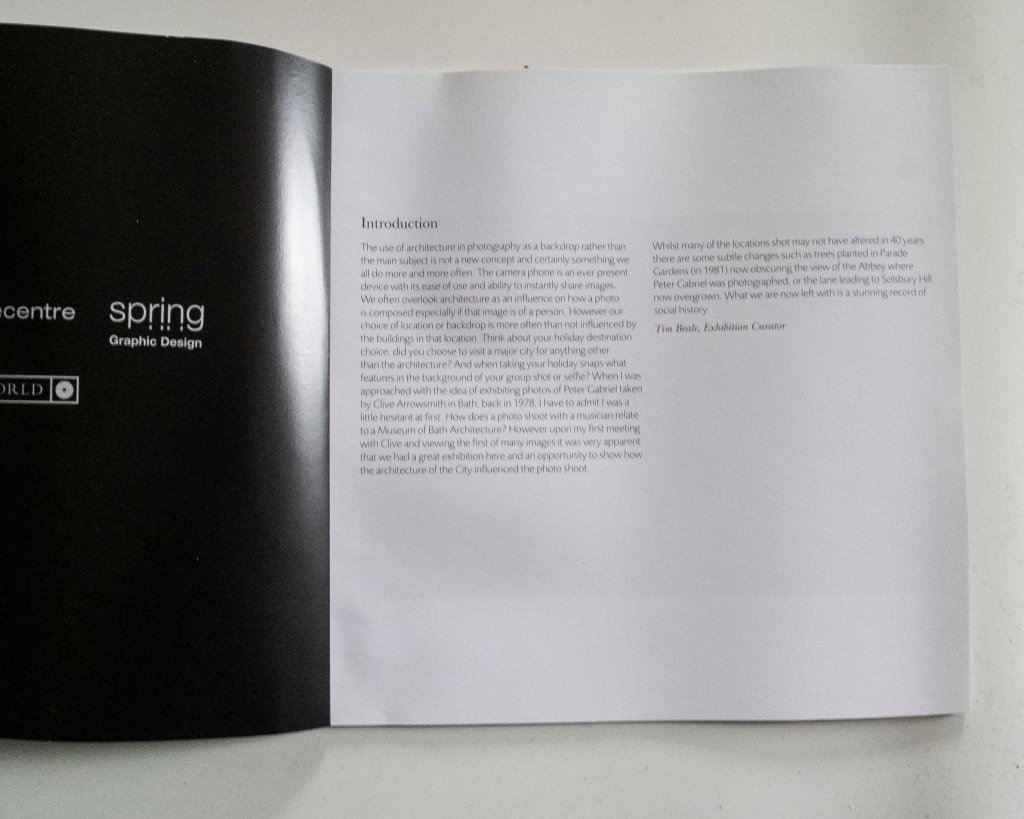
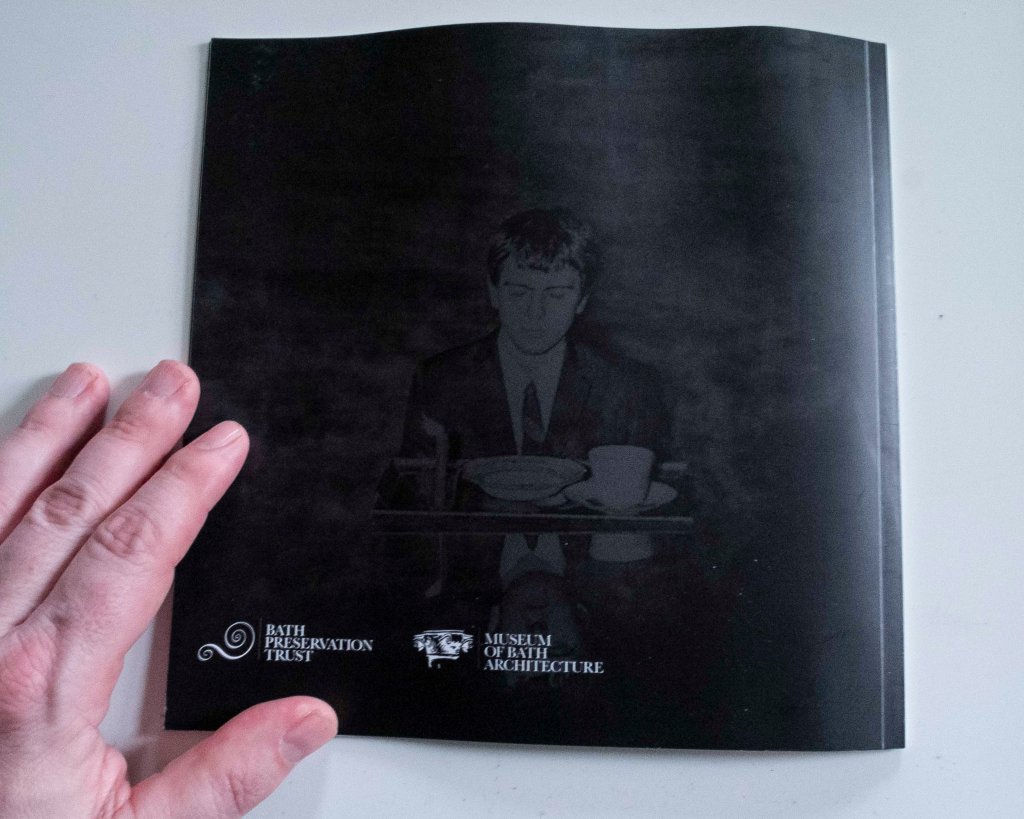
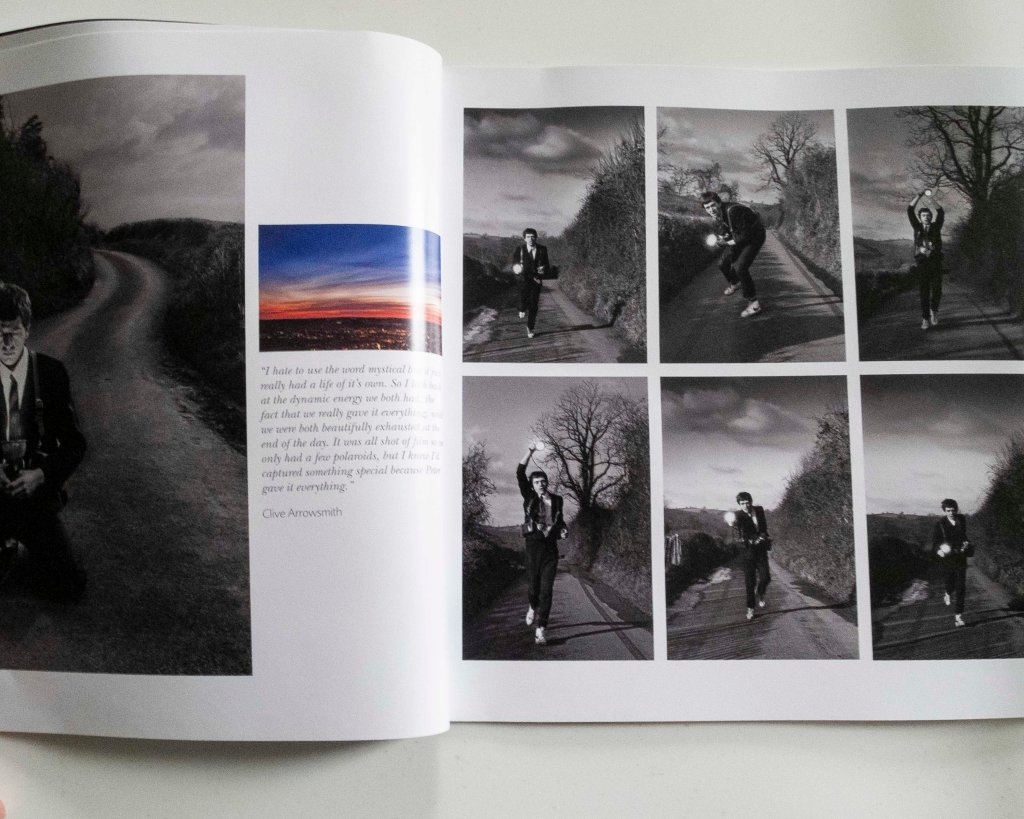
Also this week after reading ‘Beyond the exhibition: from catalogue to photobook’ I found to be in agreement with the notion that catalogues, pamphlets and guides are significant records of an exhibition and without this record the exhibition is at risk of disappearing . I produced a guide book for the ‘Peter Gabriel Reflections: Photography of Clive Arrowsmith’3 it was intended as a) a source of secondary income b) souvenir of the exhibition for visitor c) a way of people experiencing the exhibition that could not attend and d) a record of the exhibition for our archives. One the the failings of the guide and a reason I cannot call it a true catalogue is the lack of an inventory of images, this exists in an exhibition folder separately.
I found this week’s forum, looking at our peer’s websites and those they like, very useful, informative and inspiring. I clearly need to up my game with both my CRJ blog and practice website. Some google analytics pointers I pick up from feed back were:
- Include links to other photographers work increases google presence
- Create content that holds the viewers attention. The longer they stay on your site is an area google looks at
I also found it useful to look at other established photographers websites and glean inspiration from these. Some websites I like are visually dynamic but wouldn’t suit my style whilst others would, being much more simplistic with a natural flow.
References:
1 O’Hagan. S (2012), Guardian Newspapers Limited. Photography: A Guardian Masterclass: The world’s most expensive photograph …is of a scene that doesn’t exist.
2 Griffin. B (2020) Falmouth University live webinar.
3 Keane, T. (2019) Hyperallergic: British Rock Meets Modernism. [Online] Available from: https://hyperallergic.com/480967/peter-gabriel-reflections-the-museum-of-bath-architecture-clive-arrowsmith/ [Accessed 08/11/2020]
 The Space Between