[G Bachelard, The poetics of space, 1958 Press Universitaires de France.]
In ‘the poetics of space’ Bachelard applies the method of phenomenology to architecture, on lived experience in architectural places and their contexts in nature. He focuses especially on the personal, emotional response to buildings both in life and in literary works, both in prose and in poetry. He is thus led to consider spatial types such as the attic, the cellar, drawers and the like. Bachelard implicitly urges architects to base their work on the experiences it will engender rather than on abstract rationales that may or may not affect viewers and users of architecture.
In the section ‘House’ Bachelard discusses the fundamental importance of the house as a space in which we store memories:
“Of course, thanks to the house, a great many of our memories are housed, and if the house is a bit elaborate, if it has a cellar and a garret, nooks and corridors, our memories have refuges that are all the more clearly delineated. All our lives we can come back to them in our daydreams.”
And how we fill our homes with objects, photos, keepsakes as strongholds for our memories. When we wish to recall a memory we can seek out that object, special space or room that holds the key to that memory. We can visualise the room in our conscious mind and question:
“Was the room a large one? How was it lighted? Was it warm?… How too, in these fragments of space, did we achieve achieve silence? How did we relish the very special silence of the various retreats of solitary dreaming?”
Bachelard further goes on to discuss the house we were born in, the way the ‘house’ holds not conscious memory but a physical memory. Memories we cannot bring to mind but rather those of learning to, walk, talk, touch, taste, smell:
“But over and beyond our memories, the house we were born in is physically inscribed in us. It is a group of organic habits…. In short, the house we were born in has engraved within us the hierarchy of the various functions of inhabiting.”
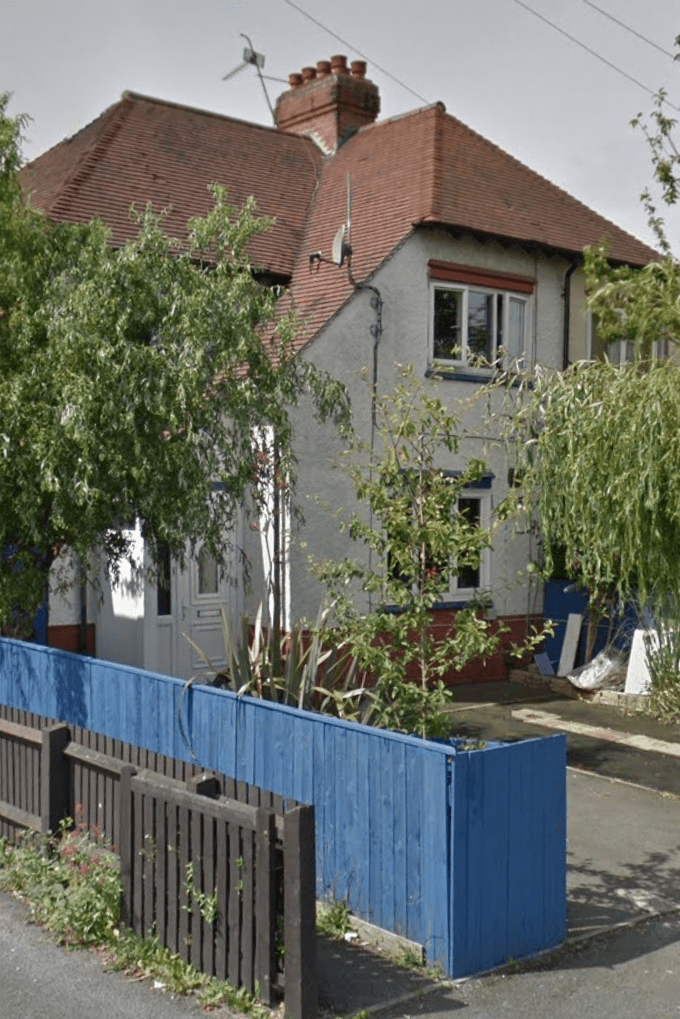
This recalls memories of the house that holds my earliest memories, despite recalling many moments there is a point beyond memory. However I have ‘sense’ of the place from this pre-memory, or as Bachelard indicates an “organic habit”. It is, however, unclear at which point do my emotional responses originate, the conscious or organic memories. For example I can clearly remember my room, the view from the window of the garden, the bathroom and living room, however I cannot recall how the kitchen looked or the front garden. I do recall what food I ate, the smell and taste and that we had a privet hedge at the front of the house. This solidity of memory is so founded in this space. Without the house as a point of reference would our memories simply drift in the winds, to be lost to time?
 The Space Between